

MercadoLibre's Margin Fell on Free Shipping and New Credit Cards, Not on Bad Loans
Hypothesis Opus 5 · Research Opus 5 · Writing Opus 5 · Prompt v1.7
The September quarter was read as the moment Latin American credit caught up with a lender whose loan book has grown by nearly two-thirds in a year. The disclosure points elsewhere: loans 15 to 90 days past due held at 7.0%, flat sequentially and year on year, while the margin did the breaking.
Revenue rose 45% to $10.75bn and income from operations fell 6.6% to $676m, a 6.3% operating margin against 9.8% a year earlier. Management sized the drivers itself: roughly 60 basis points of sequential pressure from a lower free-shipping threshold and a fulfilment build, about 40bp from a Brazilian affiliate push, and a credit margin diluted by record card issuance that is provisioned upfront and earns interest later.
The business pays in advance for volume it books afterwards. What the market is pricing is that the bill has no stated end date.
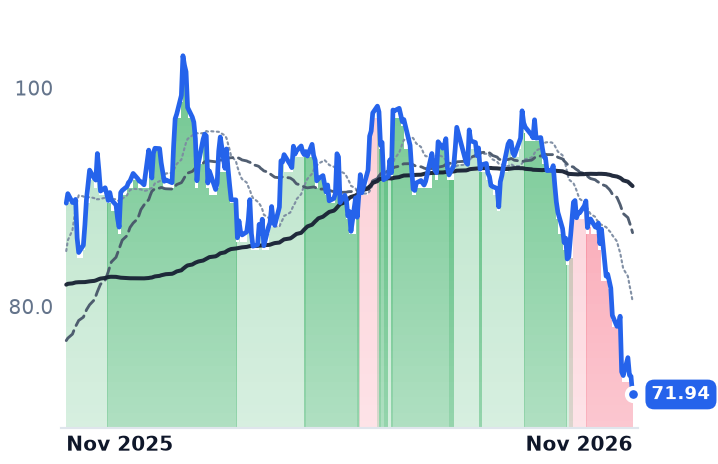
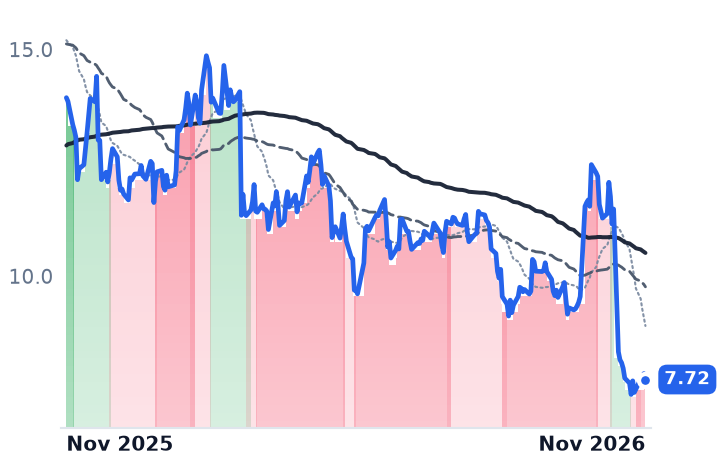
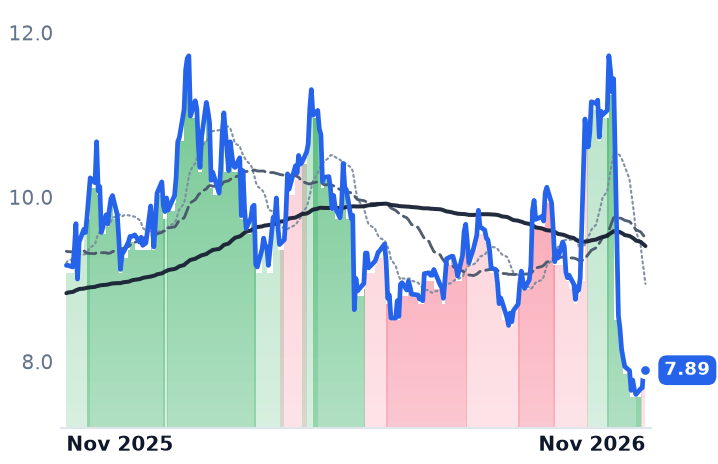
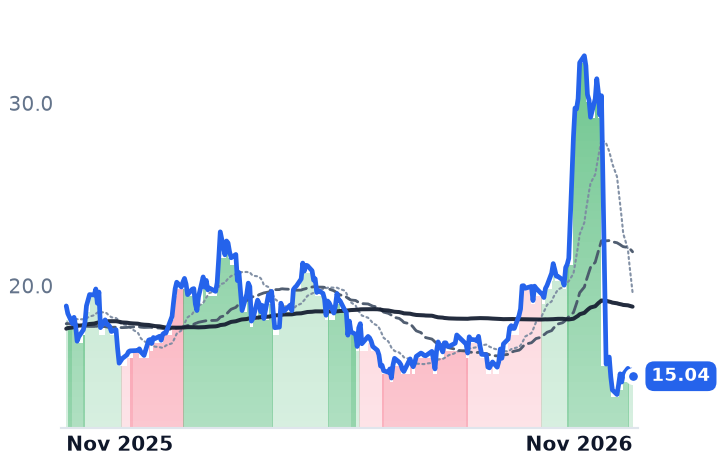
| Ticker | Company | Segment | Trend · 13mo | 30D | 1Y |
|---|---|---|---|---|---|
| The subject · what this brief is about | |||||
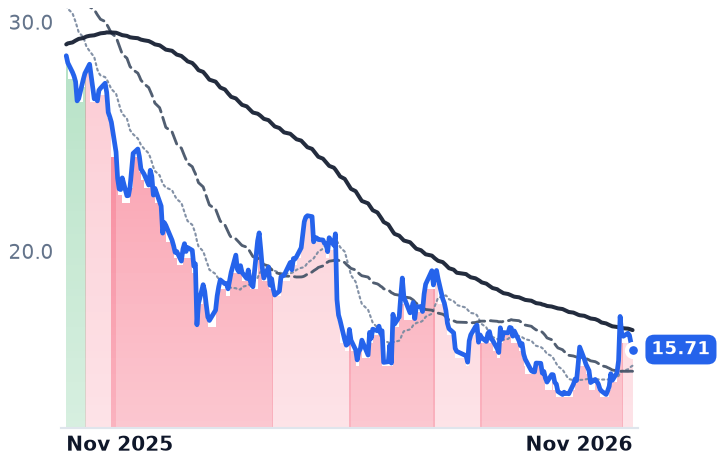
MELI | MercadoLibre | General E-commerce Platforms | 🔴 Cont. Bear | −21.2% | −27.4% |
| Compared against · context, not the story | |||||
NU | Nu | Digital Banking Platforms | 🌱 Emerging Bull | −20.8% | −23.1% |
SE | Sea | General E-commerce Platforms | 🌱 Emerging Bull | −23.6% | −46.8% |
EWZ | iShares MSCI Brazil ETF | Asset Management | ⚠️ Emerging Bear | −25.2% | −0.1% |
ARGT | Global X - MSCI Argentina ETF | Asset Management - Global | ⚠️ Emerging Bear | −17.5% | −19.6% |
STNE | StoneCo | Payment & Fintech Infrastructure | 🔴 Cont. Bear | −33.3% | −44.6% |
PAGS | PagSeguro Digital | Payment Processing & Solutions | ⚠️ Emerging Bear | −26.4% | −13.9% |
XP | XP | Retail Brokerage Platforms | 🟢 Cont. Bull | −50.6% | −20.4% |
CPNG | Coupang | General E-commerce Platforms | 🔴 Cont. Bear | +5.2% | −44.9% |
12-month price & trend
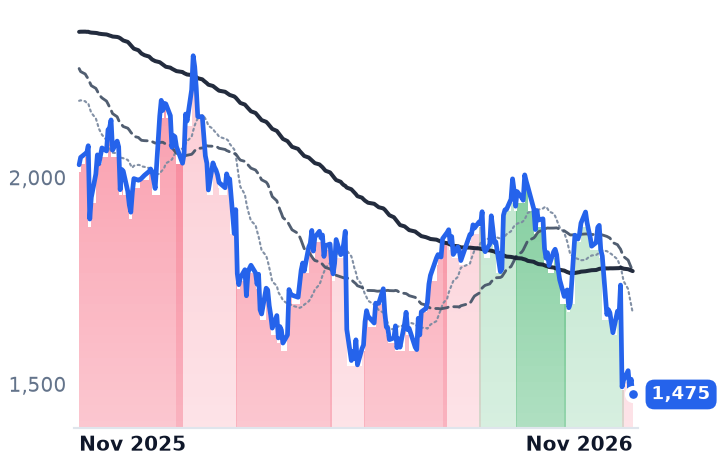
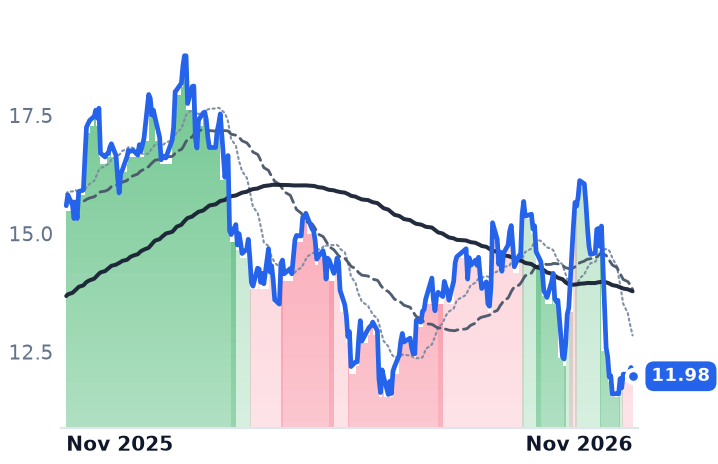
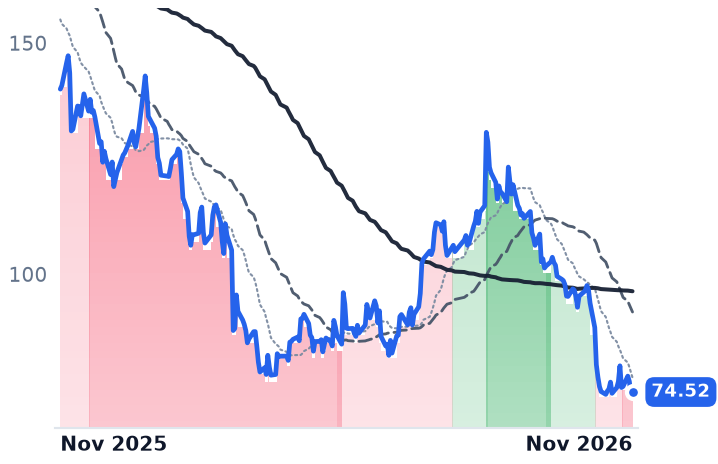
| Ticker | Mkt cap | P/E | P/E fwd | P/S | P/S fwd | P/GP | P/GP fwd | EV/EBITDA | FCF yld |
|---|---|---|---|---|---|---|---|---|---|
MELI | $74.8B | 39.6x | 39.4x | 1.9x | 1.8x | 4.6x | 4.2x | 21.6x | 16.4% |
NU | $57.1B | 16.0x | 13.7x | 2.9x | 2.5x | 6.7x | 5.7x | 17.6x | -7.4% |
SE | $45.6B | 25.7x | 20.3x | 1.5x | 1.4x | 3.3x | 3.2x | 14.6x | 6.8% |
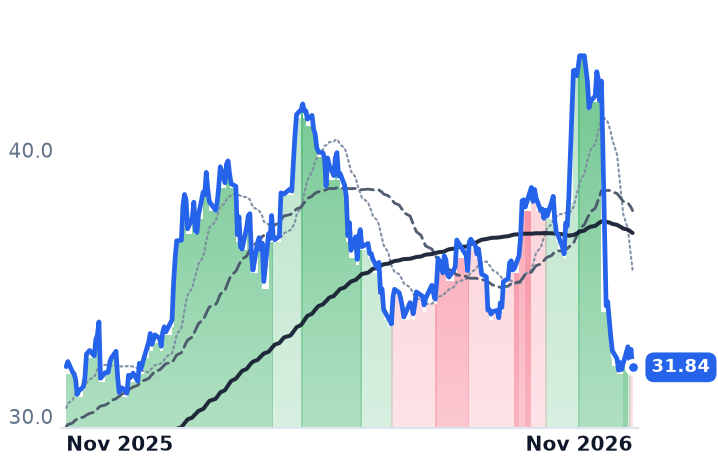
| Ticker | Mkt cap | P/E | P/E fwd | P/S | P/S fwd | P/GP | P/GP fwd | EV/EBITDA | FCF yld |
|---|---|---|---|---|---|---|---|---|---|
EWZ | $7.4B | — | — | — | — | — | — | — | — |
ARGT | $860.6M | — | — | — | — | — | — | — | — |
STNE | $2.6B | 4.4x | — | 1.0x | — | 1.3x | — | 3.4x | 30.1% |
| Ticker | Mkt cap | P/E | P/E fwd | P/S | P/S fwd | P/GP | P/GP fwd | EV/EBITDA | FCF yld |
|---|---|---|---|---|---|---|---|---|---|
PAGS | $3.0B | 7.3x | — | 0.8x | — | 1.5x | — | 6.3x | -3.7% |
XP | $15.8B | 14.9x | — | 4.1x | — | 6.2x | — | 25.0x | 27.1% |
CPNG | $28.4B | n/m | — | 0.8x | 0.8x | 2.8x | 2.7x | 873.7x | 0.4% |
Consensus projections
| Ticker | FY2026E | FY2027E | FY2028E | |
|---|---|---|---|---|
MELI | Revenue | +46.3% | +28.5% | +23.6% |
| EPS | −7.2% | +41.7% | +40.0% | |
NU | Revenue | +62.4% | +23.6% | +24.4% |
| EPS | +41.8% | +28.9% | +28.3% | |
SE | Revenue | +41.2% | +22.9% | +15.7% |
| EPS | +15.5% | +22.2% | +26.6% | |
STNE | Revenue | +7.6% | +4.7% | +5.0% |
| EPS | +18.5% | +9.3% | +3.8% | |
PAGS | Revenue | +7.3% | +5.6% | −0.3% |
| EPS | +14.7% | +9.5% | +3.3% | |
XP | Revenue | +14.3% | +13.1% | +12.7% |
| EPS | +13.8% | +15.3% | +12.1% | |
CPNG | Revenue | +6.3% | +13.9% | +12.3% |
| EPS | −410.1% | −162.9% | +123.7% |
Forward fiscal years only. Blank means no analyst coverage for that year.
MercadoLibre sold more of everything in the September quarter and earned less for it. The company, which runs a Latin American marketplace alongside Mercado Pago's payments and lending arm, reported revenue and financial income of $10.75bn, up 45% year on year, on merchandise volume of $23bn and payment volume of $109bn. Income from operations came in at $676m, down 6.6%, the third consecutive quarterly decline. The shares fell 14.2% the following session.
The print was received as the quarter in which Brazilian and Argentine credit finally caught a lender whose loan book had grown 62% in a year. The company's own disclosure argues against that reading. The leading delinquency measure, loans 15 to 90 days past due, sat at 7.0%, unchanged sequentially and year on year and near historical lows.
What deteriorated was margin, and this business pays for both of its growth engines well before either one pays back.
The shipping bill arrives before the repeat order
Gross margin fell to 40.8% from 43.3%, and management put numbers on the cause. Shipping was a roughly 60 basis-point sequential headwind, 40bp of it in cost of goods sold and 20bp in operating expense, from the lower free-shipping threshold, a 20% quarter-on-quarter expansion in fulfilment space ahead of peak season, higher energy prices and temporary recruitment. A tactical affiliate-marketing push in Brazil added about 40bp more; orders through that channel rose 240% across a network of 12 million affiliates.
The subsidy has begun to cover itself at the edges. Brazilian cost per shipment fell 5% year on year and 14% since the threshold was cut, and September was the first month in which free shipments priced between BRL 19 and BRL 79 were variable-contribution positive. Items per buyer in Brazil grew 16% after fully lapping the change, and the commerce take rate rose 1.7 percentage points to 26.9%.
"We are investing part of today's margin to accelerate the shift of commerce and financial services online in Latin America and to build lasting habits across our ecosystem," chief financial officer Martin de los Santos told investors on November 4.
Every card issued costs before it earns
The credit portfolio reached $17.9bn, with the card book at $8.5bn, up 76%, and 2.9 million cards issued in the quarter, taking cards to about 47% of the total. The shareholder letter spells out the accounting: provisions for expected losses are taken upfront on every dollar of balance drawn, while interest income arrives only later from users who revolve. Record issuance therefore depresses reported credit margin by construction. Net interest margin after losses came in at 20.1%, down about a point year on year, with card cohorts issued between 2021 and 2024 already profitable on that measure and 2026 vintages still loss-making. The lagging 90-day-plus ratio rose 0.6 points to 19.3%, and the allowance against loans receivable stood at $4,895m, roughly 27% of the book.
Nu Holdings, the digital bank serving much of the same borrower base, moved the same way for the same stated reason: 90-day-plus delinquency rose to 7.3% from 6.9% as interest-earning balances climbed to 61% of its portfolio from 44% three years ago, while its 15-to-90-day measure improved to 8.0% from 8.2%.
A cheaper stock priced for a smaller year
At 39.6x trailing earnings against 39.4x forward, the two numbers nearly identical, the market is paying nothing for near-term growth: consensus has 2026 earnings per share at $37.48, 7.2% below the $39.39 reported for 2025, before a recovery to $53.10 in 2027. Nu Holdings trades at 13.7x forward earnings with a record $1.1bn quarterly profit and a 32% return on equity. Sea, which runs the Shopee marketplace and the Monee credit arm, is at 20.3x forward and has fallen harder over three months despite expanding margins.
Against its own history the stock has genuinely cheapened, to 4.6x gross profit from 5.4x in August, with market capitalization down to $74.8bn from $90.6bn. Analysts cut targets after the print while keeping constructive ratings: UBS to $1,600 from $1,750 and JPMorgan to $1,850 from $2,150.
How much of the 20% the quarter explains
Most of the three-month decline predates the results. The stock fell roughly 13% between its October 12 high and October 26, the session after Lula won the runoff with 51.74%, when the iShares MSCI Brazil exchange-traded fund closed 19.8% lower and these shares dropped 7.8%. The earnings reaction added the rest. Country risk repriced the asset; the quarter repriced the margin.
Duration is the open question. Management gave no numerical guidance, said it is not targeting a short-term margin level, and described itself as more cautious on riskier Brazilian credit. Brazil's central bank held the Selic rate at 13.75% on November 4, ending five consecutive cuts, which raises funding costs on a loan book far larger than a year ago at the same moment the shipping subsidy widens.
The year-on-year drop in operating profit has narrowed each quarter, and September's was the smallest so far. No one at the company has promised a last one. The December quarter is peak season, when the warehouse space built this year either fills or sits.