

BlackLine Pushed Paid AI Accounting to Late 2027 Until Customers' Auditors Sign Off
Hypothesis Opus 5 · Research Opus 5 · Writing Opus 5 · Prompt v1.7
The company that automates the corporate accounting close has found that the gating item on its newest product is the buyer's control framework, not the software. BlackLine moved paid contribution from agentic accounting products to mid-to-end 2027 from the first half, with premium qualification slipping to the first weeks of February, because customers want auditor, legal and compliance sign-off before an agent posts entries.
The September quarter cut the full-year revenue outlook to $759.5m-$761.5m and guided the December quarter to 6.5-7.6% growth, a third straight quarter of deceleration. Underneath it, the meters that describe contract quality improved: annual recurring revenue of $735m grew 7% against 6% a quarter earlier, net revenue retention reached 103.5%, and the new platform pricing reached 23% of eligible recurring revenue from 17%.
The 6 November session gave back essentially the whole six-month re-rating, leaving the shares at about 2.8x trailing gross profit.
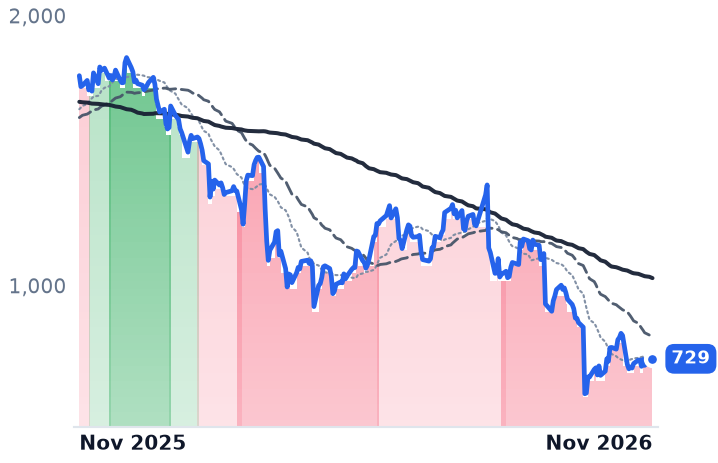
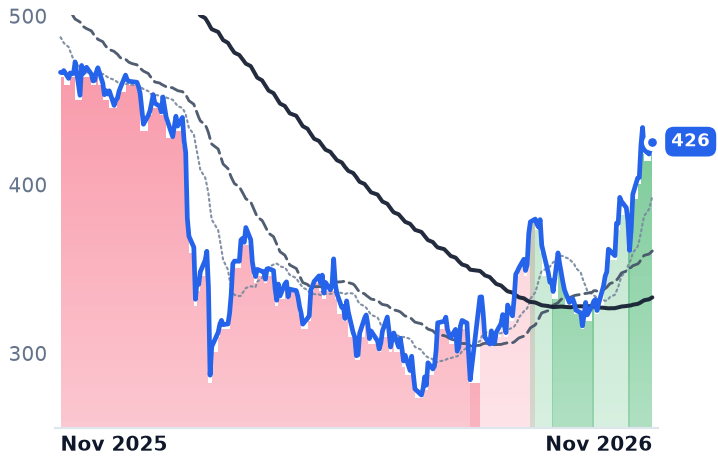
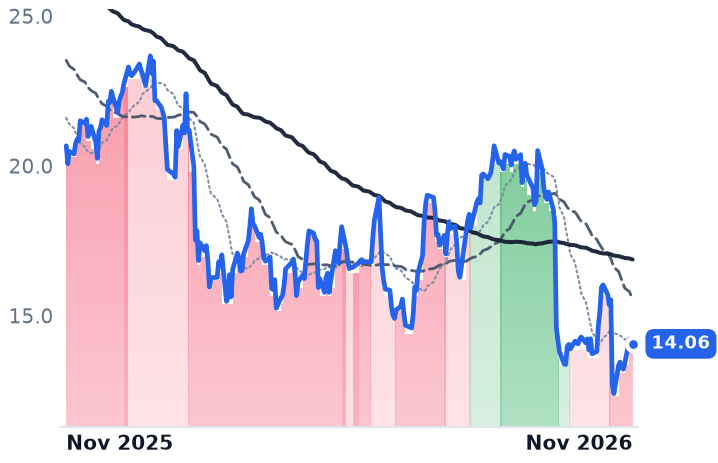
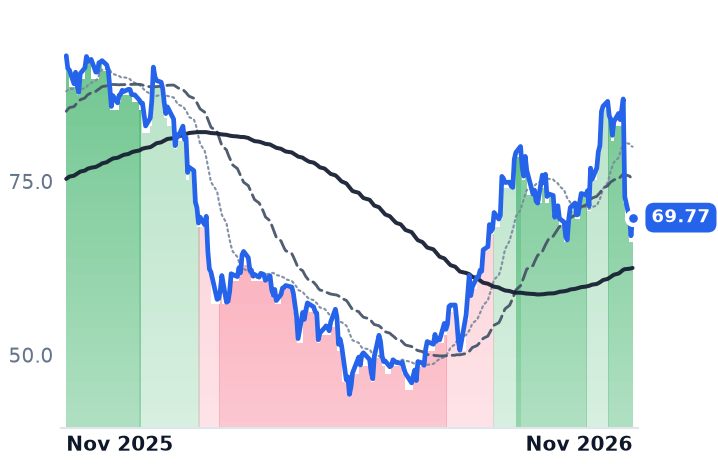
| Ticker | Company | Segment | Trend · 13mo | 30D | 1Y |
|---|---|---|---|---|---|
| The subject · what this brief is about | |||||
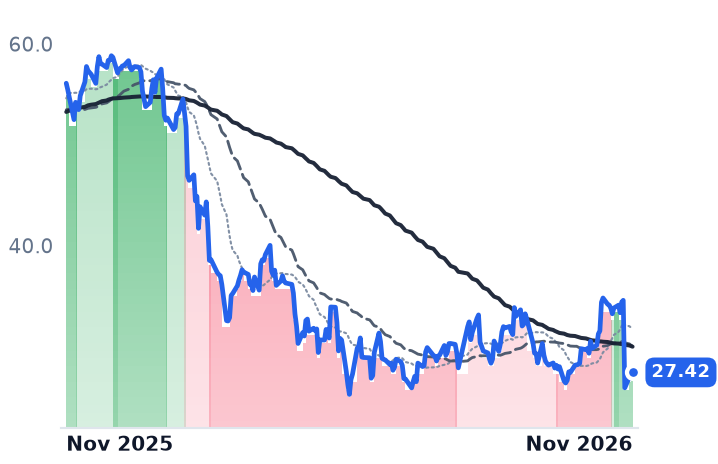
BL | BlackLine | Other | 🔴 Cont. Bear | −8.0% | −51.1% |
| Compared against · context, not the story | |||||
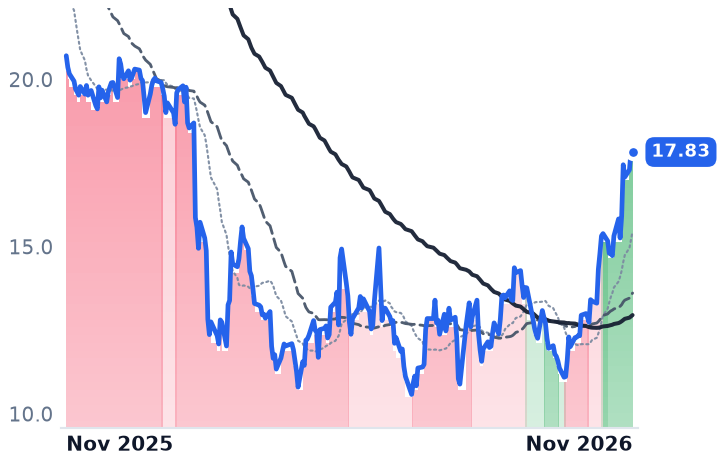
VERX | Vertex | Commerce & Digital Payments | 🌱 Emerging Bull | +38.2% | −13.9% |
QTWO | Q2 | Commerce & Digital Payments | 🟢 Cont. Bull | +24.2% | +1.1% |
NCNO | nCino | Commerce & Digital Payments | 🟢 Cont. Bull | +13.4% | −14.4% |
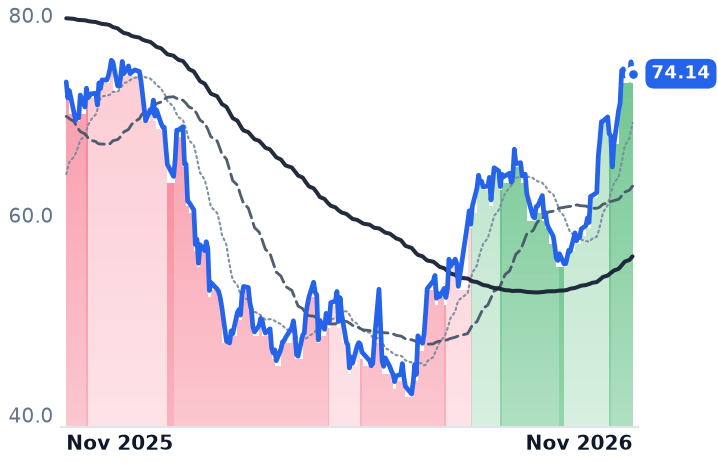
FICO | Fair Isaac | Data, Analytics & Intelligence | 🔴 Cont. Bear | −0.0% | −59.0% |
TYL | Tyler Technologies | Industry-Specific Platforms | 🌱 Emerging Bull | +23.1% | −8.8% |
ALKT | Alkami Technology | Commerce & Digital Payments | 🔴 Cont. Bear | −1.2% | −32.0% |
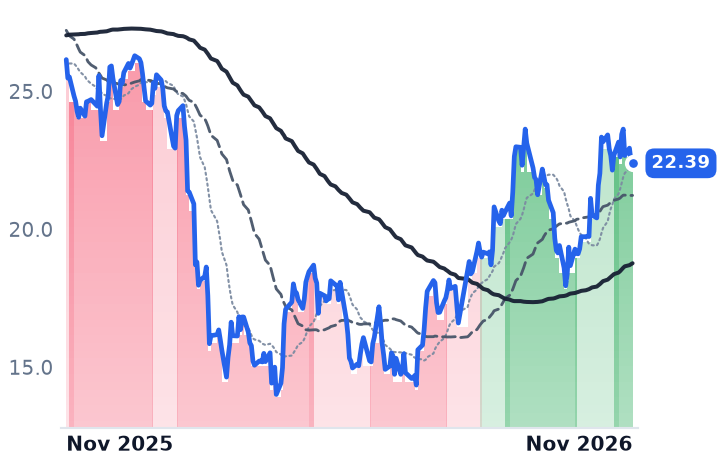
WK | Workiva | Data, Analytics & Intelligence | 🟢 Cont. Bull | −5.3% | −25.0% |
12-month price & trend
| Ticker | Mkt cap | P/E | P/E fwd | P/S | P/S fwd | P/GP | P/GP fwd | EV/EBITDA | FCF yld |
|---|---|---|---|---|---|---|---|---|---|
BL | $1.6B | 40.2x | 11.1x | 2.1x | 2.1x | 2.8x | 2.7x | 19.0x | 10.9% |
VERX | $2.9B | n/m | 21.1x | 3.6x | 3.5x | 5.7x | 5.6x | 55.8x | 2.0% |
QTWO | $4.7B | — | 26.9x | — | 5.2x | — | — | 27.6x | 4.9% |
| Ticker | Mkt cap | P/E | P/E fwd | P/S | P/S fwd | P/GP | P/GP fwd | EV/EBITDA | FCF yld |
|---|---|---|---|---|---|---|---|---|---|
NCNO | $2.4B | — | 17.1x | — | 3.7x | — | — | 28.4x | 5.6% |
FICO | $15.8B | — | 16.5x | — | 6.1x | — | — | 16.5x | 6.7% |
TYL | $16.8B | 52.6x | 32.2x | 6.8x | 6.6x | 14.3x | 13.9x | 30.0x | 4.4% |
| Ticker | Mkt cap | P/E | P/E fwd | P/S | P/S fwd | P/GP | P/GP fwd | EV/EBITDA | FCF yld |
|---|---|---|---|---|---|---|---|---|---|
ALKT | $1.5B | — | 16.9x | — | 2.9x | — | — | 286.0x | 3.6% |
WK | $4.3B | 95.4x | 23.6x | 4.5x | 4.1x | 5.6x | 5.2x | 66.7x | 4.7% |
Consensus projections
| Ticker | FY2026E | FY2027E | FY2028E | |
|---|---|---|---|---|
BL | Revenue | +8.6% | +8.5% | +9.3% |
| EPS | +19.1% | +10.5% | +14.6% | |
VERX | Revenue | +10.9% | +10.5% | +10.8% |
| EPS | +32.5% | +22.8% | +20.4% | |
QTWO | Revenue | +12.5% | +10.2% | +10.0% |
| EPS | +17.9% | +23.8% | +17.2% | |
NCNO | Revenue | +9.8% | +8.9% | +8.6% |
| EPS | +25.2% | +45.3% | +19.9% | |
FICO | Revenue | +27.2% | +2.7% | +5.6% |
| EPS | +44.6% | +4.0% | +8.9% | |
TYL | Revenue | +8.6% | +9.9% | +9.8% |
| EPS | +14.8% | +18.9% | +14.1% | |
ALKT | Revenue | +19.9% | +14.1% | +14.7% |
| EPS | +60.9% | +28.3% | +26.5% | |
WK | Revenue | +18.3% | +15.5% | +14.9% |
| EPS | +105.3% | +20.5% | +21.8% |
Forward fiscal years only. Blank means no analyst coverage for that year.
BlackLine, whose software automates the corporate accounting close for multinationals and large domestic enterprises, now says its customers' auditors set the date it begins getting paid for artificial-intelligence agents. On the 5 November earnings call management moved expected paid contribution from its agentic products to mid-to-end 2027 from the first half, and pushed premium qualification to the first few weeks of February. The constraint it named was not engineering: buyers want auditor, legal and governance sign-off before an agent is trusted to prepare an accounting entry.
That matters beyond one product date. Close and reconciliation automation has been marked down for a year on the view that it is the software AI does for free, and BlackLine's shares are 50.4% below where they stood twelve months ago. The September quarter tests that reading, and splits it: the forward revenue line and the timing of deals deteriorated, while retention, pricing attach, margin and cash all improved.
Who signs off decides when the revenue lands
The same approval mechanism shows up in the deals management described as slipped rather than lost: a Fortune 10 pursuit of two and a half years now expected to be approved in December with a January start, a federal award expected on 30 September now expected by 31 December, and a Fortune 250 win where the customer said 31 January was more realistic than 31 December. Cyber and governance scrutiny lengthened the approval cycle in each case.
Adoption without a price tag sits alongside it. Generative-AI features are enabled at 3,400 customers, roughly 90% of the active base, with 2,500 using them in the quarter; Verity Prepare, the agentic reconciliation product, has been generally available under ten weeks, with a quarter of entitled customers evaluating it and 98% of its suggestions retained by users.
The pricing upgrade attached; services did not
Annual recurring revenue reached $735m, up 7%, an improvement on the 6% of the June quarter, and dollar-based net revenue retention rose to 103.5% from 102%. Platform pricing, which carries a disclosed 10-40% uplift on converted accounts, reached 23% of eligible recurring revenue — total ARR excluding the SAP reseller channel and public sector — against 17% a quarter earlier. The chief financial officer said that uplift alone should add close to two percentage points of ARR growth in 2027. SAP, which resells the product, was 26% of revenue, and buyer hesitation over the joint roadmap paused decisions in that channel during the quarter.
Reported revenue of $193.4m grew 8.5%, the third consecutive quarterly step down from 9.7% and 9.2%. The full-year outlook came down to $759.5m-$761.5m and the December quarter to 6.5-7.6% growth, with roughly half the shortfall attributed to professional services, where revenue grew 2%. Non-GAAP operating margin reached 25.9%, up 450 basis points, free cash flow was $58m at a 30% margin, and buybacks absorbed $124m year to date, about all of that cash flow. Customers paying more than $1m a year rose 18% to 98, while total customers fell to 4,316 from 4,424.
"If customers were replacing us, it would show up first in our largest accounts as churn, smaller contracts and/or shorter commitments," chief executive Owen Ryan told investors on 5 November. "We are seeing the opposite, larger deals, longer commitments and strong enterprise renewals."
One session gave back six months
The shares closed at $34.57 on 5 November and $25.89 on 6 November, and stood at $27.42 on 11 November. Piper Sandler cut its target to $30 from $35 while keeping a Neutral rating as the December guide landed below consensus. Price-to-trailing-gross-profit is now 2.77x against 2.72x forward, roughly 2% of gross-profit growth priced into next year; because the price is 8.7% above its 13 May level while trailing gross profit grew 4.8% over those two quarters, that multiple sits about 4% above its May trough, having been about 31% above it the day before the fall. Trailing free cash flow yields 10.9% and trailing enterprise value is 19.0x EBITDA, against 27.6x at Q2 Holdings, which sells digital-banking platforms to US community banks and credit unions, and 55.8x at Vertex, the indirect-tax software vendor whose e-invoicing revenue rides on European filing mandates and which trades at 5.70x trailing gross profit.
So the de-rating is hard to pin on unit economics. What deteriorated is the date revenue arrives — services work, channel decisions, agentic qualification — while the contract quality behind it got better on every disclosed measure except the customer count, which management attributes to deliberately prioritizing larger accounts. Consensus still models 8.5% revenue growth for the current year and 8.5% again next year, which the December guide does not support; that gap, rather than retention, is where the risk now sits.
BlackLine has built the governance layer it says customers demand, and the customers agree they need it. They are waiting for someone else to approve it — their own auditors — and that is a queue no vendor controls.