

Insulet Won Type-2 Diabetes Pump Customers Faster Than It Could Keep Them Past 90 Days
Hypothesis Opus 5 · Research Opus 5 · Writing Opus 5 · Prompt v1.7
The expansion of diabetes devices into type-2 patients is recruiting sensor customers and shedding pump customers, and the split explains why two companies selling into the same population have moved in opposite directions.
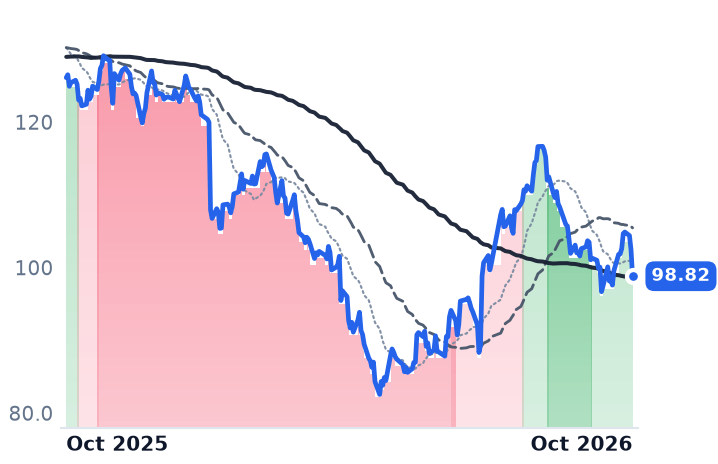
Insulet took type-2 patients past 40% of its new American customers, then cut US Omnipod growth guidance to 17-19% from 20-22% because retention fell apart in the first 90 days after onboarding. Group revenue still grew 23.5% to $801.7m in the June quarter and net income more than quadrupled, while the full-year revenue forecast came down by under 1%.
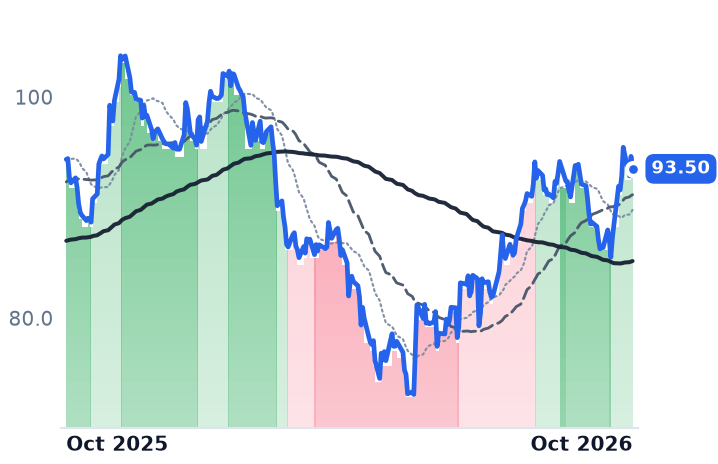
Dexcom's side of the same population is additive: its CONNECT trial reached the New England Journal of Medicine on October 14, and its own survey finds 58% of type-2 patients on GLP-1 drugs wearing a sensor. Tandem is a third case, with new pump starts flat.
| Ticker | Company | Segment | Trend · 13mo | 30D | 1Y |
|---|---|---|---|---|---|
| The subject · what this brief is about | |||||
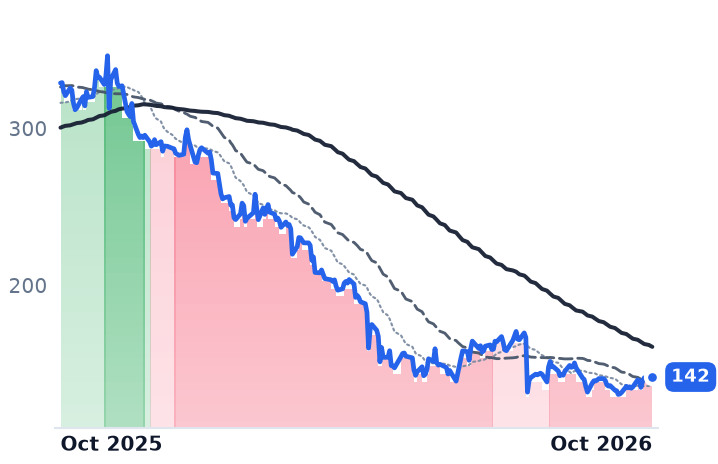
PODD | Insulet | Diabetes Management | 🔴 Cont. Bear | +0.7% | −57.0% |
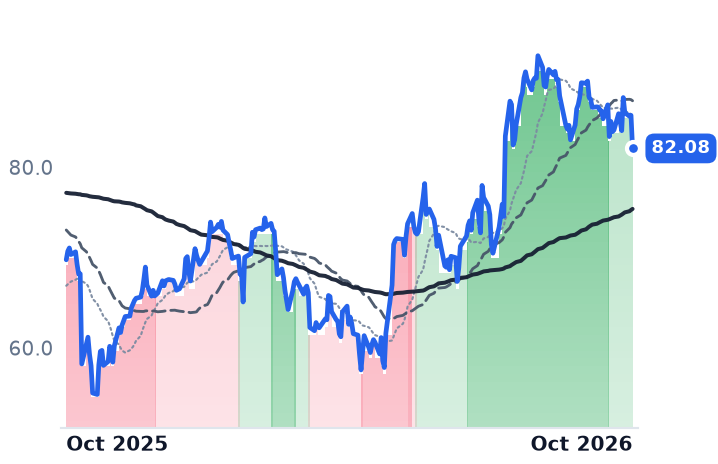
DXCM | DexCom | Diabetes Management | 🟢 Cont. Bull | −8.1% | +17.7% |
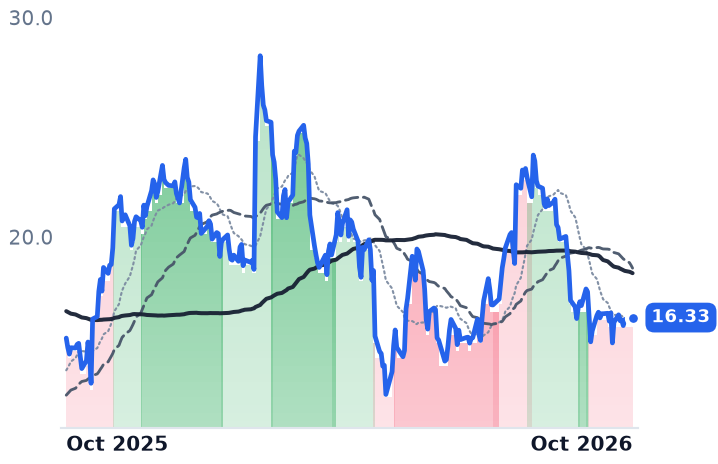
TNDM | Tandem Diabetes Care | Diabetes Management | ⚠️ Emerging Bear | −7.4% | +6.1% |
| Compared against · context, not the story | |||||
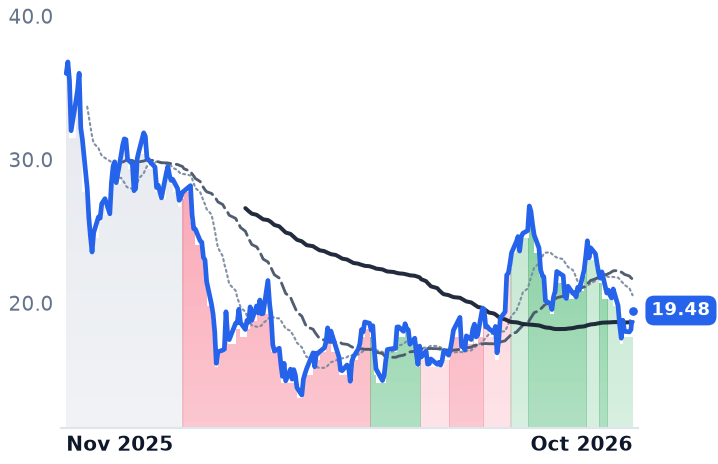
BETA | BETA Technologies | Aircraft & Helicopter Manufacturers | 🌱 Emerging Bull | −12.7% | −45.9% |
ABT | Abbott Laboratories | Clinical & Molecular Diagnostics | 🌱 Emerging Bull | −3.9% | −21.6% |
MDT | Medtronic | Cardiovascular Devices | 🟢 Cont. Bull | +1.7% | −0.9% |
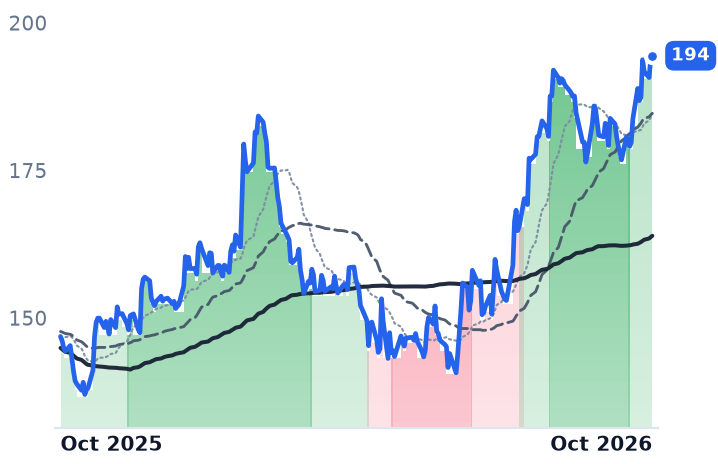
BDX | Becton, Dickinson and | Intravenous Access & Infusion | 🟢 Cont. Bull | +7.6% | +32.4% |
12-month price & trend
| Ticker | Mkt cap | P/E | P/E fwd | P/S | P/S fwd | P/GP | P/GP fwd | EV/EBITDA | FCF yld |
|---|---|---|---|---|---|---|---|---|---|
PODD | $9.8B | 26.5x | 21.8x | 3.2x | 3.0x | 4.5x | 4.2x | 15.6x | 3.0% |
DXCM | $30.3B | 31.0x | 30.0x | 6.1x | 5.8x | 9.8x | 9.3x | 19.6x | 4.6% |
TNDM | $1.1B | n/m | — | 1.1x | 1.1x | 2.0x | 1.9x | n/m | -2.3% |
| Ticker | Mkt cap | P/E | P/E fwd | P/S | P/S fwd | P/GP | P/GP fwd | EV/EBITDA | FCF yld |
|---|---|---|---|---|---|---|---|---|---|
BETA | $5.9B | n/m | — | 130.8x | 125.3x | 282.4x | 270.3x | n/m | -7.2% |
ABT | $178.2B | 33.1x | 18.7x | 3.8x | 3.5x | 6.7x | 6.2x | 18.2x | 4.9% |
MDT | $116.4B | 22.2x | 15.2x | 3.1x | 3.0x | 4.7x | 4.5x | 15.1x | 5.3% |
| Ticker | Mkt cap | P/E | P/E fwd | P/S | P/S fwd | P/GP | P/GP fwd | EV/EBITDA | FCF yld |
|---|---|---|---|---|---|---|---|---|---|
BDX | $48.6B | 53.1x | 13.9x | 2.3x | 2.5x | 5.1x | 5.5x | 16.6x | 5.4% |
Consensus projections
| Ticker | FY2026E | FY2027E | FY2028E | |
|---|---|---|---|---|
PODD | Revenue | +22.2% | +13.8% | +13.7% |
| EPS | +33.3% | +18.7% | +20.6% | |
DXCM | Revenue | +12.4% | +10.8% | +11.3% |
| EPS | +29.7% | +17.1% | +19.4% | |
TNDM | Revenue | +7.1% | +12.4% | +14.1% |
| EPS | −67.8% | −119.1% | +516.9% | |
BETA | Revenue | +47.8% | +569.3% | +193.9% |
| EPS | −58.4% | +2.1% | −12.8% | |
ABT | Revenue | +12.6% | +8.7% | +7.0% |
| EPS | +7.0% | +10.0% | +10.9% | |
MDT | Revenue | +7.9% | +8.0% | +3.5% |
| EPS | +1.1% | +8.3% | +7.1% | |
BDX | Revenue | −11.7% | +2.1% | +3.8% |
| EPS | +12.1% | +4.9% | +6.6% |
Forward fiscal years only. Blank means no analyst coverage for that year.
Insulet took type-2 diabetics past 40% of its new American customers in the June quarter, and then cut the growth forecast for its home market because too many of them stopped using the product within three months. The population it could not hold on to is the same one paying Dexcom's sensor business, and on October 14 Dexcom's CONNECT trial was published in The New England Journal of Medicine — the evidence file it has handed to Medicare in support of covering those patients.
The halving of Insulet's shares over the past year has been read as proof that the type-2 opportunity both companies sell is smaller than advertised. The company's own numbers say something narrower. Omnipod revenue rose 24.6% to $795.9m, the global customer base grew 23%, gross margin held at 70.2% against 69.7% a year earlier, and net income more than quadrupled to $95.0m.
What broke was onboarding: one company, one country, one segment.
The first 90 days did the damage
Insulet, which sells the tubeless Omnipod insulin pump through the pharmacy channel, reduced full-year US Omnipod growth guidance to 17-19% from 20-22% on weaker type-2 retention and utilisation, concentrated in the first 90 days after a patient is set up. "As CEO, I take accountability for our reduced U.S. outlook," chief executive Ashley McEvoy told investors on the second-quarter call, adding that "once Type 2 customers remain on Omnipod for the first 90 days, retention rates stabilize, a trend that we also see in our Type 1 population." The fixes are operational: more customer-care staff for insurance navigation, sales compensation re-weighted to reward retention in the first 45 days, a refined sampling programme.
Group guidance moved to roughly $3.25-3.30bn from $3.28-3.33bn, under a 1% cut, with international Omnipod growth raised to 30-32% from 26-28%. At $141.90 the shares carry 21.8x this year's consensus earnings of $6.51; the same consensus against last October's price implies about 50x. Two things sit inside that compression which the income statement does not show: a March 12 voluntary Medical Device Correction and a second on May 26 covering Omnipod 5, DASH and Eros lots, with a securities class action alleging the first affected more pods than disclosed, and the collapse of drug-delivery revenue to $5.8m, down 78%.
Dexcom gets paid for the patient Insulet lost
For a sensor, the type-2 push is clean volume. CONNECT randomised 283 adults at 22 US primary-care sites over 26 weeks and cut A1C by 1.6 percentage points from a baseline of 8.8%, 0.9 points better than routine care. Dexcom's own survey presented at the EASD meeting finds 58% of type-2 patients taking GLP-1 drugs wearing a sensor against 27% of type-2 patients not on insulin, with use nearly quadrupling among non-insulin patients after a GLP-1 starts. Weight-loss drugs recruit sensor customers; they do not have to recruit pump customers.
The gate is reimbursement. Medicare today covers a sensor for any diabetic using insulin or with documented problematic hypoglycaemia; patients on oral drugs alone do not automatically qualify. Chief executive Jake Leach said Dexcom "submitted the CONNECT data for publication and provided the evidence to CMS in support of the non-insulin coverage expansion", a segment he said has "delivered some of the largest growth of our business over the last couple years".
That is a 2027 argument. What Dexcom has delivered now is margin: non-GAAP gross margin of 64.1% against 60.1% and operating income at 25.1% of revenue against 19.2%, on revenue up 13% to $1.308bn — down from 21.6% growth in the September 2025 quarter. Full-year revenue is guided to 11-13% after 15.6% in 2025, and the shares at 30.0x this year's consensus are about 17% dearer on that basis than a year ago.
Tandem's volume is its own installed base
Tandem Diabetes Care, which sells the tubed t:slim X2 and Tandem Mobi pumps, shipped more than 33,000 pumps in the quarter for 10% growth and lifted gross margin to 57%, up 460 basis points, narrowing operating loss to -$13.8m on revenue growth of 5.8%. But new pump starts were flat year over year and a few hundred units below plan, and management needs 12-13% growth in new starts in the second half to reach $1.065-1.085bn for the year. Its answer to Omnipod's form factor, a tubeless Mobi, is at the FDA and not expected in the US until 2027. At 1.95x trailing gross profit against Dexcom's 9.76x, it is priced as the loser of a pump race it also supplies: Tandem added Dexcom G7 15-day compatibility this quarter, so its lost starts are partly revenue-neutral for Dexcom.
Why the same patient splits the two businesses
The results account for almost none of Insulet's de-rating. A 23.5% revenue quarter with margins intact does not produce a 56% fall over twelve months; the recalls, the litigation and doubt about how much of the insulin-using type-2 market actually converts are doing that work, and the guidance cut is the smallest part of it. Dexcom's 25% twelve-month gain came with decelerating revenue and a wider multiple, which makes it a position on the coverage decision more than on current volume. Tandem has the margin recovery and neither the growth nor the device.
The mechanism underneath is the product. A sensor is a consumable any persuaded, reimbursed patient can wear, so prescribing patterns in diabetes drugs feed it directly. A pump asks the patient to keep wearing a device through a difficult first month, so the same expansion imports churn. From January 2028 CMS moves sensors and pumps to monthly rental payment with supplies bundled into the rate, a rule diabetes organisations are lobbying Congress to delay. Dexcom reports on October 29 and Tandem on November 5.
Insulet's quarter, due November 4, is the first that can show whether the type-2 patients it signed up over the summer are still wearing pods. The sensor only has to be prescribed; the pump has to be worn, and that is the harder sale to make twice.