

Equity Lifestyle Set 2027 Lot Rents 5.1% Higher, the Same Increase It Guided a Year Ago
Hypothesis Opus 5 · Research Opus 5 · Writing Opus 5 · Prompt v1.7
The manufactured-housing landlords have gone nowhere for a year, and the reading on offer is that the annual lot-rent increase which is their entire earnings engine is sliding back toward inflation. The third-quarter accounts say otherwise: core property revenue at Equity Lifestyle rose 4.4% while core operating expenses rose 1.3%, lifting income from property operations 6.7%, and Florida tax notices came in light enough for the company to cut its full-year tax line. Guidance was left where it was.
What did slow is camping. Transient recreational-vehicle revenue fell 5.8% at Equity Lifestyle in the quarter and 4.8% at Sun Communities in the June quarter. UMH Properties, which owns no RV sites, grew same-store rental income 8.7%. The flat year looks like a higher discount rate landing on an unchanged rent stream rather than a rent stream that broke.
| Ticker | Company | Segment | Trend · 13mo | 30D | 1Y |
|---|---|---|---|---|---|
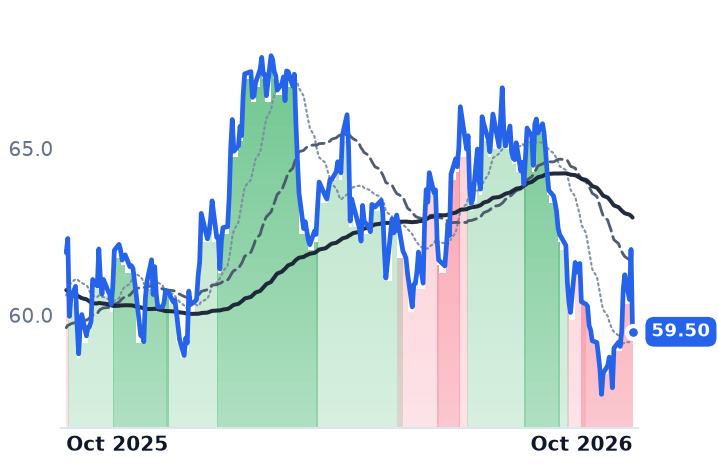
ELS | Equity LifeStyle Properties | Manufactured Housing | ⚠️ Emerging Bear | −1.4% | −3.8% |
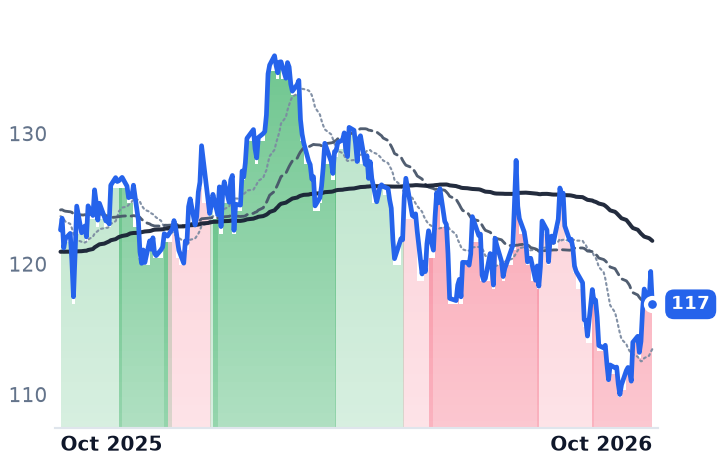
SUI | Sun Communities | Manufactured Housing | 🔴 Cont. Bear | +2.9% | −4.6% |
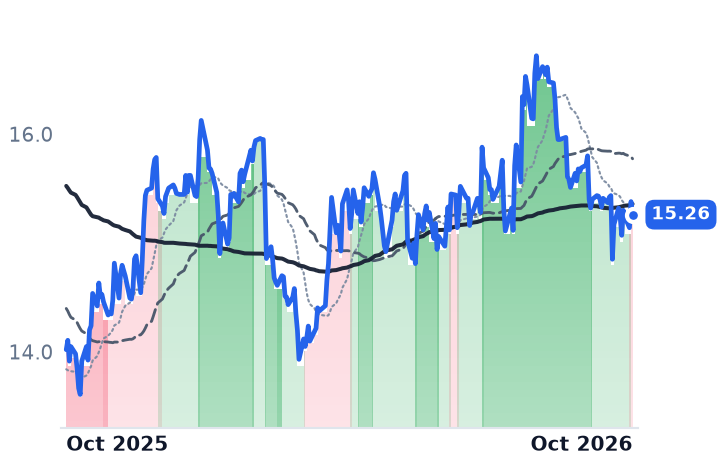
UMH | UMH Properties | Manufactured Housing | 🟢 Cont. Bull | −2.9% | +8.8% |
12-month price & trend
| Ticker | Mkt cap | P/E | P/E fwd | P/S | P/S fwd | P/GP | P/GP fwd | EV/EBITDA | FCF yld |
|---|---|---|---|---|---|---|---|---|---|
ELS | $11.5B | 30.3x | 28.5x | 7.1x | 7.3x | 19.1x | 19.7x | 23.2x | 3.0% |
SUI | $14.2B | n/m | — | 6.5x | 7.2x | 12.0x | 13.3x | 14.2x | 5.9% |
UMH | $1.3B | 83.4x | 91.0x | 4.7x | 5.2x | 9.2x | 10.1x | 17.2x | 2.5% |
Consensus projections
| Ticker | FY2026E | FY2027E | FY2028E | |
|---|---|---|---|---|
ELS | Revenue | +3.7% | +4.4% | +5.3% |
| EPS | +6.1% | +6.1% | +8.2% | |
SUI | Revenue | −12.8% | +0.6% | +6.1% |
| EPS | −159.5% | −155.0% | +11.5% | |
UMH | Revenue | −6.6% | +7.8% | +27.6% |
| EPS | +37.5% | +0.0% | −100.0% |
Forward fiscal years only. Blank means no analyst coverage for that year.
Equity Lifestyle Properties, the Chicago landlord that rents land to owners of manufactured homes and recreational vehicles across about 423 properties, told investors on October 21 what it intends to charge its manufactured-housing residents next year: 5.1% more. That is the identical figure the company put out a year earlier, and it sits below the 5.6% rate growth it actually realized in the third quarter partly because the preliminary number deliberately excludes occupancy gains and the rent reset on new residents. The shares fell 4% on the day.
The year has been read as the moment the most defensive niche in residential real estate lost its pricing engine: resident affordability cracks, lot-rent escalations decelerate toward the consumer price index, Sunbelt insurance and property taxes widen the expense line. Each leg is testable from disclosure, and the first two fail on this quarter's numbers.
The expense line narrowed instead of widening
Core property operating revenues rose 4.4% in the third quarter while core operating expenses excluding property management rose 1.3%, producing core income from property operations up 6.7%, and 6% for the year to date. Management put that expense growth roughly 135 basis points below inflation. Florida's annual tax notices arrived with smaller real-estate tax increases than budgeted, enough for the company to take $600,000 out of its full-year tax assumption. Normalized funds from operations came in at $0.79 a share, up 4.6%, and full-year guidance was left unchanged at $3.15 to $3.21.
Pricing here is largely inherited from lease structure. Roughly half the book is market-based, a quarter is linked to inflation or rent-controlled, and a quarter sits under long-term Florida agreements with escalation floors, which is why the reported rate does not track the consumer price index in either direction.
Where residents do turn over, the reset is large. "What we're seeing on mark-to-markets for new residents coming in is a 12% increase," Patrick Waite, president and chief operating officer, said on the October 21 call. Pressed by an analyst on why the 2027 rate matched last year's despite higher inflation and cost-of-living adjustments, chief executive Marguerite Nader pointed to better resident attrition than the prior year and said she expects that to continue.
The part that is genuinely shrinking is the campground
Seasonal RV revenue fell 4.4% and transient RV revenue 5.8% in the quarter, with fourth-quarter RV and marina rent growth guided near 2.8%. Sun Communities, the Michigan owner of about 455 manufactured-housing and RV properties, shows the same split more starkly: its 2026 guidance calls for manufactured-housing same-property net operating income growth of 5.9% against 0.9% for RV, and its June-quarter transient RV revenue fell $2.9m, or 4.8%. Equity Lifestyle is converting that traffic into annual leases: 14% of annual manufactured-housing sales this year came from seasonal and transient guests, at roughly $8,000 of annual revenue each.
UMH Properties owns no RV sites at all, which is why the three cannot be one story. The Northeast and Midwest operator, which supplies its own homes to entry-level renters, grew same-store rental income 8.7% in the third quarter and gross home sales 28%, to $12.8m, a quarterly record, with same-property occupancy up 110 basis points to 89.4% in the June quarter on 5% site-rent increases. The affordability squeeze that was supposed to break the model is the thing filling its pads.
What repriced was the discount rate
The ten-year Treasury yield reached 5.13% on October 21, against 4.02% a year earlier, and the FTSE Nareit All Equity REITs index fell 5.7% in September against a 0.6% decline for the Russell 1000. That gap points at the discount rate, because property-level cash flow at these landlords went up. Equity Lifestyle now trades at about 18.7 times its unchanged $3.18 guidance midpoint, against roughly 20.7 times a year ago on a smaller funds-from-operations base; the multiple gave up about a tenth while per-share cash earnings grew 4.6%. Sun Communities sits near 16.8 times its $6.87 to $7.07 core guidance and UMH near 15.1 times its $0.98 to $1.04 range, the cheapest of the three.
So the stall is a valuation event with one operating qualification. Lot rents at all three are compounding between 5% and 6%, expenses are growing slower than rents at the two that disclose the split, and the single decelerating line — nights sold to travelers who have signed no annual lease — is the one with no lease protecting it. At Sun Communities the picture is genuinely mixed: the company wrote $1.1bn off its UK business before selling it for about $1.03bn in September and has bought back roughly $425m of its own stock, so the revenue base being valued today is a different one from last year's. Part of the de-rating is rational re-anchoring, too, since ten-year mortgage terms the company described run 6.1% to 6.6% and the acquisition market Equity Lifestyle called muted is repricing to match.
The cleanest remaining threat to the escalator is legislative, not economic. New Jersey and Washington both capped lot-rent increases last year, and a Pennsylvania bill introduced in September would limit mobile-home fee increases. Those are among the states where UMH, the one landlord here whose rents and occupancy are both still climbing, does most of its business. Affordability did not break the annual rent increase this year; a statehouse is what can.