

nCino's Signed Contracts Now Outrun the Revenue It Can Book From Them
Hypothesis Opus 5 · Research Opus 5 · Writing Opus 5 · Prompt v1.7
Two vendors sell software into the same community and regional banks, and only one of them can show this year's wins in this year's revenue. nCino expects to end its fiscal year with annual contract value of $662.5m-$667.5m against revenue of $644m-$647m: signed work sits in a $1.4bn obligation book until a long implementation goes live, and the implementation line itself is shrinking, down 3% year on year at a 3% gross margin.
Q2 Holdings is the mirror. Subscription recurring revenue of $825.5m is growing 15% with committed backlog near $2.8bn, roughly three times guided revenue, and its finished cloud migration already shows in margin.
BlackLine inverts both: reported revenue growth accelerated to 9.2% while recurring revenue grew 6% and net retention slipped to 102.4%, because it is deliberately moving buyers off per-seat pricing.
| Ticker | Company | Segment | Trend · 13mo | 30D | 1Y |
|---|---|---|---|---|---|
| The subject · what this brief is about | |||||
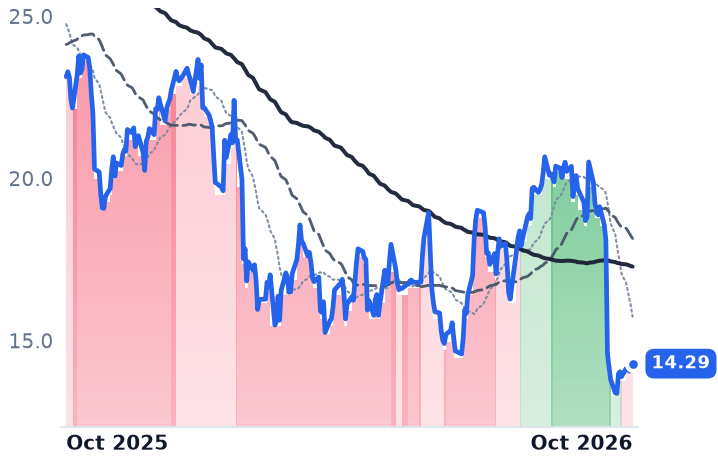
NCNO | nCino | Financial Services Software | 🌱 Emerging Bull | −11.0% | −20.2% |
QTWO | Q2 | Financial Services Software | 🌱 Emerging Bull | −4.9% | −4.3% |
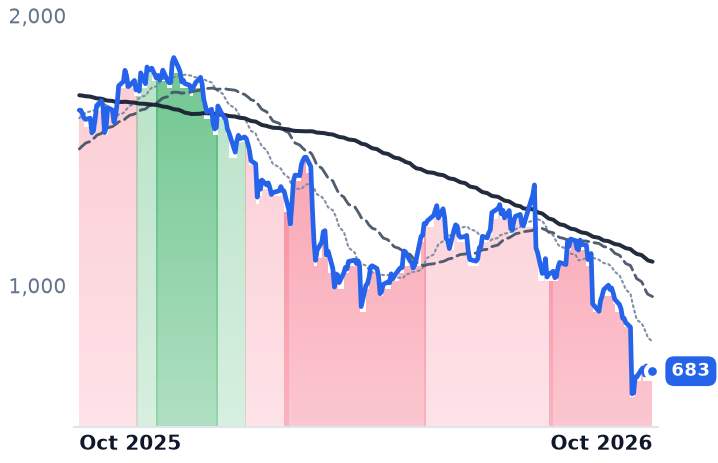
BL | BlackLine | Financial Services Software | 🔴 Cont. Bear | −2.0% | −40.9% |
| Compared against · context, not the story | |||||
GWRE | Guidewire Software | Financial Services Software | 🌱 Emerging Bull | +9.4% | −31.1% |
ALKT | Alkami Technology | Financial Services Software | 🌱 Emerging Bull | −28.1% | −38.2% |
FICO | Fair Isaac | Financial Services Software | 🔴 Cont. Bear | −31.8% | −58.6% |
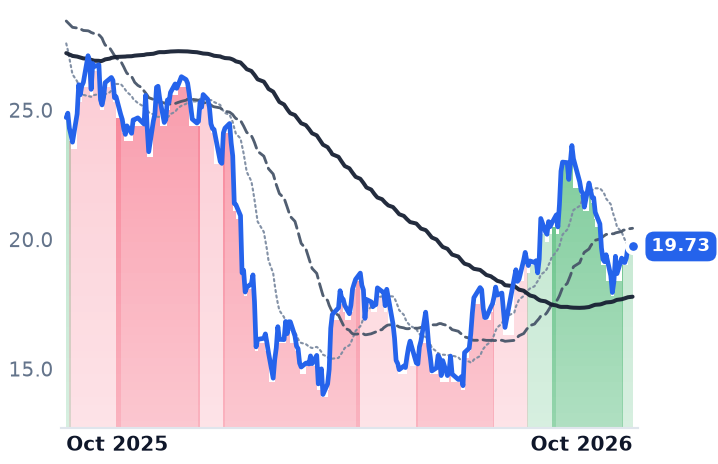
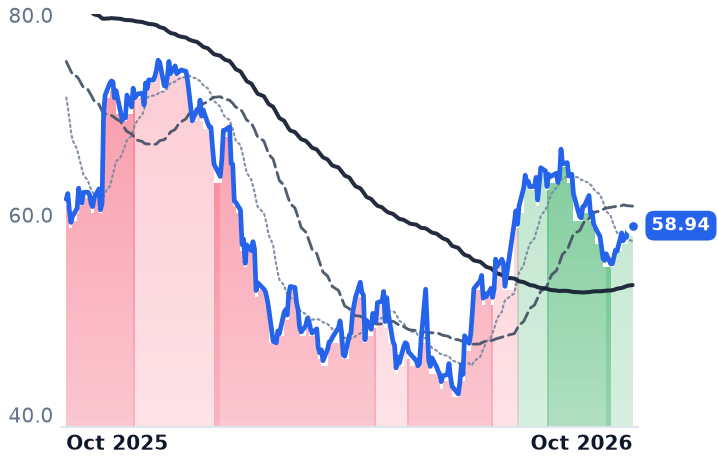
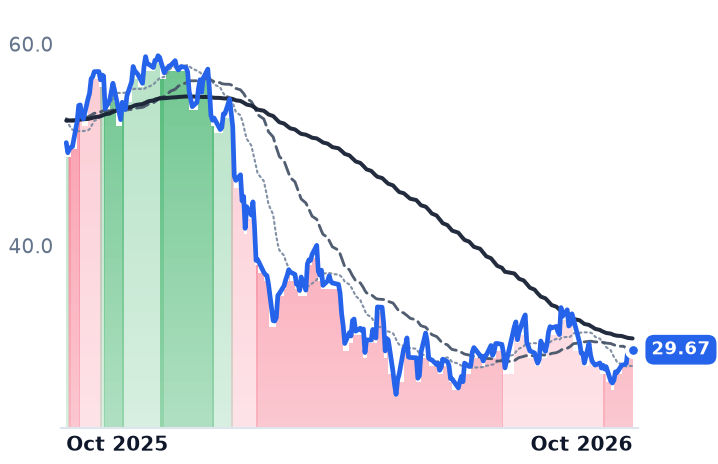
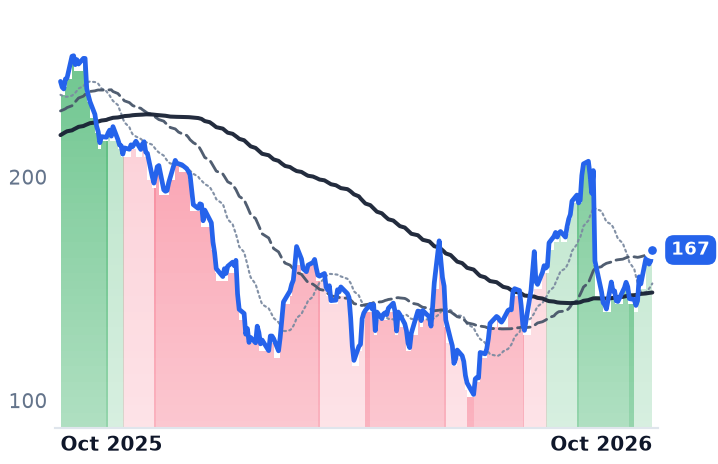
12-month price & trend
| Ticker | Mkt cap | P/E | P/E fwd | P/S | P/S fwd | P/GP | P/GP fwd | EV/EBITDA | FCF yld |
|---|---|---|---|---|---|---|---|---|---|
NCNO | $2.2B | 63.6x | 15.1x | 3.5x | 3.3x | 5.6x | 5.4x | 26.1x | 6.1% |
QTWO | $3.7B | 39.9x | 20.4x | 4.4x | 4.2x | 7.6x | 7.3x | 24.4x | 5.5% |
BL | $1.7B | 50.4x | 11.9x | 2.4x | 2.3x | 3.1x | 3.0x | 21.6x | 9.8% |
| Ticker | Mkt cap | P/E | P/E fwd | P/S | P/S fwd | P/GP | P/GP fwd | EV/EBITDA | FCF yld |
|---|---|---|---|---|---|---|---|---|---|
GWRE | $14.0B | 101.9x | 40.1x | 9.5x | 8.1x | 14.8x | 12.7x | 67.0x | 2.1% |
ALKT | $1.5B | n/m | 18.0x | 3.1x | 2.9x | 5.4x | 5.0x | n/m | 4.3% |
FICO | $14.4B | 19.2x | 13.4x | 6.0x | 5.1x | 7.1x | 6.0x | 15.6x | 6.9% |
Consensus projections
| Ticker | FY2026E | FY2027E | FY2028E | |
|---|---|---|---|---|
NCNO | Revenue | +9.8% | +9.0% | +8.5% |
| EPS | +25.2% | +44.5% | +20.0% | |
QTWO | Revenue | +11.8% | +10.1% | +10.6% |
| EPS | +22.1% | +19.5% | +32.6% | |
BL | Revenue | +9.5% | +10.4% | +10.3% |
| EPS | +19.7% | +10.9% | +18.0% | |
GWRE | Revenue | +23.8% | +17.2% | +15.7% |
| EPS | +41.5% | +20.8% | +27.4% | |
ALKT | Revenue | +19.6% | +16.7% | +14.5% |
| EPS | +51.0% | +37.7% | +21.9% | |
FICO | Revenue | +27.5% | +10.4% | +9.1% |
| EPS | +45.3% | +16.6% | +14.4% |
Forward fiscal years only. Blank means no analyst coverage for that year.
nCino, which sells banks, credit unions and independent mortgage lenders the cloud software their loan officers and account-opening staff work in, expects to finish its fiscal year with more business under contract than it will record as revenue. Guidance issued on 25 August puts period-end annual contract value at $662.5m-$667.5m against full-year revenue of $644m-$647m. The gap is work that has been signed and not yet switched on.
That ordering is the whole difficulty in reading a vendor like this. The July quarter was taken as evidence that bank demand had re-accelerated, and in the recognised line it had: total revenue of $161.0m rose 8% and subscription revenue 10%, or 12% excluding US mortgage, where subscription revenue of $20.6m fell 1% as higher interest rates kept pressure on originations. But the revenue a bank-software company reports this year is what it sold in earlier years. What it is selling now shows up first in the contracted book.
The book is bigger than the guidance
That book is now $1.4bn. nCino's remaining performance obligations reached $1.4bn on 31 July, against $1.3bn at the end of January and $1.04bn two years earlier - roughly 35% growth over two years while reported revenue grew 8% to 10% a year. The company expects about 65% of it to convert to revenue within 24 months and 29% in the 25 to 48 months after that.
The gate between the two is implementation, and it is getting smaller. Professional services revenue was $17.5m in the July quarter, down 3% year on year, at a gross margin of 3% after a 600 basis-point improvement from negative 3%; services fell from 12.1% of revenue to 10.9%. Subscription net retention was 110%, or 106% organic. "We are seeing many of our largest customers consolidating more of their most critical operations on nCino and expanding their commitments to include our market leading AI capabilities," chief executive Sean Desmond said on 25 August.
Guidewire, which sells property-and-casualty insurers their core policy and claims systems, runs the same mechanic one cycle further along. "More than half of the net new ARR contemplated in this outlook is already under contract with ramp dates defined and signed customer agreements," chief financial officer Jeff Cooper told investors on 3 September; Guidewire closed its fiscal year with recurring revenue of $1.242bn, up 19% in constant currency. It is also the most expensive name of this group at 40.1x forward earnings.
Q2's meter is already running
Q2 Holdings supplies the digital-banking front end to regional and community institutions, and its forward book is converting rather than waiting. Subscription recurring revenue reached $825.5m, up 15%, with committed backlog up $404.3m year on year to about $2.8bn on revenue of $219.8m in the June quarter, up 13%. Gross margin went from 53.6% a year earlier to 59.2% and operating margin from 5.0% to 13.4%. The company raised full-year guidance to $881m-$886m and added a $350m repurchase authorization, with non-GAAP gross margin of 62.3% reflecting a completed cloud migration.
It also has a second source of growth that does not require winning a bank at all. Helix, its banking-as-a-service platform, serves about 18 million end users and moves roughly $40bn a year; transactional revenue was $17.9m against $16.7m a year earlier, even as discretionary services work declined.
BlackLine is cutting its own seat count on purpose
BlackLine sells accounting-close automation to corporate controllers, and its two meters point in opposite directions. Reported revenue growth has accelerated across four quarters to 9.2%, but recurring revenue of $719m grew only 6% and net revenue retention fell to 102.4% from roughly 105%. The reason is a decision rather than lost demand: platform pricing, which replaces per-seat licenses with unlimited users and gates access to its Verity AI agents, reached 17% of eligible recurring revenue from 13%, took nearly 90% of net new business, and is expected to shrink paid user counts.
Chief executive Owen Ryan put the bet to investors on 4 August: "Gartner expects the average Fortune 500 company to be running more than 150,000 AI agents by 2028, up from fewer than 15 last year, and fewer than one in five companies believe they have the governance to manage that scale."
The prices moved together; the meters did not
All three sit inside a year-long hole that began as a verdict on the software model, not on these businesses: roughly $2trn of software market value went after a 6 February selloff triggered by fears that AI agents would bypass per-seat subscriptions. Over ninety days to 12 October nCino is up 12.6% and Q2 up 13.9%; over twelve months nCino is down 21.1%, Q2 down 5.3%, and BlackLine down 39.6%. BlackLine has risen 4.7% over thirty days off a 29 September low.
On price to gross profit, nCino sits at 5.65x trailing against 5.52x in May - essentially unchanged while its GAAP operating margin swung from minus 6.2% to plus 8.5% year on year. Q2 carries the premium at 7.64x, about 35% above nCino, having risen from 7.28x in May. BlackLine has compressed to 3.15x from 3.58x, with a 9.8% free-cash-flow yield.
So the three-month advance at nCino and Q2 is supported by what the accounts show, and the twelve-month decline at nCino is not: 9% growth with a contracted book growing faster, forward earnings at 15.1x against consensus for 45% EPS growth, and a 6.1% cash yield do not describe a business that lost a fifth of its value. The split has a cause in each case. Q2 is rewarded because its growth is already in revenue and its migration spending is behind it. nCino is not, because its evidence of winning is a disclosure line rather than an income-statement line. BlackLine's de-rating tracks a real slowdown in the forward meter that its accelerating revenue hides - and at this cash yield, it looks closer to finished than to beginning.
The risk in all three books is the customer disappearing rather than refusing to renew. More than 130 bank deals and roughly 100 credit-union mergers were under way in 2026, after 180-plus in 2025, with technology and compliance cost behaving like a fixed charge that lands hardest on the smallest balance sheet. Loans at commercial banks grew 5.1% year on year with the community-bank net interest margin at 3.81% - enough to fund a software renewal, not enough to make the buyer indifferent to its price.
BlackLine reports after the close on 5 November, and it is the one of the three whose next print can settle its own question: whether taking seats off the bill was the price of selling agents, or just the beginning of a smaller bill.