

Fuel Surcharges and Cheap Intermodal Boxes Built Norfolk Southern's Record Quarter
Hypothesis Opus 5 · Research Opus 5 · Writing Opus 5 · Prompt v1.7
Norfolk Southern's June quarter set a revenue record and the cost meter management actually controls went backwards in the same three months. A merchandise carload earned about $3,493; an intermodal container earned about $857, and the container is what grew.
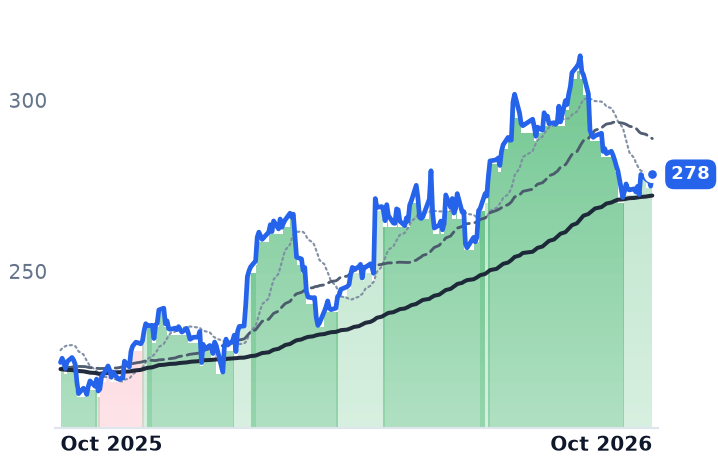
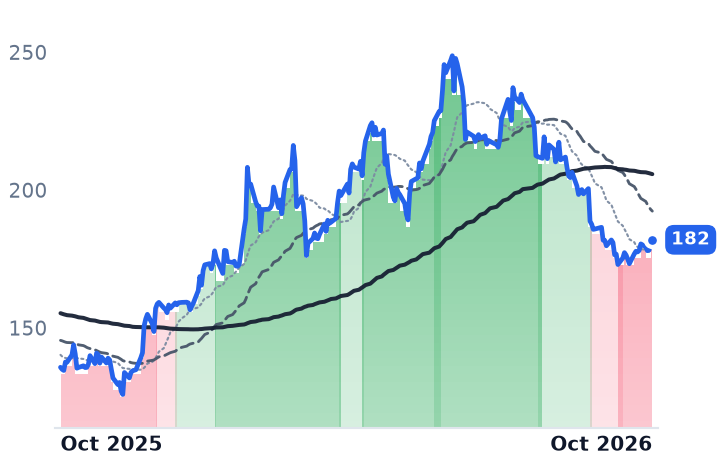
Revenue per unit excluding the diesel surcharge rose 1%, operating income rose 1.8% on an 11% revenue gain, and net income fell. Union Pacific ran the same shift toward cheap boxes and still held an operating ratio of 59.7%. Old Dominion, which sets its own tariff, lifted operating income 30% and fell nearly 20% over three months anyway.
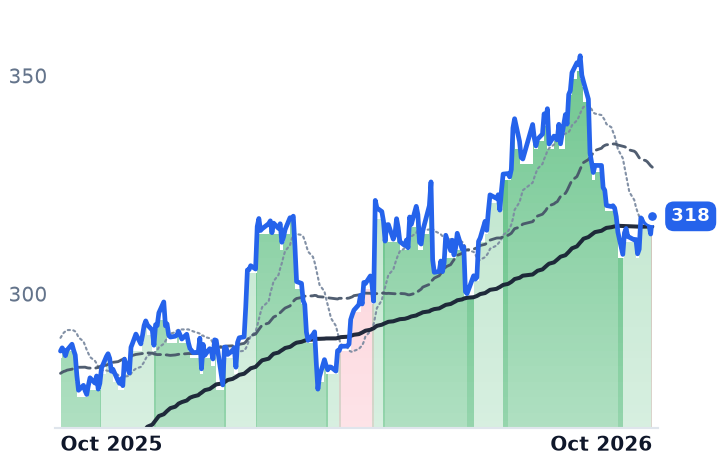
The rails' 5% slide from August is their smaller problem. On 18 November rivals file what they want from the combined network, and Union Pacific has said some answers would end the $85bn deal.
| Ticker | Company | Segment | Trend · 13mo | 30D | 1Y |
|---|---|---|---|---|---|
| The subject · what this brief is about | |||||
NSC | Norfolk Southern | Class I Railroads | 🟢 Cont. Bull | −0.8% | +10.8% |
UNP | Union Pacific | Class I Railroads | 🟢 Cont. Bull | −2.1% | +24.6% |
ODFL | Old Dominion Freight Line | Less-Than-Truckload (LTL) | ⚠️ Emerging Bear | +1.2% | +34.1% |
| Compared against · context, not the story | |||||
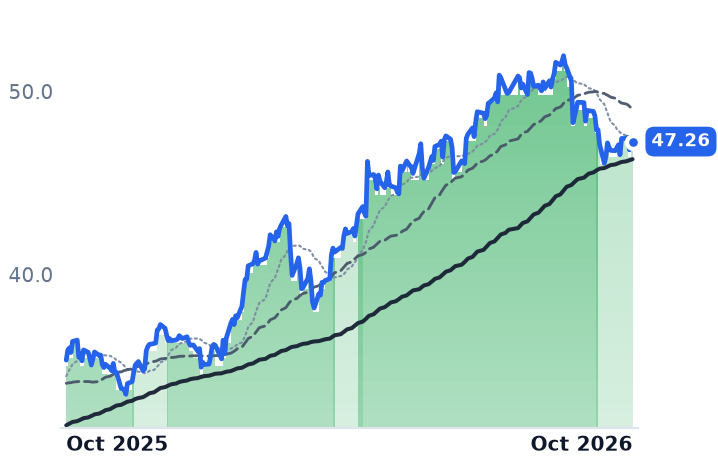
CSX | CSX | Class I Railroads | 🟢 Cont. Bull | −3.5% | +33.8% |
SAIA | Saia | Less-Than-Truckload (LTL) | ⚠️ Emerging Bear | −4.1% | +13.6% |
XPO | XPO Logistics | Truckload & LTL | ⚠️ Emerging Bear | +0.7% | +42.9% |
JBHT | J.B. Hunt Transport Services | Truckload & LTL | 🟢 Cont. Bull | −15.2% | +66.8% |
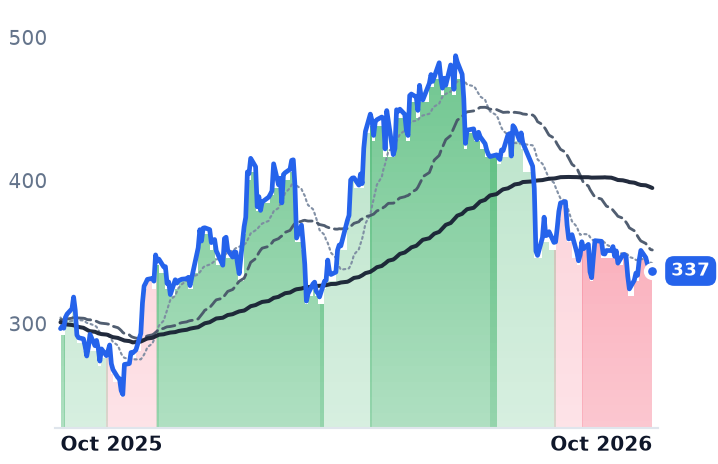
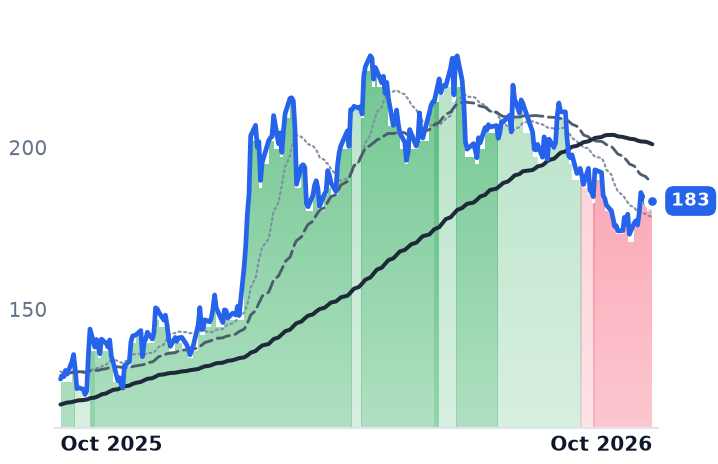
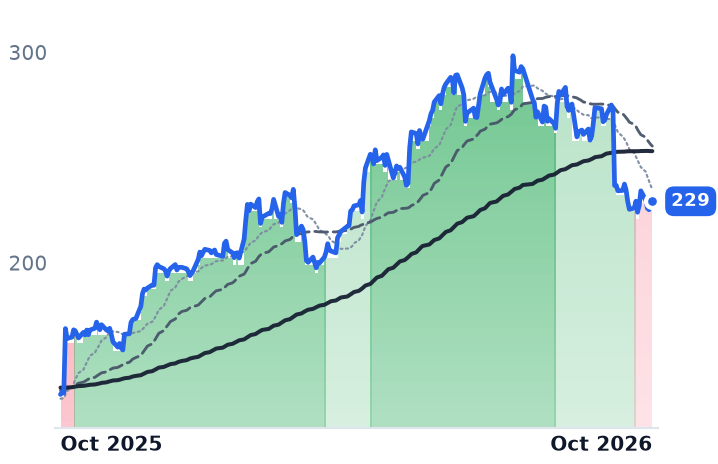
12-month price & trend
| Ticker | Mkt cap | P/E | P/E fwd | P/S | P/S fwd | P/GP | P/GP fwd | EV/EBITDA | FCF yld |
|---|---|---|---|---|---|---|---|---|---|
NSC | $71.4B | 27.1x | 24.6x | 5.7x | 5.4x | 10.6x | 10.0x | 16.0x | 5.4% |
UNP | $165.4B | 22.5x | 21.3x | 6.5x | 6.1x | 14.3x | 13.4x | 14.6x | 3.9% |
ODFL | $37.8B | 35.0x | 31.0x | 6.8x | 6.3x | 21.3x | 20.0x | 20.7x | 2.9% |
| Ticker | Mkt cap | P/E | P/E fwd | P/S | P/S fwd | P/GP | P/GP fwd | EV/EBITDA | FCF yld |
|---|---|---|---|---|---|---|---|---|---|
CSX | $87.5B | 27.3x | 23.6x | 6.0x | 5.7x | 17.1x | 16.3x | 15.8x | 5.7% |
SAIA | $9.0B | 32.4x | 29.6x | 2.6x | 2.5x | 16.4x | 15.4x | 14.5x | 2.8% |
XPO | $20.8B | 51.7x | 32.3x | 2.4x | 2.3x | 19.0x | 18.0x | 19.0x | 2.8% |
| Ticker | Mkt cap | P/E | P/E fwd | P/S | P/S fwd | P/GP | P/GP fwd | EV/EBITDA | FCF yld |
|---|---|---|---|---|---|---|---|---|---|
JBHT | $21.5B | 32.6x | 30.3x | 1.7x | 1.6x | 10.4x | 9.6x | 13.8x | 5.1% |
Consensus projections
| Ticker | FY2026E | FY2027E | FY2028E | |
|---|---|---|---|---|
NSC | Revenue | +9.1% | +4.6% | +4.0% |
| EPS | +7.3% | +11.2% | +9.7% | |
UNP | Revenue | +10.3% | +4.7% | +11.5% |
| EPS | +11.9% | +8.8% | +9.6% | |
ODFL | Revenue | +8.6% | +8.1% | +8.4% |
| EPS | +22.1% | +14.7% | +13.5% | |
CSX | Revenue | +8.0% | +5.2% | +3.4% |
| EPS | +22.4% | +14.1% | +10.3% | |
SAIA | Revenue | +12.2% | +7.5% | +8.3% |
| EPS | +22.1% | +25.4% | +20.4% | |
XPO | Revenue | +11.5% | +5.3% | +6.6% |
| EPS | +52.4% | +18.9% | +21.9% | |
JBHT | Revenue | +14.3% | +9.7% | +8.4% |
| EPS | +25.3% | +32.6% | +19.1% |
Forward fiscal years only. Blank means no analyst coverage for that year.
Norfolk Southern collected more revenue in the June quarter than in any quarter of its history, and almost none of the increase came from hauling more valuable freight. The Atlanta railroad, which moves chemicals, metals, autos, coal and intermodal containers over roughly 19,300 route miles in 22 states, reported revenue of $3,465m, up 11%. Operating income rose 1.8%. Net income fell 4.4%.
The record top line has been read as a franchise strengthening into its handover to Union Pacific. A Class I railroad, though, is not paid for freight demand in any form its revenue line makes legible: it collects a rate struck commodity by commodity, plus a diesel surcharge recognized inside revenue, so the honest meters are volume mix, revenue per unit excluding fuel, the operating ratio and service. All four of Norfolk Southern's went the wrong way.
The volume that grew was the cheap kind
The hierarchy is in the quarter's 10-Q. Merchandise earned $2,133m on 610.7 thousand units, about $3,493 a unit. Intermodal earned $908m on 1.06m units, roughly $857. Coal came in between, near $2,264 a car. A merchandise car is worth about four containers.
The containers are what arrived. Domestic intermodal units grew 11% while international fell 3%, and utility coal tonnage fell 8% as export tonnage surged 25%. Revenue excluding fuel surcharge reached a record $3,050m, up 5%, but revenue per unit excluding fuel rose just 1% across all three segments, against reported per-unit gains of 6% in merchandise and 16% in intermodal.
That gap is the surcharge, and it looks backwards. Class I formulas compute the charge off a diesel price from a period up to 60 days earlier, so fuel expense and fuel recovery can diverge sharply in a volatile market. Diesel set a nominal record of $6.529 a gallon in the week of 21 September against a year-to-date average of $5.040, which means the recovery landing in autumn revenue is money already spent.
Slower trains inside a record top line
Norfolk Southern's operating ratio was 67.6%, or 65.5% adjusted for $51m of merger-related expense, $15m of Eastern Ohio incident costs and $6m of restructuring. The reported figure worsened by 2.1 points year on year, of which roughly 1.1 points came from fuel price and a further 1.9 from inflation.
Service deteriorated with it: train speed fell to 19.9 mph from 21.6, terminal dwell rose to 24.0 hours from 22.7, and merchandise plan compliance dropped to 68% from 78%. Train length, train weight and fuel efficiency set records, which is what a long train run late looks like in a report.
"Norfolk Southern delivered a strong second quarter, exceeding our expectations as demand improved across key markets," chief executive Mark George said on 23 July. On the call management said network velocity was regaining momentum in the third quarter.
Union Pacific ran the same mix and held 59.7%
The larger railroad, 32,452 route miles linking Pacific and Gulf ports to Midwestern gateways, saw the identical shift: domestic intermodal up 19%, international down 14%, coal carloads down 17%. Its fuel-surcharge revenue rose to $1.0bn from $569m, so about $431m of the quarter's $735m revenue increase was diesel pass-through. Freight revenue excluding fuel grew 4%. The operating ratio was 59.7%, eight points better than Norfolk Southern's.
The next price increase gets filed, not negotiated
What Union Pacific is actually buying is single-line revenue, and whether it keeps it is decided in a docket. The Surface Transportation Board's 18 August schedule set 18 November as the deadline for protests and requests for conditions, with responses due 16 February 2027 and hearings to be scheduled later.
BNSF, CPKC and CSX have all said they will seek broad access to the combined network, CSX specifically trackage rights over Norfolk Southern's Lurgan Branch to Harrisburg, the Reading Line to Bethlehem and the Lehigh Line into New Jersey. Union Pacific has said it would walk away from the $85bn purchase if the Board orders widespread trackage rights or line sales. CSX, the Eastern railroad left outside, ran a 61.7% operating ratio last quarter on 10% revenue growth, the best of the three, and trades at 27.3x trailing against 23.6x forward earnings.
Old Dominion sets its own tariff
The truck side of the same shelf answers to nobody's docket. Old Dominion, a less-than-truckload carrier running a national service-center network out of Thomasville, North Carolina, saw tons per day slip 0.9% in August on a 2.4% fall in shipments, and raised prices anyway: revenue per hundredweight up 11.3% as reported but 4.8% excluding fuel, followed by a 4.9% general rate increase effective 5 October. "Underlying demand trends remaining relatively consistent as the quarter has progressed," chief executive Marty Freeman said on 3 September. Second-quarter operating income rose 30.0%, and the shares still fell 19.4% over three months.
Which de-rating is deserved
The results account for Norfolk Southern's weakness and not for Old Dominion's. Norfolk Southern is 5.3% off its 11 August high, yet its trailing price-to-earnings ratio of 27.1x is above the 25.9x of 31 May, because the earnings fell faster than the price; at $317.79 the shares sit roughly 13.5% below the $367.16 of Union Pacific stock and cash the deal would pay, a discount derived from the two closing prices. Old Dominion's compression, to 35.0x trailing from 43.3x in early May, is earnings catching up to a price that had run ahead of them.
The cause of the split is who sets the rate. Old Dominion files its own tariff and its ceiling is its own doors, which is why 30% earnings growth and a one-fifth share decline can coexist. Norfolk Southern's rate is negotiated car by car, its surcharge is a lagging echo of a diesel bill already paid, and the several years of single-line revenue behind its premium are an open question on a government calendar.
Third-quarter numbers from both railroads land on 22 October, the first covering the record-diesel quarter. Six weeks before anyone files what they want from the merged map.