

Frontier and Ryanair Earn the Same Fees Per Passenger They Did Before Jet Fuel Doubled
Hypothesis Opus 5 · Research Opus 5 · Writing Opus 5 · Prompt v1.7
Bags, seat assignments and bundles earn an ultra-low-cost airline a near-fixed sum per head, so a doubled fuel bill has to be recovered in the fare — and whether that is possible depends on who else flies the route. Frontier's non-fare take was $68.42 per passenger in the June quarter, flat on a year earlier, while its fare revenue per passenger rose 54% after Spirit Airlines ceased operations on 2 May. Ryanair, flying into European capacity that kept growing, took an average fare of €48 against €51 and reported a 34% profit fall. Part of Southwest's reported unit revenue gain came from a credit-card reclassification inside its passenger line. Frontier is the only one of the three whose shares have held an uptrend; Southwest and Ryanair rolled over on their own guidance cuts.
| Ticker | Company | Segment | Trend · 13mo | 30D | 1Y |
|---|---|---|---|---|---|
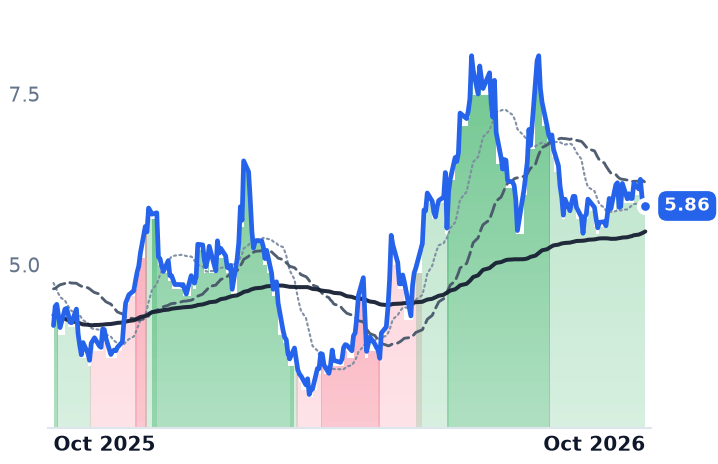
ULCC | Frontier | Low-Cost Carriers | 🟢 Cont. Bull | +4.3% | +42.6% |
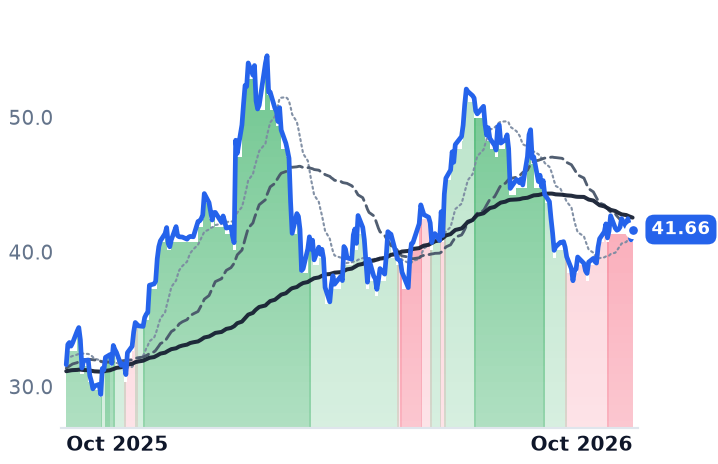
LUV | Southwest Airlines | Low-Cost Carriers | ⚠️ Emerging Bear | +6.2% | +31.7% |
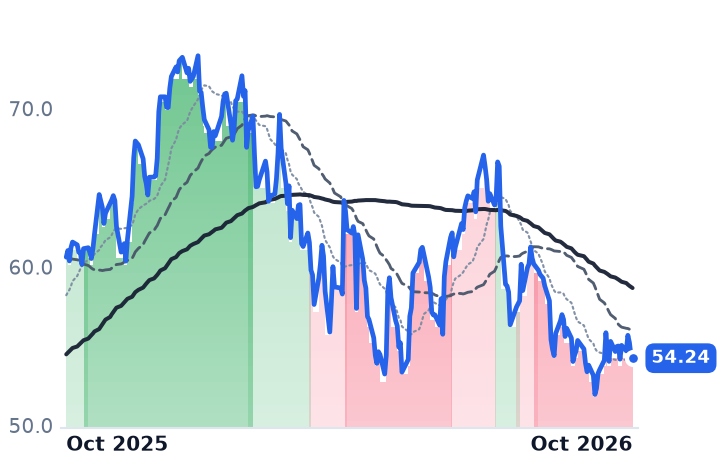
RYAAY | Ryanair | Low-Cost Carriers | ⚠️ Emerging Bear | +0.8% | −10.5% |
12-month price & trend
| Ticker | Mkt cap | P/E | P/E fwd | P/S | P/S fwd | P/GP | P/GP fwd | EV/EBITDA | FCF yld |
|---|---|---|---|---|---|---|---|---|---|
ULCC | $1.3B | n/m | — | 0.3x | 0.3x | — | — | n/m | -9.3% |
LUV | $20.4B | 25.1x | 14.5x | 0.7x | 0.6x | 1.1x | 1.0x | 8.8x | -3.0% |
RYAAY | $28.2B | 12.7x | 16.2x | 1.5x | 1.8x | 8.1x | 9.4x | 6.0x | 7.2% |
Consensus projections
| Ticker | FY2026E | FY2027E | FY2028E | |
|---|---|---|---|---|
ULCC | Revenue | +32.1% | +10.6% | +3.2% |
| EPS | −28.7% | −171.9% | +188.7% | |
LUV | Revenue | +17.8% | +5.5% | +3.4% |
| EPS | +202.1% | +46.4% | +29.5% | |
RYAAY | Revenue | +10.3% | +2.1% | +9.2% |
| EPS | +40.9% | −20.8% | −1.0% |
Forward fiscal years only. Blank means no analyst coverage for that year.
The fees an ultra-low-cost carrier collects for a checked bag, a seat assignment and a bundle are close to a fixed sum per passenger. Frontier's came to $68.42 a head in the June quarter, unchanged from the year before, while the fuel it burned cost $4.17 a gallon against $2.36, according to the carrier's second-quarter results. Everything the fuel bill demanded had to come out of the fare.
The low-fare group's summer selloff has been read as travel demand cracking. The filings point at refining: the International Air Transport Association expects industry net profit to halve to $23bn in 2026 from $45bn as jet fuel rises nearly 70% to $152 a barrel, with the jet crack spread over crude averaging a historic $57. Because the per-head fee take will not flex, what is left for each carrier is the question of who else is flying its routes.
Frontier inherited a price, not a cost
Spirit Airlines, the original American ultra-low-cost carrier, ceased all operations on 2 May 2026, and Frontier overlapped it on roughly 35% of seats. Fare revenue per passenger then rose 54% year over year, lifting total revenue per passenger to $131 and quarterly revenue 38% to a record $1.3bn on unit revenue up 28%. Chief executive Jimmy Dempsey called it a "structural change" on the 29 July call, estimating that Spirit's removal from overlapping markets provided more than five points of unit revenue.
The cost side is intact and improving. Stage-adjusted cost per available seat mile excluding fuel was 7.42 cents, up 2%, aircraft utilisation reached 9.7 block hours a day against a management target of 11 to 11.5, and aircraft grounded by Pratt & Whitney geared-turbofan inspections were down 25% year to date on maintenance output up over 40%. Liquidity was $1.16bn against net debt of $506m, and Frontier guided third-quarter capacity up 17-18% with unit revenue up just over 20%.
It still lost money: a 7.6% operating margin deficit in the June quarter after a 28.5% deficit in March, and a $90m net loss. The equity trades at 0.28x forward sales against Southwest's 0.62x, with no earnings multiple at all — consensus carries a loss of $0.50 a share this year and $0.36 of profit in 2027, and FY2025 gross profit was $14m on $3.72bn of revenue. Competitive capacity on Frontier's routes is scheduled down more than four points in the third quarter. Frontier is pricing into a gap a dead rival left.
Southwest's unit revenue is partly a credit-card number
Southwest spent two years dismantling the model that made it cheap: bag fees on tickets bought from 28 May 2025, basic economy, and assigned and extra-legroom seating from 27 January 2026, which ended 54 years of open seating. Adjusted unit revenue rose 20.1% in the June quarter. Its 10-Q explains that passenger revenue "includes the co-brand impact" of a 2025 amendment with Chase that moved "a larger portion of co-brand Chase credit card benefits" into that line, and that other revenue rose $104m in the half "driven primarily by improved retail spend on the Company's co-branded credit cards." Loyalty revenue, the cash received for points sold, grew 2.4% to $557m in the March quarter, a quarter in which total revenue grew 12.8%.
"The revenue contribution from bag fees has exceeded our expectations so far, and we've experienced no negative impact to the operation," chief executive Bob Jordan said in January. Fuel swamped it: $3.92 a gallon, an estimated $889m year-over-year increase, larger than the quarter's $465m adjusted net income. Full-year adjusted earnings were reset to $3.25-$4.25 a share from at least $4.00 and planned capacity growth roughly halved to 1-1.5%. The shares carry 14.5x forward earnings against 25.1x trailing, a compression that exists only because consensus assumes $2.88 a share this year against $0.79 delivered last year.
The fifth of Ryanair's fuel it did not hedge set the result
Ryanair hedged 80% of this fiscal year's jet fuel to March 2027 at about $67 a barrel; the unhedged remainder pushed total costs up 11% to €3.81bn in the June quarter. Traffic grew 6% to 61.3 million passengers and ancillary revenue held at roughly €24 a head, the same as the prior full year, but the average fare fell to €48 from €51 and profit dropped 34% to €538m. With jet fuel then trading near $140 a barrel, it trimmed winter capacity and cut full-year traffic guidance to 214m passengers from 216m. "This is a full-blown crisis," Michael O'Leary told the Financial Times in September. "Everybody is going to be hurting next year."
Ryanair is the only one of the three with earnings to capitalise, and its forward multiple of 16.2x sits above 12.7x trailing: the price is falling and the estimates are falling faster, from $4.10 a share last year to $3.36 expected. It is also the only one with no debt, having repaid a €1.2bn bond in May. Some of the dollar-quoted decline is translation — the euro went from $1.1808 on 16 April to $1.1200 on 8 October.
What the three prints explain
All five listed low-fare carriers fell between 15% and 35% in the three months to 9 October, and the last thirty days were flat, which is why none appears in a short-term mover list. Four rolled out of their uptrends between late August and late September. Frontier, down 23.9% over three months, has held a mild uptrend since 11 August.
The results account for Ryanair cleanly and Southwest hardly at all. Ryanair's de-rating matches an earnings decline it guided toward itself, plus roughly five points of currency. Southwest delivered four straight quarters of accelerating revenue and a wider operating margin and fell anyway; the reconciling item is its own guidance cut. Frontier's shares followed its margin line rather than its 37.7% revenue line, and its fare power is an inheritance from a liquidated competitor.
Boeing has confirmed Ryanair's first fifteen MAX-10s for spring 2027, aircraft that burn a fifth less fuel. They arrive after the winter it has already cut.