

PG&E Is Shrinking the Spending It Earns Returns On to Win Back Investment Grade
Hypothesis Opus 5 · Research Opus 5 · Writing Opus 5 · Prompt v1.7
A regulated utility's profit comes from capital a commission lets it put into service, which makes PG&E's decision to spend less next year a decision to earn less later. The California utility cut 2027 capital spending to $11.4bn from $13.4bn after state lawmakers ended their regular session without changing wildfire liability rules, and launched a review aimed at regaining investment-grade ratings.
Its operating results are not the problem. June-quarter operating income rose 15.2% and diluted earnings came in at $0.33 a share against $0.24 a year earlier. Yet the shares fell 23.6% over 90 days and trade at 0.85x book value, against Dominion's 1.87x.
What sets PG&E's profit now is the balance of California's $21bn wildfire fund, which one estimate S&P cites leaves near $11bn after the Eaton fire alone.
| Ticker | Company | Segment | Trend · 13mo | 30D | 1Y |
|---|---|---|---|---|---|
| The subject · what this brief is about | |||||
PCG | PG&E | Vertically Integrated Utilities | ⚠️ Emerging Bear | −4.9% | −17.3% |
ETR | Entergy | Vertically Integrated Utilities | ⚠️ Emerging Bear | −2.4% | +8.8% |
D | Dominion Energy | Vertically Integrated Utilities | 🟢 Cont. Bull | −4.2% | +2.7% |
| Compared against · context, not the story | |||||
NEE | NextEra Energy | Vertically Integrated Utilities | 🔴 Cont. Bear | −6.0% | −7.0% |
CEG | Constellation Energy | Diversified Renewable Generators | 🔴 Cont. Bear | +4.7% | −21.6% |
VST | Vistra | Integrated Retail & Generation | 🔴 Cont. Bear | +8.8% | −22.7% |
TLN | Talen Energy | Wholesale Power Producers | ⚠️ Emerging Bear | +21.0% | −13.1% |
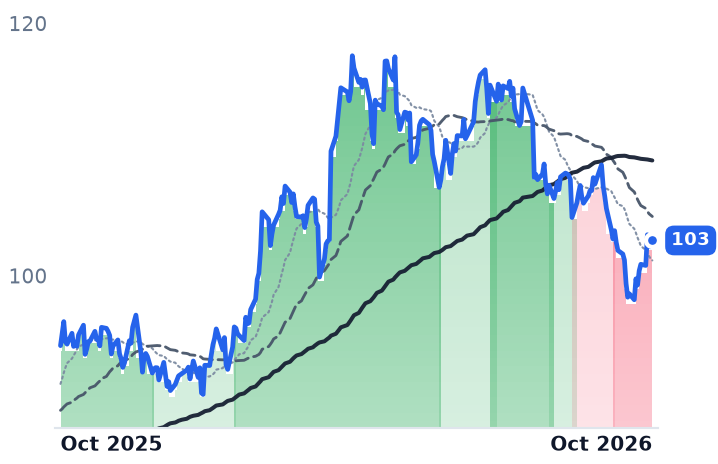
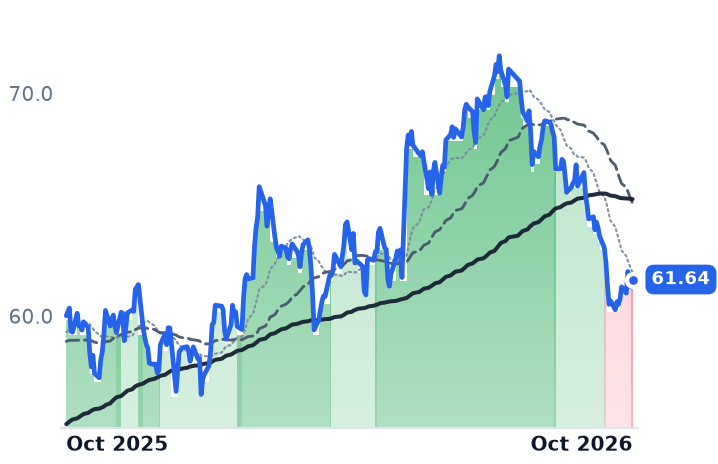
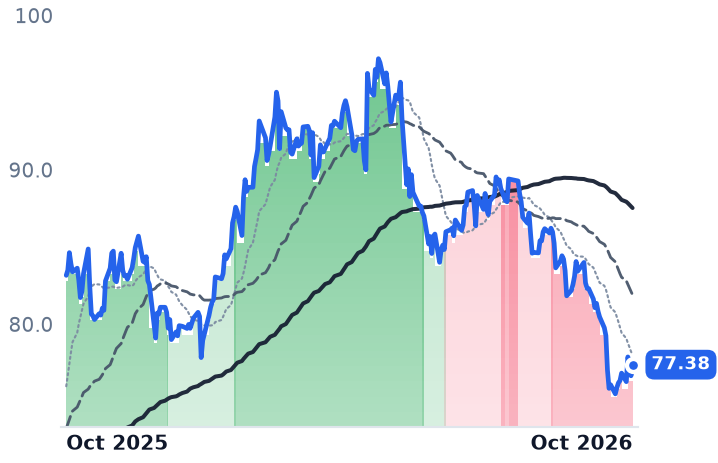
12-month price & trend
| Ticker | Mkt cap | P/E | P/E fwd | P/S | P/S fwd | P/GP | P/GP fwd | EV/EBITDA | FCF yld |
|---|---|---|---|---|---|---|---|---|---|
PCG | $35.2B | 9.5x | 7.9x | 1.4x | 1.3x | 2.4x | 2.4x | 9.0x | -12.1% |
ETR | $48.0B | 26.0x | 23.4x | 3.6x | 3.4x | 9.1x | 8.8x | 13.8x | -6.6% |
D | $54.2B | 21.3x | 17.2x | 3.0x | 2.9x | 6.0x | 6.0x | 14.0x | -12.6% |
| Ticker | Mkt cap | P/E | P/E fwd | P/S | P/S fwd | P/GP | P/GP fwd | EV/EBITDA | FCF yld |
|---|---|---|---|---|---|---|---|---|---|
NEE | $160.3B | 17.2x | 19.3x | 5.5x | 5.2x | 7.7x | 7.2x | 15.1x | -6.3% |
CEG | $107.0B | 29.0x | 24.7x | 3.5x | 3.2x | 20.0x | 18.4x | 15.8x | 0.3% |
VST | $54.4B | 27.0x | 18.7x | 3.4x | 2.4x | 26.3x | 18.7x | 11.3x | 2.5% |
| Ticker | Mkt cap | P/E | P/E fwd | P/S | P/S fwd | P/GP | P/GP fwd | EV/EBITDA | FCF yld |
|---|---|---|---|---|---|---|---|---|---|
TLN | $17.2B | n/m | 18.4x | 4.9x | 3.9x | 10.9x | 8.7x | 36.8x | 3.0% |
Consensus projections
| Ticker | FY2026E | FY2027E | FY2028E | |
|---|---|---|---|---|
PCG | Revenue | +2.5% | +3.9% | +3.7% |
| EPS | +10.1% | +8.7% | +8.7% | |
ETR | Revenue | +8.7% | +9.7% | +9.8% |
| EPS | +12.4% | +16.0% | +13.6% | |
D | Revenue | +14.4% | +6.4% | +6.1% |
| EPS | +5.1% | +6.3% | +6.9% | |
NEE | Revenue | +8.9% | +9.7% | +9.0% |
| EPS | +7.5% | +9.0% | +8.6% | |
CEG | Revenue | +37.2% | +2.5% | +5.3% |
| EPS | +28.9% | +10.4% | +26.4% | |
VST | Revenue | +16.7% | +9.7% | +5.4% |
| EPS | +80.8% | +18.5% | +18.5% | |
TLN | Revenue | +84.0% | +16.0% | +4.9% |
| EPS | +247.2% | +49.2% | +17.7% |
Forward fiscal years only. Blank means no analyst coverage for that year.
PG&E plans to spend $11.4bn on its system next year, down from the $13.4bn it had previously laid out, a deferral the company disclosed after California lawmakers ended their regular session without voting on a deal to change how utilities bear wildfire costs. For a company paid a return set by regulators on the capital it puts into service, cutting that capital is a choice to earn less later. PG&E also stopped giving capital plans beyond 2027.
Utility equities this year have been bought on load growth: data centers queueing for power, capital plans rising to serve them, earnings compounding off a bigger asset base. PG&E, the $35.2bn holding company that generates, transmits and distributes electricity and gas across northern and central California, is the counter-case on its own shelf. Its binding constraint is the cost and availability of credit, and it is willingly surrendering future rate base to protect it.
The two variables in Sacramento that set the profit
Chief financial officer Carolyn Burke told S&P Global Ratings' webinar series for chief financial officers on 5 October that the company's credit quality remains tied to the size and durability of California's $21bn wildfire fund, created under Assembly Bill 1054, and that while PG&E's preferred outcome is further state legislation, it cannot wait indefinitely. PG&E has named the two changes it wants: a durable source of liquidity outside the present fund, and a true maximum cap on disallowed costs that does not depend on how much of the fund is left.
That second point is the whole argument. S&P has said PG&E and Edison International could fall to single-B speculative grade if the state does nothing and the fund keeps shrinking, and cites a California Earthquake Authority estimate that the Eaton fire alone could leave roughly $11bn of the $21bn. The strategic review PG&E launched in response may reach capital allocation, business structure or separating the operations least exposed to wildfire.
Every earnings meter improved in the quarter the shares fell hardest
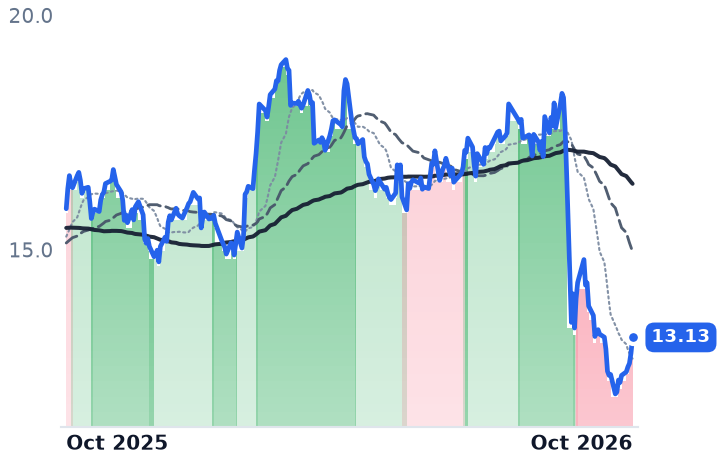
June-quarter operating income rose 15.2% to $1.263bn on revenue that was flat, net income rose 38.6% to $761m, and gross margin reached 84.5%. Consensus has 2026 earnings at $1.65 a share, up 10.1%, and 2027 at $1.80. The shares fell 23.6% over the 90 sessions to 9 October; they trade at 7.94x forward earnings against 9.51x trailing, and at 0.85x book value, where Dominion sits at 1.87x and Entergy at 2.56x.
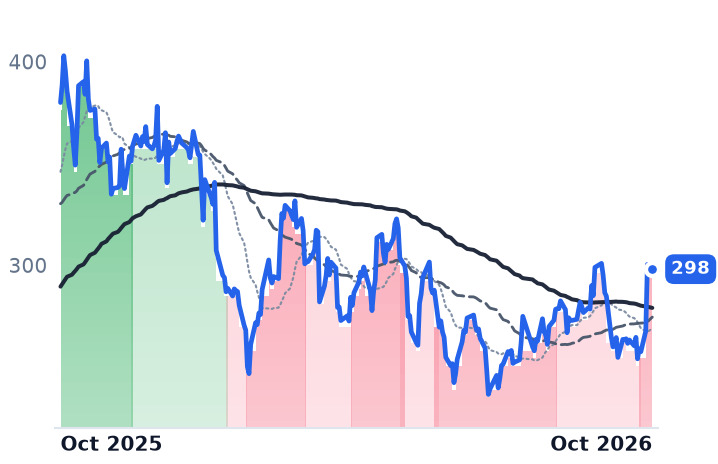
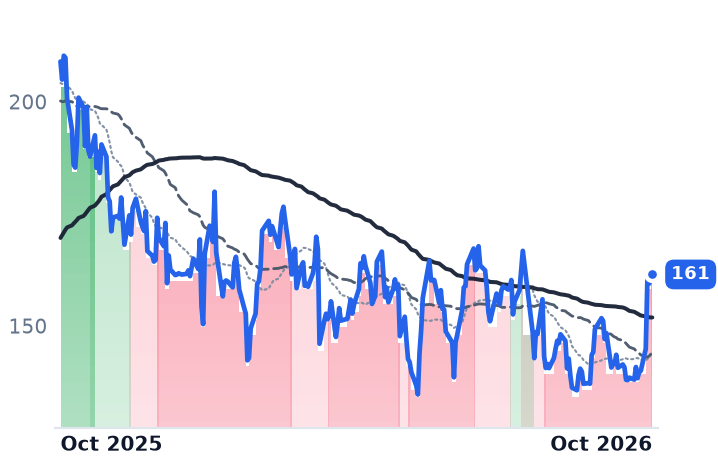
Some of that is the sector's cost of capital. Twenty-six of 29 utility and power names tested fell over the same 90 days, with the utilities exchange-traded fund XLU down about 6% in the month, its steepest monthly drop in nearly two years, as the 10-year Treasury reached 5.365% on 7 October, its highest since April 2002. PG&E's decline was roughly twice Entergy's 9.8%, and the gap is Sacramento: the shares fell about 20% when the liability deal collapsed in the legislature. Those lows held until the last week of September, after which PG&E rose from $12.34 on 25 September to $13.13 by 9 October.
So the operating results account for none of the drawdown. Earnings grew, margins widened, guidance points up, and the equity still trades under the book value of the assets producing those earnings, because the market is pricing the liability tail on the balance sheet rather than the income it throws off. A sub-book price is a weak anchor in that situation: book value only bounds the loss if the exposure is bounded, and PG&E's own stated ask is a cap that does not yet exist. The capital cut is the honest read on what management believes about its financing cost, since a regulated operator forgoes earning assets only when the alternative is worse.
Lawmakers were expected to take up a bill in special session that would let insurers pursue utilities for wildfire losses. The variable that sets this company's profit sits in a chamber where it does not get a vote.