

GE Vernova Is Adding Turbine Capacity 50% Faster and Thinning the Scarcity It Charges For
Hypothesis Opus 5 · Research Opus 5 · Writing Opus 5 · Prompt v1.7
GE Vernova's quarter was the best since the spinoff, and its shares crossed into a downtrend three weeks later alongside every other gas-turbine maker on the shelf. The company's own capacity decision is the uncomfortable part.
The book everyone cites as a decade of locked revenue is 116 gigawatts of gas equipment, of which 63 gigawatts are slot reservations rather than firm orders, and only 3 gigawatts shipped in the June quarter. Power segment profitability improved on price and volume, with segment margin at 18.8%, while the real annuity arrives decades later in service contracts.
Nothing in GE Vernova's or Mitsubishi Heavy's results explains their de-rating. Cummins is the exception: its truck engine book rolled over with the emissions pre-buy, and at 17.7x forward earnings the markdown is doing rational work.
| Ticker | Company | Segment | Trend · 13mo | 30D | 1Y |
|---|---|---|---|---|---|
| The subject · what this brief is about | |||||
GEV | GE Vernova | GE Vernova Integrated | ⚠️ Emerging Bear | +9.0% | +66.1% |
CMI | Cummins | Power & Propulsion Systems | ⚠️ Emerging Bear | −4.0% | +27.8% |
MHVYF | Mitsubishi Heavy Industries | Industrial - Machinery | 🔴 Cont. Bear | −1.5% | −11.3% |
| Compared against · context, not the story | |||||
CAT | Caterpillar | Heavy Construction & Mining | ⚠️ Emerging Bear | +0.1% | +64.3% |
SMERY | Siemens Energy | Industrial - Machinery | 🔴 Cont. Bear | −0.3% | −73.3% |
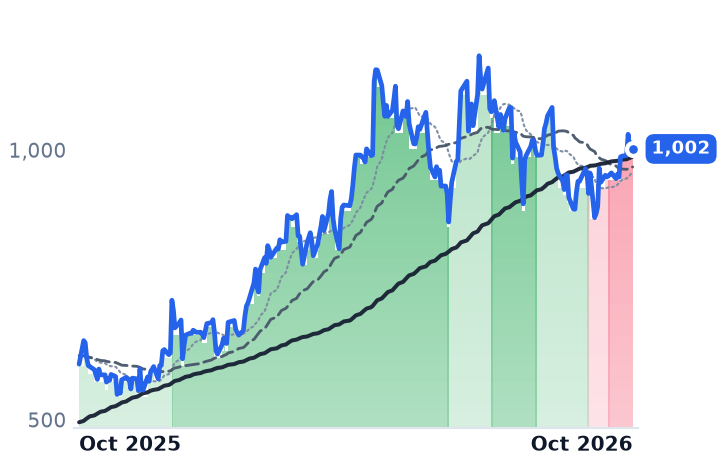
12-month price & trend
| Ticker | Mkt cap | P/E | P/E fwd | P/S | P/S fwd | P/GP | P/GP fwd | EV/EBITDA | FCF yld |
|---|---|---|---|---|---|---|---|---|---|
GEV | $267.6B | 28.5x | 33.0x | 6.5x | 5.8x | 32.0x | 28.6x | 28.5x | 4.6% |
CMI | $72.2B | 26.6x | 17.7x | 2.1x | 1.9x | 8.2x | 7.6x | 15.5x | 4.7% |
MHVYF | $78.0B | 30.9x | — | 2.5x | — | 11.2x | — | 16.5x | 7.8% |
| Ticker | Mkt cap | P/E | P/E fwd | P/S | P/S fwd | P/GP | P/GP fwd | EV/EBITDA | FCF yld |
|---|---|---|---|---|---|---|---|---|---|
CAT | $389.4B | 36.2x | 31.0x | 5.2x | 4.9x | 15.4x | 14.5x | 24.6x | 2.3% |
SMERY | $177.1B | 68.2x | 48.0x | 3.8x | 4.0x | 20.0x | 21.1x | 29.0x | 3.9% |
Consensus projections
| Ticker | FY2026E | FY2027E | FY2028E | |
|---|---|---|---|---|
GEV | Revenue | +24.0% | +14.6% | +14.9% |
| EPS | +319.0% | −19.6% | +41.4% | |
CMI | Revenue | +13.1% | +9.4% | +8.5% |
| EPS | +29.6% | +17.1% | +16.5% | |
MHVYF | Revenue | −1.7% | +12.5% | +8.4% |
| EPS | +6.1% | +52.4% | +16.8% | |
CAT | Revenue | +19.8% | +11.1% | +11.1% |
| EPS | +46.0% | +19.0% | +19.5% | |
SMERY | Revenue | +15.1% | +13.5% | +12.9% |
| EPS | +167.3% | +37.5% | +29.3% |
Forward fiscal years only. Blank means no analyst coverage for that year.
GE Vernova is building gas turbines faster than it said it would a year ago, and that is the most consequential thing it has told investors since July. Chief executive Scott Strazik disclosed at the Morgan Stanley Laguna conference on 16 September that the company is accelerating its gas capacity additions by 50% this year, with factory output reaching a 5 gigawatt quarterly run-rate in the second half of 2026, 6 in the second half of 2027 and 7 in 2028. New orders are already pricing 10 to 20 points higher per kilowatt than at the end of 2025. Scarcity is what that price is, and the three companies that own roughly 90% of the heavy-duty market are each dismantling it on schedule.
The belief being tested is that a sold-out slot book through 2032 is the same thing as a decade of contracted revenue. It is not what the disclosure says.
What a reserved slot is worth before anyone orders anything
A gas-turbine dollar arrives in three separable forms. First comes the deposit: GE Vernova will not label a customer commitment a slot reservation agreement until roughly 20% of contract price is posted in cash, money that lands in working capital and a contract liability. In the June quarter working capital was a $6.4bn cash benefit "driven primarily by higher down payments on increased orders and slot reservations at Power." Then the firm equipment order. Then the annuity: long-term service agreements that run 5 to 25 years, with more than 70% of the existing book carrying over a decade of remaining life and about 70% renewal rates. Service revenues were approximately 70% of Power segment revenues in 2022, and aftermarket margins substantially exceed new-unit margins.
"Every gigawatt of HAs will generate $0.5 billion of high-margin services revenue over the first 20 years of the cycle," Strazik said on 16 September. The profit is real and it is distant.
Which is why 116 gigawatts is not 116 gigawatts of revenue. The June-quarter split was 53 gigawatts of firm backlog against 63 of reservations; the company converted 10 gigawatts of reservations into orders and shipped 3. Management said it expects to reach the point where firm backlog exceeds reserved gigawatts in the second half of 2026. Gordon Johnson of GLJ Research used that same 54% reservation share to initiate a Sell with a $470 target, and the stock fell 8.6% in September.
The results and the price moved opposite ways
The operating record is accelerating. Revenue rose 21.9% to $11.1bn in the June quarter, operating income 73%, and Power segment orders reached $16.7bn, up 134% organically, with segment EBITDA margin of 18.8%, up 320 basis points organically on volume and favorable price at Gas Power.
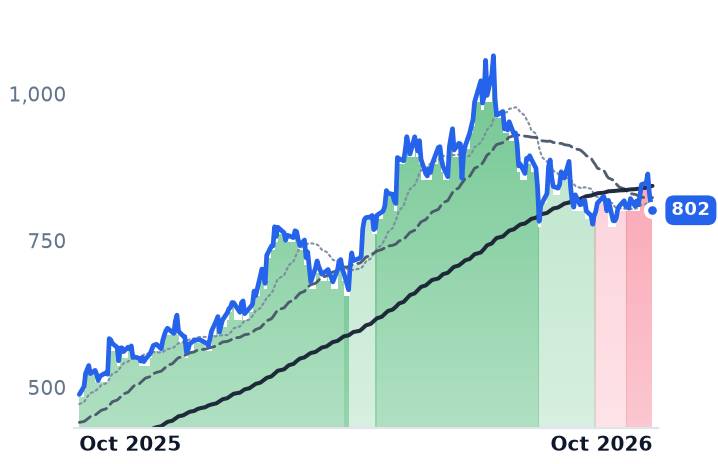
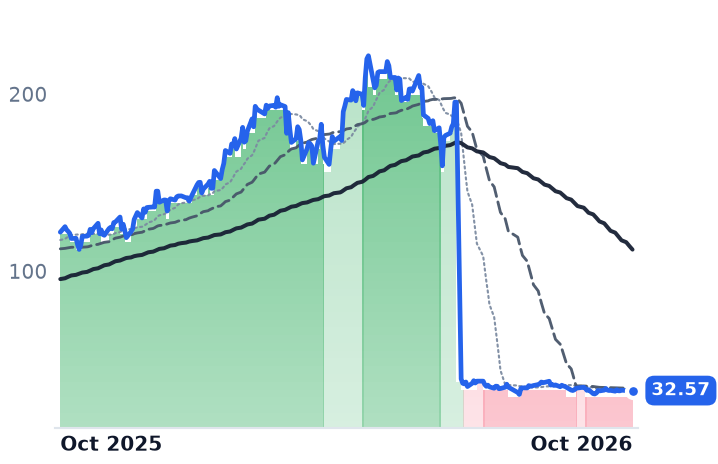
The shares nonetheless entered a sustained downtrend on 23 September and have stayed there, as have Caterpillar, Cummins and Mitsubishi Heavy. GE Vernova closed at $1,002.08 on 9 October, still up 58% over twelve months. At 33.0x forward earnings the stock looks cheaper than it is: consensus FY2026 earnings of $30.49 a share contain the $4.5bn pre-tax Prolec GE gain, and FY2027 consensus falls 19.6% to $24.51, which puts the real figure near 41x against roughly 37x forward in May.
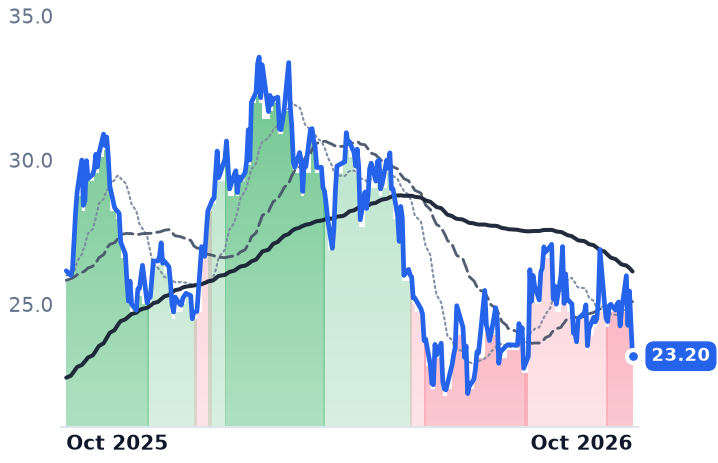
Mitsubishi Heavy is the supply-side gauge, and it is loosening. Its large-frame backlog stands at about 35 gigawatts, it plans 30% more turbine capacity by FY2028 and has since discussed doubling against 2024 levels; Caterpillar is spending $725m to roughly 2.5x Solar Turbines output by 2030. Mitsubishi's own June-quarter revenue slipped 0.7% while operating income rose 40%, and the shares are down 22.5% over six months at 30.9x trailing earnings with a 7.8% free-cash-flow yield.
The half of Cummins being marked down is trucks
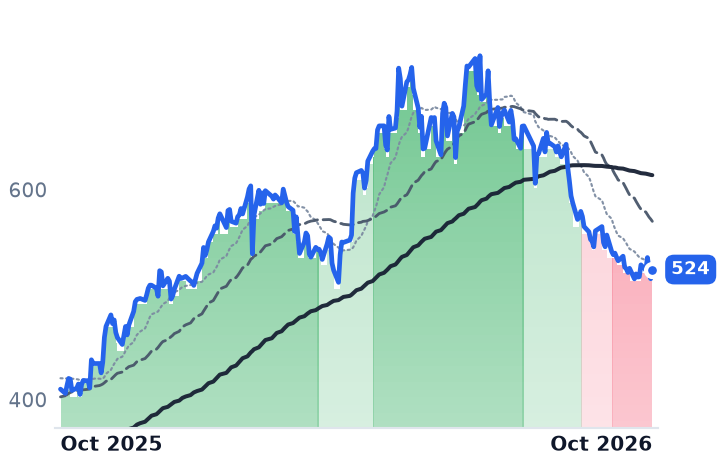
Cummins is the one name where the decline tracks the business. Power Systems, the standby and data-centre genset arm, posted sales of $2.3bn, up 19%, at a 24.5% EBITDA margin against 22.8%. Chief executive Jennifer Rumsey credited "disciplined execution and robust demand for data center backup power." The truck-levered majority went the other way: Engine EBITDA margin fell to 12.5% from 13.8% and Components to 13.2% from 14.7%, so revenue up 9.4% produced operating income up only 4.3%. ACT Research put September Class 8 orders at 18,700 units, down 9.5%, with the EPA 2027 pre-buy effectively over. At 17.7x forward earnings against roughly 24x in May, the de-rating has already removed most of the premium.
So the shelf splits on cause. Cummins' markdown is a truck cycle correctly priced; GE Vernova's and Mitsubishi's is not visible in any results line, and with no turbine order cancellation disclosed in the window, the likelier reading is multiple compression against broad doubt about artificial-intelligence capital budgets and a 10-year Treasury yield of 5.24%, which discounts 2032 deliveries harder than 2027 ones. The company-specific crack is narrower and real: GE Vernova's gas customers are roughly 80% utilities and only 20% data centres, so the demand it is being valued on reaches it second-hand, through someone else's procurement committee.
GE Vernova's third-quarter report lands on 28 October. The number that matters is not how many gigawatts the company has lined up, but how many of them a customer has actually ordered.