

Heartland Needed Used-Truck Gains to Post a Profit While Werner's Contract Rates Rose 5%
Hypothesis Opus 5 · Research Opus 5 · Writing Opus 5 · Prompt v1.7
Hauling freight barely paid at two of the four listed truckload carriers last quarter, and the money came in anyway from the resale lot. Heartland Express booked gains on selling used tractors equal to 13.6% of revenue against a 2015-25 average of 4.1%; at Covenant Logistics a 49%-owned leasing venture contributed $5.3m of pre-tax income, roughly 60% of the quarter's $8.8m of operating income.
Werner Enterprises sits on the other side of the split: dedicated revenue per tractor per week rose 5.4% year over year, one-way revenue per total mile net of fuel surcharge rose 10.4%, and dedicated pricing guidance was raised to up 3-5%.
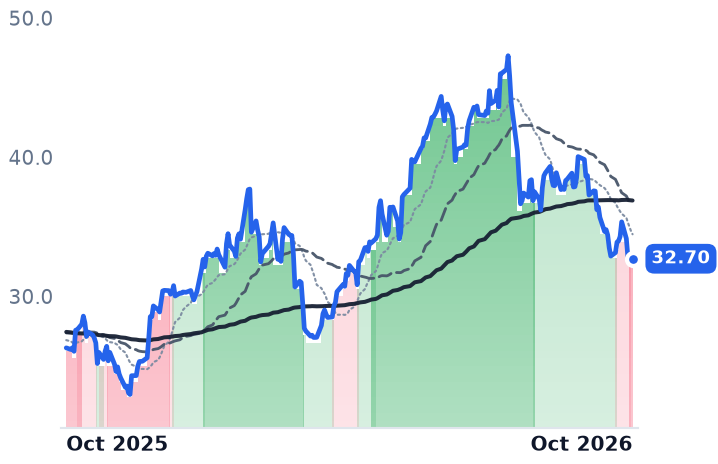
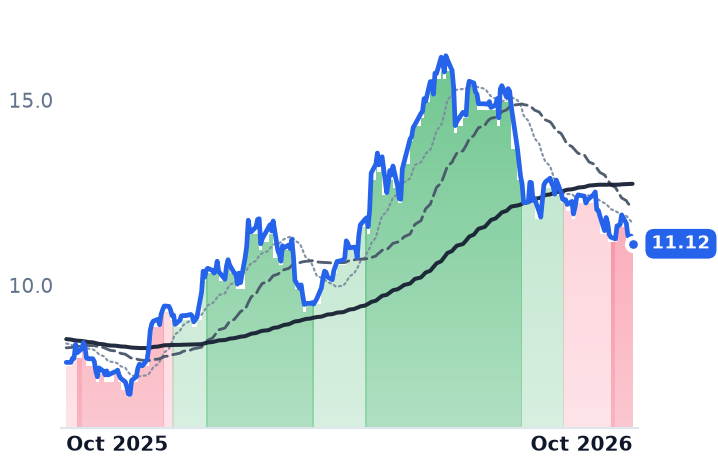
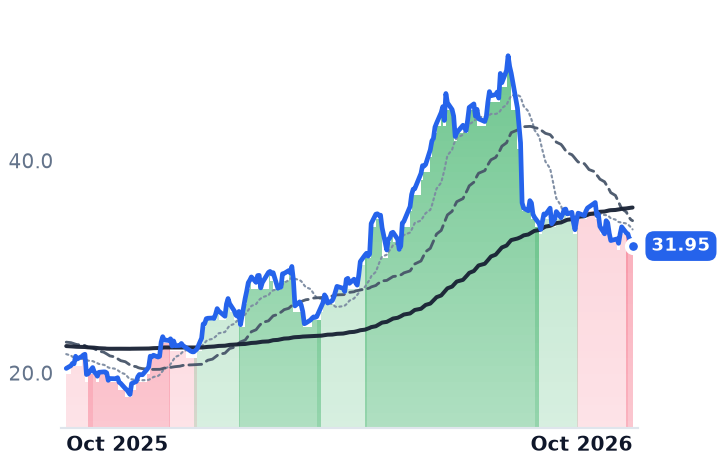
All four stocks fell 25% to 31% over three months as diesel hit a record. Only Werner's operating meters moved the other way.
| Ticker | Company | Segment | Trend · 13mo | 30D | 1Y |
|---|---|---|---|---|---|
| The subject · what this brief is about | |||||
WERN | Werner Enterprises | Truckload & Dedicated | ⚠️ Emerging Bear | −15.5% | +24.4% |
HTLD | Heartland Express | Truckload & Dedicated | ⚠️ Emerging Bear | −9.6% | +40.5% |
CVLG | Covenant Logistics | Truckload & Dedicated | ⚠️ Emerging Bear | −10.1% | +56.4% |
| Compared against · context, not the story | |||||
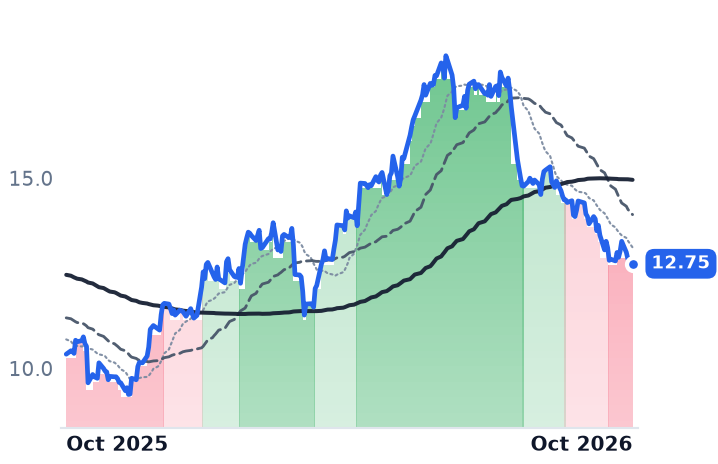
MRTN | Marten Transport | Truckload & Dedicated | ⚠️ Emerging Bear | −8.9% | +22.9% |
NSC | Norfolk Southern | Class I Railroads | 🟢 Cont. Bull | −1.8% | +11.2% |
CSX | CSX | Class I Railroads | 🟢 Cont. Bull | −3.5% | +34.1% |
JBHT | J.B. Hunt Transport Services | Truckload & LTL | 🟢 Cont. Bull | −14.4% | +68.0% |
KNX | Knight-Swift Transportation | Less-Than-Truckload (LTL) | 🟢 Cont. Bull | −7.2% | +53.2% |
SNDR | Schneider National | Less-Than-Truckload (LTL) | 🟢 Cont. Bull | −7.9% | +43.0% |
XPO | XPO Logistics | Truckload & LTL | ⚠️ Emerging Bear | −0.4% | +41.8% |
RXO | RXO | Freight Brokerage & Logistics | 🟢 Cont. Bull | +47.8% | +75.3% |
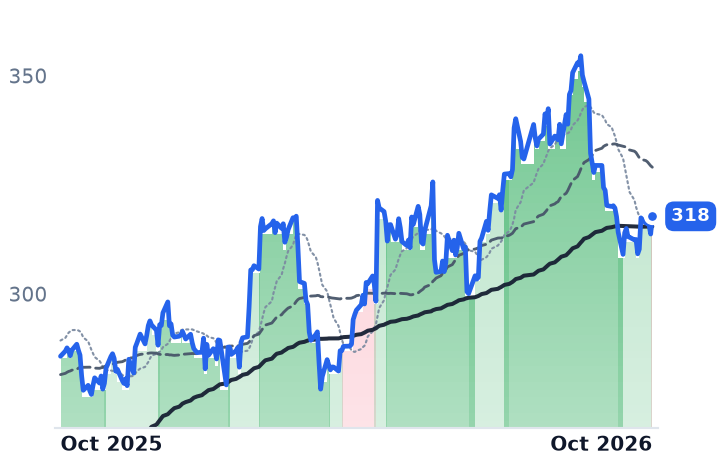
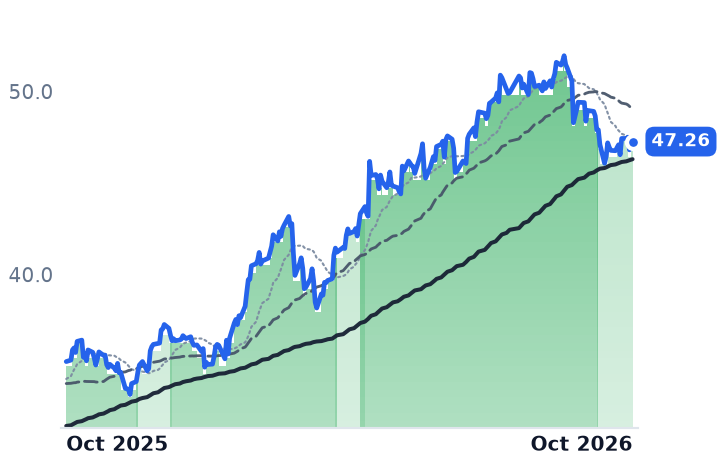
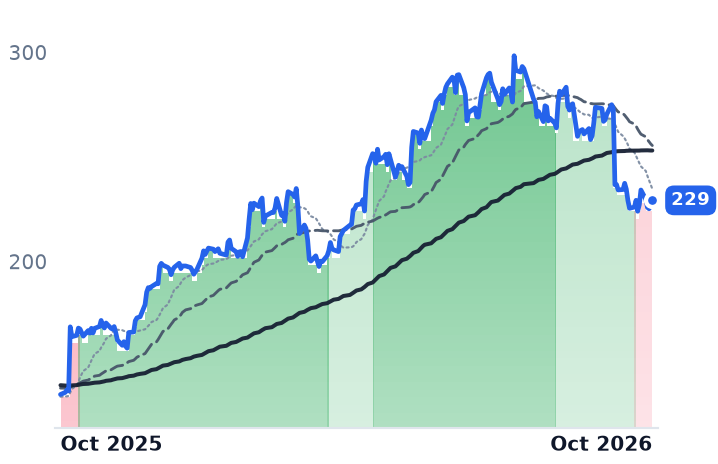
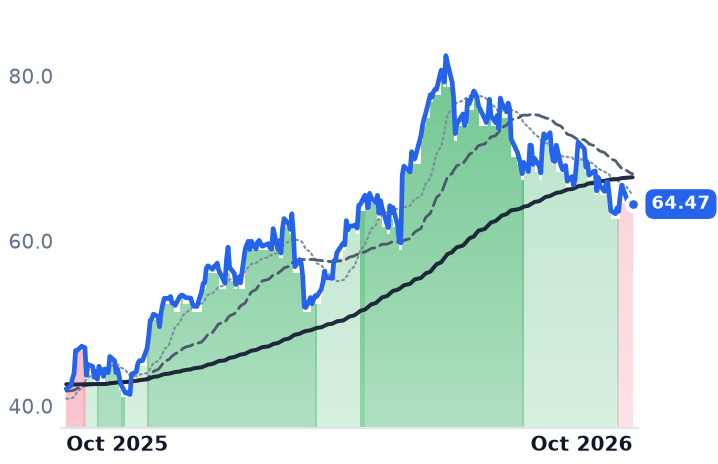
12-month price & trend
| Ticker | Mkt cap | P/E | P/E fwd | P/S | P/S fwd | P/GP | P/GP fwd | EV/EBITDA | FCF yld |
|---|---|---|---|---|---|---|---|---|---|
WERN | $2.0B | n/m | 29.0x | 0.6x | 0.5x | 8.4x | 7.5x | 9.9x | 2.7% |
HTLD | $861.7M | n/m | 75.8x | 1.2x | 1.2x | 15.6x | 16.1x | 9.2x | -10.0% |
CVLG | $803.8M | 213.0x | 19.3x | 0.7x | 0.6x | 6.1x | 5.7x | 8.3x | 13.7% |
| Ticker | Mkt cap | P/E | P/E fwd | P/S | P/S fwd | P/GP | P/GP fwd | EV/EBITDA | FCF yld |
|---|---|---|---|---|---|---|---|---|---|
MRTN | $1.0B | 82.2x | 46.6x | 1.2x | 1.2x | 100.7x | 96.5x | 8.2x | 0.1% |
NSC | $69.5B | 26.4x | 23.8x | 5.5x | 5.2x | 10.3x | 9.8x | 15.7x | 5.5% |
CSX | $87.3B | 27.2x | 23.5x | 6.0x | 5.7x | 11.0x | 10.5x | 15.8x | 5.8% |
| Ticker | Mkt cap | P/E | P/E fwd | P/S | P/S fwd | P/GP | P/GP fwd | EV/EBITDA | FCF yld |
|---|---|---|---|---|---|---|---|---|---|
JBHT | $21.5B | 32.6x | 30.3x | 1.7x | 1.6x | 10.4x | 9.6x | 13.8x | 5.1% |
KNX | $11.2B | 330.0x | 37.3x | 1.5x | 1.4x | 6.0x | 5.6x | 13.7x | 11.1% |
SNDR | $5.6B | 57.1x | 35.0x | 1.0x | 0.9x | 6.7x | 6.4x | 9.5x | 7.6% |
| Ticker | Mkt cap | P/E | P/E fwd | P/S | P/S fwd | P/GP | P/GP fwd | EV/EBITDA | FCF yld |
|---|---|---|---|---|---|---|---|---|---|
XPO | $20.8B | 51.7x | 32.3x | 2.4x | 2.3x | 19.0x | 18.0x | 19.0x | 2.8% |
RXO | $3.1B | n/m | 439.8x | 0.5x | 0.5x | 3.1x | 2.9x | 417.8x | -0.5% |
Consensus projections
| Ticker | FY2026E | FY2027E | FY2028E | |
|---|---|---|---|---|
WERN | Revenue | +21.4% | +7.7% | +5.5% |
| EPS | +1672.3% | +98.9% | +38.3% | |
HTLD | Revenue | −12.7% | +7.4% | +8.4% |
| EPS | −130.1% | +244.6% | +39.8% | |
CVLG | Revenue | +12.7% | +8.4% | +6.9% |
| EPS | +6.9% | +62.2% | +30.1% | |
MRTN | Revenue | +1.7% | +9.7% | — |
| EPS | +39.5% | +137.8% | — | |
NSC | Revenue | +8.5% | +4.3% | +4.6% |
| EPS | +8.0% | +10.5% | +9.5% | |
CSX | Revenue | +7.6% | +5.0% | +3.7% |
| EPS | +22.7% | +13.3% | +10.4% | |
JBHT | Revenue | +14.3% | +9.7% | +8.4% |
| EPS | +25.3% | +32.6% | +19.1% | |
KNX | Revenue | +7.0% | +7.2% | +6.2% |
| EPS | +39.5% | +75.7% | +27.9% | |
SNDR | Revenue | +4.2% | +5.9% | +4.8% |
| EPS | +31.1% | +65.3% | +26.8% | |
XPO | Revenue | +11.5% | +5.3% | +6.6% |
| EPS | +52.4% | +18.9% | +21.9% | |
RXO | Revenue | +8.2% | +7.2% | +6.9% |
| EPS | −301.5% | +1046.4% | +22.9% |
Forward fiscal years only. Blank means no analyst coverage for that year.
Heartland Express hauled freight at roughly break-even cost in the June quarter and still reported $10.6m of net income. The difference was the second-hand market for its own trucks: gains on the sale of revenue equipment ran at 13.6% of revenue against a 2015-25 average of 4.1%, and the trade publication FreightWaves calculated that without the outsized gains the carrier's operating ratio would have been closer to 103% than the 91.0% it reported.
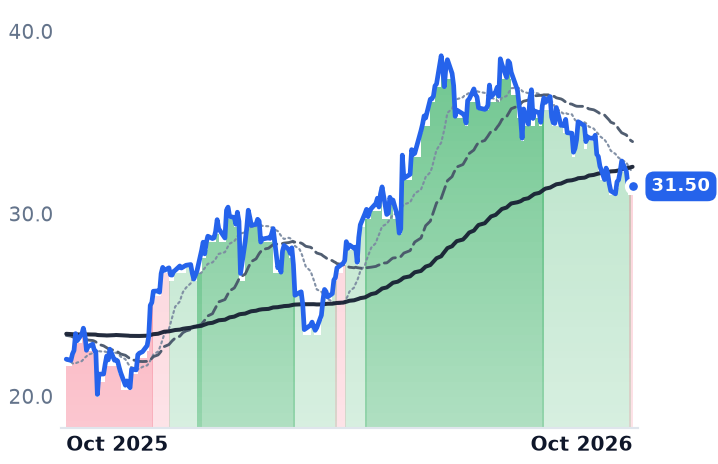
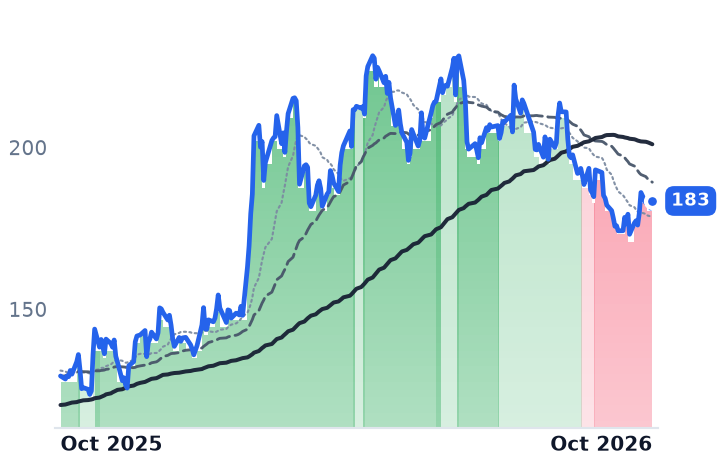
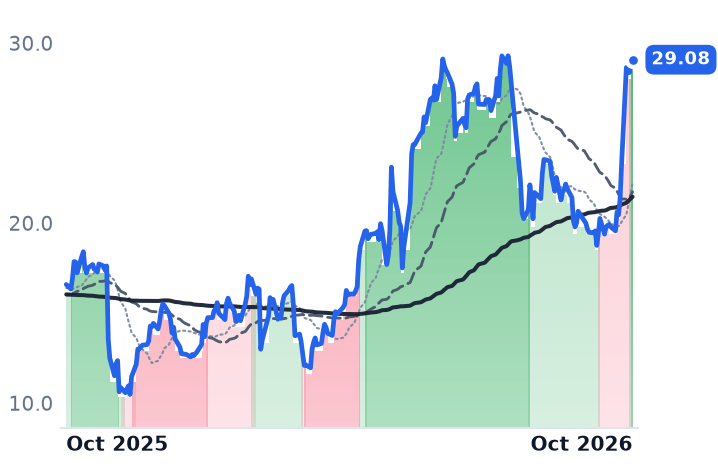
The same question sits over the whole truckload shelf. These shares spent the summer rising on the argument that capacity is finally leaving American trucking and that pricing is turning with it; between 23 September and 7 October all four crossed into sustained downtrends, down 25% to 31% over three months, after diesel reached a record $6.31 a gallon in mid-September and J.B. Hunt pre-announced a fuel hit of more than $10m. The June-quarter filings say the pricing argument holds at Werner Enterprises and is close to irrelevant at Heartland and Covenant Logistics, where the quarter turned on what a three-year-old tractor fetches.
Werner is paid by the truck-week, and the truck-week went up
Werner, the Omaha carrier running dry van, temperature-controlled and regional truckload fleets across the US and Mexico plus a brokerage arm, no longer sells much freight at spot. More than 70% of its truckload fleet sits under a dedicated agreement, fixed fleets parked at one shipper's door, about 7,400 trucks; the one-way fleet shrank from nearly 3,300 tractors in 2022 to under 2,400 at the end of 2025.
So the meter that matters is revenue per truck per week, and in the June quarter it rose 5.4% year over year net of fuel surcharge. The smaller one-way book did better still: revenue per total mile up 10.4%, miles per tractor per week up 15.7%. Werner raised dedicated pricing guidance from flat-to-up-3% to up 3-5% and lifted net capital spending guidance to $215m-$250m. "This tightness is being driven by intensifying regulatory pressure," chairman and chief executive Derek Leathers said on the July 28 earnings call, putting the industry in the "third inning" of capacity removal.
The reported line looks like the opposite. Operating income fell 74.5% to $16.9m, because the prior-year quarter carried a $45.7m liability reversal inside insurance and claims after a favorable decision on a 2018 adverse jury verdict; the company's 8-K attributes the decline to $53.6m of favorable reversals in total, including a contingent-consideration settlement. Adjusted operating income rose 67% to $27.6m. Revenue growth of 24% to $933.9m is partly bought: the January purchase of dedicated carrier First Fleet, reported as FirstFleet, added 2,110 trucks to the dedicated average fleet. At $32.70 the shares trade at 9.9x trailing EV/EBITDA, with consensus 2027 earnings of $2.24 implying 14.6x against 29.0x on this year's trough $1.13.
Heartland's quarter arrived on the resale lot
Heartland, a short-haul dry van and temperature-controlled carrier running the Heartland, Millis, Smith Transport and CFI brands on average hauls under 400 miles, is the one pure one-way book here, and the one with no quarterly call and no published pricing or utilisation metrics. What is disclosed: revenue of $184.1m, an operating ratio improved 1,490 basis points, average tractor age down to 2.3 years from 2.6, and $25m of acquisition debt repaid in the first half, taking acquisition debt and finance leases to $135m from $494m in 2022.
The fleet is funding the balance sheet. Forward earnings of $0.147 put the stock at 75.8x, trailing free cash flow is negative at 10.0% of market value, and only book value, at 1.14x, is cheap.
Covenant's profit came through a 49% leasing stake
Covenant, the Chattanooga group reporting in Expedited, Dedicated, Managed Freight and Warehousing segments, earned $8.8m of operating income on $332.9m of revenue, and says the largest drag was Managed Freight gross margin while higher earnings from its leasing investment offset it. That investment, a 49% stake in tractor and trailer lessor Transport Enterprise Leasing, contributed $5.3m pre-tax, or $0.16 a share, up from $4.3m, on higher equipment sale gains. Covenant is reducing its spot exposure too, moving about 15% of the Expedited fleet onto multi-year committed contracts as expedited freight revenue fell 11.4% and dedicated rose 4.3%. Net debt of $289.7m at roughly 2.2x adjusted leverage is the constraint; at 8.3x trailing EV/EBITDA the shares are the cheapest of the four on that measure.
Marten Transport, the refrigerated carrier with $104.0m of cash and no comparable leasing income, made $5.3m on $223.5m of revenue and watched its dedicated operating ratio deteriorate to 96.4% from 92.4%. At 46.6x forward earnings it is the weakest earner on the shelf.
Capacity is leaving on fuel and enforcement
The supply story the group was bought for is real, and freight demand is not what is driving it. September Class 8 net orders came in at 18,700 units, down 9.5%, which ACT Research tied to incomplete 2027 orderboards and uncertainty over the Environmental Protection Agency's 2027 emissions rule. Federal regulators restricted non-domiciled commercial licences from 16 March and made an English-proficiency failure an out-of-service violation. Dry van spot rates including fuel recovered to $3.53 a mile in early October, more than 10% above the late-August low, though much of the year-on-year gain is diesel itself; tender rejections eased to 13.78% on 1 October from 14.6% on 19 September.
The three-month drawdown is therefore a cost shock priced across the complex, with the rails off about 2% over thirty days against the truckload names' 9% to 15%, and the carrier results do not all point the same way underneath it. Werner's contract book repriced upward and its claims accrual improved against an industry where premiums reached about 10.6 cents a mile in 2025, while consensus still assumes a margin recovery the share price has stopped paying for. Heartland and Covenant depend instead on strong used-equipment values, which is the same tightness counted a second way: the enforcement pushing drivers out of service eventually puts their trucks on the lot.
Werner reports on 27 October and Covenant on 29 October. The number that decides the first is dollars per truck per week; at the second, it is how much of the profit again arrives from a business that owns trucks rather than drives them.