

Lincoln Electric's Record Welding Quarter Was Eight Points Price and Two Points Volume
Hypothesis Opus 5 · Research Opus 5 · Writing Opus 5 · Prompt v1.7
A welding consumable is bought by the hour, not by the project, which is why Lincoln Electric's June quarter was read as proof that American factory activity has turned. The decomposition is less comforting: of 10.1% organic growth, roughly 8 points were price and 2 were volume, and the price is metal passed through with a lag.
Volumes did inflect across all three product areas after nine quarters of compression, and Americas consumable volumes grew at a low-double-digit rate. But the Harris Products brazing slab put up 26.9% sales growth on volume down 8.2%, carried by silver and copper adders, and silver has halved since January.
Lincoln trades at 23.4x forward earnings against 26.0x trailing. ESAB, running the same consumables-plus-equipment model abroad, raised full-year profit guidance while its shares fell more than 40% in twelve months.
| Ticker | Company | Segment | Trend · 13mo | 30D | 1Y |
|---|---|---|---|---|---|
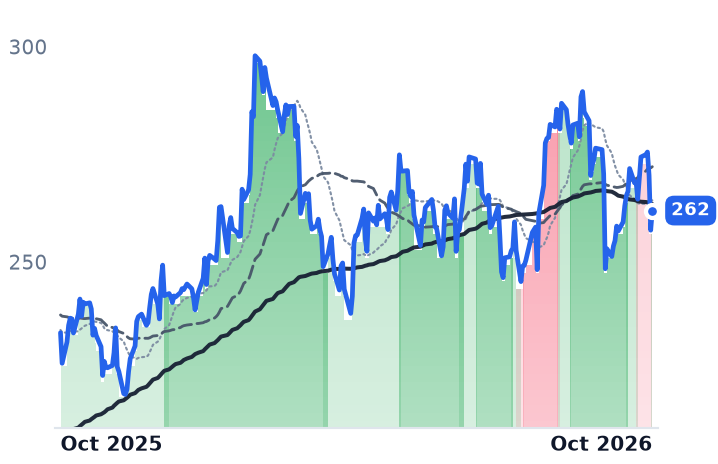
LECO | Lincoln Electric | Welding & Cutting Equipment | 🟢 Cont. Bull | −3.1% | +12.2% |
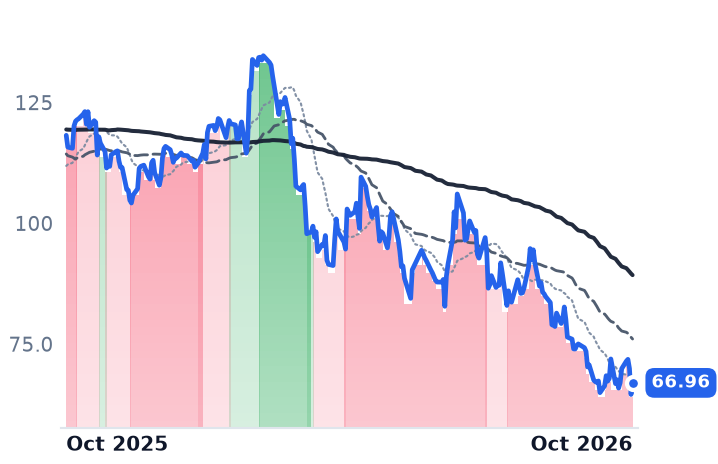
ESAB | ESAB | Welding & Cutting Solutions | 🔴 Cont. Bear | −8.9% | −43.4% |
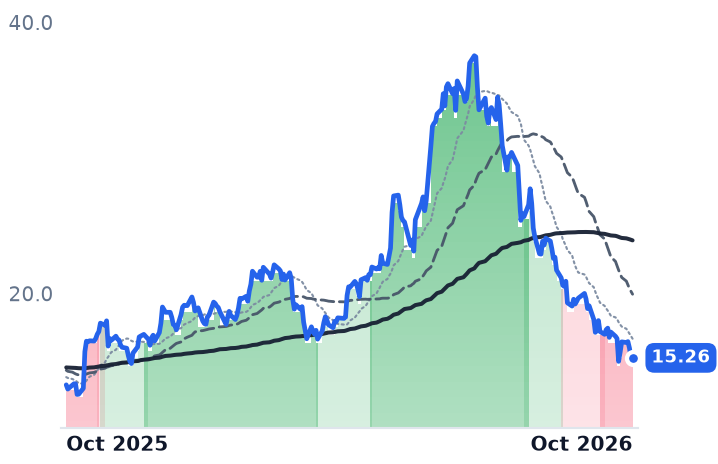
MEC | Mayville Engineering | Welding & Cutting Solutions | ⚠️ Emerging Bear | −22.2% | +15.0% |
12-month price & trend
| Ticker | Mkt cap | P/E | P/E fwd | P/S | P/S fwd | P/GP | P/GP fwd | EV/EBITDA | FCF yld |
|---|---|---|---|---|---|---|---|---|---|
LECO | $14.3B | 26.0x | 23.4x | 3.2x | 3.0x | 8.9x | 8.4x | 17.1x | 3.6% |
ESAB | $4.1B | 24.5x | 12.3x | 1.4x | 1.3x | 3.8x | 3.7x | 13.3x | 4.8% |
MEC | $320.7M | n/m | 59.0x | 0.5x | 0.5x | 6.4x | 5.9x | 19.6x | -1.4% |
Consensus projections
| Ticker | FY2026E | FY2027E | FY2028E | |
|---|---|---|---|---|
LECO | Revenue | +10.7% | +6.2% | +6.4% |
| EPS | +14.9% | +11.8% | +10.0% | |
ESAB | Revenue | +13.3% | +9.0% | +4.4% |
| EPS | +2.8% | +17.7% | +12.7% | |
MEC | Revenue | +16.5% | +14.1% | +8.1% |
| EPS | +121.9% | +293.2% | +40.4% |
Forward fiscal years only. Blank means no analyst coverage for that year.
Lincoln Electric sold more welding wire, electrode and robotic cells in its June quarter than in any quarter of its history, and only about two of the ten points of organic growth came from shipping more of it. The rest was price. The Cleveland company, founded in 1895 and selling arc welding equipment and consumables through industrial distributors, reported net sales up 12.0% to a record $1,220m, with organic sales up 10.1% split roughly 8 points of price, 2 points of volume, 1.5 points from the Alloy Steel acquisition and 40 basis points of currency.
That quarter was taken as evidence that the American industrial cycle had turned under the price increases. It is better evidence of something narrower: Lincoln is paid in metal it passes through, and the pass-through is what laps.
The dollar is burned, not bought
Most of what Lincoln ships is consumed. On 2025 revenue the split was roughly $2.28bn of consumables against $1.08bn of equipment and $870m of automation, and Lincoln's North American brand share across the complete equipment-plus-consumables package is estimated near 40%. A stick electrode is reordered because a factory ran a shift; a robotic cell is a quoted project that can be deferred. Both sit in one revenue line, and they can move in opposite directions inside it.
In the June quarter they moved the same way. Americas Welding sales rose 11.2% to $774.4m with volume contributing 7.1 of those points, equipment organic sales accelerated to high-teens growth, and consumable volumes grew at a low-double-digit rate that management put in line with general industrial production. Automation sales were $229m on a record backlog. "Second quarter marked a solid inflection to volume growth in the business after nine quarters of compression," chief executive Steven Hedlund said on the July 30 call. One quarter earlier, pricing had contributed 10.4 points while volumes fell 2.6%.
The cost side explains where the price came from. US hot-rolled coil averaged about $1,213 a ton in September and the weekly mill benchmark rose for three consecutive weeks with 50% steel tariffs capping imports. Nucor has raised prices eight weeks running. Lincoln's own list prices follow, late.
Where the brazing adders go next
The clearest price-masked volume is the Harris Products Group, Lincoln's gas-equipment and brazing-alloy business, which is about a sixth of group sales. Harris revenue rose 26.9% to $201.9m with pricing contributing 34.2 percentage points, mechanical adders that pass silver and copper through, while volume fell 8.2% on weak HVAC and retail channels. Silver set a record of $121.62 an ounce on January 29 and traded at $61.56 on October 6. When the comparison laps, that contribution runs in reverse against volume already shrinking.
International Welding is the other soft leg: adjusted operating profit down 13% to $27m on volumes off about 5% in Europe, with the Middle East conflict costing the segment $6m-$7m of sales a quarter.
Then the capex leg arrived separately from the quarter. Shares fell 8.4% intraday on September 10 after chief financial officer Gabe Bruno told the Jefferies industrials conference that customers were delaying final investment decisions on major capital projects, that automotive production was down mid-single digits, and that Americas pricing actions only became effective in September.
What the results account for, and what they do not
Operating income grew 23.9% on revenue up 12.1% and margin reached 18.38% while gross margin slipped 40 basis points: the earnings came from leverage on volume, which is the part of the mix that is one quarter old. The group's reported growth stands on price that the metal market is now unwinding at Harris and only began flowing in the Americas last month. Lincoln is 9.5% below its August 27 record close and still up 11.4% over twelve months, so the market has marked down the price contribution without disputing the volume turn. At 23.4x forward earnings against 26.0x trailing, it is discounting barely a year of the 14.9% earnings growth consensus carries for 2026. September's ISM manufacturing reading of 54.5 with prices paid at 77.9 says factory hours are expanding and input costs faster.
ESAB, which sells the same consumables-and-equipment package through independent distributors with roughly two-thirds of revenue in consumables, shows the geography running the other way: second-quarter revenue up 12.9% to $807.6m but only 2.5% organic, with double-digit Middle East declines, and full-year adjusted profit guidance raised to $615m-$625m. "We expect to mitigate the transitory cost inflation related to logistics and commodity price increases over the next few quarters," chief executive Shyam Kambeyanda said on the August 6 call. The shares are down 43.5% over twelve months at 12.3x forward earnings, carrying total debt that went from $1.24bn to $2.42bn for the $1.45bn Eddyfi inspection deal.
Lincoln's third-quarter report comes before the open on October 27. It is the first quarter in which the price contribution starts to shrink on its own, and the first in which the wire has to move by itself.