

Schneider Electric Is Buying PTC at a 42% Premium for Manufacturers' Product Data
Hypothesis Opus 5 · Research Opus 5 · Writing Opus 5 · Prompt v1.7
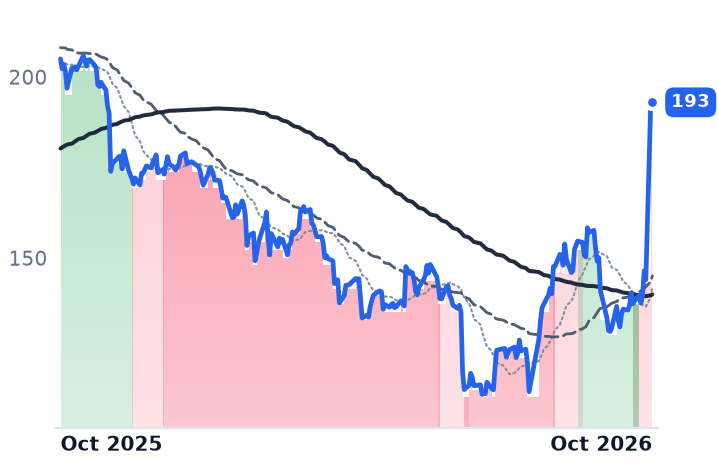
A French electrical-equipment group has agreed to buy the Boston software house whose per-seat licences the market spent this year writing off, and it is paying cash: $205 a share, or $23.7bn including debt. PTC now sits at a 5.9% discount to that price, which is what the market charges for a closing anticipated by the third quarter of 2027 and for the regulators in between.
The deal is all of PTC's move and most of its sector's. Strip PTC, Synopsys and Cadence out of the eight engineering- and developer-software names and the remaining five average -1.6% over thirty days. PTC's constant-currency recurring revenue grew 9.1% last quarter while reported revenue fell on divestitures, which is why the buyer's price looks like roughly nine times recurring revenue and nothing a sales screen would recognize. GitLab and Figma, the seat-priced pair, were not invited.
| Ticker | Company | Segment | Trend · 13mo | 30D | 1Y |
|---|---|---|---|---|---|
| The subject · what this brief is about | |||||
PTC | PTC | Specialized Enterprise Solutions | 🌱 Emerging Bull | +44.6% | −5.9% |
GTLB | GitLab | Developer Tools & DevOps | 🟢 Cont. Bull | +9.5% | +9.7% |
FIG | Figma | Design & Content Creation | 🌱 Emerging Bull | −3.6% | −61.5% |
| Compared against · context, not the story | |||||
ADSK | Autodesk | Design & Content Creation | 🔴 Cont. Bear | +9.5% | −28.5% |
SNPS | Synopsys | EDA & Design Tools | 🔴 Cont. Bear | +26.5% | +5.6% |
CDNS | Cadence Design Systems | Developer Tools & DevOps | 🔴 Cont. Bear | +23.7% | +1.8% |
ADBE | Adobe | Design & Content Creation | 🔴 Cont. Bear | −7.3% | −32.0% |
TEAM | Atlassian | Developer Tools & DevOps | 🌱 Emerging Bull | +9.5% | +28.8% |
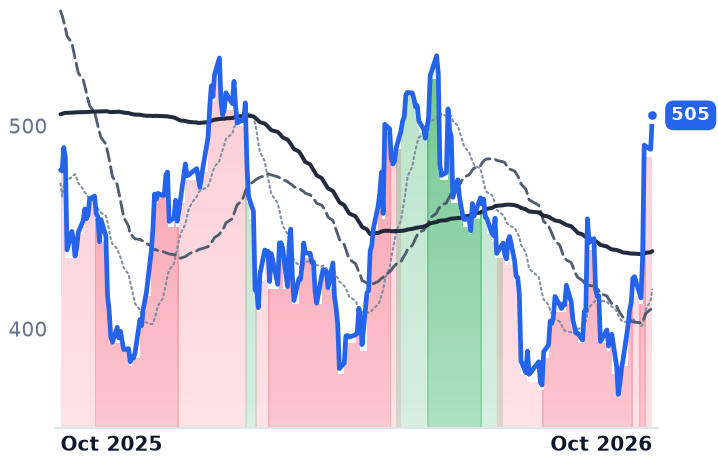
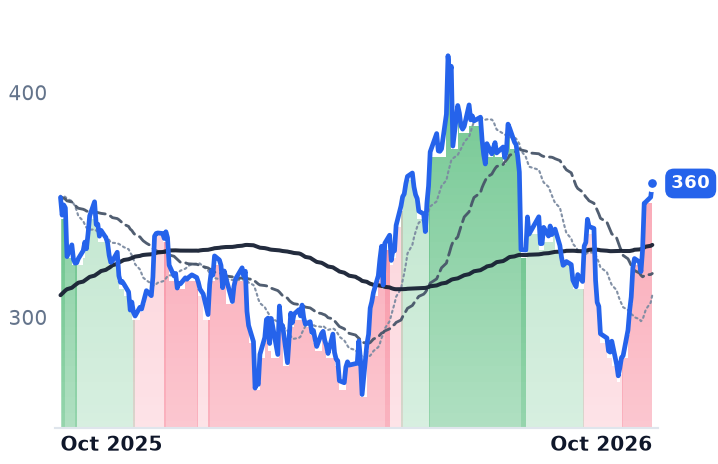
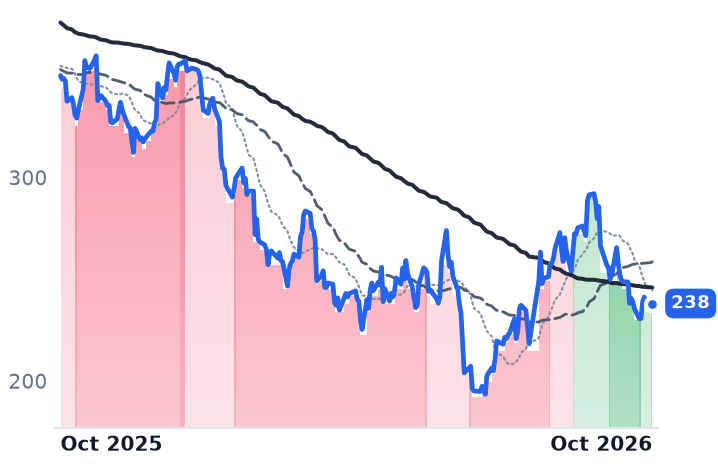
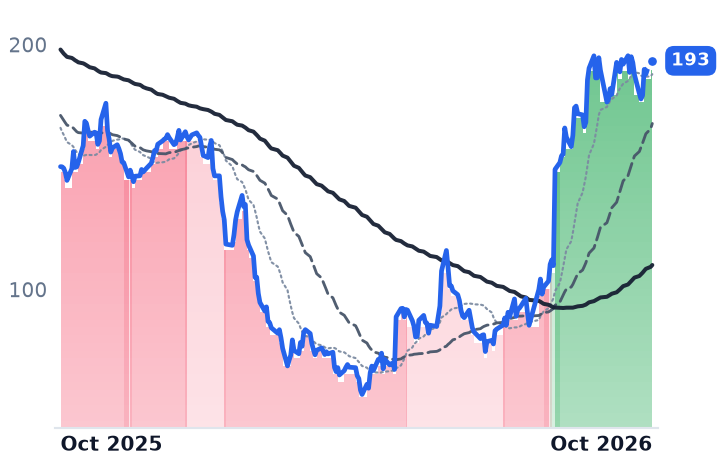
12-month price & trend
| Ticker | Mkt cap | P/E | P/E fwd | P/S | P/S fwd | P/GP | P/GP fwd | EV/EBITDA | FCF yld |
|---|---|---|---|---|---|---|---|---|---|
PTC | $22.3B | 18.6x | 21.6x | 7.5x | 7.7x | 9.0x | 9.1x | 14.1x | 4.2% |
ADSK | $44.8B | 27.3x | 16.8x | 5.7x | 5.4x | 6.3x | 5.9x | 19.2x | 6.3% |
GTLB | $8.7B | n/m | 59.6x | 8.3x | 7.7x | 9.6x | 9.0x | n/m | 2.5% |
| Ticker | Mkt cap | P/E | P/E fwd | P/S | P/S fwd | P/GP | P/GP fwd | EV/EBITDA | FCF yld |
|---|---|---|---|---|---|---|---|---|---|
FIG | $10.7B | n/m | 76.7x | 8.3x | 7.3x | 10.5x | 9.2x | n/m | 2.2% |
SNPS | $87.1B | 187.9x | 30.8x | 9.2x | 9.0x | 12.8x | 12.4x | 30.7x | 3.2% |
CDNS | $94.6B | 67.9x | 42.2x | 16.2x | 15.0x | 18.3x | 16.9x | 43.8x | 1.8% |
| Ticker | Mkt cap | P/E | P/E fwd | P/S | P/S fwd | P/GP | P/GP fwd | EV/EBITDA | FCF yld |
|---|---|---|---|---|---|---|---|---|---|
ADBE | $93.6B | 13.1x | 9.6x | 3.6x | 3.5x | 4.0x | 3.9x | 9.4x | 11.7% |
TEAM | $49.4B | n/m | 34.2x | 7.5x | 6.6x | 8.9x | 7.8x | 232.7x | 2.7% |
Consensus projections
| Ticker | FY2026E | FY2027E | FY2028E | |
|---|---|---|---|---|
PTC | Revenue | +4.9% | +6.4% | +7.5% |
| EPS | +20.5% | +9.0% | +9.9% | |
ADSK | Revenue | +17.0% | +16.1% | +11.0% |
| EPS | +23.0% | +23.0% | +12.5% | |
GTLB | Revenue | +25.6% | +19.5% | +15.5% |
| EPS | +40.9% | −2.9% | +19.9% | |
FIG | Revenue | +40.4% | +23.8% | +24.0% |
| EPS | −24.5% | +24.8% | +32.1% | |
SNPS | Revenue | +37.4% | +10.9% | +11.9% |
| EPS | +15.2% | +16.9% | +18.0% | |
CDNS | Revenue | +19.7% | +13.6% | +11.7% |
| EPS | +15.3% | +17.0% | +14.3% | |
ADBE | Revenue | +12.3% | +9.3% | +8.7% |
| EPS | +17.6% | +13.4% | +14.0% | |
TEAM | Revenue | +24.7% | +15.4% | +14.7% |
| EPS | +55.5% | −0.2% | +21.6% |
Forward fiscal years only. Blank means no analyst coverage for that year.
Schneider Electric agreed on 4 October to pay $205 a share in cash for PTC, the Boston software house whose Creo design and Windchill lifecycle-management products sit inside manufacturers' engineering change processes. The deal values PTC's equity at about $22.6bn and implies a $23.7bn enterprise value, a 42.3% premium to the last close before the announcement of $144.03 on 2 October. The shares gapped 33.5% to $192.26 the next session on 29.5m shares against 1.1m the day before, and closed at $193.00 on 6 October.
That is a 5.9% discount to the cash price, and it is not a view on design-software demand. It is the spread the market charges for a closing the companies anticipate by the third quarter of 2027, subject to a majority shareholder vote and regulatory clearances. The belief being tested is larger: roughly $2 trillion of enterprise-software market value has gone since early 2026 on the thesis that AI agents would eat per-seat licences. An industrial buyer has now put $23.7bn of cash behind the opposite reading of one such installed base, backed by a debt commitment letter for up to $25bn from Morgan Stanley Europe SE and Société Générale, with a $700m break fee.
What the revenue line hides
PTC's reported revenue fell 6.8% year over year in the June quarter, to $600.0m, because it had sold businesses. The meter that matters ran the other way: constant-currency annual recurring revenue excluding divestitures reached $2.448bn, up 9.1%, above the top of guidance, and full-year growth guidance went to 9-9.5%. Free cash flow, the number management guides to, came in at $249m against a $240-245m range. On a midpoint exiting ARR near $2.534bn, the $23.7bn enterprise value works out to roughly 9.4 times recurring revenue by our calculation, and about 16.7 times consensus EBITDA of $1.418bn, against 14.1 times trailing where the stock sat on its own.
Both chief executives described the asset in the same terms. "PTC provides the software the world's leading manufacturers and product companies rely on to design, build and maintain great products and unlock more value from their product data in an increasingly AI-driven world," PTC's Neil Barua said. Schneider's Olivier Blum called the combination "the industry's most complete Software & AI powerhouse". The buyer put numbers on it: EUR 250m of cost synergies by year three and about EUR 800m of revenue synergies from cross-selling and joint development.
Three names made the month
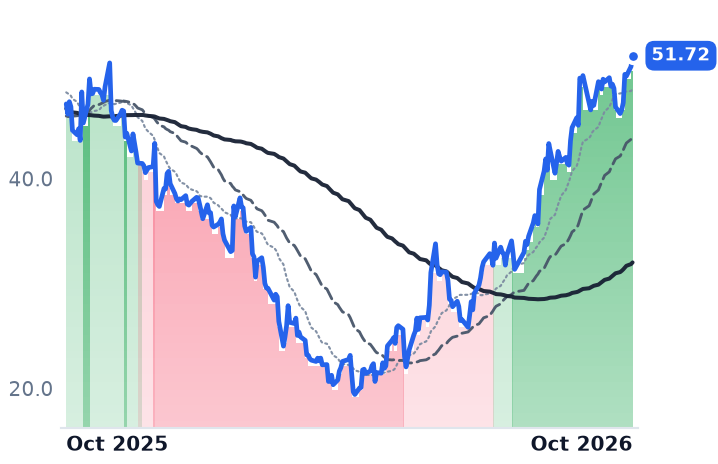
Over the thirty days to 6 October, PTC gained 36.9%, Synopsys 28.3% and Cadence 22.8%; Autodesk added 6.1%, GitLab 3.8%, Atlassian 2.0%, while Figma lost 9.1% and Adobe 10.7%. The three leaders supply essentially the whole eight-name average of +10.0%. Synopsys's gain has its own dated cause in a different end market, chip design: fiscal third-quarter revenue up roughly 42% to $2.48bn including about $711m from Ansys, raised full-year guidance, and a Morgan Stanley upgrade to Overweight on 8 September.
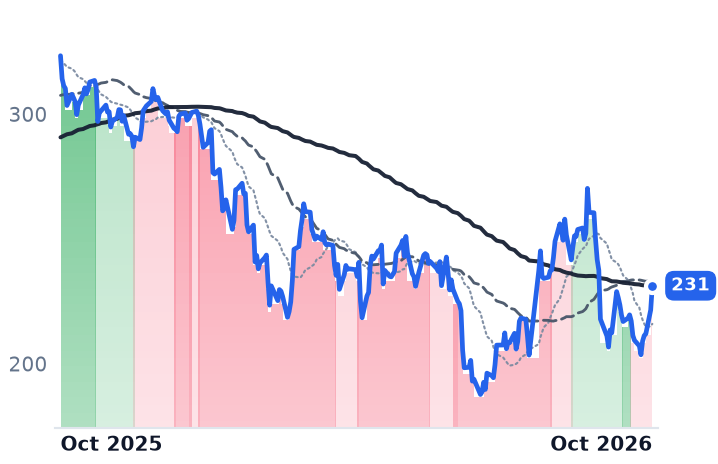
Autodesk is the engineering-software name re-rating on its own results rather than on a buyer. June-quarter revenue grew 16.1% to $2.046bn, free cash flow was $561m, and full-year free-cash-flow guidance went to $2.725-2.75bn. It trades at 16.8 times forward earnings against 27.3 times trailing, the compression sizing the growth the market expects. On the 27 August call Andrew Anagnost framed the moat the way the Schneider deal does: "The future of AI won't belong to the company with the best single model. It will belong to the platform that combines the richest context with the right models." Autodesk is also cutting the price of AI rather than metering it, taking its Flex token minimum from $300 to $99 while warning that gross margins will face compression from AI workloads over time.
The seat-priced pair nobody bid for
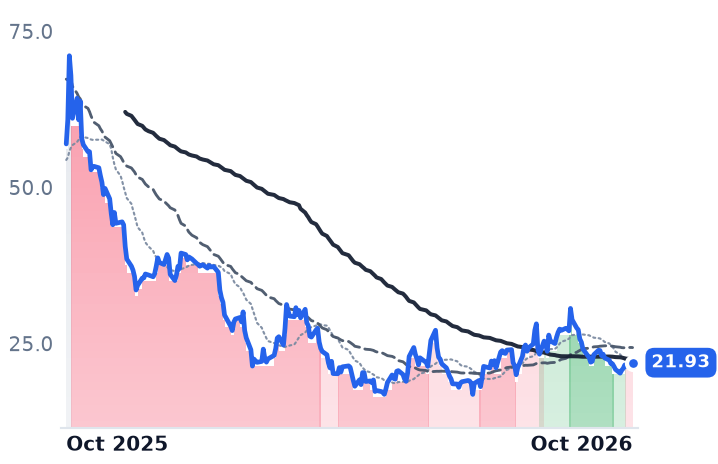
GitLab, which sells a single-application software-development platform, and Figma, the browser-based design tool, now cost the same per revenue dollar: 8.3 times trailing sales each. GitLab's growth is the slower of the two at 21.3%, with a full-year guide of 18-19% and a multiple that has expanded from 5.5 times sales in late July; its net ARR still grew 42% and dollar-based net retention accelerated to 117%. Figma grew 48.2%, with net dollar retention of 136% and 15,964 customers above $10,000 of ARR, its operating margin improving from -64.4% to -31.7% over three quarters, and it is down 61.5% over twelve months. Consensus has its growth halving to 23.8% next year, which is the whole argument.
So the sector's good month decomposes into three company-specific events and five names going nowhere. PTC's price is now a cash number with a vote and an antitrust file attached; Synopsys earned its re-rating on Ansys; Atlassian's three-month gain traces largely to one 35.8% session after its fourth-quarter shareholder letter. Nothing in the week changed what a developer seat is worth. What changed is that an industrial buyer, not a software one, was willing to pay nine times recurring revenue for product data embedded in change-control workflows, and the market has not yet decided whether any seat-licence business qualifies for the same compliment.
PTC holders are now long a date rather than a business. GitLab reports next on 7 December, and that print, not the merger, is where the seat question gets answered.