

Paycom Earns Interest on $2.9bn of Client Payroll Cash and the Fed Just Raised the Yield
Hypothesis Opus 5 · Research Opus 5 · Writing Opus 5 · Prompt v1.7
Employment-indexed software has been read all year as hostage to two falling meters, short rates and hiring. Both reversed in September. The Federal Reserve raised its target range to 3.75-4.00% on 16 September, its first increase in three years, and ADP's payroll file showed private employers adding 90,000 jobs, up from a revised 36,000. The money Paycom holds in trust between a client's payroll debit and the employee's credit, about $2.9bn on average daily balance, now earns more rather than less.
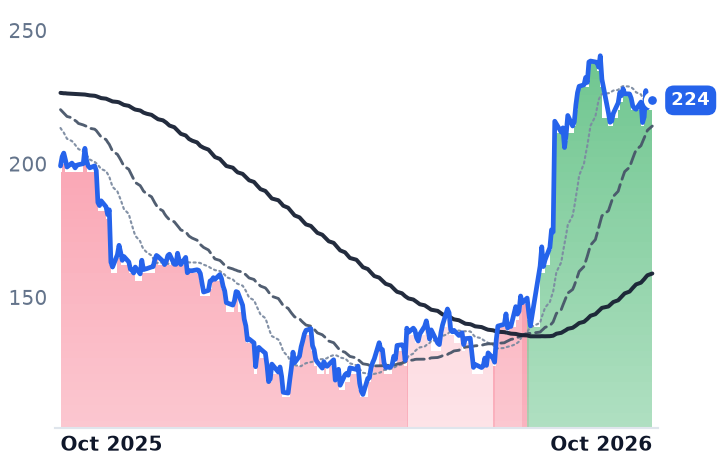
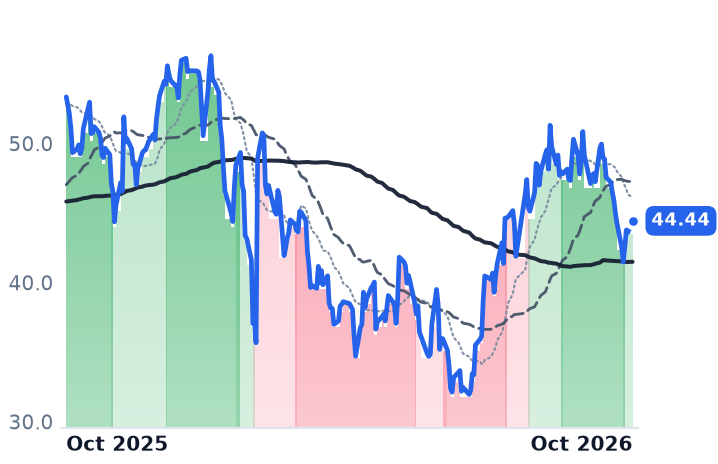
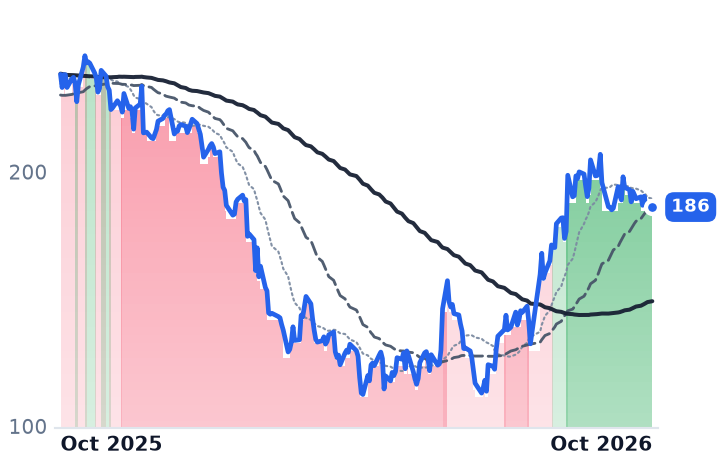
What fell was the price: the 10-year Treasury yield reached 5.28% on 2 October. Paycom's own results carry its advance, with operating income up 50% on a 31.7% margin, though most of the earnings growth is margin and an 18.5% smaller share count. Workday's do not: total backlog growth halved to 8% while its price-to-gross-profit went from 4.31x in May to 6.34x. BILL, at 2.42x forward sales, is the one whose valuation gap has not closed, and the one whose take rate is still contracting.
| Ticker | Company | Segment | Trend · 13mo | 30D | 1Y |
|---|---|---|---|---|---|
| The subject · what this brief is about | |||||
PAYC | Paycom Software | HR & Workforce Management | 🌱 Emerging Bull | +2.1% | +12.3% |
BILL | Bill.com | Fintech & Digital Finance | 🌱 Emerging Bull | −5.7% | −16.7% |
WDAY | Workday | Enterprise Resource Planning | 🌱 Emerging Bull | −0.1% | −21.9% |
| Compared against · context, not the story | |||||
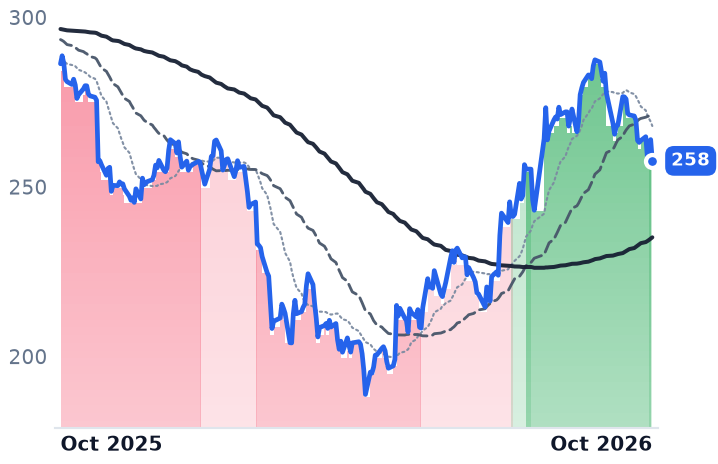
ADP | Automatic Data Processing | HCM Software & Payroll | 🌱 Emerging Bull | −4.1% | −10.0% |
INTU | Intuit | Enterprise Resource Planning | 🔴 Cont. Bear | −10.4% | −57.8% |
NOW | ServiceNow | Specialized Enterprise Solutions | 🌱 Emerging Bull | +0.4% | −26.4% |
DOCU | DocuSign | Specialized Enterprise Solutions | 🌱 Emerging Bull | +6.7% | −4.4% |
MNDY | monday.com | Other | 🌱 Emerging Bull | −8.6% | −58.2% |
PCTY | Paylocity | HR & Workforce Management | 🌱 Emerging Bull | −0.5% | −7.6% |
TEAM | Atlassian | Developer Tools & DevOps | 🌱 Emerging Bull | +10.0% | +29.3% |
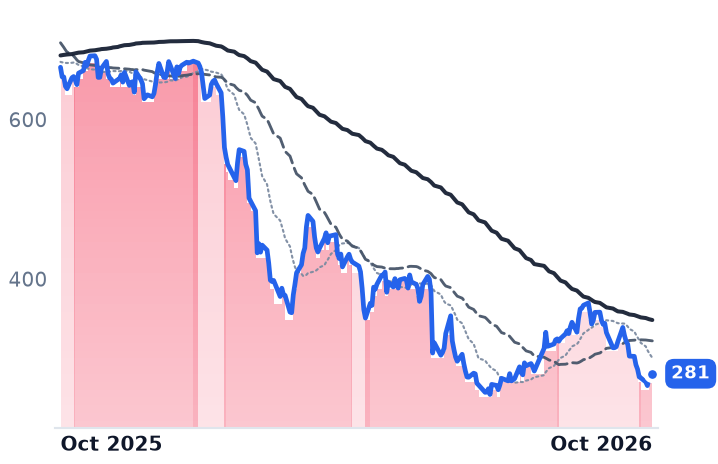
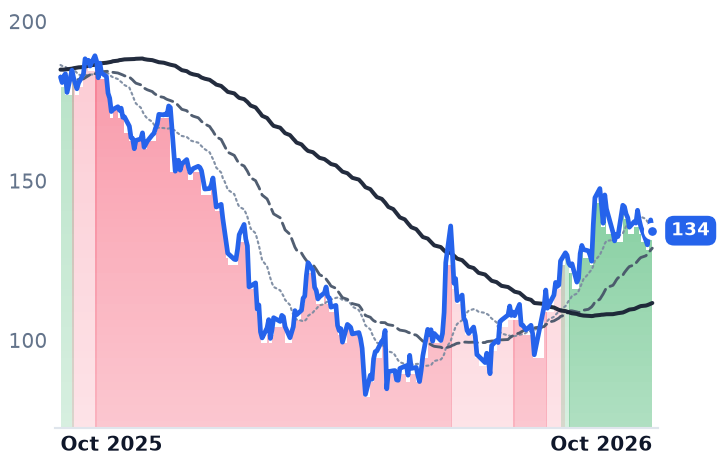
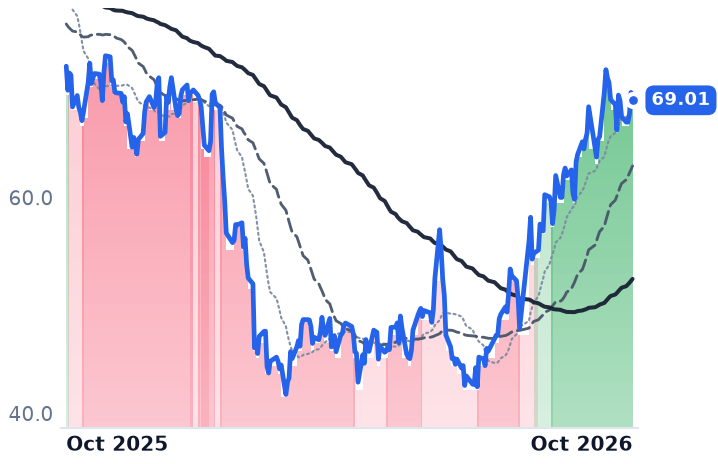
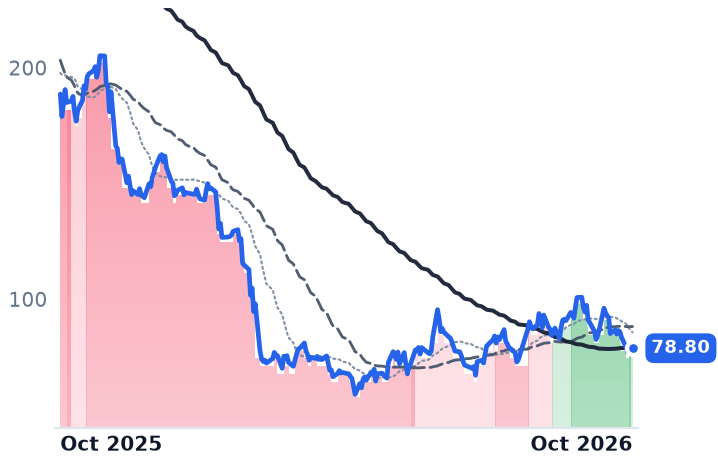
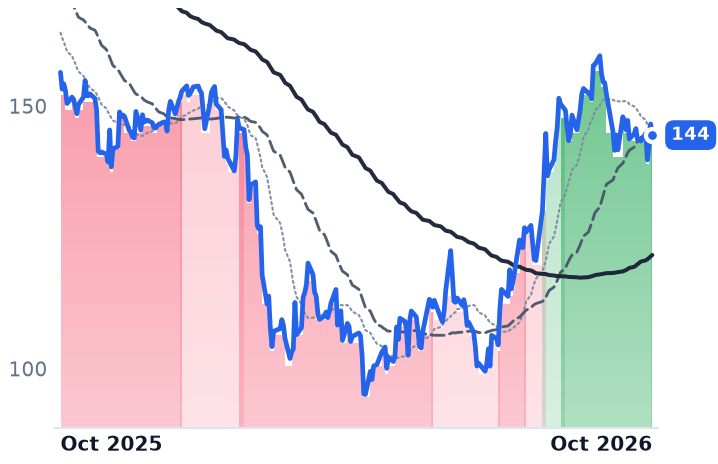
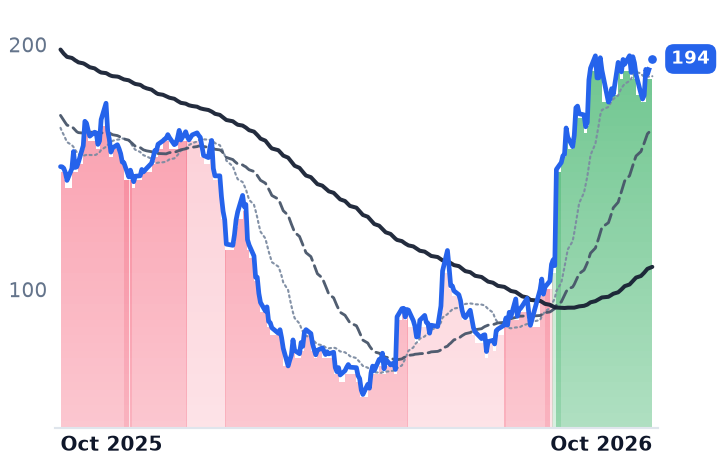
12-month price & trend
| Ticker | Mkt cap | P/E | P/E fwd | P/S | P/S fwd | P/GP | P/GP fwd | EV/EBITDA | FCF yld |
|---|---|---|---|---|---|---|---|---|---|
PAYC | $10.1B | 23.7x | 18.5x | 4.7x | 4.6x | 5.9x | 5.7x | 12.1x | 7.5% |
BILL | $4.4B | n/m | 11.8x | 2.7x | 2.4x | 3.3x | 3.0x | 42.1x | 10.8% |
WDAY | $48.8B | 37.6x | 16.8x | 4.8x | 4.6x | 6.3x | 6.0x | 31.1x | 5.8% |
| Ticker | Mkt cap | P/E | P/E fwd | P/S | P/S fwd | P/GP | P/GP fwd | EV/EBITDA | FCF yld |
|---|---|---|---|---|---|---|---|---|---|
ADP | $110.6B | 25.2x | 22.6x | 5.0x | 4.8x | 10.5x | 9.9x | 17.6x | 4.5% |
INTU | $97.9B | 21.7x | 14.8x | 4.6x | 4.2x | 5.6x | 5.1x | 14.8x | 8.8% |
NOW | $140.1B | 84.1x | 33.3x | 9.5x | 8.6x | 12.7x | 11.6x | 41.8x | 3.3% |
| Ticker | Mkt cap | P/E | P/E fwd | P/S | P/S fwd | P/GP | P/GP fwd | EV/EBITDA | FCF yld |
|---|---|---|---|---|---|---|---|---|---|
DOCU | $13.2B | 41.4x | 14.9x | 3.9x | 3.8x | 4.9x | 4.7x | 20.3x | 9.1% |
MNDY | $3.8B | 38.1x | 16.7x | 2.8x | 2.6x | 3.2x | 2.9x | 34.3x | 7.8% |
PCTY | $8.5B | 31.6x | 17.9x | 4.8x | 4.5x | 6.9x | 6.5x | 16.6x | 5.3% |
| Ticker | Mkt cap | P/E | P/E fwd | P/S | P/S fwd | P/GP | P/GP fwd | EV/EBITDA | FCF yld |
|---|---|---|---|---|---|---|---|---|---|
TEAM | $49.4B | n/m | 34.2x | 7.5x | 6.6x | 8.9x | 7.8x | 232.7x | 2.7% |
Consensus projections
| Ticker | FY2026E | FY2027E | FY2028E | |
|---|---|---|---|---|
PAYC | Revenue | +7.7% | +7.2% | +8.2% |
| EPS | +30.9% | +15.6% | +11.0% | |
BILL | Revenue | +13.2% | +11.1% | +11.1% |
| EPS | +26.1% | +42.3% | +16.8% | |
WDAY | Revenue | +13.4% | +11.8% | +10.5% |
| EPS | +26.5% | +22.0% | +19.5% | |
ADP | Revenue | +7.0% | +5.9% | +5.7% |
| EPS | +11.0% | +10.7% | +9.2% | |
INTU | Revenue | +13.9% | +9.7% | +9.4% |
| EPS | +18.5% | +1.9% | +13.1% | |
NOW | Revenue | +22.4% | +18.7% | +18.6% |
| EPS | +17.1% | +23.2% | +21.4% | |
DOCU | Revenue | +8.4% | +9.2% | +8.0% |
| EPS | +6.9% | +22.1% | +12.8% | |
MNDY | Revenue | +19.8% | +15.1% | +14.6% |
| EPS | +27.8% | +22.3% | +19.1% | |
PCTY | Revenue | +11.1% | +7.5% | +7.6% |
| EPS | +15.4% | +9.0% | +9.7% | |
TEAM | Revenue | +24.7% | +15.4% | +14.7% |
| EPS | +55.5% | −0.2% | +21.6% |
Forward fiscal years only. Blank means no analyst coverage for that year.
On 16 September the Federal Reserve raised its target range a quarter point to 3.75-4.00%, its first increase in three years, on a 12-0 vote, and signalled one more. For Paycom, which sells a single cloud payroll and human-capital platform to small and mid-sized American employers at a price per employee per month, that decision lands in a line most readers of its income statement skip past: the interest it collects on money sitting in trust between a client's payroll debit and the employee's or the tax authority's credit. That balance averaged about $2.9bn in the June quarter, up 9% from a year earlier.
Back-office software has been read all year as hostage to two falling meters, short rates and hiring. In September both turned up. ADP's own payroll files counted private employers adding 90,000 jobs, against a revised 36,000 in August, with gross pay up 4.7% year on year. What fell instead was the price, as the 10-year Treasury yield moved from 4.75% at the end of August to 5.28% on 2 October and discounted subscription cash flows harder. With no company news behind the one-month pullbacks of 3% to 10% across these three, the discount rate is the likelier reading.
The trust account is the tailwind now
Paycom's interest on funds held for clients was $113.0m in 2025, equal to 5.5% of revenue and 19.9% of that year's operating income, and management guided it to roughly $105m in 2026 even as balances grew. Wage inflation does part of the work: dollars through the trust account rise with pay even when bodies do not, which is why average balances grew 9% while employee records on the platform grew 5%.
The core meter has been steadier than the recovery in the shares implies. Revenue grew 9.8% in the June quarter, inside a band that has run between 7.8% and 10.2% over four quarters. Operating income rose 50.0% to $168.5m, lifting the margin to 31.7% from 23.2%, after Paycom cut more than 500 roles it said artificial intelligence could do and automated part of its own billable service work through Beti and GONE. "I wouldn't say we use AI for AI's sake," chief executive Chad Richison told investors on 5 August. "Automation matters and there's a great amount of accuracy you get with automation. In our industry, you only get points for being accurate."
The per-share arithmetic is a different story. Diluted shares fell 18.5% in a year, after roughly $1.4bn of buybacks part-funded by $900m drawn on a revolving facility. Consensus has revenue growing 7.7% this year and earnings 30.9%: the gap is margin and share count. At 18.5x forward earnings against roughly 9.4x implied on the same estimate at April's low, two-thirds of the de-rating has been handed back, and the consensus 12-month target of $214.23 sits below the current price.
BILL earns the same two dollars in the opposite order
BILL Holdings runs accounts-payable and spend-management software for small businesses, charging a subscription per customer plus a cut of the payments it moves. It shifted $98.2bn of total payment volume in the June quarter, up 14%, but its accounts-payable and receivable take rate fell half a basis point to 16.0 basis points as larger customers routed volume over free bank transfers instead of card and instant rails. "A bigger TPV number monetized at the same rate still gives you the growth," founder-chief executive René Lacerte said on that call. Businesses served fell to 479,300 from 498,500 in December, and fiscal 2027 revenue is guided to 9-12% after 13.0% delivered. Its own float, about 9% of revenue, was guided to shrink roughly 7% this year, which the September hike argues against.
BILL is also the only one of the three whose valuation gap has not been spent: 2.42x forward sales, 2.99x forward gross profit, 1.26x book and a 10.8% trailing free-cash-flow yield, 54% below its two-year high, on a payments network its licences and bank partnerships took years to assemble.
Workday has no second meter
Workday sells human-capital and financial software to large enterprises and bills headcount-indexed subscriptions with no payment or float line inside them. Its contracted-demand gauge is decelerating: twelve-month current remaining performance obligation of $9.03bn grew 14.2%, total backlog of $27.4bn grew only 8%, third-quarter obligation growth is guided to 11-12%, and the early fiscal 2028 outlook is for subscription growth near 11%. "This is Workday's moment, I have never felt better about where we are headed," chief executive Aneel Bhusri said on 27 August, citing more than $100m of new annual contract value from artificial-intelligence products. Only 200 customers signed paid flex-credit contracts against 5,500 using its agents, with material revenue placed in fiscal 2028.
Meanwhile its price-to-gross-profit went from 4.31x on 3 May to 6.34x, roughly 47% of multiple expansion into halving backlog growth. Much of that arrived before any disclosure, on Silver Lake's reported approach to take the company private at up to $43bn and a rotation out of chips into software.
What the results account for
Across three months Paycom gained 60%, Workday 35% and BILL 10%, and only the first is explained by what the companies disclosed. Paycom's margin and buyback are real and self-generated, which is why its advance has a floor and also why it is nearly fully paid for at 18.5x forward earnings on 7.7% expected revenue growth. Workday's is deal speculation and a discount-rate trade priced into a bookings line going the other way. BILL has the opposite problem: cheap on cash flow, with the risk its own investors named first, fee compression on business payments, visibly arriving in a half-basis-point take rate.
The hike helps two of these three in the one place nobody underwrites. It raises the yield on cash neither company owns, at the same moment it lowers what the market will pay for the subscriptions they do.