

LandBridge Takes Just 5.4 Cents of Each Dollar From Crude; Texas Pacific Takes 59.2 Cents
Hypothesis Opus 5 · Research Opus 5 · Writing Opus 5 · Prompt v1.6
Two landowners bid the same Reeves County acreage to the same data-center developers, and only one of them gets paid in barrels. That composition difference now cuts the opposite way from the share prices.
Texas Pacific Land reported record quarterly revenue of $246.1m with oil-and-gas royalties up 53%, and sits 28% below its March high. LandBridge, whose surface-use fees grew 52.6% on produced-water volumes, carries 46.6x trailing enterprise value to EBITDA against Texas Pacific's 31.1x.
The fee stream has earned a premium for ignoring crude. What it has not yet earned is contracted cash from a giga-scale buyer with an investment-grade balance sheet. Texas Pacific has one of those, with Chevron.
| Ticker | Company | Segment | Trend · 13mo | 30D | 1Y |
|---|---|---|---|---|---|
| The subject · what this brief is about | |||||
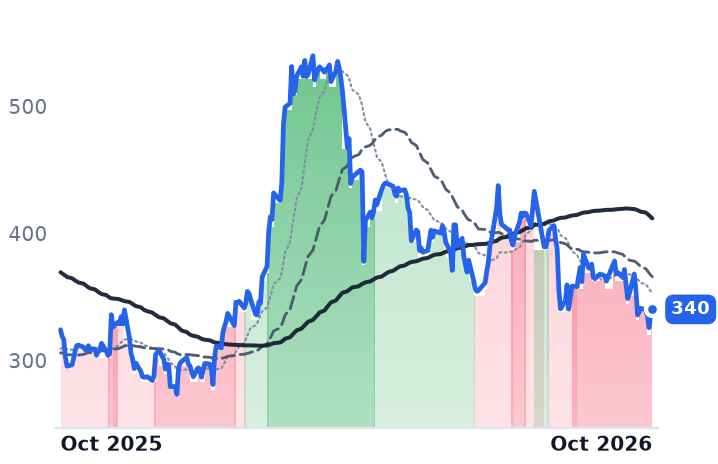
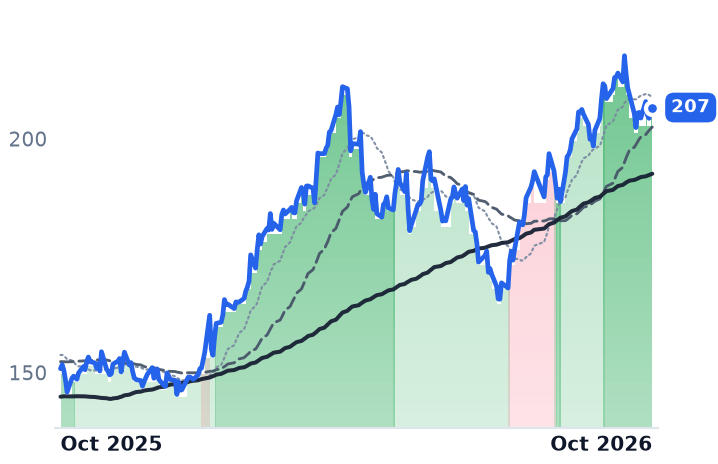
TPL | Texas Pacific Land | Royalty & Mineral Interests | 🔴 Cont. Bear | −6.1% | +4.9% |
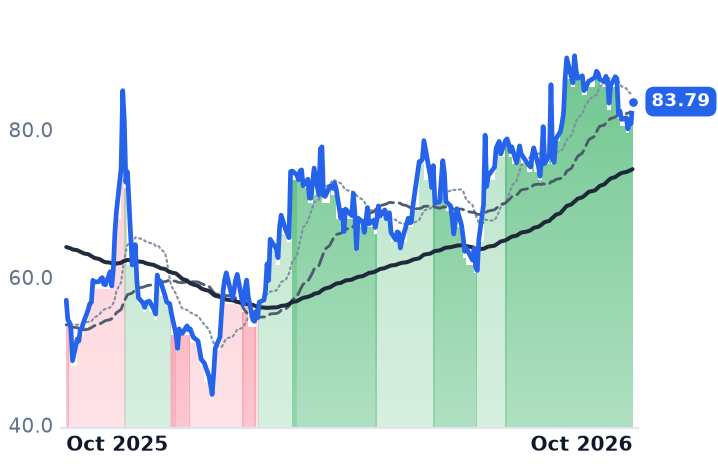
LB | LandBridge Company LLC | Production Infrastructure | 🟢 Cont. Bull | −3.2% | +47.3% |
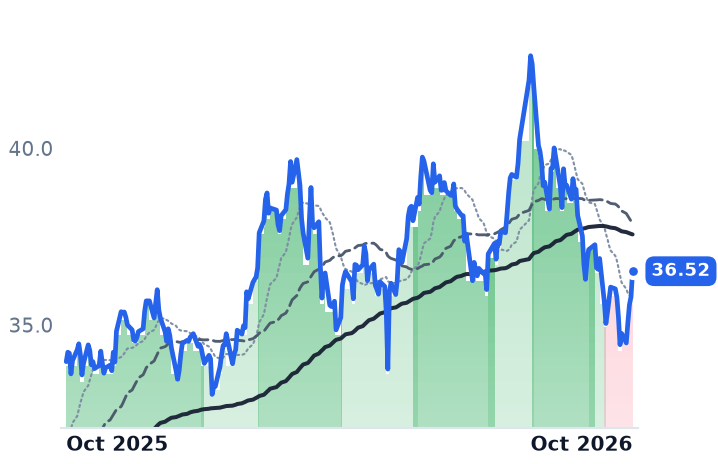
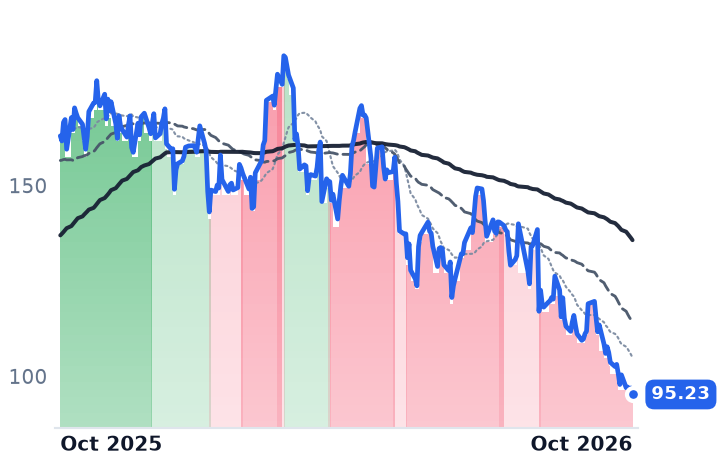
BIP | Brookfield Infrastructure Partners | Infrastructure & Transport Conglomerates | 🟢 Cont. Bull | −1.6% | +7.5% |
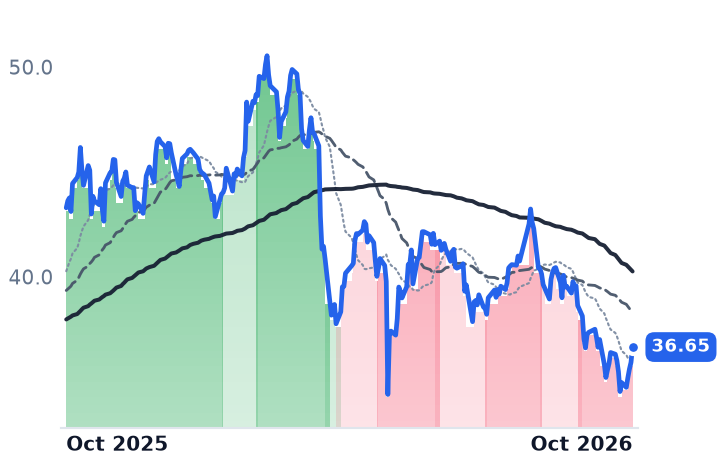
BIPC | Brookfield Infrastructure | International Gas Infrastructure | 🔴 Cont. Bear | −1.9% | −15.3% |
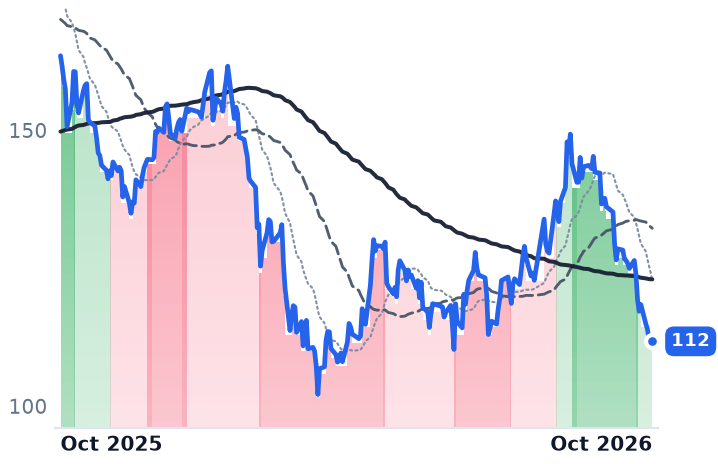
BX | Blackstone | Alternative & Private Capital | 🌱 Emerging Bull | −17.9% | −31.7% |
KKR | KKR | Alternative & Private Capital | 🌱 Emerging Bull | −16.2% | −28.6% |
| Compared against · context, not the story | |||||
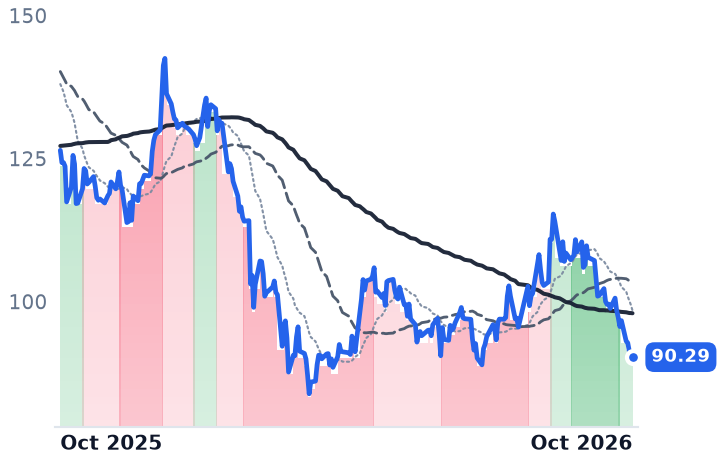
CVX | Chevron | Upstream Exploration & Production | 🟢 Cont. Bull | −0.9% | +37.0% |
NRG | NRG Energy | Integrated Retail & Generation | 🔴 Cont. Bear | −20.0% | −41.6% |
12-month price & trend
| Ticker | Mkt cap | P/E | P/E fwd | P/S | P/S fwd | P/GP | P/GP fwd | EV/EBITDA | FCF yld |
|---|---|---|---|---|---|---|---|---|---|
TPL | $23.5B | 43.3x | 36.6x | 26.1x | 23.2x | 26.1x | 23.2x | 31.1x | 2.2% |
LB | $6.5B | 37.1x | 44.5x | 28.6x | 25.7x | 31.0x | 27.8x | 46.6x | 2.6% |
BIP | $16.8B | 50.9x | 64.3x | 0.7x | 1.0x | 2.5x | 3.7x | 7.0x | -3.4% |
| Ticker | Mkt cap | P/E | P/E fwd | P/S | P/S fwd | P/GP | P/GP fwd | EV/EBITDA | FCF yld |
|---|---|---|---|---|---|---|---|---|---|
BIPC | $4.5B | n/m | — | 1.2x | 1.2x | 1.9x | 1.9x | 4.3x | -4.7% |
CVX | $380.5B | 34.4x | 14.2x | 2.0x | 1.7x | 8.0x | 6.6x | 10.4x | 3.5% |
NRG | $21.2B | — | 11.3x | — | 0.6x | — | — | 10.5x | 1.6% |
| Ticker | Mkt cap | P/E | P/E fwd | P/S | P/S fwd | P/GP | P/GP fwd | EV/EBITDA | FCF yld |
|---|---|---|---|---|---|---|---|---|---|
BX | $135.0B | 24.8x | 18.6x | 8.4x | 9.3x | 9.5x | 10.5x | 17.4x | 3.3% |
KKR | $81.1B | 26.9x | 14.2x | 3.8x | 7.1x | 17.1x | 31.7x | 12.4x | 2.9% |
Consensus projections
| Ticker | FY2026E | FY2027E | FY2028E | |
|---|---|---|---|---|
TPL | Revenue | +27.2% | +12.0% | +8.4% |
| EPS | +33.3% | +11.0% | −100.0% | |
LB | Revenue | +73.3% | +29.1% | +23.0% |
| EPS | +37.6% | +34.6% | +27.3% | |
BIP | Revenue | +112.0% | −44.9% | +8.3% |
| EPS | −46.5% | +88.2% | −29.9% | |
BIPC | Revenue | +3.7% | +6.4% | +6.3% |
| EPS | −120.4% | −553.3% | +14.2% | |
CVX | Revenue | +20.5% | −10.9% | −0.3% |
| EPS | +88.5% | −11.2% | +2.8% | |
NRG | Revenue | +17.7% | +0.8% | +3.7% |
| EPS | +14.0% | +24.5% | +15.8% | |
BX | Revenue | +13.8% | +25.5% | +5.2% |
| EPS | +11.9% | +24.3% | +10.4% | |
KKR | Revenue | +43.7% | +8.6% | +25.4% |
| EPS | +28.7% | +15.2% | +14.4% |
Forward fiscal years only. Blank means no analyst coverage for that year.
Two companies own overlapping dirt in and around the Delaware Basin of West Texas and New Mexico, pitch the same power developers and hyperscalers, and reported their second quarters on the same day. They are paid in almost opposite currencies.
Texas Pacific Land, the Dallas owner of roughly 880,000 West Texas acres that collects perpetual oil-and-gas royalties and sells water to Permian operators, took 59.2 cents of every second-quarter revenue dollar as a royalty on produced barrels, according to its earnings release. LandBridge, the four-employee Houston owner of about 325,000 surface acres, took 78.1 cents of its dollar as surface-use royalties and fees, and only 5.4 cents as an oil-and-gas royalty.
That split decides what each company is actually selling into the power and data-center buildout. A royalty owner is levered to barrels priced every day. A surface owner is paid for right-of-way, brackish water, produced-water handling and well pads, fees that track activity rather than price. The buildout is sold as a single claim on West Texas land. It is two different cash machines, and the market is currently paying more for the smaller one.
A record royalty quarter, marked down 12% in two sessions
Texas Pacific's barrel went the right way. Its oil-and-gas royalty line rose 53% year on year to $145.6m, on royalty production up 20% to 39.7 thousand barrels of oil equivalent a day and a realized oil price of $97.55. Water sales rose 55% to $39.7m and produced-water royalties 21% to $37.1m. Total revenue reached a record $246.1m, up 31%, at an 88% adjusted EBITDA margin, with free cash flow up 20%. Chief executive Tyler Glover said the quarter "delivered record results across major financial and operating metrics and achieved significant milestones within key growth initiatives."
The shares fell 8.2% the next session and 12.0% over two, on a revenue figure that missed consensus despite the record. The stock is 28.3% below its 31 March high, and its 50-day average has sat below its 200-day since mid-August. A second identifiable weight landed in the spring: Murray Stahl, chief executive of Horizon Kinetics, which reports a 14.5% stake, died on 7 April, and the stock dropped 15.7% the following session.
The third weight is the forecast. West Texas Intermediate closed at $91.11 on 2 October, up roughly 50% in a year on supply loss, with reduced Strait of Hormuz flows and regional production cuts driving third-quarter inventory draws of about 3 million barrels a day, per the Energy Information Administration's September outlook. That same agency forecast WTI averaging $51 a barrel for 2026. Nobody capitalizes a royalty stream at a price the official forecast disbelieves.
What a surface fee is worth when crude is $91
LandBridge's surface-use royalties rose 52.6% year on year to $52.2m and 41% sequentially, on higher produced-water handling volumes, at an 89% adjusted EBITDA margin. Its oil royalty line moved $0.6m, to $3.6m. Chief executive Jason Long told the 6 August call the company has "access to approximately 13.4 million acre-feet of brackish groundwater today, which is more than sufficient to meet long-term water needs for multi-gigawatt data center projects," and said LandBridge "uniquely aggregates the critical elements of data center development." Seven counterparties representing more than 10 gigawatts are under letter of intent or in late-stage talks. One is signed: PowerBridge holds an option on about 3,400 acres in Reeves County for a campus with up to 2 GW of co-located generation, bought with a $2.6m non-refundable fee and expiring in March 2027. A September 2025 agreement with NRG Energy contemplates 1,100 MW of gas-fired power, contingent on NRG landing a power purchase agreement.
Texas Pacific is on the same ground chasing the same buyers. Management described advanced talks on 25 gigawatts of projects, and Glover said he would be "very disappointed if we don't have a definitive agreement to announce in the very near term." It already has one: Project Kilby, where it supplies land and brackish water to Chevron for a plant serving a Microsoft data center of nearly 2.7 gigawatts, first power expected in 2028. It has also bought land outside its royalty acreage, in Shackelford and Jones Counties.
The premium buys indifference, not contracts
LandBridge is the dearer asset on the comparison that survives their different balance sheets, at 46.6x trailing enterprise value to EBITDA against 31.1x, with net leverage targeted at 2.0 to 2.5 times and a revolver recently lifted to $375m, against a Texas Pacific balance sheet carrying no debt. It is also the only name here whose forward price-to-earnings, 44.5x, sits above its trailing 37.1x. Its sponsor holds 57.5m Class B shares and a 79.9% voting interest, so the traded stock is a minority of the economics. Texas Pacific's 36.6x forward earnings capitalizes consensus 2026 earnings per share of $9.30, up a third, an estimate resting on a single analyst. Against its own history the de-rating is real: 26.1x price-to-gross-profit now, against 39.9x in early May.
The premium on the fee stream is defensible, because a surface dollar does not care whether the barrel is $91 or $51, and that indifference is worth paying for. What the premium does not yet buy is contracted cash. Option fees and letters of intent sit on one side, a signed Chevron supply deal on the other, at a 50% higher multiple. And the part of Texas Pacific's markdown that nothing explains is the water and surface lines, the ones crude does not touch, growing more than half and being de-rated alongside the royalty.
The cleanest test on the calendar belongs to the cheaper half's rival. PowerBridge's initial option on those Reeves County acres lapses in March 2027, and the market is already paying for the version where it does not.