

Twilio Guided Revenue Up 18% and Gross Profit Up 13%, the Gap Owed to Carrier Fees
Hypothesis Opus 5 · Research Opus 5 · Writing Opus 5 · Prompt v1.6
Two companies bill for the same unit of demand — a message sent on a customer's behalf — and the market has just priced them in opposite directions.
Twilio's own full-year guide pairs reported revenue growth of 18% to 18.5% with non-GAAP gross profit growth of 13% to 13.5%. The difference is roughly $250m of United States carrier messaging fees that Twilio collects and hands over at cost. Braze, which sells message orchestration one layer above those carrier rails, carries the same cost inside its own cost of revenue, and reported a quarter with gross profit up 24.6% and non-GAAP operating margin at 9.7% — then fell 18.4% the next session on a light third-quarter earnings guide.
Twilio's acceleration is real and its cash generation is at a record. The 27% expansion in what its shares pay for a dollar of gross profit since late August arrived with no company disclosure at all.
| Ticker | Company | Segment | Trend · 13mo | 30D | 1Y |
|---|---|---|---|---|---|
| The subject · what this brief is about | |||||
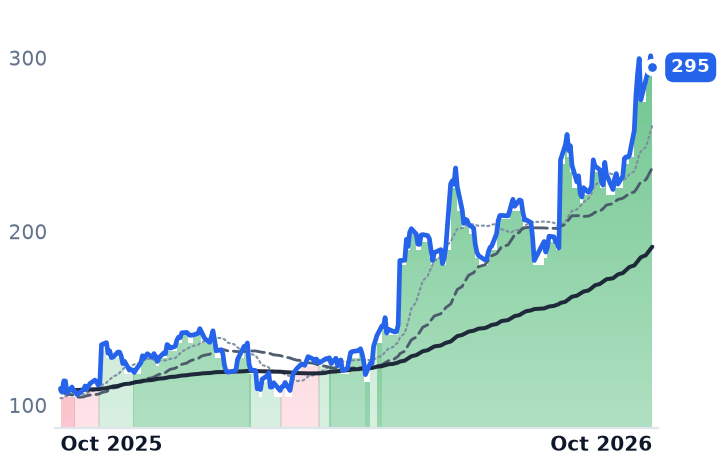
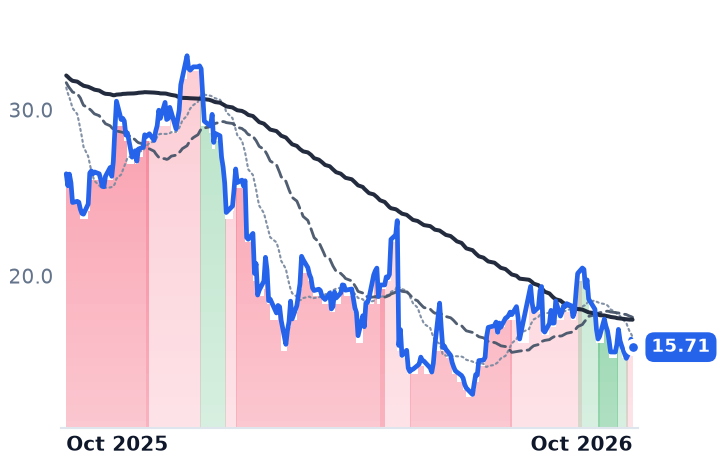
TWLO | Twilio | Communications & Messaging Platforms | 🟢 Cont. Bull | +26.4% | +168.5% |
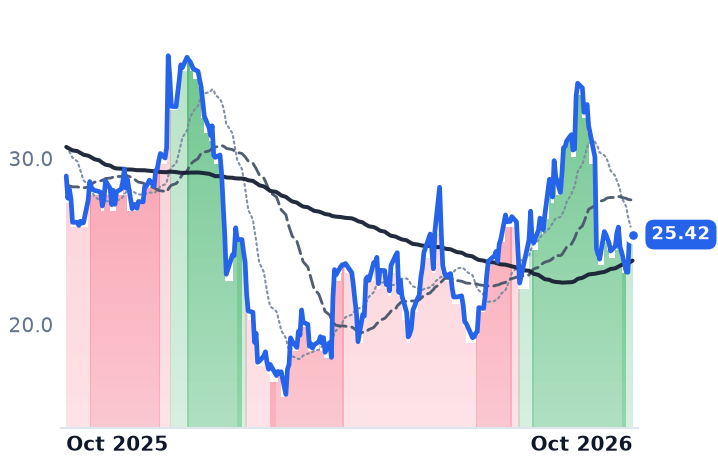
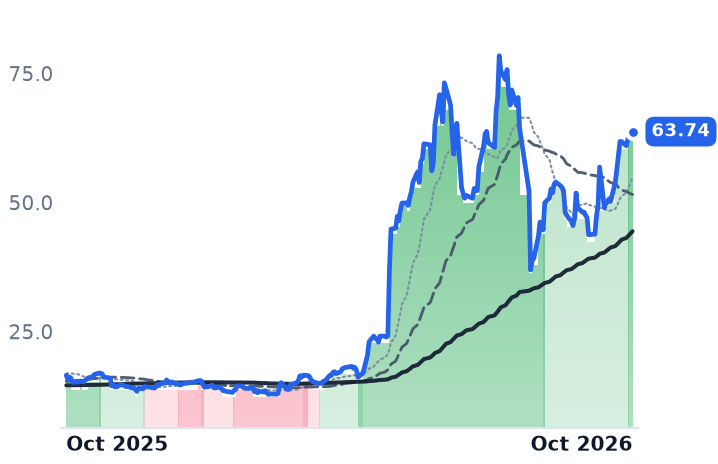
BRZE | Braze | Customer Experience & CRM | 🌱 Emerging Bull | −20.5% | −12.2% |
| Compared against · context, not the story | |||||
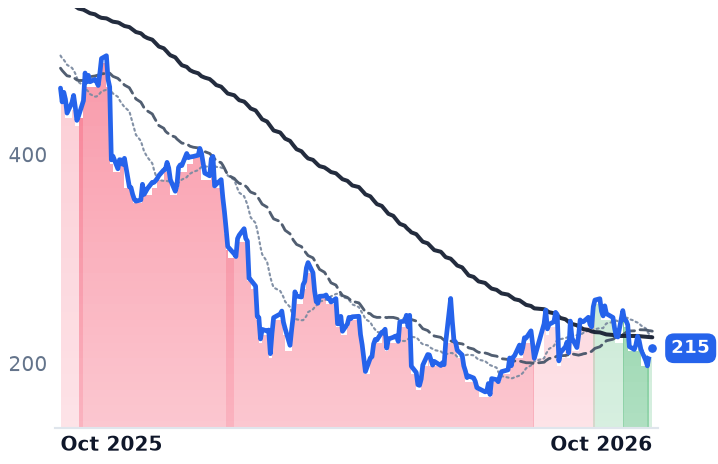
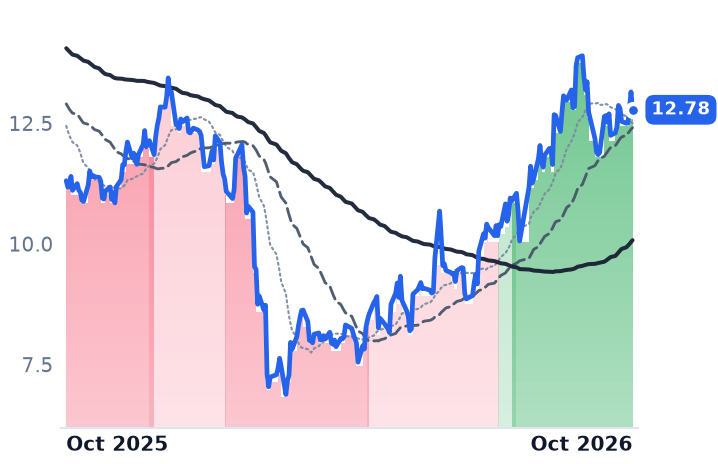
HUBS | HubSpot | Customer Experience & CRM | 🔴 Cont. Bear | −13.4% | −53.7% |
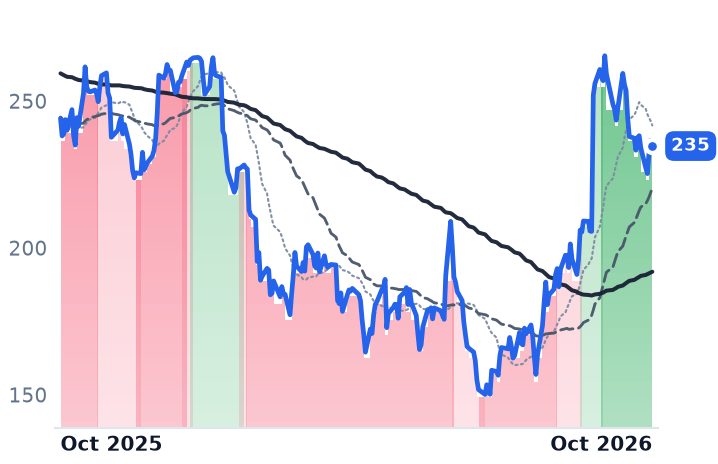
CRM | Salesforce | Customer Experience & CRM | 🌱 Emerging Bull | −9.5% | −3.9% |
KVYO | Klaviyo | Marketing Automation | 🔴 Cont. Bear | −15.6% | −39.9% |
BAND | Bandwidth | Communications & Messaging Platforms | 🟢 Cont. Bull | +45.6% | +285.4% |
FRSH | Freshworks | Security & Compliance | 🌱 Emerging Bull | +0.4% | +13.0% |
12-month price & trend
| Ticker | Mkt cap | P/E | P/E fwd | P/S | P/S fwd | P/GP | P/GP fwd | EV/EBITDA | FCF yld |
|---|---|---|---|---|---|---|---|---|---|
TWLO | $44.7B | 39.2x | 49.7x | 8.0x | 7.4x | 16.5x | 15.3x | 122.6x | 2.5% |
BRZE | $2.9B | n/m | 39.6x | 3.4x | 3.1x | 5.2x | 4.7x | n/m | 2.9% |
HUBS | $11.0B | 75.8x | 16.1x | 3.2x | 3.0x | 3.8x | 3.6x | 36.2x | 7.0% |
| Ticker | Mkt cap | P/E | P/E fwd | P/S | P/S fwd | P/GP | P/GP fwd | EV/EBITDA | FCF yld |
|---|---|---|---|---|---|---|---|---|---|
CRM | $192.2B | 21.3x | 14.0x | 4.4x | 4.2x | 5.7x | 5.4x | 14.3x | 7.9% |
KVYO | $5.4B | 838.1x | 21.9x | 3.9x | 3.5x | 5.3x | 4.8x | 173.4x | 4.5% |
BAND | $2.0B | n/m | 36.4x | 2.5x | 2.3x | 6.6x | 6.1x | — | 3.5% |
| Ticker | Mkt cap | P/E | P/E fwd | P/S | P/S fwd | P/GP | P/GP fwd | EV/EBITDA | FCF yld |
|---|---|---|---|---|---|---|---|---|---|
FRSH | $3.4B | 18.7x | 18.3x | 3.7x | 3.5x | 4.4x | 4.1x | 37.6x | 7.4% |
Consensus projections
| Ticker | FY2026E | FY2027E | FY2028E | |
|---|---|---|---|---|
TWLO | Revenue | +19.6% | +11.4% | +10.4% |
| EPS | +23.5% | +14.3% | +14.2% | |
BRZE | Revenue | +24.3% | +24.7% | +17.2% |
| EPS | +281.2% | +52.5% | +51.9% | |
HUBS | Revenue | +18.3% | +14.1% | +13.8% |
| EPS | +38.3% | +27.0% | +20.0% | |
CRM | Revenue | +9.3% | +11.5% | +9.9% |
| EPS | +17.4% | +42.3% | −4.1% | |
KVYO | Revenue | +25.7% | +19.6% | +18.9% |
| EPS | +27.3% | +28.3% | +25.3% | |
BAND | Revenue | +20.1% | +4.5% | +20.2% |
| EPS | +22.0% | +9.6% | +51.2% | |
FRSH | Revenue | +15.6% | +14.2% | +15.4% |
| EPS | +5.4% | +24.0% | +18.4% |
Forward fiscal years only. Blank means no analyst coverage for that year.
Twilio told investors in early August that its revenue this year would grow several points faster than its gross profit, and said exactly why: the fees American mobile carriers charge to deliver application-to-person text messages. The company collects those fees and hands them on. Its own definition of organic revenue, in the appendix of the deck accompanying its second-quarter results on 6 August, excludes "revenue from incremental increases to application-to-person (A2P) fees imposed by major U.S. carriers on our core messaging business", adding that "we pass these fees to our messaging customers at cost."
What has happened since is the question. Twilio — a cloud communications platform of roughly 1,800 programming interfaces that lets developers embed messaging, voice and verification inside their own software, with a meter that runs on messages, minutes and verifications — has disclosed no financial figure since that August date, and its shares have added 29.9% in the month to 2 October, reaching $294.58 and a six-month gain of 125%. Braze, which sells the orchestration layer that decides which message goes out and when, reported a beat and a raised full-year guide on 8 September and fell 18.4% the next session. The two meter the same thing. The stake is whether a dollar of this revenue is message volume from artificial-intelligence agents, as the repricing assumes, or a carrier price increase passing through.
The bill inside the top line
US operators raised those pass-through charges three times this year — T-Mobile and US Cellular in January, AT&T in April, Verizon in May. Twilio absorbed $71m of incremental carrier fees in the June quarter, which cut non-GAAP gross margin to 49.1%, and its full-year outlook assumes about $250m of such revenue, a drag of roughly 210 basis points on gross margin against 2025, according to the August call. It shows up most plainly in the messaging line: reported growth of 28% becomes about 18% once the fees come out.
Underneath it, the business is accelerating. Revenue growth went 14.3%, then 20.0%, then 22.0% across the last three quarters, to $1,499.1m; gross profit growth went 10.4%, 17.7%, 20.4%, trailing revenue each time by between 1.6 and 3.9 points. GAAP operating income more than doubled to $84.5m, free cash flow reached $353m, and the dollar-based net expansion rate climbed to 116% from around 108% a year earlier. "We are in a powerful new chapter at Twilio, marked by another quarter of organic growth acceleration as well as record profitability and free cash flow," chief executive Khozema Shipchandler said with the results. Two tests a skeptic would want are unavailable: Twilio stopped publishing active customer accounts from the first quarter of this fiscal year, and it does not split net expansion into volume and price.
The company's own guide is the caution. Third-quarter organic growth is set at 11% to 12%, down from 17% posted in June, and full-year gross profit growth at 13% to 13.5% against reported revenue growth of 18% to 18.5%.
A 27% re-rating since August, on no numbers
Twilio's 50-day average has sat above its 200-day since 17 April. On price to trailing gross profit — the only comparable measure here, since a one-off tax item put $1,067.2m of net income against $84.5m of operating income last quarter — the shares are at 16.53x, and 15.35x forward, against 12.97x in late August. Forward earnings are 49.7x against consensus revenue growth of 11.4% in 2027. The 27-analyst average target of $249.68 sits about 15% below the price, and HSBC's Sameer Lam cut the stock to Reduce on 25 September with a $211 target, arguing that rising agent activity "does not necessarily translate into a larger share of the resulting revenue for Twilio". The likelier reading of the September move is narrative: Meta launched its consumer agent Muse on 8 September, built so that talking to it feels like messaging a person.
The same bill, one layer up
Braze, founded in 2011 and run by chief executive William Magnuson, is not insulated from any of this. Its fiscal 2026 annual report states that pricing "is based in large part on the number of consumers that customers reach and the volume of messages customers send", and premium messaging volumes are the named reason its non-GAAP gross margin fell 70 basis points year on year to 68.6%. Gross profit grew 24.6% against revenue up 26.2% to $227.2m — almost exactly Twilio's shape. Everything else improved: non-GAAP operating margin reached 9.7% from 3.4%, free cash flow hit a second-quarter record $22m, customers above $500,000 of annual recurring revenue rose 28% to 361 with net retention among those accounts at 112%, and full-year guidance went up to $910m–913m. What broke the stock was a third-quarter revenue guide implying about 20% growth and adjusted earnings of $0.13–$0.14 against roughly $0.16 expected. At 5.18x trailing gross profit, down from 7.43x in late August, Braze has surrendered its entire summer re-rating.
"For every one example that I have where people are chasing their vibe coding dreams, we've got 10 more for whom Braze is their AI bet," Magnuson told analysts on 8 September. At its Forge conference at the end of the month the company launched Decisioning Studio Go, an agent handed an audience and guardrails that then runs its own experiments, with general availability expected 14 October.
Nothing resembling a category turn is visible around either name. Over the month to 2 October, HubSpot — the seat-priced comparison, selling marketing, sales and service software to mid-market businesses, and cheaper per gross-profit dollar than either at 3.83x trailing — fell 12.6% after adding 7,000 net customers against an expected 9,000 to 10,000 and cutting its second-half target. Salesforce, at 5.66x trailing gross profit and growing 10.8%, fell 8.7% even as Agentforce reached $1.5bn of annual recurring revenue. Klaviyo fell 18.6%, Freshworks 3.1%. The front office has been software's worst non-recessionary drawdown in more than 30 years, and the recovery has sorted companies by how they bill.
The verdict splits cleanly. Twilio's business earns the first leg of this move — three quarters of accelerating growth, doubled operating income, record cash — but nothing it has disclosed explains the multiple expansion since August, and its own guide says gross profit grows five points slower than the revenue line being extrapolated. Braze's de-rating is explained by neither its gross profit, its retention, nor its largest customers; it is explained by three cents of quarterly earnings guidance. Both own the same exposure, which is the part the agent story misses: the carrier fee sits in both revenue lines, so buying the message meter means buying part of Verizon's price list.
Shipchandler told investors in August that fewer than 6% of voice interactions are machine-driven. If that changes, the traffic arrives on rails whose owners have already shown they will raise the toll three times in a year.