

Shopee Books 11% of What Sells on It; Coupang Books Nearly the Whole Ticket
Hypothesis Opus 5 · Research Opus 5 · Writing Opus 5 · Prompt v1.6
Sea Limited's lending arm now out-earns the marketplace it was built to finance: Monee produced $288.0m of adjusted earnings before interest, taxes, depreciation and amortization in the June quarter against Shopee's $255.4m, on a loan book up 62% to $11.1bn whose segment profit rose only 13%.
That gap matters because "e-commerce revenue" means three different things across these companies. Sea books a commission, an ad fee and a logistics charge on other people's goods; Coupang books the full price of inventory it owns, which is why its gross margin is 28.2% against Sea's 45.6% and why it publishes no gross merchandise value at all. Comparing their revenue growth compares nothing.
Sea's commerce engine is working and thinly profitable; Coupang's is shrinking gross profit while Korean regulators bill it. The cheap multiple belongs to the deteriorating business.
| Ticker | Company | Segment | Trend · 13mo | 30D | 1Y |
|---|---|---|---|---|---|
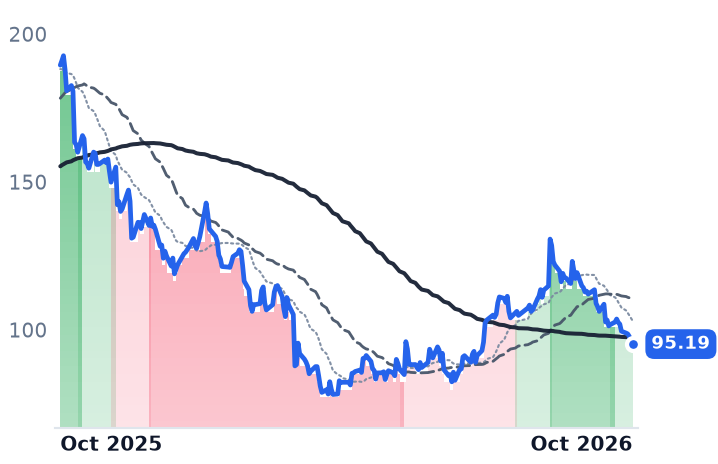
SE | Sea | Online Marketplaces | 🌱 Emerging Bull | −15.1% | −49.8% |
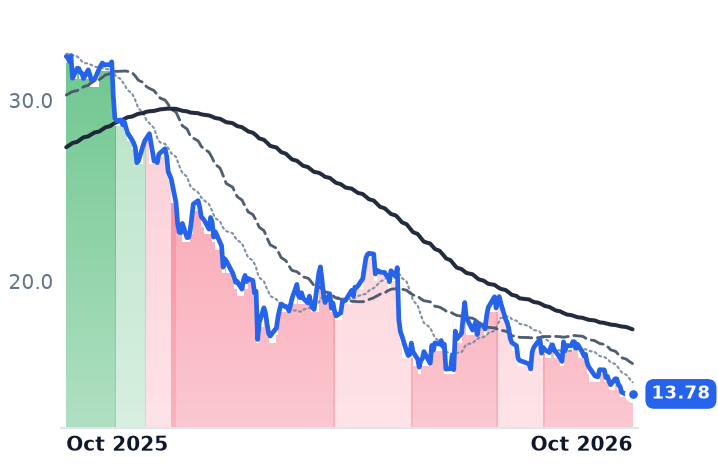
CPNG | Coupang | Regional/Niche E-commerce | 🔴 Cont. Bear | −9.9% | −57.5% |
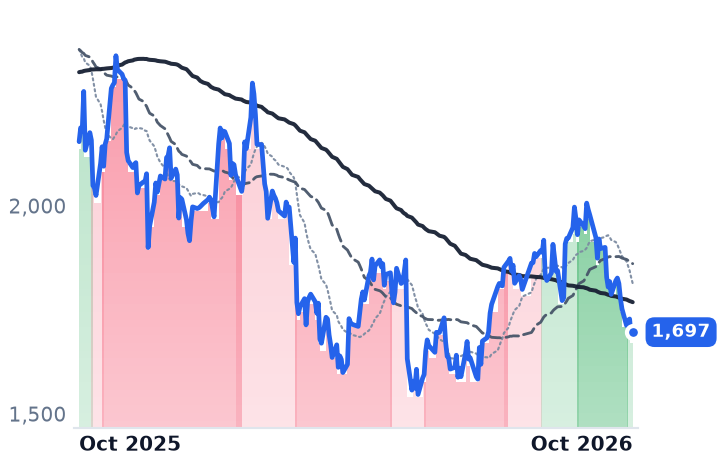
MELI | MercadoLibre | Online Marketplaces | 🌱 Emerging Bull | −14.2% | −21.2% |
12-month price & trend
| Ticker | Mkt cap | P/E | P/E fwd | P/S | P/S fwd | P/GP | P/GP fwd | EV/EBITDA | FCF yld |
|---|---|---|---|---|---|---|---|---|---|
SE | $57.1B | 35.1x | 26.0x | 2.1x | 1.8x | 4.6x | 4.1x | 20.2x | 5.4% |
CPNG | $24.8B | n/m | — | 0.7x | 0.7x | 2.5x | 2.4x | 759.1x | 0.4% |
MELI | $86.0B | 46.2x | 44.5x | 2.4x | 2.1x | 5.7x | 4.8x | 30.8x | 14.5% |
Consensus projections
| Ticker | FY2026E | FY2027E | FY2028E | |
|---|---|---|---|---|
SE | Revenue | +39.9% | +22.8% | +15.3% |
| EPS | +15.2% | +28.9% | +24.9% | |
CPNG | Revenue | +6.3% | +13.9% | +12.3% |
| EPS | −410.1% | −162.9% | +123.7% | |
MELI | Revenue | +45.3% | +28.3% | +24.6% |
| EPS | −5.7% | +44.2% | +38.5% |
Forward fiscal years only. Blank means no analyst coverage for that year.
Sea Limited's lending business earned more last quarter than the marketplace it was built to finance. Monee — the Singapore group's consumer and small-business credit arm, which includes the SPayLater installment product and SeaBank — turned in $288.0m of adjusted earnings before interest, taxes, depreciation and amortization in the three months to June, against $255.4m from Shopee, the mobile marketplace that is the company's public face. Garena, the games studio, contributed $429.8m of the $917.2m group total.
That ordering is worth pausing on, because it exposes how little the phrase "e-commerce revenue" settles. Shopee is paid a take rate: it moved $38.3bn of merchandise on 4.2bn orders in the quarter, an average ticket of about $9, and booked $4.3bn of core marketplace revenue from commissions and advertising on it — roughly 11% of what crossed the platform, against merchandise value up 28%. The gap between those two growth rates is the whole story of the quarter: advertising revenue grew more than 70%, the ad take rate widened by over 90 basis points, and the number of sellers buying ads rose about 45%.
Six cents an order
What Shopee keeps after costs is far thinner than what it captures. Its $255.4m of segment profit equals 0.7% of merchandise value — about six US cents per order. "With this solid momentum, we are optimistic that Shopee will achieve the milestone of $1 billion in adjusted EBITDA for the full year," chairman and chief executive Forrest Li told investors on August 11. Group revenue grew 48.1% in the quarter and gross margin held at 45.6%, but operating income rose only 28.4% — the reinvestment is visible.
Monee's arithmetic is the opposite shape. Principal outstanding grew 62% while segment profit grew 13%; the 90-day non-performing loan ratio held flat at 1.0%, so the absorbed money is provisioning and acquisition cost on unseasoned vintages rather than realized losses. An increasing share of Sea's incremental profit is a credit function, not a commerce one.
Coupang owns the goods
Coupang, the Korean retailer and marketplace run from Seattle by founder Bom Kim, books nearly the entire price of the inventory it owns, and the cost of that inventory beneath it. Hence a 28.2% gross margin, and hence no gross merchandise value and no take rate anywhere in its quarterly disclosure. What it publishes instead is customers and spend: 24.7m Product Commerce active customers, up 3%, generating $301 of net revenue each against $307 a year earlier.
The June quarter was ugly underneath. Product Commerce segment margin fell 390 basis points to 5.1%; the Developing Offerings arm (Eats, Play, fintech and Farfetch) lost $219m, only $16m better than a year ago; gross profit shrank 2.6% on revenue up 3.9%. A KRW 624.68bn ($410m) privacy fine over a breach of 33.7m customer records drove the $556m operating loss, and even excluding it the loss was $146m. "The vast majority of our customer spend never moved," Kim said on the August 4 call; management guided core margins back to pre-incident levels only by the middle of 2027. Korea's Fair Trade Commission sent roughly 30 investigators into its Seoul headquarters on September 1, and separately seeks a KRW 140bn penalty over search rankings.
MercadoLibre shows the mature version of the same combination. Revenue grew 49.8% to $10.2bn last quarter, but gross margin fell 467 basis points to 40.9% and operating income fell 17.2% as it subsidized shipping against Shopee in Brazil. Its credit book, at $14.6bn, carries over-90-day non-performing loans near 17.6% — a different animal from Monee's 1.0%.
What the prices say
All three fell 13-16% over the month to October 2, against an emerging-markets index down 0.7% in September. Coupang closed at $13.78, within a fraction of a percent of its 52-week low; no company-specific news explains Sea's slide, and the likelier reading there is profit-taking after August. Because gross margins run from 28% to 46%, the comparable yardstick is price against gross profit: Sea trades at 4.08x forward, below MercadoLibre's 4.84x, with Coupang cheapest at 2.36x. Sea's forward earnings multiple is 26.0x against 35.1x trailing; MercadoLibre's 44.5x forward barely undercuts its trailing 46.2x, because consensus models 2026 earnings per share down 5.7%.
The verdict the numbers support is narrow. Coupang's cheapness is a description of damage — consensus has it losing money at the EBITDA line this year — not of a mispricing. Sea's commerce business is genuinely compounding its take rate, but its profit is six cents an order, and the group's earnings momentum has migrated to a loan book growing five times faster than the income it throws off.
Shopee's promised $1bn profit year is now the cleanest test available: if it arrives, it arrives alongside a credit book that will be larger still, and the question of what Sea actually is will be harder to postpone than it was in August.