

Planet Fitness's Royalty Rides on 21.5m Memberships; Meta's Muse Can Cancel the Idle Ones
Hypothesis Opus 5 · Research Opus 5 · Writing Opus 5 · Prompt v1.6
A gym chain that does not bill its own members fell nearly a tenth in one session on a software launch, and the fitness name whose customers are quitting fastest rose the same day. Meta released Muse, a personal AI agent that cancels subscriptions its owner no longer uses, on 8 September; Bloomberg and Axios tied the 22 September selling in Planet Fitness to that trade rather than to anything the company disclosed.
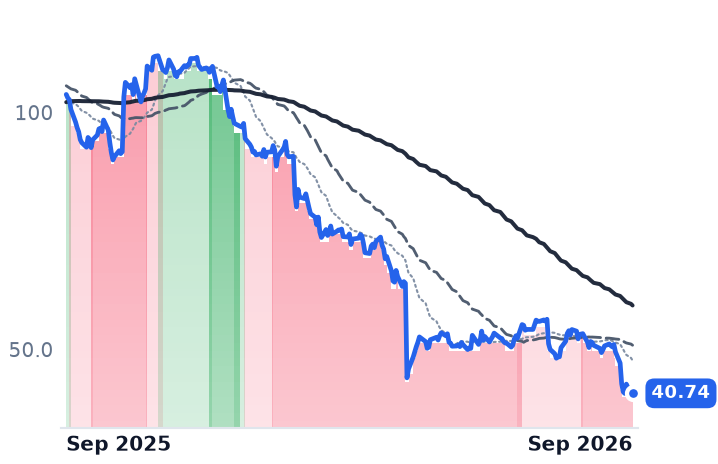
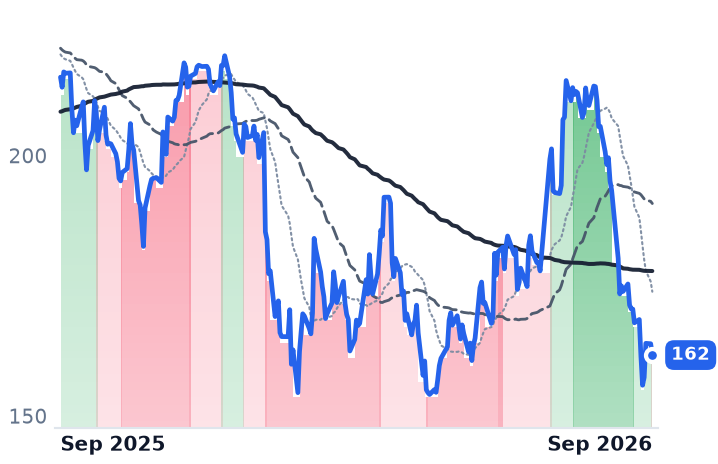
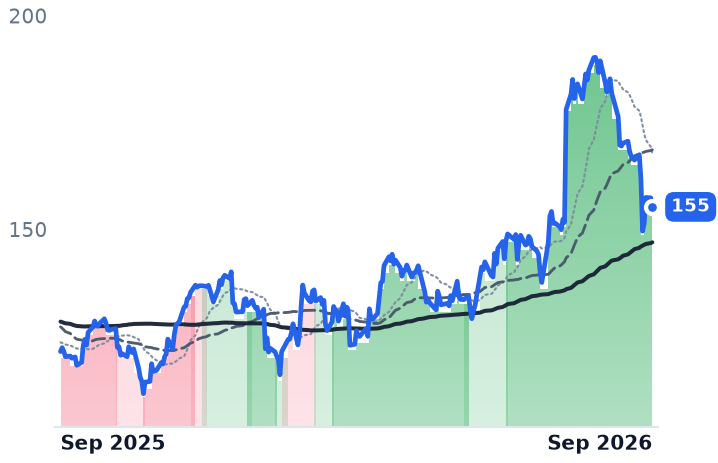
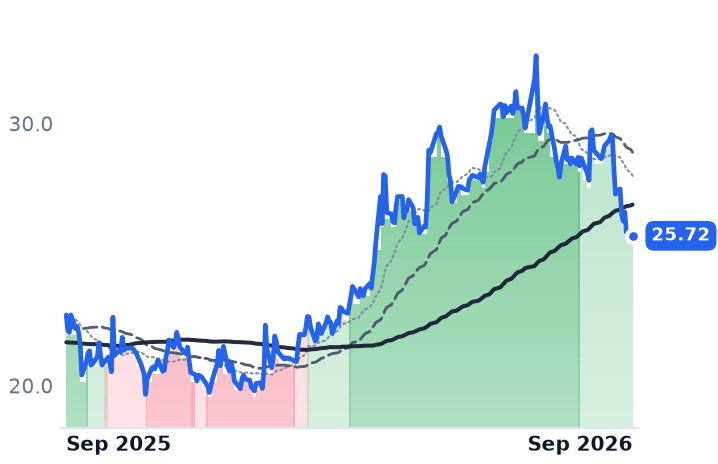
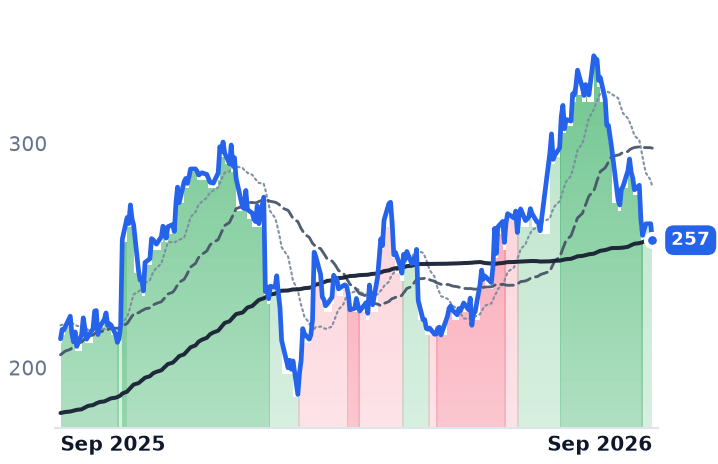
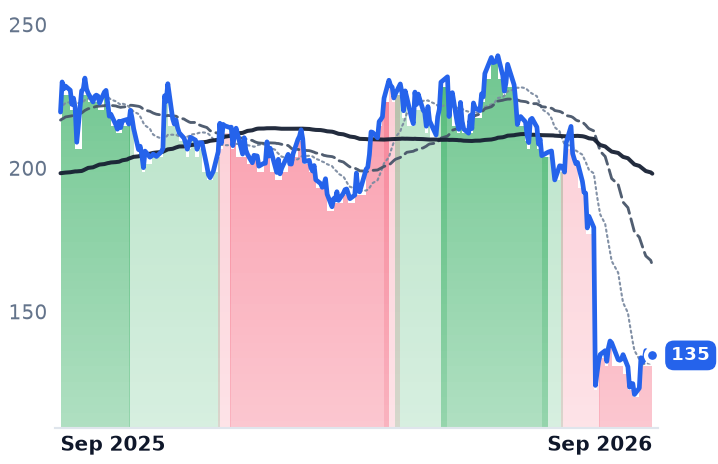
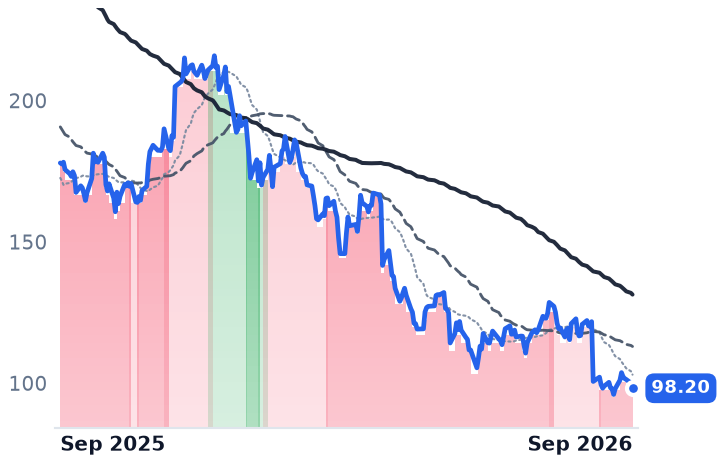
Since the launch Planet Fitness is down 18.9%, Life Time 5.9%, Peloton up 0.2% — an ordering by how visibly a member uses what they pay for. The case against Planet Fitness is already on the record: no net member additions in the June quarter, same-club sales of 1.7% on price alone, and consensus now modelling a 2.1% decline in 2026 EBITDA, its first forecast drop since 2021. Life Time grew revenue 13.7%, raised guidance twice, and fell anyway.
| Ticker | Company | Segment | Trend · 13mo | 30D | 1Y |
|---|---|---|---|---|---|
| The subject · what this brief is about | |||||
PLNT | Planet Fitness | Fitness & Wellness | 🔴 Cont. Bear | −21.0% | −60.8% |
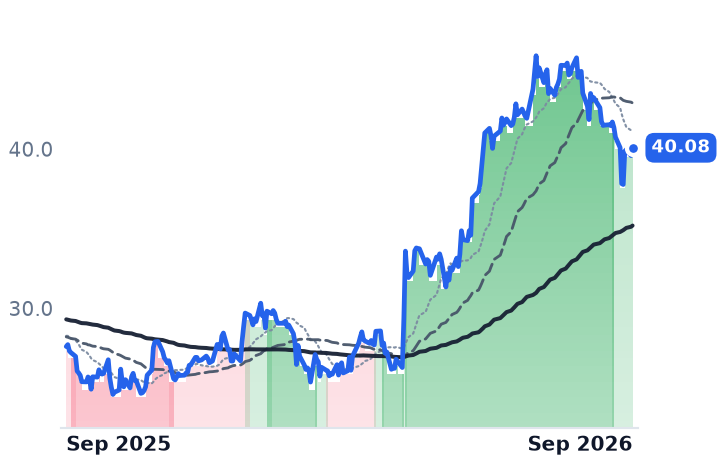
LTH | Life Time | Fitness & Wellness | 🟢 Cont. Bull | −6.1% | +45.2% |
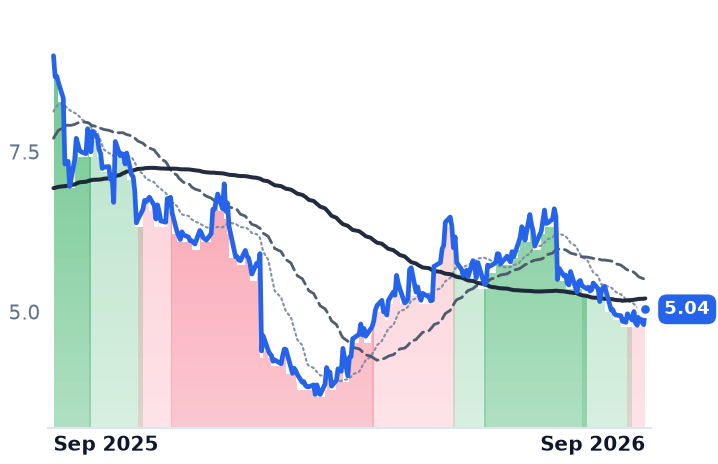
PTON | Peloton Interactive | Fitness & Wellness | 🌱 Emerging Bull | −6.0% | −44.0% |
| Compared against · context, not the story | |||||
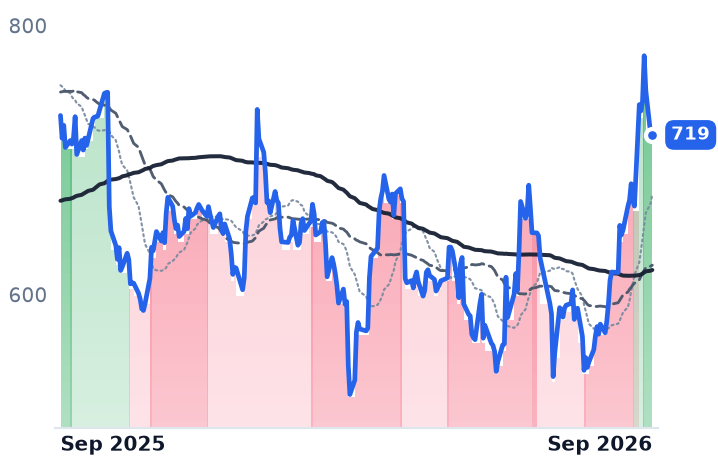
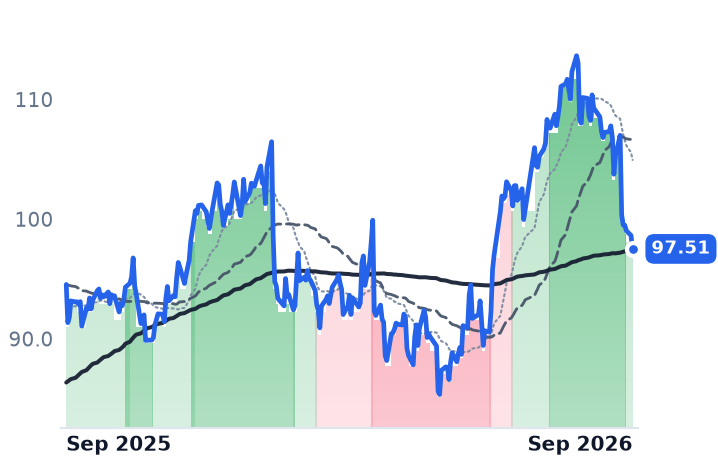
META | Meta Platforms | Social Media & Messaging | 🔴 Cont. Bear | +25.7% | −2.0% |
BKNG | Booking | Online Travel Agencies | 🌱 Emerging Bull | −19.5% | −24.8% |
ABNB | Airbnb | Alternative Accommodations | 🟢 Cont. Bull | −15.8% | +27.9% |
SIRI | Sirius XM | Music & Audio | 🟢 Cont. Bull | −8.4% | +13.3% |
SCHW | The Charles Schwab | Wealth Management & Advisory | 🟢 Cont. Bull | −11.4% | +3.1% |
EXPE | Expedia | Online Travel Agencies | 🟢 Cont. Bull | −19.7% | +20.6% |
DKS | DICK'S Sporting Goods | Sporting Goods & Outdoor | ⚠️ Emerging Bear | −1.2% | −38.6% |
LULU | Lululemon Athletica | Athletic & Activewear | 🔴 Cont. Bear | −19.6% | −44.8% |
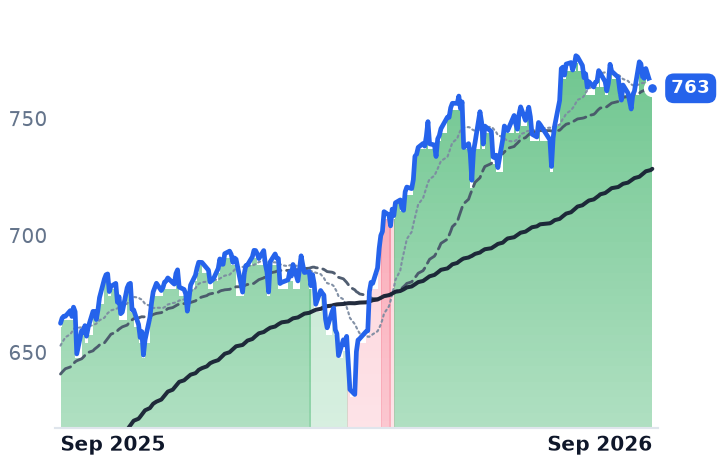
SPY | State Street SPDR S&P 500 ETF Trust | Asset Management | 🟢 Cont. Bull | −0.4% | +15.2% |
12-month price & trend
| Ticker | Mkt cap | P/E | P/E fwd | P/S | P/S fwd | P/GP | P/GP fwd | EV/EBITDA | FCF yld |
|---|---|---|---|---|---|---|---|---|---|
PLNT | $3.2B | 13.8x | 12.5x | 2.3x | 2.3x | 4.6x | 4.5x | 9.6x | 8.1% |
LTH | $9.0B | 21.3x | 25.1x | 2.8x | 2.7x | 4.1x | 3.8x | 13.9x | -1.7% |
PTON | $2.1B | 35.2x | 15.6x | 0.9x | 0.9x | 1.6x | 1.7x | 15.9x | 18.8% |
| Ticker | Mkt cap | P/E | P/E fwd | P/S | P/S fwd | P/GP | P/GP fwd | EV/EBITDA | FCF yld |
|---|---|---|---|---|---|---|---|---|---|
META | $1.5T | 21.5x | 18.2x | 6.5x | 5.8x | 7.9x | 7.1x | 14.7x | 2.8% |
BKNG | $127.0B | 18.1x | 15.7x | 4.5x | 4.3x | 4.5x | 4.3x | 12.1x | 7.5% |
ABNB | $78.8B | 31.6x | 25.9x | 6.2x | 5.7x | 7.5x | 6.8x | 28.9x | 5.8% |
| Ticker | Mkt cap | P/E | P/E fwd | P/S | P/S fwd | P/GP | P/GP fwd | EV/EBITDA | FCF yld |
|---|---|---|---|---|---|---|---|---|---|
SIRI | $8.7B | 10.3x | 8.3x | 1.0x | 1.0x | 2.2x | 2.2x | 8.4x | 15.6% |
SCHW | $158.1B | 16.8x | 15.1x | 5.6x | 5.9x | 6.5x | 6.9x | 10.4x | 6.2% |
EXPE | $30.3B | 15.8x | 12.7x | 1.9x | 1.9x | 2.1x | 2.1x | 7.5x | 16.7% |
| Ticker | Mkt cap | P/E | P/E fwd | P/S | P/S fwd | P/GP | P/GP fwd | EV/EBITDA | FCF yld |
|---|---|---|---|---|---|---|---|---|---|
DKS | $18.0B | 22.7x | 15.2x | 1.0x | 0.8x | 3.2x | 2.4x | 17.1x | 3.0% |
LULU | $14.0B | 9.0x | 9.7x | 1.3x | 1.2x | 2.2x | 2.2x | 5.1x | 6.6% |
SPY | $773.0B | — | — | — | — | — | — | — | — |
Consensus projections
| Ticker | FY2026E | FY2027E | FY2028E | |
|---|---|---|---|---|
PLNT | Revenue | +8.2% | +6.9% | +8.4% |
| EPS | +6.9% | +12.5% | +15.5% | |
LTH | Revenue | +12.6% | +12.0% | +10.9% |
| EPS | +17.6% | +14.3% | +9.8% | |
PTON | Revenue | −1.1% | −2.8% | −0.9% |
| EPS | −131.8% | +143.7% | +2.0% | |
META | Revenue | +27.3% | +20.1% | +17.8% |
| EPS | +38.3% | +6.9% | +15.4% | |
BKNG | Revenue | +9.6% | +9.4% | +8.2% |
| EPS | +14.9% | +18.3% | +15.8% | |
ABNB | Revenue | +14.6% | +10.5% | +10.6% |
| EPS | +24.2% | +18.1% | +18.2% | |
SIRI | Revenue | +0.3% | +1.4% | +1.4% |
| EPS | +12.2% | +9.1% | +5.2% | |
SCHW | Revenue | +11.6% | +10.0% | +9.3% |
| EPS | +23.5% | +17.5% | +15.9% | |
EXPE | Revenue | +10.9% | +7.1% | +7.4% |
| EPS | +35.9% | +17.3% | +14.5% | |
DKS | Revenue | +28.0% | +30.9% | +3.4% |
| EPS | −8.8% | +12.3% | +13.1% | |
LULU | Revenue | +4.7% | +3.9% | +4.5% |
| EPS | −9.1% | −5.7% | +7.7% |
Forward fiscal years only. Blank means no analyst coverage for that year.
Planet Fitness does not bill a single gym-goer. It licenses its brand to franchisees, who bill the members, and collects a royalty of roughly 7% on the dues they take in — which is why a piece of consumer software turned into the most important thing to happen to the stock this month. Meta released Muse, a personal artificial-intelligence agent, on 8 September; among the chores it will run in the background, with its owner's permission, is cancelling subscriptions that have stopped being used. Two weeks later Planet Fitness fell 9.3% in the single session of 22 September, on a day the S&P 500 tracking fund closed essentially flat and Dick's Sporting Goods rose 8.6%. Bloomberg reported that afternoon that Muse was dragging down stocks that depend on "consumer inertia"; Axios followed two days later, noting that "customers often keep paying for subscriptions long after they stop valuing or using the service."
That one day was 40% of Planet Fitness's decline over the past month, and the four sessions to 24 September accounted for 81% of it. The fall had been read as fallout from the chain's own marketing misfire and from $9.99 rivals — an explanation that fits the year and not the week. What is being repriced is the share of a fitness dollar collected from people who do not use what they pay for, and the three listed ways of collecting that dollar carry very different exposure. Demand itself is not the issue: US gym membership stands at 81 million, an all-time high.
Three meters
Measured from the launch to 29 September, Planet Fitness is down 18.9%, Life Time down 5.9% and Peloton up 0.2%. Planet Fitness's royalty rides on auto-pay dues billed to approximately 21.5m members across 2,930 clubs, and June-quarter same-club sales grew 1.7% entirely on rate, with membership level against March. The company does not disclose visit frequency; outside estimates put the share of members who do not visit in a given month near 60%. Attrition ran 3.5%, mid-range for the chain. The problem is joins.
Life Time, which operates resort-style athletic centers with pools, courts, a spa and cafés, charges average dues of $245 a month and collected $993 of revenue per membership in the June quarter — roughly a quarter of that from training, spa and food bought inside the building, which is hard to pay for and never use. Memberships rose 1.2% to 860,041, comparable-center revenue grew 9.1%, and full-year comparable guidance went up a second time, to 7.9%–8.3%. Revenue rose 13.7% to $866m and operating margin reached 17.3% from 14.2%. "We continue to see strong performance across all aspects of our business," founder and chief executive Bahram Akradi said on the 30 July call. The shares fell 5.6% on 22 September regardless, then recovered to $40.08 by 29 September.
Peloton's $49.99 membership is tethered to a machine the household already bought, so cancelling strands the asset — and Peloton rose 2.8% that day. Its annuity is nonetheless the one visibly shrinking: connected-fitness subscribers fell 8.8% to 2.553m in the year to 30 June, with monthly churn at 2.2% against 1.8%. Price covered the gap; subscription revenue grew 7% to $436.6m, fiscal 2026 was the first profitable year in company history, and fiscal 2027 revenue is guided to $2.3bn–$2.4bn, a decline.
What the businesses earn
Planet Fitness trades at 12.5x forward earnings and 9.6x trailing enterprise value to EBITDA, with an 8.1% trailing free-cash-flow yield, against a 52-week high of $114.26 — about 35x forward. Life Time is on 13.9x trailing EV/EBITDA against consensus 2026 EBITDA growth of 41%, with the catch that its free-cash-flow yield is minus 1.7%: roughly $400m of sale-leasebacks, not operating cash, funds the new clubs. Peloton is on 15.6x forward earnings and an 18.8% free-cash-flow yield on $378m of fiscal 2026 free cash flow.
Planet Fitness's 61% twelve-month fall is earned by its own disclosures — May's cut to roughly 1% comparable growth from 4–5%, withdrawn three-year targets, the $10 promotion restored, and consensus 2026 EBITDA of $611m, down 2.1%. "We are concentrating our efforts this year on two priorities that are central to reigniting net member growth, driving acquisition and reinforcing affordability," chief executive Colleen Keating said on the 6 August call. The September leg is different: operating margin expanded to 33.9% from 30.0%, nothing has been disclosed since August, and JPMorgan reiterated Overweight at $62 on 25 September calling the week an overreaction. The same trade knocked Booking Holdings and SiriusXM down since the launch, which is the point: this is a bet on cancellation behavior across subscriptions, not a verdict on gyms. Life Time's one-day drop is the least explained of the three, and Peloton moving the other way is the cleanest evidence that what was sold was inertia rather than fitness.
Whether idle members actually leave is a fact only franchisees can report, one attrition line at a time, and the first reading arrives with the third quarter.