

Digi Now Books $191m of Recurring Revenue; Zebra Still Sells the Box Once
Hypothesis Opus 5 · Research Opus 5 · Writing Opus 5 · Prompt v1.6
Three companies sold as one bet on connected machines are paid by meters that share almost nothing, and only one of them bills monthly. Zebra Technologies sells hardware once, through distributors; its June-quarter margin was flattered by $73m of refunded tariffs, and its own third-quarter guide of $4.70 to $4.90 a share steps down from the quarter that re-rated the stock. Digi International's recurring line is the group's only genuine mix shift, and it is already valued at 28.4x forward earnings. Ituran's subscription revenue grew 25% on 6.4% more subscribers, so the remainder is price, mix and a currency effect the company does not strip out. The businesses accelerated together; the shares did not, and Zebra's entire three-month advance happened in one session.
| Ticker | Company | Segment | Trend · 13mo | 30D | 1Y |
|---|---|---|---|---|---|
ZBRA | Zebra Technologies | IoT & Edge Connectivity | 🟢 Cont. Bull | +4.8% | +24.6% |
DGII | Digi International | IoT & Edge Connectivity | 🟢 Cont. Bull | +2.3% | +107.2% |
ITRN | Ituran Location and Control | IoT & Edge Connectivity | ⚠️ Emerging Bear | −0.8% | +49.6% |
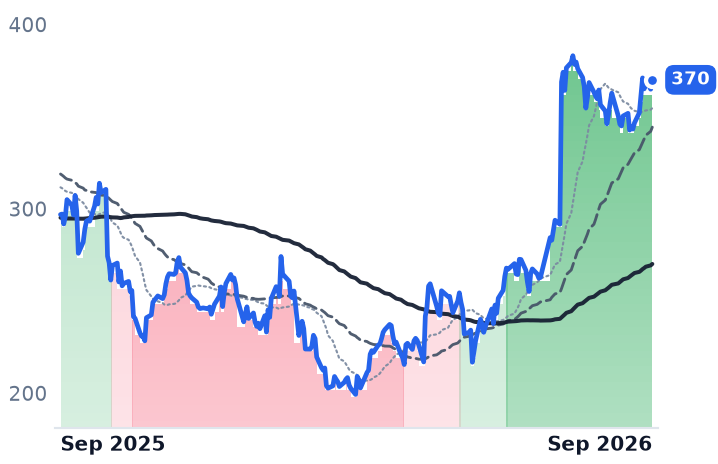
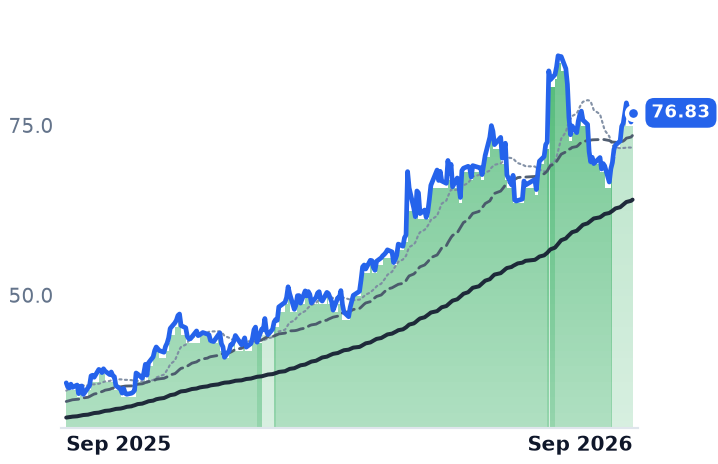
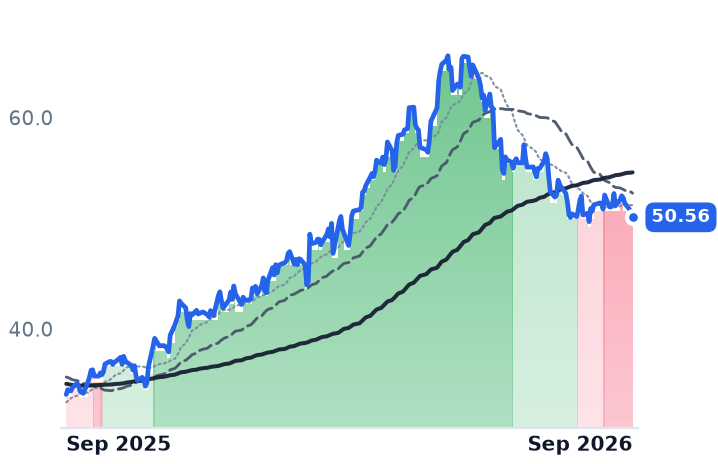
12-month price & trend
| Ticker | Mkt cap | P/E | P/E fwd | P/S | P/S fwd | P/GP | P/GP fwd | EV/EBITDA | FCF yld |
|---|---|---|---|---|---|---|---|---|---|
ZBRA | $17.9B | 35.2x | 17.8x | 3.1x | 2.9x | 6.3x | 5.9x | 18.0x | 5.0% |
DGII | $2.9B | 58.8x | 28.4x | 5.7x | 5.4x | 8.9x | 8.5x | 29.9x | 4.7% |
ITRN | $1.0B | 15.7x | 14.2x | 2.6x | 2.4x | 5.2x | 4.9x | 8.7x | 8.2% |
Consensus projections
| Ticker | FY2026E | FY2027E | FY2028E | |
|---|---|---|---|---|
ZBRA | Revenue | +15.5% | +6.1% | +4.3% |
| EPS | +33.5% | +5.3% | +8.4% | |
DGII | Revenue | +24.8% | +8.7% | +4.5% |
| EPS | +31.4% | +16.3% | +8.4% | |
ITRN | Revenue | +16.5% | +5.4% | +7.5% |
| EPS | +23.8% | +8.6% | +9.4% |
Forward fiscal years only. Blank means no analyst coverage for that year.
Ituran Location and Control, which bills a monthly fee for every vehicle it tracks in Israel and Brazil, has found a second way to get paid. On September 9 it signed the first commercial contract for its traffic-data platform: a software deal with entities of Israel's Ministry of Transport, running up to four years and worth more than 21m shekels, or about $7m, built on anonymised data from more than a million vehicles — roughly a quarter of those in the country. Against 2025 revenue of $359m, spread over four years, it is small. It is also the only new way of getting paid that any of these three companies has produced since early August.
That matters because Zebra, Digi International and Ituran are the standard way a portfolio owns scanned parcels, tracked vehicles and connected machines — and all three reported accelerating revenue for four straight quarters. What separates them is the meter. One sells a box once and waits for the next refresh; one is converting boxes into subscriptions; one has only ever been paid monthly. Which meter is running decides whether this is an enterprise capital-spending cycle with a date on it or an annuity.
Zebra: one sale, then the wait
Zebra sells the barcode scanners, radio-frequency identification readers, thermal printers and rugged mobile computers used in warehouses and stores, through a partner network it puts at more than 10,000 firms. June-quarter revenue rose 20.4% to $1.557bn, but 9.2% of that was organic, the Elo Touch acquisition supplying the rest; the full-year 7% organic guide contains roughly two points of price, putting unit volume growth nearer 5%. Gross margin reached 53.0% against 47.6% a year earlier, helped by $73m of tariffs refunded after the Supreme Court struck the levies down in February. Transportation and logistics — parcel scanning itself — was flat, with the large deployments starting in 2027.
The binding constraint is memory. "In second half, we're continuing to see a challenging and dynamic environment around memory," chief executive Bill Burns told investors on the August 4 call, saying demand signals pointed to the high end of the range while the guide sat at the midpoint. Chief financial officer Nathan Winters described qualifying ten new suppliers, targeting five to seven sources for each memory type. Server memory contract prices are still rising 13-18% quarter on quarter. Third-quarter guidance is $4.70 to $4.90 in non-GAAP earnings a share against $6.35 in the refund-aided second quarter, on about 22% adjusted profitability. At 17.8x forward earnings the stock sits below its 20-25x five-year range, against roughly 14x in mid-July; consensus has revenue growth falling from 15.5% this year to 6.1% next. The 35.2x trailing figure is mostly a GAAP-versus-adjusted artefact rather than a growth expectation.
Digi: the only mix shift
Digi, a $2.9bn maker of cellular routers, embedded radio modules and console servers, reported revenue up 29.0% to $138.7m and annualised recurring revenue of $191m, up 52% — about a third of annualised sales, against roughly 29% of fiscal 2025 revenue. "Growth in ARR reflects achieving ROI for our customers through remote presence and control over their mission-critical and business-critical assets," chief executive Ron Konezny said. Gross margin has climbed to 64.8%. Part of the ramp was bought, through the Particle and Jolt Software deals, and consensus models revenue growth of 8.7% next fiscal year off four analysts. Investors now pay 8.93x trailing gross profit, up from 7.18x in early May, and 29.9x trailing operating cash profit.
Ituran: paid regardless
Ituran's subscription fees rose 25% to $79.8m, 76% of a record $104.8m quarter, with 41,000 net additions taking the base to 2,711,000. That is 6.4% more subscribers than a year earlier, so some 17 to 18 points of the revenue gain is dollar revenue per subscriber: price, mix, and translation the company does not report on a constant-currency basis, having put the effect on operating profit at roughly $1m. New subscribers are coming from motorcycles in Brazil under deals with Yamaha and BMW, not from anyone's capital budget. Operating margin has held between 21% and 23% throughout. It is the cheapest of the three at 14.2x forward earnings and 8.68x operating cash profit, with an 8.2% free-cash-flow yield, $103.7m of net cash and no debt — against Zebra's roughly $2.66bn of borrowings. One analyst supplies its estimates.
What the prices earned
Zebra's 44.6% three-month gain is one session: it rose 26.5% on August 4 and has added 0.3% in the eight weeks since. Digi gapped 14.4% higher on August 6 and trades 7.4% below that close. Ituran is down 18.7% over three months into record results. Over twelve months the dispersion is wider still, Digi up 107.2% against Zebra's 24.6%.
So what binds these three is a mechanism, and their share prices have almost nothing to do with one another. Zebra's re-rating is earned by operating leverage — June-quarter operating income up 75.4% — but the part that depends on a logistics refresh remains a 2027 claim, and the next quarter guides down; the average sell-side target of $383.08 across 13 brokerages sits roughly at the price, even after Needham went to $435 on September 15. Digi is the only one whose revenue quality is measurably improving, and the one paying most for that fact. Ituran is the only business here immune to a deferred refresh, and the cheapest — with the caveat that its per-subscriber gain, the bulk of its growth, is the line no outsider can decompose.
Zebra's second half rests on memory it is still qualifying suppliers for and on parcel carriers spending next year. Ituran's shareholders get 50 cents a share on October 14 either way.