

Ceva's Licensees Shipped 567 Million Units for 1% More Royalty Revenue
Hypothesis Opus 5 · Research Opus 5 · Writing Opus 5 · Prompt v1.6
Edge AI is shipping in volume; the company that licenses the designs is not being paid much more for it. Ceva's customers shipped 16% more chips containing its cores in the June quarter and paid it about 1.9 cents each in royalties, down from roughly 2.2 cents a year earlier, because the units arriving are low-rate Bluetooth and Wi-Fi connectivity while vision and AI royalties are still years out.
Growth came instead from up-front license fees, up 21% and the strongest licensing quarter in three years — a pipeline being sold rather than a field being metered. The late-September share price jump arrived in six sessions in which the whole small-cap chip complex rose, with no company announcement discoverable in the window. Ambarella, paid per chip instead of per license, went the other way: growth decelerating for four straight quarters and inventory days rising.
| Ticker | Company | Segment | Trend · 13mo | 30D | 1Y |
|---|---|---|---|---|---|
| The subject · what this brief is about | |||||
CEVA | CEVA | Specialty Semiconductors | 🌱 Emerging Bull | +29.8% | +34.0% |
AMBA | Ambarella | Specialty Semiconductors | 🌱 Emerging Bull | −2.1% | −16.7% |
| Compared against · context, not the story | |||||
LSCC | Lattice Semiconductor | Specialty Semiconductors | 🟢 Cont. Bull | +8.6% | +74.3% |
SYNA | Synaptics Incorporated | Other | ⚠️ Emerging Bear | +3.9% | +47.2% |
MCHP | Microchip Technology Incorporated | Analog & Mixed-Signal | ⚠️ Emerging Bear | +8.8% | +25.9% |
ON | ON Semiconductor | Analog & Mixed-Signal | ⚠️ Emerging Bear | +2.5% | +52.6% |
NXPI | NXP Semiconductors | Analog & Mixed-Signal | ⚠️ Emerging Bear | +5.9% | +5.9% |
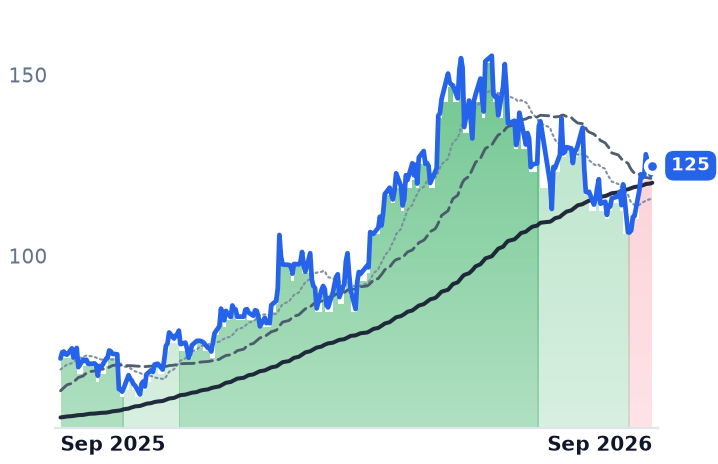
ARM | Arm Holdings plc American Depositary Shares | Specialty Semiconductors | 🟢 Cont. Bull | +24.6% | +112.9% |
QCOM | QUALCOMM Incorporated | RF & Wireless | 🟢 Cont. Bull | +10.7% | +14.1% |
HIMX | Himax Technologies | Specialty Semiconductors | 🟢 Cont. Bull | +4.2% | +63.7% |
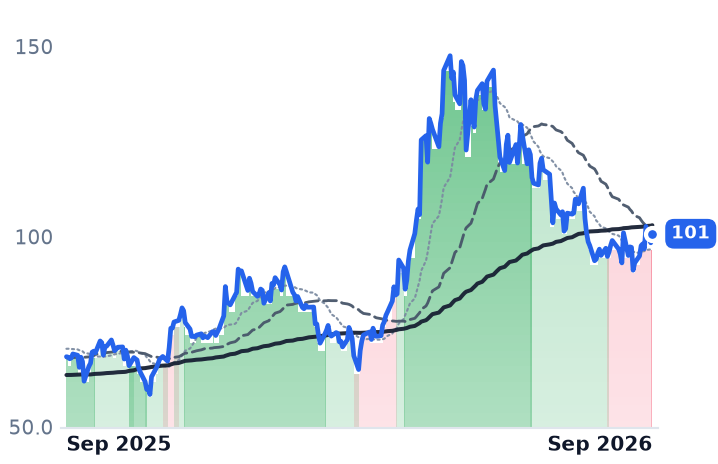
INDI | indie Semiconductor | RF & Wireless | 🔴 Cont. Bear | −20.1% | −24.9% |
12-month price & trend
| Ticker | Mkt cap | P/E | P/E fwd | P/S | P/S fwd | P/GP | P/GP fwd | EV/EBITDA | FCF yld |
|---|---|---|---|---|---|---|---|---|---|
CEVA | $960.6M | n/m | 62.9x | 8.3x | 7.7x | 9.5x | 8.8x | n/m | -0.1% |
AMBA | $3.0B | n/m | 85.5x | 7.2x | 6.8x | 12.4x | 11.7x | n/m | 0.3% |
LSCC | $17.5B | 484.1x | 60.1x | 26.9x | 19.1x | 39.8x | 28.2x | 200.9x | 1.2% |
| Ticker | Mkt cap | P/E | P/E fwd | P/S | P/S fwd | P/GP | P/GP fwd | EV/EBITDA | FCF yld |
|---|---|---|---|---|---|---|---|---|---|
SYNA | $3.9B | n/m | 19.2x | 3.3x | 3.0x | 7.4x | 6.8x | n/m | 2.6% |
MCHP | $42.7B | 109.0x | 21.6x | 8.3x | 6.7x | 13.9x | 11.1x | 28.4x | 2.6% |
ON | $30.1B | 48.9x | 24.1x | 4.8x | 4.6x | 12.9x | 12.3x | 24.5x | 5.9% |
| Ticker | Mkt cap | P/E | P/E fwd | P/S | P/S fwd | P/GP | P/GP fwd | EV/EBITDA | FCF yld |
|---|---|---|---|---|---|---|---|---|---|
NXPI | $57.5B | 19.4x | 15.1x | 4.4x | 4.0x | 7.8x | 7.2x | 13.3x | 5.1% |
ARM | $331.4B | 319.9x | 139.2x | 64.3x | 54.6x | 67.4x | 57.2x | 239.5x | 0.4% |
QCOM | $170.3B | 18.5x | 15.3x | 3.9x | 3.9x | 7.1x | 7.3x | 13.4x | 6.1% |
| Ticker | Mkt cap | P/E | P/E fwd | P/S | P/S fwd | P/GP | P/GP fwd | EV/EBITDA | FCF yld |
|---|---|---|---|---|---|---|---|---|---|
HIMX | $3.3B | 104.1x | 47.6x | 4.1x | 3.6x | 13.4x | 11.7x | 49.4x | 2.1% |
INDI | $638.1M | n/m | — | 2.8x | 2.4x | 12.8x | 11.1x | n/m | -13.1% |
Consensus projections
| Ticker | FY2026E | FY2027E | FY2028E | |
|---|---|---|---|---|
CEVA | Revenue | +14.3% | +13.3% | +13.0% |
| EPS | +31.8% | +46.4% | +36.5% | |
AMBA | Revenue | +39.8% | +12.9% | +11.6% |
| EPS | −311.1% | +34.9% | +31.8% | |
LSCC | Revenue | +2.3% | +76.6% | +45.1% |
| EPS | +11.9% | +103.0% | +50.7% | |
SYNA | Revenue | +11.4% | +8.6% | +13.1% |
| EPS | +26.7% | +13.6% | +25.5% | |
MCHP | Revenue | +6.2% | +37.1% | +16.4% |
| EPS | +20.7% | +132.2% | +25.6% | |
ON | Revenue | +9.2% | +13.1% | +13.9% |
| EPS | +37.1% | +40.7% | +30.4% | |
NXPI | Revenue | +16.7% | +11.5% | +8.3% |
| EPS | +28.0% | +20.5% | +15.3% | |
ARM | Revenue | +22.5% | +23.9% | +36.1% |
| EPS | +7.9% | +27.2% | +37.6% | |
QCOM | Revenue | −1.3% | +4.2% | +15.1% |
| EPS | −10.8% | −2.6% | +26.8% | |
HIMX | Revenue | +12.6% | +24.3% | +21.9% |
| EPS | +63.3% | +115.0% | +72.1% | |
INDI | Revenue | +23.1% | +33.2% | +30.4% |
| EPS | −38.3% | −110.8% | +1093.0% |
Forward fiscal years only. Blank means no analyst coverage for that year.
Ceva, which builds no chips at all and instead licenses digital-signal-processor cores, neural accelerators and Bluetooth, Wi-Fi and cellular radio designs to semiconductor makers and device OEMs, collected $10.8m of royalties in the June quarter on 567 million devices shipped by its licensees. The unit count was 16% higher than a year earlier. The royalty was 1% higher.
So the money collected per shipped device fell, from roughly 2.19 cents to about 1.91 cents. That arithmetic is the central question for anyone owning edge inference through intellectual property rather than through silicon: adoption in the camera, the earbud and the car can be entirely real and still not arrive as revenue, because the units shipping today are cheap connectivity sockets — Bluetooth up 16% to 295m units, Wi-Fi up 28% to 80m, cellular internet-of-things at a record 68m — while the expensive vision and AI cores being licensed now do not pay a royalty until the chips carrying them reach production years later.
The license is the revenue
What carried the quarter was the up-front fee. Licensing and related revenue rose 21% year over year to $18.2m, 63% of the total, on ten agreements including two with first-time customers and two struck directly with OEMs — among them a neural-processing-unit license to what Ceva called a leading global AI and computing platform company for a custom silicon program. "We delivered another strong quarter, with revenue increasing 13% year-over-year to $29 million, fueled by licensing and related revenue growing 21% to hit highest level in three years," chief executive Amir Panush said on the August 10 call. Customers, he added, "are adopting broader platforms and deeper collaborations that strengthens both our near-term licensing business and our long-term royalty opportunity."
The operating record underneath is genuinely improving: gross margin of 87.4%, an operating loss narrowed by more than half to $2.08m, revenue growth accelerating for four consecutive quarters to 13.1%, and full-year growth guidance raised to 13-15% from 12%. The shares fell about 10% on the day anyway.
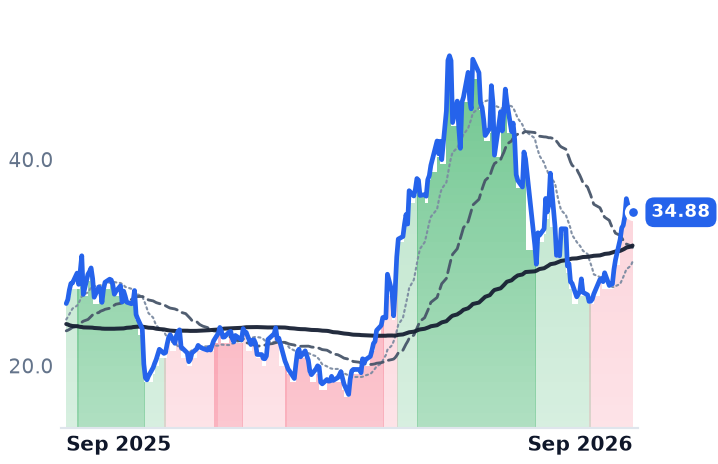
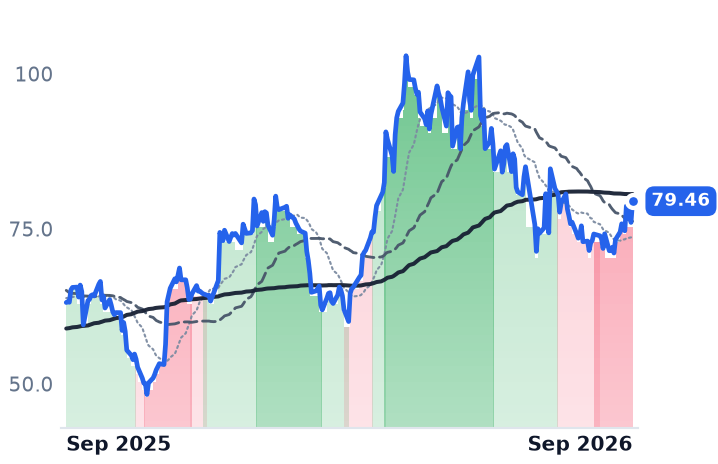
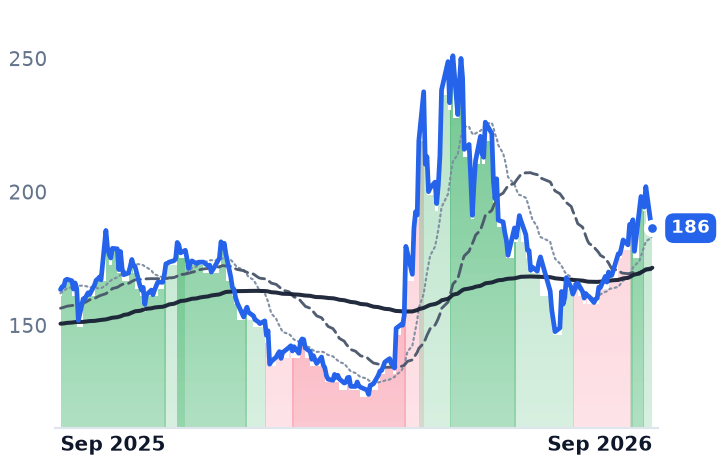
They made it back in a week that had nothing to do with Ceva. Between September 17 and September 25 the stock rose 23.4% — the entire month's gain — alongside Arm up 19.5%, Lattice Semiconductor 15.6%, onsemi 14.0%, Synaptics 12.6% and Microchip 10.7%. indie Semiconductor was the lone edge-adjacent decliner, off 4.0%. No Ceva announcement was discoverable in that window; the nearest event was a StoneX upgrade to Buy on September 14. The likelier reading is sector rotation expressed through the highest-beta name in it. Even after the run, Ceva sits 18.9% below its June level, and its 50-day average has been below its 200-day since September 1.
The per-chip version of the same bet
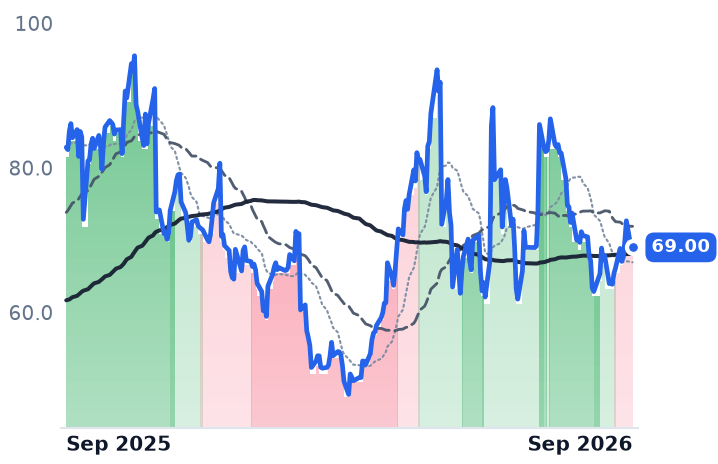
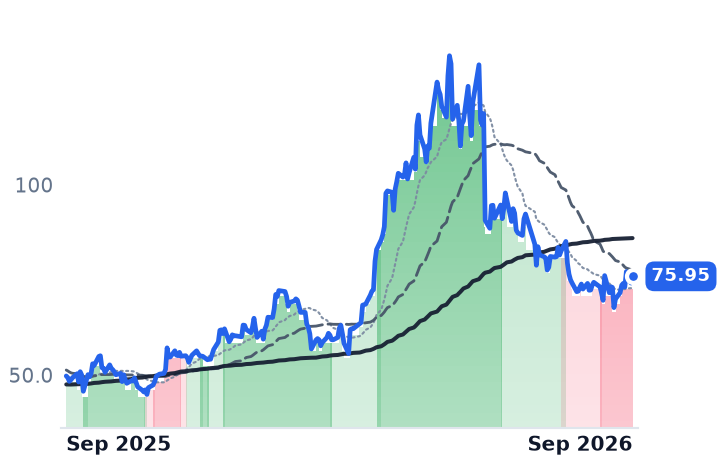
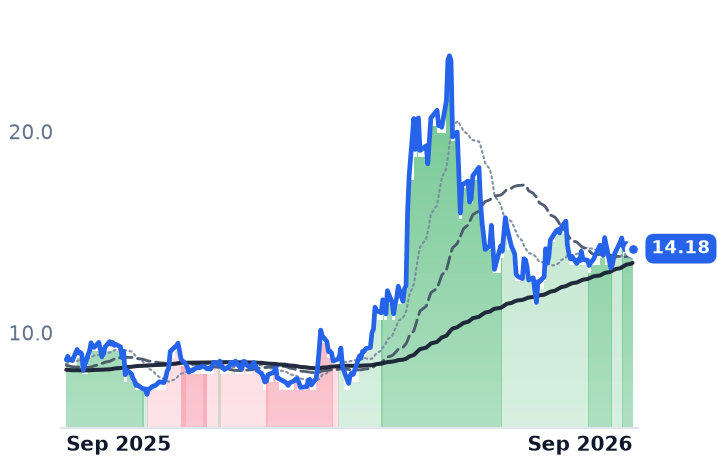
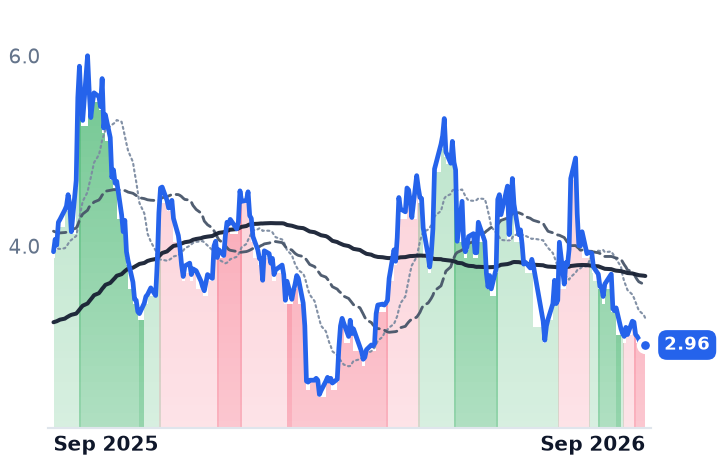
Ambarella, which sells computer-vision system-on-chips per unit into dashcams, driver-monitoring systems, security cameras and robotics, shows what the other collection method is doing. June-quarter revenue of $108.1m grew 13.2%, the fourth straight deceleration from 31.2%, with GAAP gross margin at 57.7% against 58.9% a year earlier, inventory days up to 157 from 145, and a guide of $115.0m-$124.0m whose midpoint implies about 10% growth. Automotive revenue set a record; the constraint sits elsewhere. Chief executive Fermi Wang said the company is working with customers to make sure they can secure enough memory for fourth-quarter business, calling it "an uncertainty that we are dealing with" — the consequence of AI data centers absorbing roughly 70% of high-end DRAM output this year, with J.P. Morgan Global Research putting DRAM prices up more than 400% from the start of 2024 to the end of 2026. Ambarella buys no memory itself. Its customers do.
Both lose money on a GAAP basis, and gross margins of 57.7% and 87.4% are too far apart for sales multiples to compare, so price against gross profit does the work. Ceva is the cheaper of the two at 8.80x forward gross profit against Ambarella's 11.75x — and Ambarella's reading is above Microchip Technology's 11.10x, a profitable embedded-controller maker consensus has growing revenue 37% this year against Ambarella's guided 10%.
On earnings, the ranking reverses. Ceva trades at 62.9x consensus 2026 earnings of $0.55 a share and 31.8x the 2028 figure — a price already marked to profit two years out, demanding that earnings roughly double, on a royalty line that grew 1%.
What each side earns
Ambarella's twelve-month decline of 16.7% is earned: decelerating growth, a margin that missed its own guided range, and inventory building for a second quarter. Ceva's advance is half earned. Rising licensing revenue at 87% gross margin against a shrinking loss is a real business improving, and the unit base is expanding. What is not earned is the rate: the volume arriving is worth less per chip each year, and the week that produced the move belonged to the sector.
The number that settles it is the one Ceva reports every quarter and nobody quotes — royalty dollars divided by units shipped. Until that figure turns up, the edge is shipping and somebody else is keeping the margin.