

Expedia Will Sell Hotels Inside Meta's Muse and Keep the Payment Itself
Hypothesis Opus 5 · Research Opus 5 · Writing Opus 5 · Prompt v1.6
The online travel sellers lost about a fifth of their value in four weeks on a distribution question, and the company that signed the deal at the center of it is the one whose numbers are improving fastest. Expedia agreed on 22 September to book hotels inside Meta's Muse AI agent as merchant of record — and its shares fell 5.5% that session.
Expedia's June-quarter revenue grew 14% with operating margin at 23.9% against 14.0% a year earlier, and it raised full-year 2026 revenue guidance to 9–10%. Booking's case is weaker but not broken: revenue growth halved to 8.1% while marketing rose 11%, and its take rate on gross bookings slipped to 14.4%. Trip.com is the one whose earnings actually collapsed, and the cause is a RMB5.18bn Chinese antitrust penalty, not an AI agent.
| Ticker | Company | Segment | Trend · 13mo | 30D | 1Y |
|---|---|---|---|---|---|
| The subject · what this brief is about | |||||
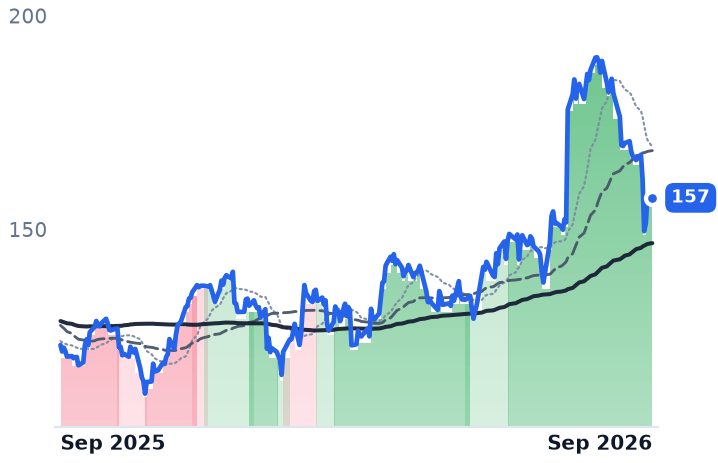
EXPE | Expedia | Online Travel Agencies | 🟢 Cont. Bull | −17.4% | +20.3% |
BKNG | Booking | Online Travel Agencies | 🌱 Emerging Bull | −18.4% | −24.6% |
TCOM | Trip.com | Online Travel Agencies | 🔴 Cont. Bear | −11.7% | −47.6% |
| Compared against · context, not the story | |||||
MMYT | MakeMyTrip | Online Travel Agencies | 🌱 Emerging Bull | −20.1% | −50.3% |
ABNB | Airbnb | Alternative Accommodations | 🟢 Cont. Bull | −14.7% | +28.0% |
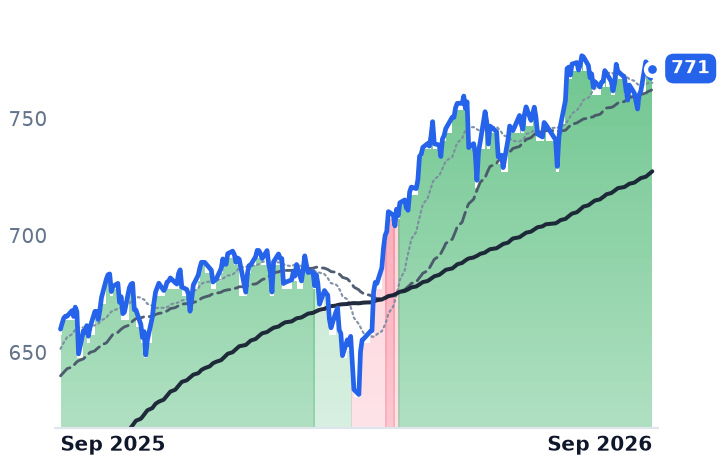
SPY | State Street SPDR S&P 500 ETF Trust | Asset Management | 🟢 Cont. Bull | −0.1% | +15.9% |
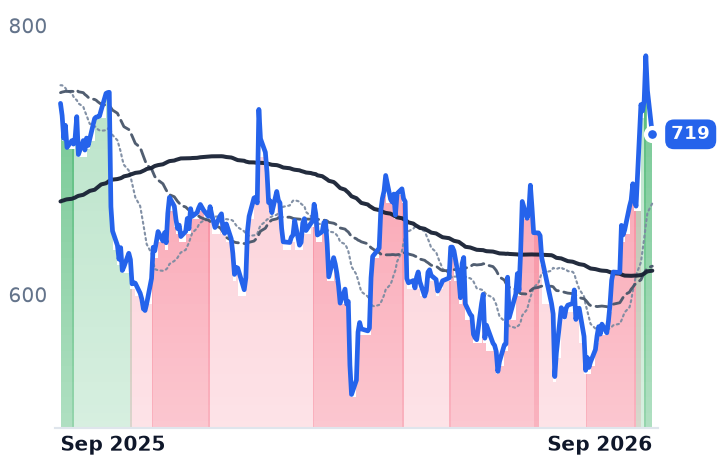
META | Meta Platforms | Social Media & Messaging | 🔴 Cont. Bear | +25.8% | −3.1% |
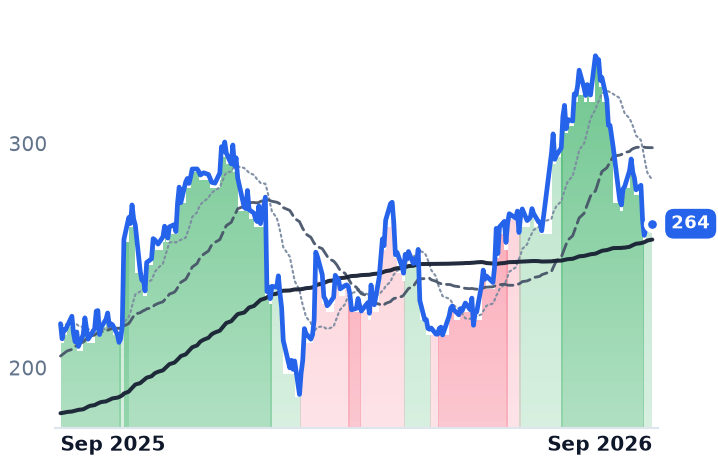
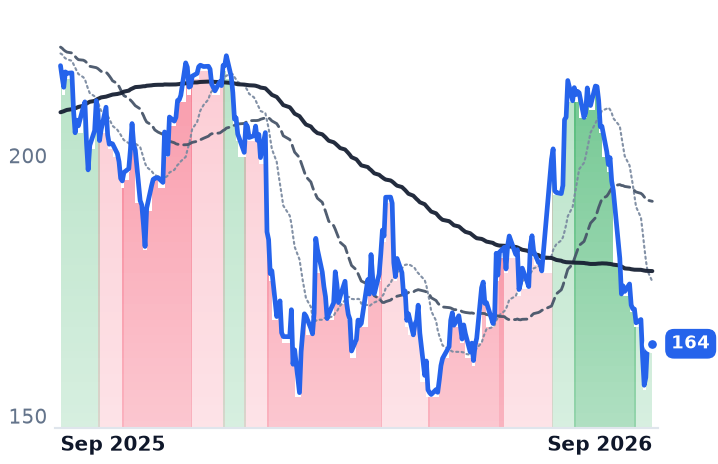
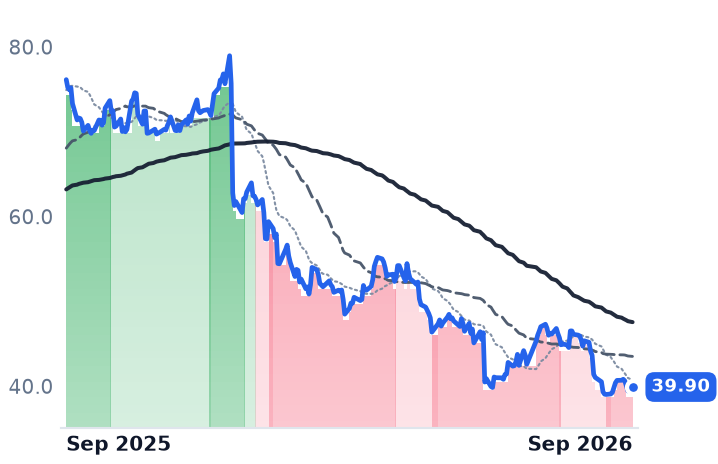
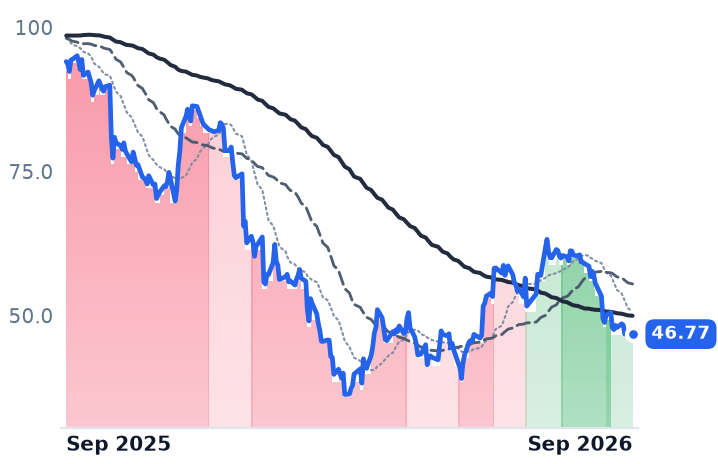
12-month price & trend
| Ticker | Mkt cap | P/E | P/E fwd | P/S | P/S fwd | P/GP | P/GP fwd | EV/EBITDA | FCF yld |
|---|---|---|---|---|---|---|---|---|---|
EXPE | $30.3B | 15.8x | 12.7x | 1.9x | 1.9x | 2.1x | 2.1x | 7.5x | 16.7% |
BKNG | $127.0B | 18.1x | 15.7x | 4.5x | 4.3x | 4.5x | 4.3x | 12.1x | 7.5% |
TCOM | $25.9B | 7.1x | — | 2.5x | — | 3.2x | — | 4.8x | 8.2% |
| Ticker | Mkt cap | P/E | P/E fwd | P/S | P/S fwd | P/GP | P/GP fwd | EV/EBITDA | FCF yld |
|---|---|---|---|---|---|---|---|---|---|
MMYT | $5.2B | 157.5x | 106.3x | 4.9x | 4.4x | 7.1x | 6.3x | 30.7x | 1.8% |
ABNB | $78.8B | 31.6x | 25.9x | 6.2x | 5.7x | 7.5x | 6.8x | 28.9x | 5.8% |
SPY | $773.0B | — | — | — | — | — | — | — | — |
| Ticker | Mkt cap | P/E | P/E fwd | P/S | P/S fwd | P/GP | P/GP fwd | EV/EBITDA | FCF yld |
|---|---|---|---|---|---|---|---|---|---|
META | $1.5T | 21.5x | 18.2x | 6.5x | 5.8x | 7.9x | 7.1x | 14.7x | 2.8% |
Consensus projections
| Ticker | FY2026E | FY2027E | FY2028E | |
|---|---|---|---|---|
EXPE | Revenue | +10.9% | +7.1% | +7.4% |
| EPS | +35.9% | +17.3% | +14.5% | |
BKNG | Revenue | +9.6% | +9.4% | +8.2% |
| EPS | +14.9% | +18.3% | +15.8% | |
TCOM | Revenue | +7.8% | +8.7% | +10.5% |
| EPS | −48.5% | +14.2% | +11.6% | |
MMYT | Revenue | +12.6% | +7.4% | +17.3% |
| EPS | −48.0% | +19.8% | +97.7% | |
ABNB | Revenue | +14.6% | +10.5% | +10.6% |
| EPS | +24.2% | +18.1% | +18.2% | |
META | Revenue | +27.3% | +20.1% | +17.8% |
| EPS | +38.3% | +6.9% | +15.4% |
Forward fiscal years only. Blank means no analyst coverage for that year.
Expedia Group agreed on 22 September to sell hotel rooms inside Muse, the personal AI agent Meta launched in the United States on 8 September that can search, compare and complete a booking by itself. Expedia remains the merchant of record and the payment settles inside the assistant. Investors read the arrangement as a loss for the seller rather than a win: Expedia closed 5.5% lower that session and Booking Holdings 4.2%, with travel intermediaries selling off again the following day as Booking gave up a further 3.4%.
An online travel agency is not paid for travel demand. It buys demand — largely from search engines it cannot price — and then levies a take rate on the gross bookings it collects. The question a four-week drawdown of roughly a fifth at both Booking and Expedia asks, against a broad market that was flat, is whether an agent owning the traveler's first question permanently raises the cost of that demand. It has been asked without new data: neither company has reported since early August, and the hotel market itself is firming, with CoStar and Tourism Economics raising their 2026 US revenue-per-available-room forecast to 4.4% from 2.8%.
The counterparty is the one accelerating
Expedia, which runs Brand Expedia, Hotels.com and Vrbo alongside a white-label supply business selling travel inventory to airlines and banks and the Trivago metasearch site, has now accelerated for four straight quarters: June-quarter revenue rose 14% to $4.315bn, and operating margin reached 23.9% against 14.0% a year earlier. The growth is coming from other people's traffic. Business-to-business revenue rose 23% and its gross bookings 21%, against 8% for the consumer brands, while Trivago advertising revenue grew 48% — and full-year revenue guidance went up, to 9–10%, on 5 August. Chief executive Ariane Gorin told the Skift Global Forum on 23 September that Expedia has scrapped its single all-purpose agent for narrower "point agents" and will judge agent partnerships case by case; she also disclosed that those tools have not lifted bookings yet, though they yield more than 60% more data on traveler intent. Over twelve months Expedia's shares are up 18.6%.
Booking bought more traffic to grow bookings less
Booking Holdings, which owns Booking.com, Agoda, Priceline, KAYAK and OpenTable, gives the bears something real. Revenue growth halved to 8.1% in the June quarter, from 16.2% in the March quarter. Gross bookings of $51.0bn produced $7.352bn of revenue — a take rate of 14.4%, down from roughly 14.5% — while marketing spend rose 11% to $2.37bn, faster than bookings at 9% and room nights at 5%. Management attributed the overshoot to "changes in traffic mix, incremental investments in paid marketing at attractive ROIs, and a shift of merchandising spend to performance marketing". Roughly a third of its demand arrives through channels it pays for; direct booking runs in the mid-60% range, according to Morgan Stanley's Matthew Cost, who initiated coverage at Overweight with a $230 target on 16 September on the argument that AI is a new acquisition channel. Against that: operating margin improved to 34.0% from 33.1%, full-year guidance is untouched at about 9% constant-currency growth, and the company returned a record $4.1bn in the quarter. It also lost its route into flights by acquisition permanently when the EU General Court upheld the veto of the eTraveli deal on 9 September. Booking now trades at 15.7 times forward earnings against a ten-year average CNBC puts at 22.3 times; Expedia is cheaper still at 12.7 times, on 7.5 times trailing earnings before interest, taxes, depreciation and amortization.
Trip.com broke, and search had nothing to do with it
Trip.com, the Ctrip, Qunar and Skyscanner operator, is the member with no Google dependence and the worst numbers. Revenue growth decelerated to 5.5% in the June quarter and the period produced an operating loss of RMB1.462bn — because China's market regulator imposed a RMB5.18bn ($765m) penalty for price-parity terms forced on hotels. Underneath it, international agency revenue grew 50%. "AI-assisted orders through TripGenie on Trip.com increased by approximately 400% year-over-year and nearly 60% of TripGenie interactions are now booking related," executive chairman James Liang said on the 15 September call. The shares sit at 1.04 times book and under five times trailing operating cash earnings, with RMB100.5bn ($14.8bn) of cash against a $25.9bn market value — cheap because the fine is real and the domestic partner transition is unfinished, not because an agent took the customer.
What the selloff earns
Only one of the three causes is shared, and it is the one supported by no company data: the agent risk. Booking earns part of its markdown — a take rate that slipped while the traffic bill outgrew the bookings is the mechanism bears describe, arriving early. Expedia's is the harder to justify, since it is the counterparty to the deal that triggered the selling and raised guidance during the slide. Trip.com's markdown is earned by a regulator in Beijing. Treating these as one exposure to agentic search is the error the September tape made.
Booking reports on 27 October and Expedia two days later. If an AI agent is raising the price of finding a traveler, it will show up as a marketing line before it shows up in a headline — and nobody has seen one since 4 August.