

Slide Grew Policies 46.1%, Cut Its Combined Ratio to 57.6% — and Retains $166.8m per Storm
Hypothesis Opus 5 · Research Opus 5 · Writing Opus 5 · Prompt v1.6
Florida's three listed home insurers are being paid in inverse order to how well they underwrite. Slide Insurance, the newest and fastest-growing of them, spent 57.6 cents of every premium dollar on claims and expenses in the June quarter, down from 67.4 cents a year earlier, and grew policies in force 46.1% to 509,075 — and it still trades at 6.35x forward earnings, below Universal Insurance Holdings at 8.87x, whose net combined ratio was 91.6%.
The growth is real and the loss economics are improving for structural reasons — Florida's regulator counted a 41.3% drop in lawsuits after tort reform — but none of it has met a hurricane. The 2026 Atlantic season passed September 11 without one, and Slide keeps the first $166.8m of any single event, more in dollars than Universal's $45m. The storm quarter reports in late October.
| Ticker | Company | Segment | Trend · 13mo | 30D | 1Y |
|---|---|---|---|---|---|
| The subject · what this brief is about | |||||
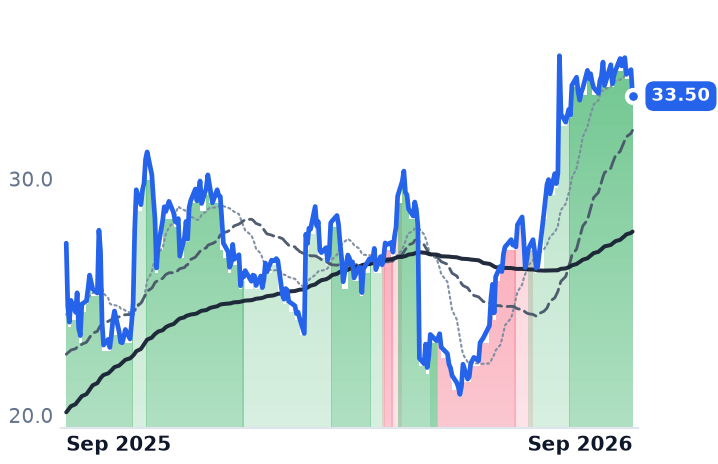
SLDE | Slide Insurance | Coastal & Specialty Property | 🟢 Cont. Bull | +1.0% | +62.7% |
UVE | Universal Insurance | Coastal & Specialty Property | 🟢 Cont. Bull | −1.3% | +70.5% |
HCI | HCI | Coastal & Specialty Property | 🌱 Emerging Bull | −2.7% | −0.4% |
| Compared against · context, not the story | |||||
ACIC | American Coastal Insurance | Coastal & Specialty Property | 🔴 Cont. Bear | −1.4% | −12.3% |
HRTG | Heritage Insurance | Coastal & Specialty Property | 🟢 Cont. Bull | −3.2% | +22.8% |
12-month price & trend
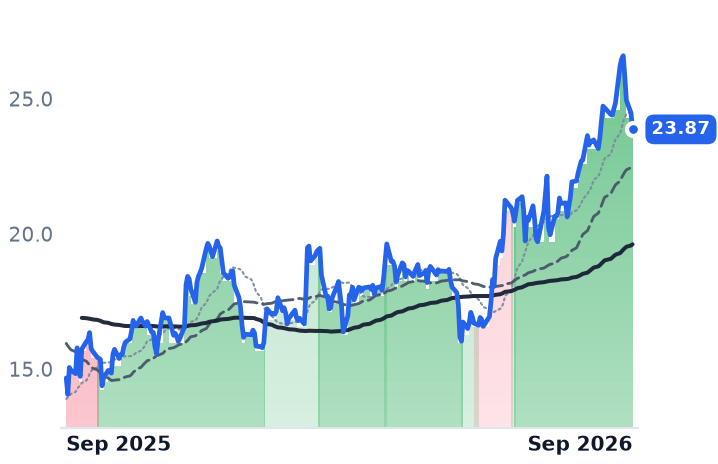
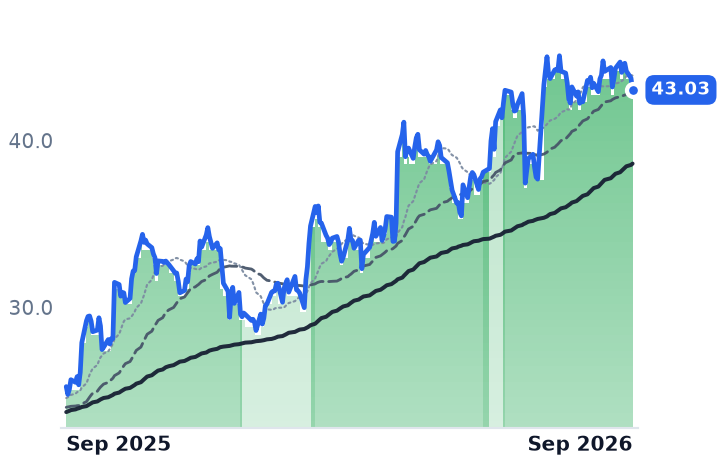
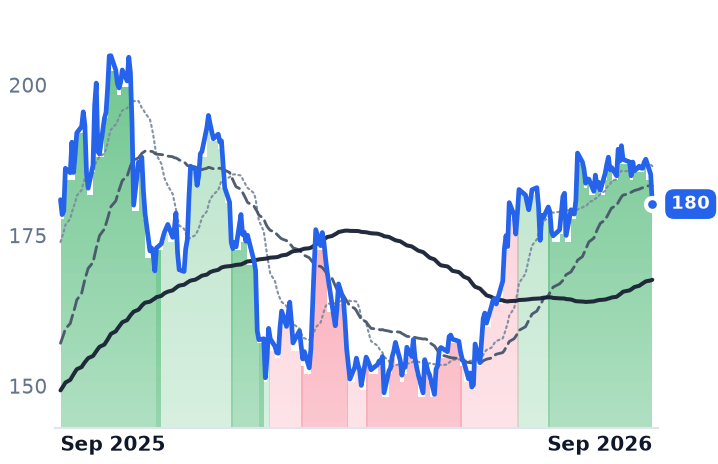
| Ticker | Mkt cap | P/E | P/E fwd | P/S | P/S fwd | P/GP | P/GP fwd | EV/EBITDA | FCF yld |
|---|---|---|---|---|---|---|---|---|---|
SLDE | $2.8B | 5.2x | 6.3x | 2.0x | 1.6x | 2.4x | 1.8x | 2.2x | 37.1% |
UVE | $1.2B | 5.4x | 8.9x | 0.7x | 0.5x | 2.0x | 1.4x | 2.5x | 28.4% |
HCI | $2.3B | 7.0x | 9.4x | 2.4x | 2.4x | 3.5x | 3.4x | 3.1x | 17.8% |
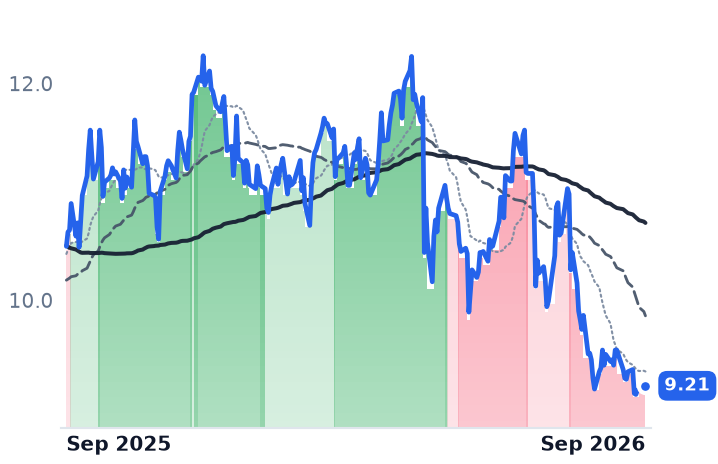
| Ticker | Mkt cap | P/E | P/E fwd | P/S | P/S fwd | P/GP | P/GP fwd | EV/EBITDA | FCF yld |
|---|---|---|---|---|---|---|---|---|---|
ACIC | $525.8M | 5.0x | 7.7x | 1.6x | 0.9x | 2.2x | 1.3x | 2.7x | 7.4% |
HRTG | $710.8M | 3.6x | 5.5x | 0.9x | 0.8x | 1.8x | 1.6x | 1.0x | 28.3% |
Consensus projections
| Ticker | FY2026E | FY2027E | FY2028E | |
|---|---|---|---|---|
SLDE | Revenue | +20.1% | +6.3% | −0.5% |
| EPS | +25.3% | −1.5% | +2.9% | |
UVE | Revenue | +4.4% | +3.0% | −27.3% |
| EPS | −8.7% | −2.1% | +15.8% | |
HCI | Revenue | +10.3% | +6.3% | +7.9% |
| EPS | −6.7% | +0.3% | −1.1% | |
ACIC | Revenue | −11.8% | +0.1% | — |
| EPS | −29.4% | +8.5% | — | |
HRTG | Revenue | +1.9% | +4.4% | — |
| EPS | −27.3% | +8.3% | — |
Forward fiscal years only. Blank means no analyst coverage for that year.
Slide Insurance ended June with 509,075 home policies in force across Florida and South Carolina, and it is keeping a rising share of the premium it writes on them. Policies in force rose 46.1% year on year while gross premiums written grew 16.7% to $508.0m; net premiums earned — the part Slide retains the risk on — rose 47.9% to $360.6m, about three times as fast as gross writings. Net income nearly doubled, to $134.9m.
That gap is the whole question. Slide, run from Tampa by founder and chief executive Bruce Lucas, is often described as a fee-collecting manager sitting above the underwriting. It is not: its managing general agent is a wholly owned company within the group, so the management fees the carrier pays it disappear in consolidation. What is left on the income statement is an insurer taking coastal wind risk, and this year it has taken more of it than before.
The cost of the storm it has not had
The price of that risk fell sharply in June. Guy Carpenter put Florida property-catastrophe pricing down 15% to 20% on a risk-adjusted basis at the June 1 renewal, with some accounts down 25%, after two loss-light seasons rebuilt reinsurer capital. Slide used the softness to buy volume: total aggregate limit rose to $5.463bn from $3.304bn, first-event capacity to $3.981bn, with a $780m catastrophe bond inside it. But the company's own filing puts its maximum retained loss on a first event at $166.8m, and $150.0m on a second — roughly 1.2 times what it earned in the June quarter. Universal keeps $45m of a first event; HCI Group keeps $163m against attributable quarterly earnings of $73.8m, the heaviest of the three relative to what it earns.
Nothing has tested any of it. The 2026 Atlantic season passed September 11 without a hurricane, the latest first hurricane of the satellite era, under a below-normal outlook. The quarter that contains the rest of the season is reported in late October and early November.
What the other two are paid for
Universal, the Fort Lauderdale writer that places its own reinsurance and runs the Clovered agency, grew revenue 6.2% last quarter and doubled gross margin; its net combined ratio was 91.6%, the thinnest underwriting margin among the peers that reported and 34 points worse than Slide's. Its shares are up 66.8% over twelve months, in a path built on gaps — three sessions of 12% or more. HCI, the Tampa group that also manages two reciprocal exchanges it does not own and sells policy-administration software, went the other way: revenue growth decelerated from 52.5% in the December quarter to 11.1%, operating margin gave back 13 points to 45.0%, and the stock is slightly lower on the year.
On price-to-book — the fitting anchor when a hurricane-free year distorts earnings — Slide at 2.38x is a quarter dearer than HCI at 1.90x and Universal at 1.88x. On forward earnings the order inverts: Slide 6.35x, Universal 8.87x, HCI 9.42x, the highest of the three on the weakest momentum. For all three the forward figure sits above the trailing one, which is analysts saying plainly that 2026 earnings came off a base no one expects to repeat. Consensus has Universal at $4.85 a share for 2026 against $6.32 delivered.
The part the business earns
Some of the improvement is structural rather than meteorological. Florida's Office of Insurance Regulation reported in its July 2026 stability report that lawsuits fell 41.3% after House Bill 837 removed one-way attorney fees in most insurance disputes. Florida's share of US homeowners claims opened fell to 4.9% in 2025 from 12.3%. And the savings are being handed back: Citizens, the state-run residual carrier, recommended an average 8.8% cut for multiperil homeowners policyholders, with Broward down 14.1%.
So Slide's advance is earned by things a reader can check — policies, retained premium, a loss ratio down to 30.2% — while Universal's is earned by a margin that cheaper reinsurance and an empty ocean both flatter, on almost no volume. Slide reaffirmed 2026 guidance of $1.85bn to $1.95bn of gross written premium and $455m to $470m of net income. "I think net income, we're probably trending in the right direction to exceed those estimates for sure," Lucas told analysts on the July 29 call. "But we're just trying to be conservative."
The conservatism has a specific address. Citizens has shrunk roughly 80% from its late-2023 peak of about 1.41m policies, so the takeout pipeline that built Slide is draining, and the company already credits voluntary new business alongside renewals of policies it took out. What remains untested is the other end: a single landfall large enough to reach the top of the retention costs Slide more than a quarter of earnings, and the only evidence that the repaired economics hold is a season in which nothing arrived.