

Fair Isaac's $10 Mortgage Score Now Faces a $1 Rival Cleared for Every Fannie Mae Lender
Hypothesis Opus 5 · Research Opus 5 · Writing Opus 5 · Prompt v1.6
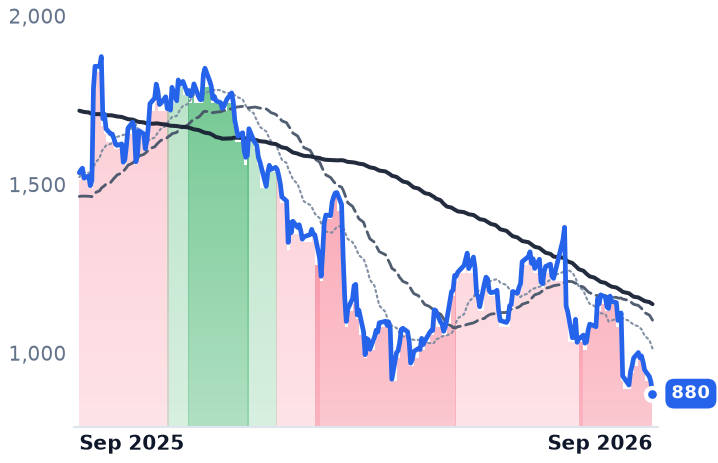
Fair Isaac's mortgage business is growing faster than it ever has while its shares have lost more than 40% in a year. Both are true because the growth came from a price the company set by itself — the wholesale royalty on a mortgage score more than doubled for 2026 — and on 3 September the Federal Housing Finance Agency directed Fannie Mae and Freddie Mac to approve every eligible lender to use VantageScore 4.0 instead.
Scores revenue rose 41% in the June quarter and mortgage-origination revenue rose 97%, against industry forecasts of roughly 8% growth in loan volume. Nothing in the reported meters has broken. What has broken is the assumption that nobody can undercut the toll. The seat-billed platforms — Q2 Holdings and Alkami — face a different question entirely, and Alkami's 19.3% fall this week answered none of it.
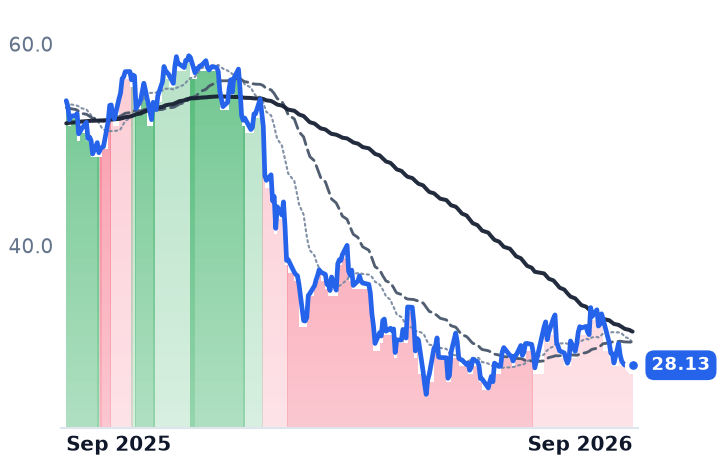
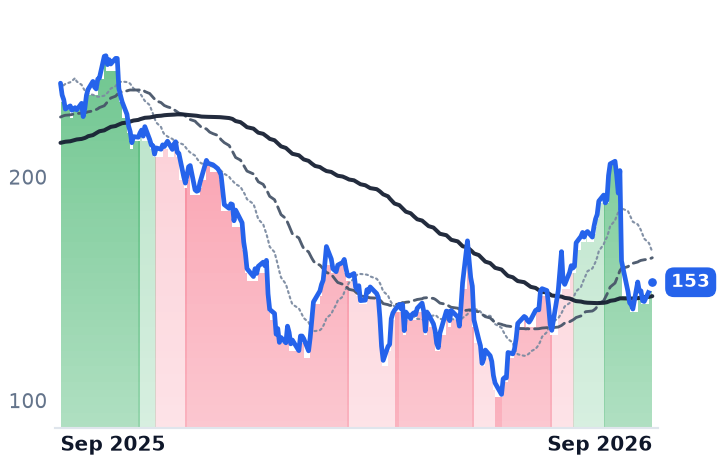
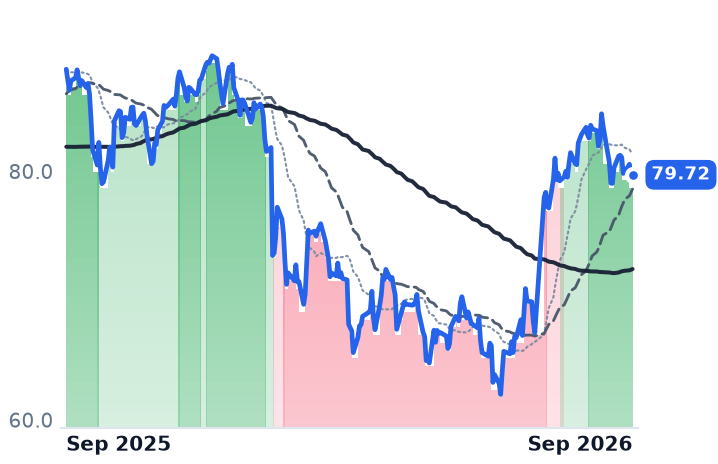
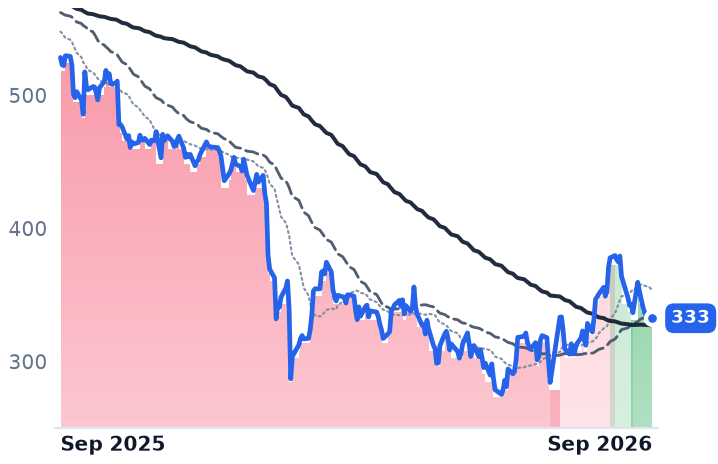
| Ticker | Company | Segment | Trend · 13mo | 30D | 1Y |
|---|---|---|---|---|---|
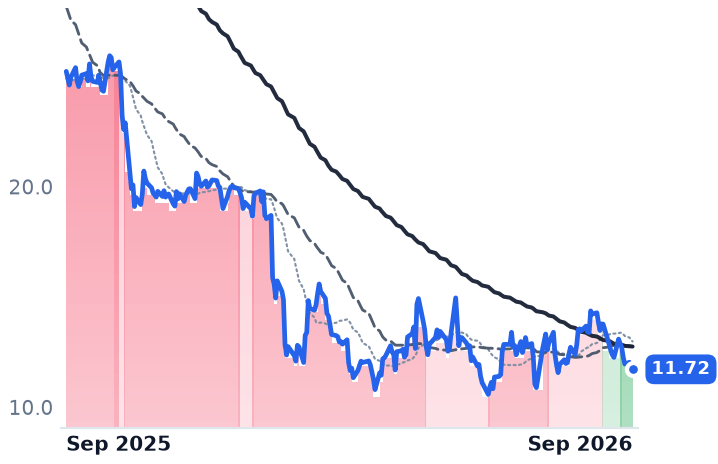
FICO | Fair Isaac | Financial Services Software | 🔴 Cont. Bear | −24.6% | −42.7% |
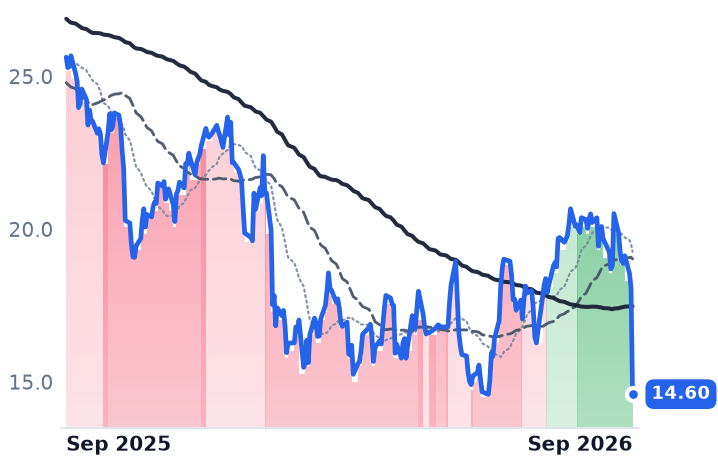
ALKT | Alkami Technology | Financial Services Software | 🌱 Emerging Bull | −28.1% | −43.0% |
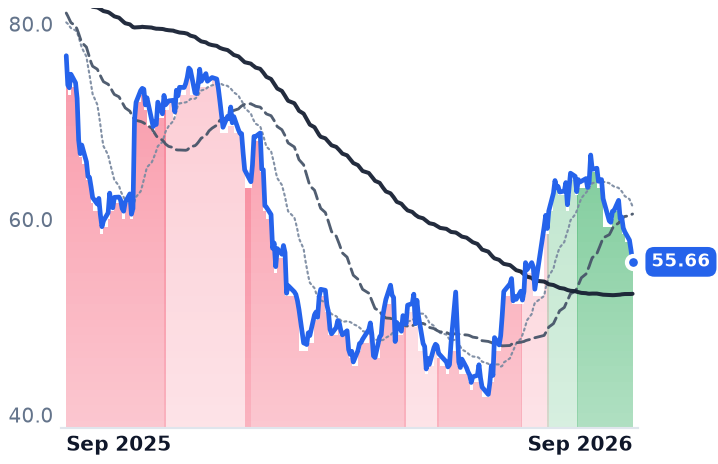
QTWO | Q2 | Financial Services Software | 🌱 Emerging Bull | −13.3% | −27.5% |
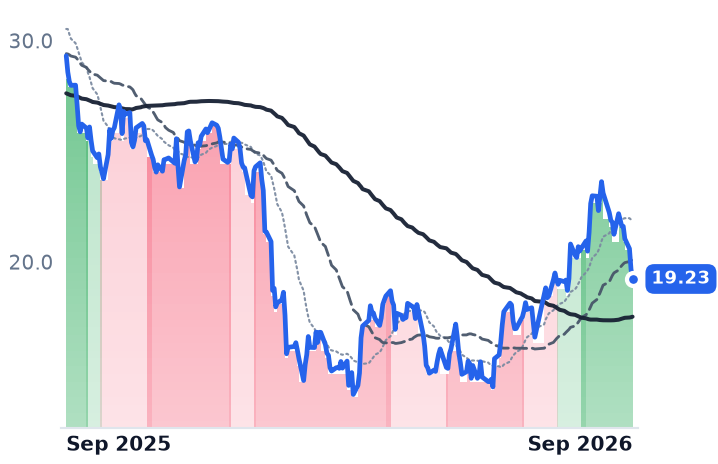
NCNO | nCino | Financial Services Software | 🌱 Emerging Bull | −8.2% | −34.4% |
BL | BlackLine | Financial Services Software | 🔴 Cont. Bear | −12.0% | −48.3% |
GWRE | Guidewire Software | Financial Services Software | 🌱 Emerging Bull | −20.3% | −36.8% |
SSNC | SS&C Technologies | Financial Services Software | 🌱 Emerging Bull | −4.6% | −9.6% |
TYL | Tyler Technologies | Financial Services Software | 🌱 Emerging Bull | −6.5% | −37.1% |
VERX | Vertex | Financial Services Software | 🔴 Cont. Bear | −14.3% | −53.5% |
12-month price & trend
| Ticker | Mkt cap | P/E | P/E fwd | P/S | P/S fwd | P/GP | P/GP fwd | EV/EBITDA | FCF yld |
|---|---|---|---|---|---|---|---|---|---|
FICO | $19.0B | 25.3x | 20.5x | 7.9x | 7.5x | 9.3x | 8.8x | 19.2x | 5.2% |
ALKT | $1.6B | n/m | 18.6x | 3.2x | 2.9x | 5.6x | 5.2x | n/m | 4.2% |
QTWO | $3.5B | 37.6x | 19.2x | 4.1x | 3.9x | 7.2x | 6.9x | 23.5x | 5.8% |
| Ticker | Mkt cap | P/E | P/E fwd | P/S | P/S fwd | P/GP | P/GP fwd | EV/EBITDA | FCF yld |
|---|---|---|---|---|---|---|---|---|---|
NCNO | $2.1B | 62.0x | 14.7x | 3.4x | 3.3x | 5.5x | 5.3x | 28.6x | 6.3% |
BL | $1.7B | 47.8x | 11.3x | 2.3x | 2.2x | 3.0x | 2.8x | 20.9x | 10.3% |
GWRE | $12.7B | 92.7x | 36.5x | 8.6x | 7.4x | 13.4x | 11.5x | 61.1x | 2.3% |
| Ticker | Mkt cap | P/E | P/E fwd | P/S | P/S fwd | P/GP | P/GP fwd | EV/EBITDA | FCF yld |
|---|---|---|---|---|---|---|---|---|---|
SSNC | $18.7B | 22.3x | 11.2x | 2.8x | 2.8x | 5.9x | 5.7x | 11.7x | 9.4% |
TYL | $13.6B | 43.6x | 25.4x | 5.6x | 5.3x | 12.0x | 11.4x | 29.7x | 5.2% |
VERX | $1.9B | 383.0x | 14.3x | 2.4x | 2.3x | 3.9x | 3.7x | 59.2x | 3.1% |
Consensus projections
| Ticker | FY2026E | FY2027E | FY2028E | |
|---|---|---|---|---|
FICO | Revenue | +27.8% | +14.0% | +11.9% |
| EPS | +45.6% | +22.5% | +19.9% | |
ALKT | Revenue | +19.6% | +16.7% | +14.5% |
| EPS | +51.0% | +38.2% | +25.0% | |
QTWO | Revenue | +11.8% | +10.1% | +10.6% |
| EPS | +22.1% | +19.5% | +32.6% | |
NCNO | Revenue | +9.8% | +9.0% | +8.5% |
| EPS | +25.2% | +44.5% | +20.0% | |
BL | Revenue | +9.5% | +10.5% | +10.2% |
| EPS | +19.5% | +11.9% | +17.2% | |
GWRE | Revenue | +23.8% | +17.2% | +15.7% |
| EPS | +41.5% | +20.8% | +27.4% | |
SSNC | Revenue | +8.6% | +5.0% | +4.8% |
| EPS | +17.2% | +9.6% | +7.4% | |
TYL | Revenue | +8.8% | +9.9% | +8.9% |
| EPS | +14.7% | +17.5% | +14.3% | |
VERX | Revenue | +10.6% | +10.5% | +11.6% |
| EPS | +28.4% | +24.0% | +21.0% |
Forward fiscal years only. Blank means no analyst coverage for that year.
Fair Isaac raised the wholesale royalty it charges for a mortgage credit score from $4.95 to $10 for 2026, a unilateral increase passed through by the credit bureaus and the resellers who assemble three-bureau reports. The money arrived exactly as designed. In the quarter ended 30 June, mortgage-origination revenue grew 97% and accounted for 62% of the Scores segment, whose revenue reached $458.9m against $324.3m a year earlier.
The trouble is what a price set by one company invites. On 3 September, Federal Housing Finance Agency director Bill Pulte directed Fannie Mae and Freddie Mac to approve every eligible lender to use VantageScore 4.0, converting a pilot that began on 1 May into a market-wide choice. Fair Isaac — which sells credit scores licensed through the bureaus and decisioning software to lenders, and carries a $19.0bn market value — closed the next session down 16.7%, and has kept sliding since.
Ten dollars against one
The rival is not priced to compete at the margin. TransUnion cut VantageScore 4.0 to $0.99 for mortgage lenders and bundles it free with a FICO score purchase through 2026; Experian made it free indefinitely; Equifax has committed to $1 through the end of 2027. VantageScore says its 4.0 model had already taken more than 9% of mortgage securitizations backed by the two government-sponsored enterprises by the end of August — before the directive.
Chief executive Will Lansing did not dispute the setup on the July 29 call. "It is a reality that Vantage is selling scores and is sending them along with FICO Scores... gaming is a reality and we're going to have gaming," he said. "The rules of the road, the environment that we're operating in is a gaming environment. The FHFA has put it in place. The GSEs have accepted it. And so that's the world we have." His defense was the product: "10T is absolutely the best score in the world for measuring credit default risk."
Volume will not rescue the toll. The Mortgage Bankers Association forecast about $2.2trn of single-family originations in 2026, roughly 8% above 2025, and has since trimmed that to about $2.12trn. Essentially all of the 97% is price.
Meanwhile the reported numbers are the best in years: revenue up 25.7%, operating margin of 53.8% against 48.9%, and guidance raised to $2.53bn for the fiscal year. Diluted shares fell 7.6% year on year, so earnings per share grew 41% on net income growth of 30.5% — about ten points of the EPS gain bought rather than earned, helped by a $1.5bn term loan drawn in June to fund an accelerated repurchase. The shares are down 42.7% over twelve months and trade at 25.3x trailing and 20.5x forward earnings, against roughly 44x forward at the twelve-month high close. Consensus already has fiscal 2027 revenue growth halving to 14%.
Paid by the seat instead
The contrast is not with every software vendor that rallied this summer — the rebound off the June low swept in public-sector and insurance-systems companies with no bank exposure at all. It is with the two firms billed per registered digital user. Q2 Holdings, which sells digital-banking software to regional and community banks and credit unions, reported subscription annual recurring revenue of $826m, up 15%, and $2.76bn of remaining performance obligations. Revenue growth decelerated to 12.6%, but gross margin expanded to 59.2% from 53.6% and operating income nearly tripled. It trades at 19.2x forward earnings against 37.6x trailing — the market paying for the margin ramp.
Alkami, its smaller Plano, Texas rival, showed annual recurring revenue of $511.7m, up 21%, on 23.6m registered users, up 13%. Then on 23 September its board concluded a review of strategic opportunities and chose to stay independent, reaffirming revenue guidance of $528m–$531m and adjusted EBITDA of $96m–$98m word for word. The shares fell 19.3% to $14.60 — below the $18.17 they closed at on 31 July, before advisers began approaching buyers. More than a deal premium came out.
nCino, which sells loan-origination and onboarding software to the same institutions, shows what the seat model avoids: its US mortgage subscription revenue fell 1% to $20.6m last quarter while everything else accelerated to 12%, and management blamed higher-for-longer rates driving churn among independent mortgage banks.
What the de-rating is actually pricing
None of Fair Isaac's meters has turned. The de-rating is a forecast, and a specific one: that a royalty set unilaterally is worth less when a regulator hands every lender a substitute at a tenth of the price. Seat-based vendors face pressure of a different kind — Q2's growth is slowing, Alkami's has halved from 28.9% to 15.9%, and per-institution pricing limits how far account-level expansion carries either — but no memo from Washington can replace a bank's core software in a quarter.
Equifax's dollar price runs through the end of 2027. Fair Isaac's fiscal-year guidance, due with fourth-quarter results, is the first place management has to say what it thinks that costs.