

RELX and Thomson Reuters Both Grew Legal Revenue 10% After February's AI Selloff
Hypothesis Opus 5 · Research Opus 5 · Writing Opus 5 · Prompt v1.6
Two of the largest sellers of proprietary professional content have de-rated for a year while their businesses accelerated. RELX grew underlying revenue 7% in the first half, with its LexisNexis legal division the fastest-growing of its four. Thomson Reuters grew 8% organically and raised its full-year outlook in August.
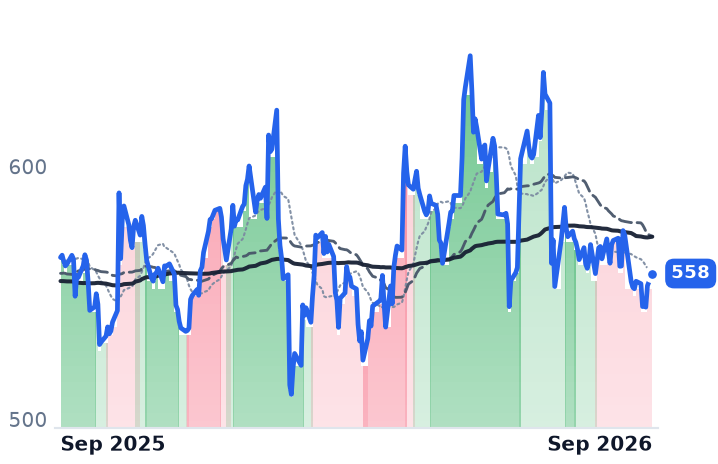
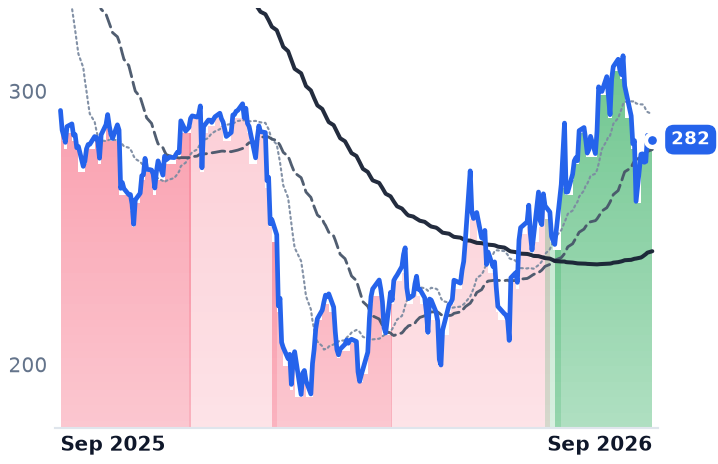
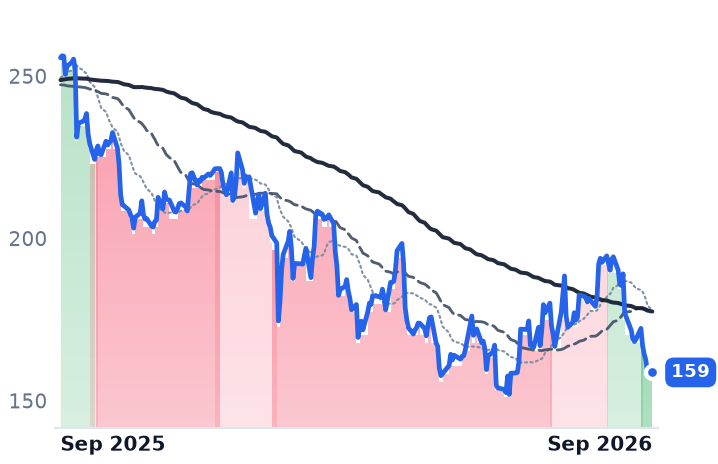
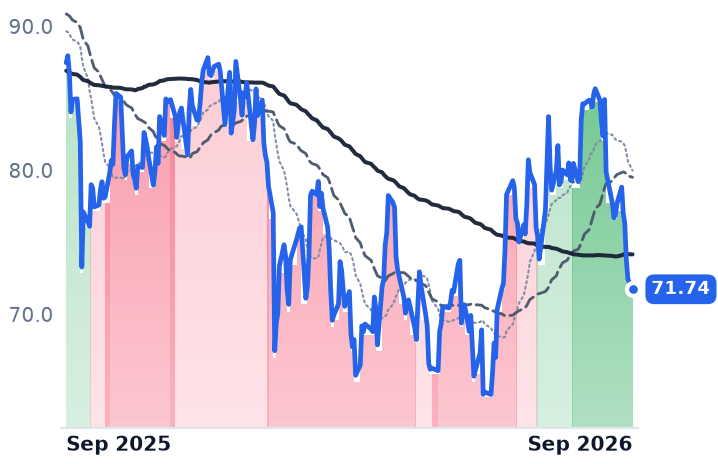
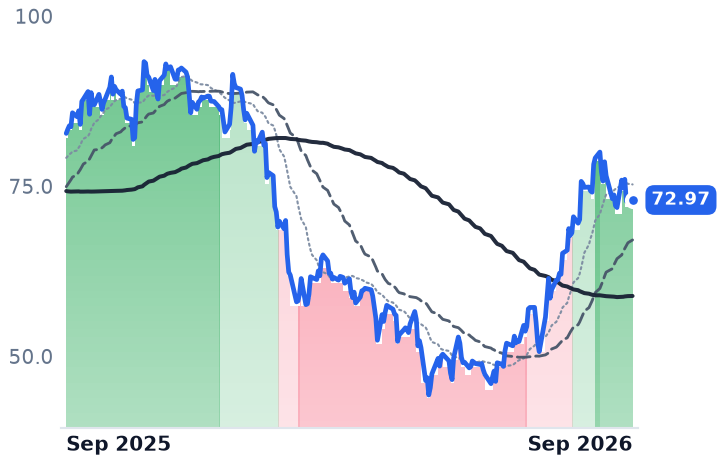
Most of the share-price damage happened in one session, February 3, when Anthropic shipped plug-ins automating legal and analytical work. Against unchanged 2026 consensus earnings, Thomson Reuters has gone from roughly 36.8 times forward earnings a year ago to 21.5 times today. One meter genuinely is cooling — RELX's Risk division is 61% transactional, and US auto-insurance shopping growth slowed by more than half to 1.4% in the second quarter — but that explains a sliver of the repricing rather than its bulk.
| Ticker | Company | Segment | Trend · 13mo | 30D | 1Y |
|---|---|---|---|---|---|
| The subject · what this brief is about | |||||
RELX | RELX | Information & Analytics Platforms | 🌱 Emerging Bull | −8.1% | −27.6% |
TRI | Thomson Reuters | Information & Analytics Platforms | 🌱 Emerging Bull | −11.8% | −39.6% |
| Compared against · context, not the story | |||||
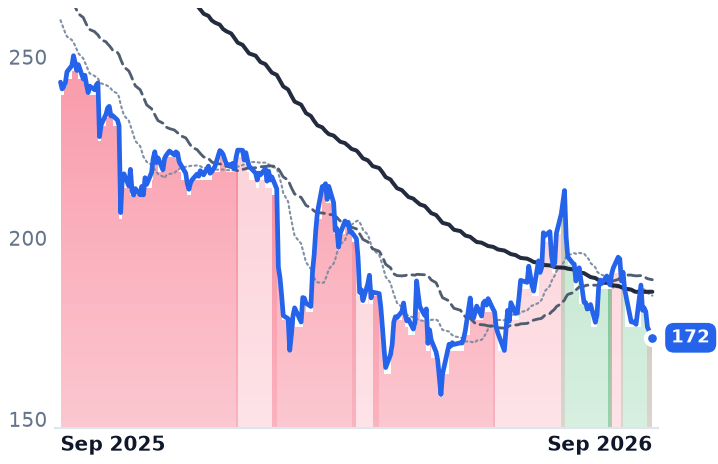
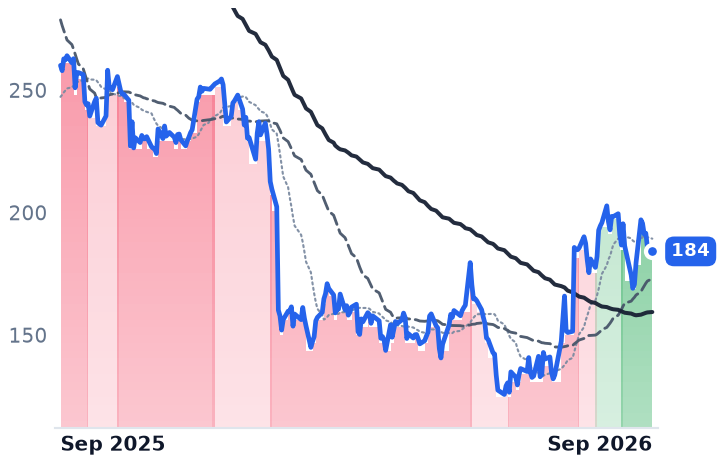
SPGI | S&P Global | Credit Ratings | 🌱 Emerging Bull | −6.8% | −19.4% |
MCO | Moody's | Credit Ratings | 🌱 Emerging Bull | −8.3% | −3.6% |
MSCI | MSCI | Investment Data & Analytics | ⚠️ Emerging Bear | −2.4% | −1.1% |
FDS | FactSet Research Systems | Investment Data & Analytics | 🌱 Emerging Bull | −7.5% | −3.6% |
VRSK | Verisk Analytics | Software - Services | 🔴 Cont. Bear | −9.0% | −29.0% |
IT | Gartner | Research & Advisory | 🌱 Emerging Bull | −9.2% | −29.2% |
EFX | Equifax | Credit & Risk Intelligence | 🌱 Emerging Bull | −18.4% | −37.9% |
TRU | TransUnion | Credit & Risk Intelligence | 🌱 Emerging Bull | −15.5% | −18.0% |
CLVT | Clarivate | Other | 🔴 Cont. Bear | −8.7% | −52.1% |
NDAQ | Nasdaq | Exchange & Clearing | 🌱 Emerging Bull | −5.0% | +5.0% |
WK | Workiva | Security & Compliance | 🟢 Cont. Bull | −2.6% | −11.8% |
SPY | State Street SPDR S&P 500 ETF Trust | Asset Management | 🟢 Cont. Bull | +1.4% | +16.8% |
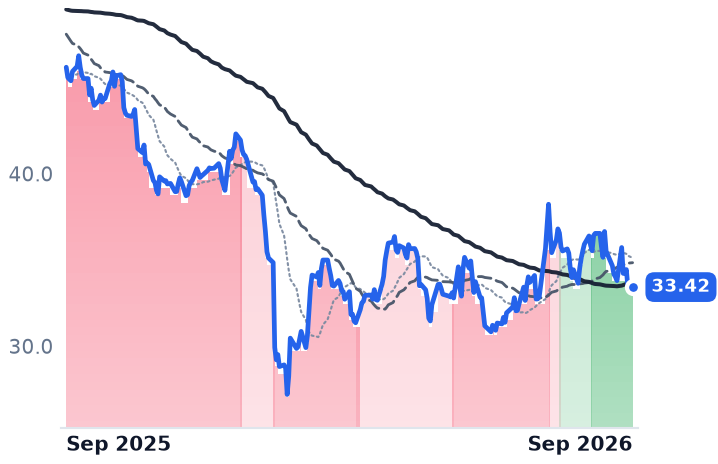
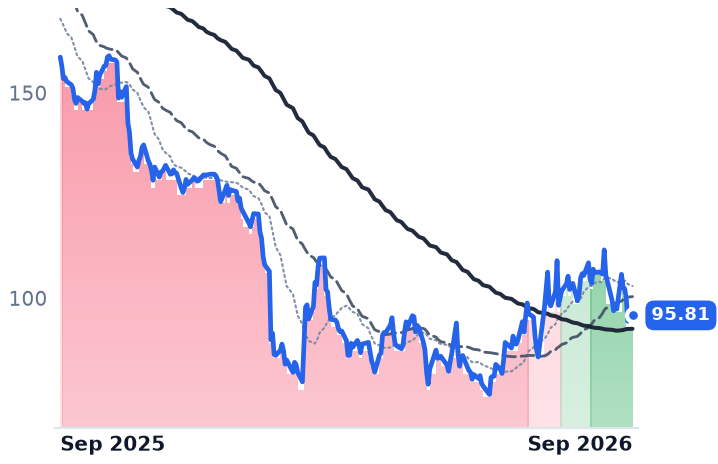
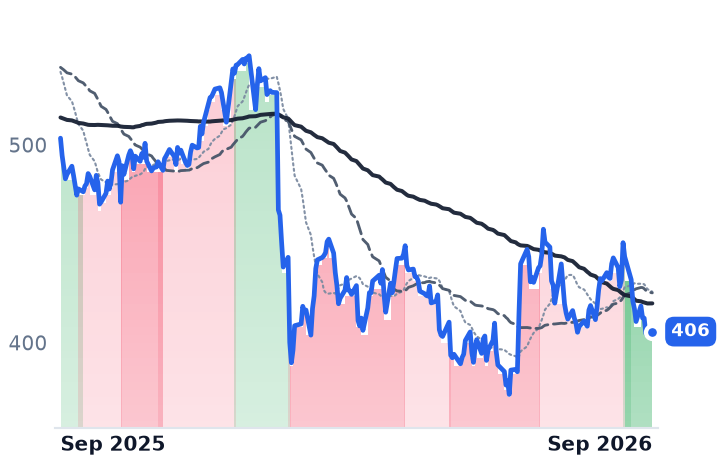
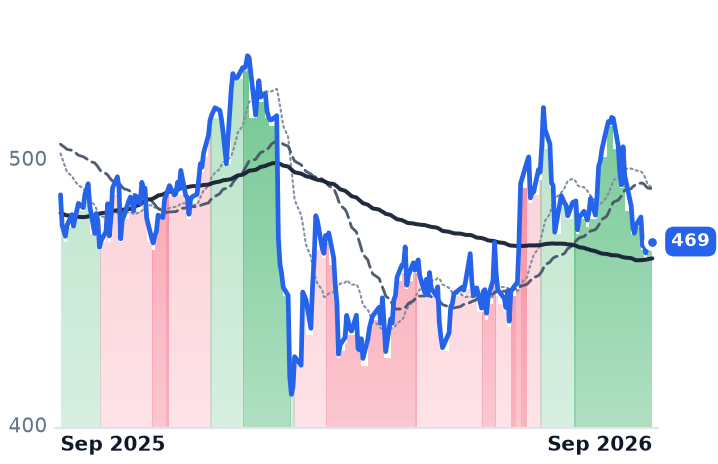
12-month price & trend
| Ticker | Mkt cap | P/E | P/E fwd | P/S | P/S fwd | P/GP | P/GP fwd | EV/EBITDA | FCF yld |
|---|---|---|---|---|---|---|---|---|---|
RELX | $58.3B | 19.7x | 23.7x | 4.5x | 5.8x | 7.1x | 9.3x | 12.9x | 6.7% |
TRI | $41.7B | 25.5x | 21.5x | 5.3x | 5.1x | 8.0x | 7.7x | 13.4x | 5.3% |
SPGI | $119.3B | 25.1x | 20.5x | 7.6x | 7.2x | 10.8x | 10.3x | 16.8x | 4.7% |
| Ticker | Mkt cap | P/E | P/E fwd | P/S | P/S fwd | P/GP | P/GP fwd | EV/EBITDA | FCF yld |
|---|---|---|---|---|---|---|---|---|---|
MCO | $74.9B | 30.4x | 25.7x | 9.5x | 9.1x | 13.7x | 13.0x | 20.4x | 4.0% |
MSCI | $41.1B | 31.1x | 28.7x | 12.3x | 11.7x | 14.9x | 14.1x | 23.1x | 3.9% |
FDS | $10.6B | 19.5x | 16.8x | 4.3x | 4.3x | 8.5x | 8.4x | 12.4x | 6.7% |
| Ticker | Mkt cap | P/E | P/E fwd | P/S | P/S fwd | P/GP | P/GP fwd | EV/EBITDA | FCF yld |
|---|---|---|---|---|---|---|---|---|---|
VRSK | $21.3B | 24.1x | 21.2x | 6.9x | 6.6x | 10.2x | 9.8x | 14.9x | 5.3% |
IT | $9.8B | 13.8x | 10.7x | 1.5x | 1.5x | 2.2x | 2.2x | 9.0x | 12.8% |
EFX | $19.1B | 27.2x | 18.4x | 3.0x | 2.8x | 6.8x | 6.3x | 12.9x | 6.0% |
| Ticker | Mkt cap | P/E | P/E fwd | P/S | P/S fwd | P/GP | P/GP fwd | EV/EBITDA | FCF yld |
|---|---|---|---|---|---|---|---|---|---|
TRU | $12.8B | 18.1x | 13.9x | 2.7x | 2.5x | 5.1x | 4.7x | 12.1x | 5.5% |
CLVT | $1.5B | n/m | 3.2x | 0.6x | 0.7x | 1.0x | 1.0x | 6.4x | 38.6% |
NDAQ | $51.5B | 27.0x | 23.2x | 6.2x | 8.9x | 11.4x | 16.3x | 19.4x | 3.9% |
| Ticker | Mkt cap | P/E | P/E fwd | P/S | P/S fwd | P/GP | P/GP fwd | EV/EBITDA | FCF yld |
|---|---|---|---|---|---|---|---|---|---|
WK | $4.3B | 95.4x | 23.6x | 4.5x | 4.1x | 5.6x | 5.2x | 66.7x | 4.7% |
SPY | $773.0B | — | — | — | — | — | — | — | — |
Consensus projections
| Ticker | FY2026E | FY2027E | FY2028E | |
|---|---|---|---|---|
RELX | Revenue | +3.3% | +6.5% | +7.5% |
| EPS | +9.3% | +10.8% | +11.8% | |
TRI | Revenue | +7.6% | +7.1% | +8.5% |
| EPS | +11.1% | +14.3% | +13.0% | |
SPGI | Revenue | +7.7% | +7.2% | +7.3% |
| EPS | +9.9% | +13.3% | +14.0% | |
MCO | Revenue | +7.2% | +7.6% | +7.7% |
| EPS | +13.5% | +11.6% | +11.0% | |
MSCI | Revenue | +12.0% | +8.7% | +8.6% |
| EPS | +14.5% | +14.0% | +13.7% | |
FDS | Revenue | +6.5% | +5.8% | +6.3% |
| EPS | +4.2% | +10.2% | +11.5% | |
VRSK | Revenue | +4.9% | +6.8% | +6.4% |
| EPS | +10.2% | +13.2% | +11.8% | |
IT | Revenue | −0.7% | +4.6% | +6.3% |
| EPS | +7.2% | +12.5% | +14.2% | |
EFX | Revenue | +11.6% | +9.2% | +9.9% |
| EPS | +13.0% | +19.3% | +21.5% | |
TRU | Revenue | +13.0% | +8.2% | +7.7% |
| EPS | +12.0% | +16.7% | +17.5% | |
CLVT | Revenue | −3.2% | +2.3% | +2.4% |
| EPS | +13.3% | +7.2% | +16.3% | |
NDAQ | Revenue | +10.2% | +8.4% | +8.0% |
| EPS | +14.6% | +12.7% | +14.1% | |
WK | Revenue | +18.3% | +15.5% | +14.9% |
| EPS | +105.3% | +20.5% | +21.8% |
Forward fiscal years only. Blank means no analyst coverage for that year.
The session that did a year's work
A single session on February 3 took roughly a seventh off the market value of RELX, the London-headquartered owner of Elsevier's research journals, the LexisNexis legal and risk businesses and a large exhibitions arm. Thomson Reuters — which sells Westlaw, Practical Law and the CoCounsel legal assistant, largely per attorney seat — fell 15.7% the same day. Neither company had announced anything. Anthropic had shipped Claude Cowork plug-ins automating legal, sales, marketing and data-analysis work, and S&P Global separately guided 2026 earnings to $19.40–$19.65 a share against consensus near $19.96. Within days, roughly $285bn of market value had been erased across software, legal-tech and data companies on three continents, and S&P Global's outlook had dragged Moody's, FactSet, MSCI, Verisk and Nasdaq lower on the read-across.
That one day accounts for close to a third of each company's twelve-month decline — RELX is down 29.0% over the year and Thomson Reuters 41.3%. The stake is whether generative agents substitute for platforms built on proprietary content or get sold by them, and two reporting seasons have since produced an answer that the share prices have only partly absorbed.
What the companies reported afterward
RELX's first-half revenue of £4,871m rose 7% underlying, with adjusted operating margin improving to 35.5% from 34.8%. All four divisions grew: Risk 8%, Scientific, Technical & Medical 6%, Exhibitions 6% and Legal 10% — the LexisNexis division the disintermediation thesis targets most directly was the fastest of the four. "RELX delivered strong underlying revenue and profit growth and strong new sales in the first half of 2026," chief executive Erik Engstrom said on July 23, citing "a further step up in growth in Legal." He also told investors that roughly 90% of new sales value and about three-quarters of renewal value now runs through the AI-enabled platform.
Thomson Reuters reported 8% organic revenue growth in the second quarter, Legal Professionals up 10% organically and 11% excluding government, adjusted earnings before interest, tax, depreciation and amortization at a 38.1% margin, and free cash flow up 29% to $727m. "We saw strong momentum continue in the second quarter, underscored by 10% organic revenue growth in our 'Big 3' segments," chief executive Steve Hasker said on August 5. The company raised full-year organic growth guidance to about 8%, the top of its prior range, and management attributed the legal acceleration to agentic products, saying on the call that "a large part of growth is coming from the agentic offerings, both Westlaw and CoCounsel".
The meter that is genuinely slowing
One part of RELX is not a subscription at all. Inside LexisNexis Risk Solutions, subscription revenue is 39% of the total and transactional revenue, including volumetric contracts, is 61%, so the division is paid per query on insurance underwriting and identity checks rather than per customer budget. That volume is cooling: LexisNexis's own US Insurance Demand Meter put year-on-year auto shopping growth at 3.2% in the first quarter and 1.4% in the second. Part of the de-rating is earned.
The legal exposure is narrower than the selloff implied. Wells Fargo, cutting Thomson Reuters to Equal Weight and its target to $95 on March 23, noted that AI-native startups such as Midpage are trying to replicate the Westlaw library, which is roughly a quarter of company revenue. Yet Anthropic itself launched Claude for Legal on May 12 with connectors into Westlaw, making the library a layer inside the agent; RELX answered on August 24 with a "Legal Intelligence Engine" rebuilding its Protégé assistant inside Lexis+ around agentic orchestration.
Where the group trades
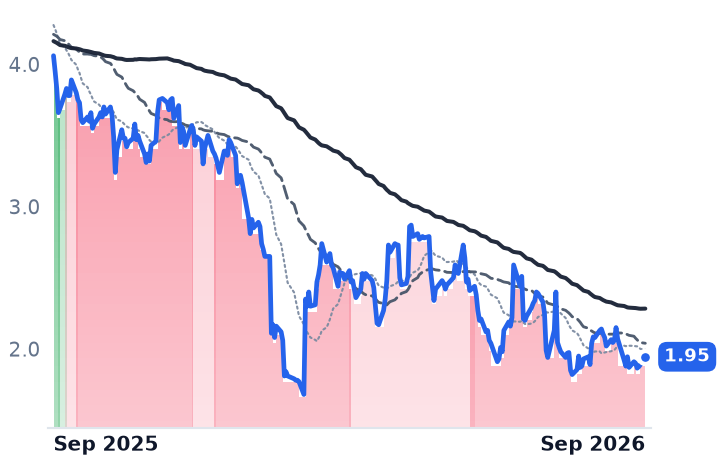
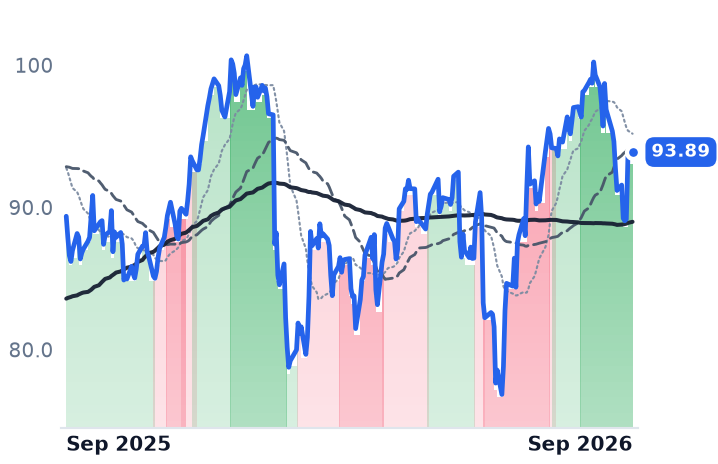
The market has discriminated rather than marked down everything sold by subscription. Over twelve months MSCI fell 1.8%, Moody's 4.0% and FactSet 4.5% — franchises with benchmark or regulatory lock-in — against Clarivate's 52.1%, Thomson Reuters' 41.3% and Equifax's 38.2%. Holding today's consensus 2026 earnings of $4.43 a share constant, Thomson Reuters has gone from 36.8 times forward earnings last September to 21.5 times, and from 48.4 times at its 2025 peak, a 41% compression into raised guidance. RELX trades at 19.7 times trailing earnings on a 6.7% trailing free-cash-flow yield; because consensus has 2026 earnings of £1.41 a share against roughly £1.24 trailing, its forward multiple sits below that.
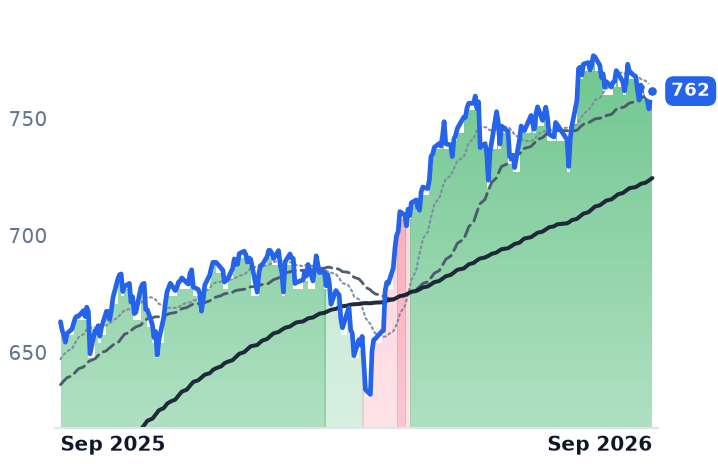
The last month carries no company news at either name. Both jumped on September 14 — Thomson Reuters 8.7%, RELX 5.7%, while the S&P 500 fell — after Dario Amodei published an essay on September 12 urging frontier labs to slow capability gains, then gave it back by September 18, the day the Federal Reserve raised rates a quarter point to a 3.75%–4.00% range. Both have traded above their long-term moving averages since late August.
The verdict
The business earns almost none of the twelve-month decline. Organic growth accelerated at both companies, margins expanded at both, and Thomson Reuters raised guidance; the one honestly deteriorating input is US insurance shopping volume feeding RELX's per-query Risk revenue, and that division still grew 8%. What the fundamentals cannot explain is the February gap, which priced a substitution that the subsequent six months of disclosure contradicted — JPMorgan analysts wrote during the selloff that "current market pricing is expressing the most bearish possible outcome". The recovery has been uneven: RELX now sits 5.9% below its pre-gap close and Thomson Reuters 12.1% below, which is the market saying that per-seat legal research is the more substitutable meter, even as it is the one growing fastest at both.
The test is arithmetic and close at hand. Thomson Reuters guided to about 8% organic growth for the full year, and it has already printed 8% with legal at 10%. A third-quarter print that holds that line leaves the February discount without a fact behind it.