

Twilio Guided Organic Growth Down to 11-12%. Its Shares Rose 15% in the Month After
Hypothesis Opus 5 · Research Opus 5 · Writing Opus 5 · Prompt v1.6
Twilio has published nothing new since its August 6 results, and its shares have risen roughly a seventh since late August anyway — the whole move is repricing. What the August print actually said was that revenue growth of 22% produced gross profit growth of 20.4%, because a rising share of the top line is carrier surcharge the company collects and hands straight to mobile operators.
The underlying business is genuinely better: dollar-based net expansion reached 116% from about 108% a year earlier, and free cash flow grew 34% to $353m. But management guides third-quarter organic growth to 11-12% after posting 17%. Bandwidth, which owns the network Twilio rents, shows the mechanism in harsher form — gross profit up 9.6% on the same 22% revenue growth — and sits 31% below its July peak.
| Ticker | Company | Segment | Trend · 13mo | 30D | 1Y |
|---|---|---|---|---|---|
| The subject · what this brief is about | |||||
TWLO | Twilio | Communications & Messaging Platforms | 🟢 Cont. Bull | +16.0% | +145.5% |
BAND | Bandwidth | Communications & Messaging Platforms | 🟢 Cont. Bull | +16.3% | +200.0% |
| Compared against · context, not the story | |||||
RNG | RingCentral | Communications & Collaboration | 🟢 Cont. Bull | +7.1% | +123.6% |
FIVN | Five9 | Communications & Collaboration | 🟢 Cont. Bull | −0.9% | +18.7% |
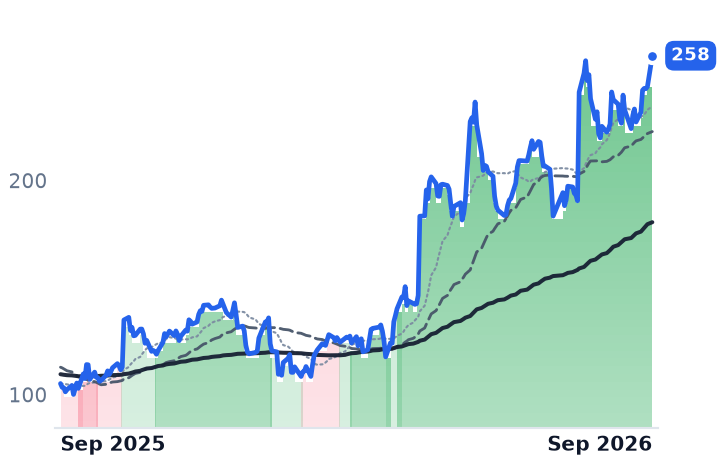
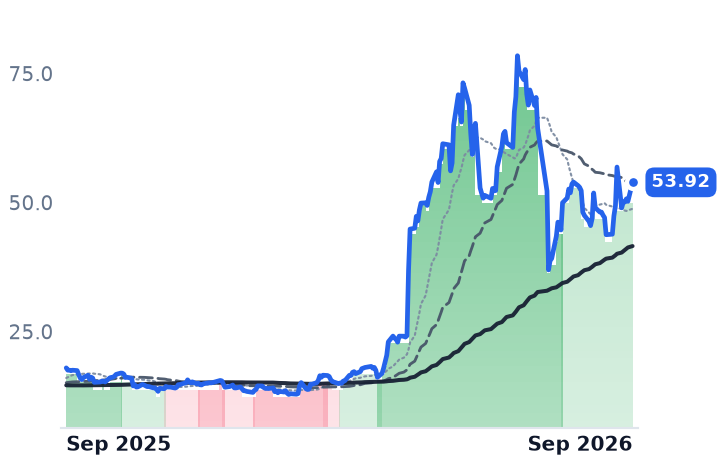
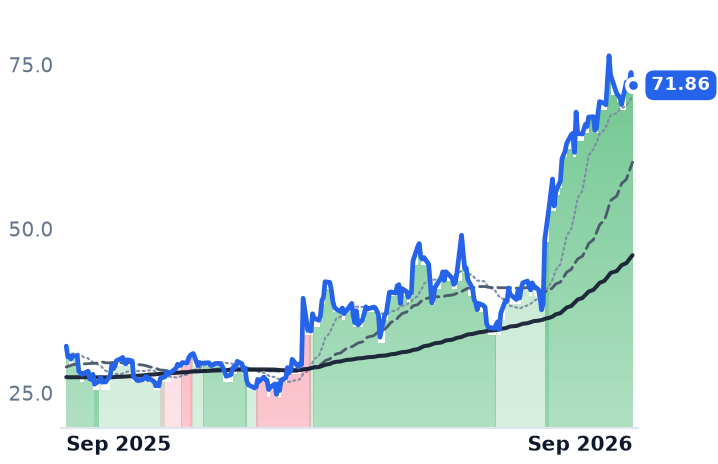
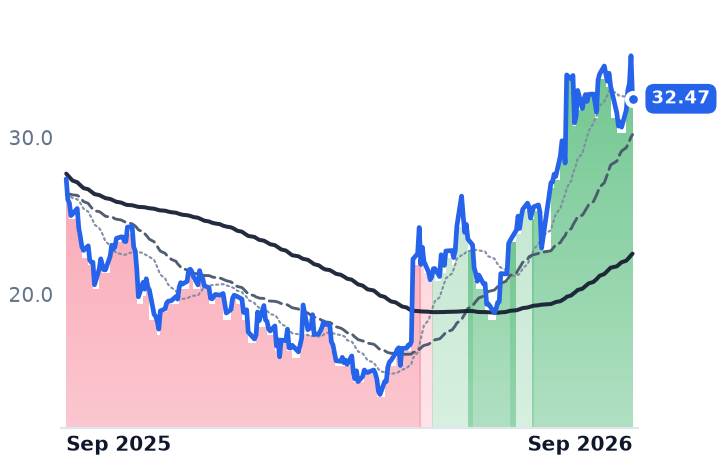
12-month price & trend
| Ticker | Mkt cap | P/E | P/E fwd | P/S | P/S fwd | P/GP | P/GP fwd | EV/EBITDA | FCF yld |
|---|---|---|---|---|---|---|---|---|---|
TWLO | $39.2B | 34.3x | 43.5x | 7.0x | 6.5x | 14.5x | 13.4x | 107.5x | 2.8% |
BAND | $1.7B | n/m | 30.8x | 2.1x | 1.9x | 5.6x | 5.1x | — | 4.2% |
RNG | $6.0B | 53.8x | 13.8x | 2.3x | 2.3x | 3.2x | 3.2x | 21.4x | 11.2% |
| Ticker | Mkt cap | P/E | P/E fwd | P/S | P/S fwd | P/GP | P/GP fwd | EV/EBITDA | FCF yld |
|---|---|---|---|---|---|---|---|---|---|
FIVN | $2.6B | 45.5x | 10.6x | 2.2x | 2.1x | 4.0x | 3.9x | 15.9x | 7.5% |
Consensus projections
| Ticker | FY2026E | FY2027E | FY2028E | |
|---|---|---|---|---|
TWLO | Revenue | +19.6% | +11.4% | +10.4% |
| EPS | +23.5% | +14.3% | +14.3% | |
BAND | Revenue | +20.1% | +4.5% | +20.2% |
| EPS | +22.0% | +9.6% | +51.2% | |
RNG | Revenue | +5.1% | +4.6% | +4.4% |
| EPS | +16.4% | +11.1% | +10.8% | |
FIVN | Revenue | +9.5% | +9.9% | +10.6% |
| EPS | +10.5% | +18.0% | +16.6% |
Forward fiscal years only. Blank means no analyst coverage for that year.
Twilio has disclosed nothing about its business since August 6. Its valuation has moved regardless: the shares closed at $258.27 on September 21 against $225.30 a month earlier, about 15% higher, and now carry 14.48x trailing gross profit against 12.45x in late August and roughly 7.2x in February. No new financial information arrived in between.
That matters because the company's own last word pointed the other way. Twilio, which sells cloud communications interfaces that let developers embed messaging, voice and email into their software and bills per message and per minute rather than per seat, guided third-quarter revenue to $1.505-1.515bn — 11-12% organic growth, after posting 17% in the June quarter.
The dollar that isn't kept
Twilio's reported revenue grew 22.0% in the second quarter to $1,499.1m. Gross profit grew 20.4%, and gross margin slipped to 48.42% from 49.07%. The gap is the carrier fee. United States operators raised application-to-person messaging pass-through charges three times in 2026 — T-Mobile and US Cellular in January, AT&T in April, Verizon in May — and both companies bill those charges on at no markup. Revenue rises; gross profit does not. Twilio is absorbing roughly $190m of incremental carrier fees this year, a drag of about 170 basis points on gross margin, while per-message prices fall 5-8% a year on their own.
Strip the surcharge and the business is still improving. Dollar-based net expansion reached 116%, from around 108% a year earlier; operating income more than doubled to $84.5m; free cash flow rose 34% to $353m. "We are in a powerful new chapter at Twilio, marked by another quarter of organic growth acceleration as well as record profitability and free cash flow," chief executive Khozema Shipchandler said with the results. On the call he called the artificial-intelligence opportunity "very early innings", with under 6% of voice interactions machine-driven. The reported earnings line is no help in judging any of it: second-quarter net income of $1,067.2m against $84.5m of operating income is a one-off tax item, which is why gross profit and the 43.5x forward earnings multiple are the anchors that work.
Owning the network did not help
Bandwidth, a Raleigh company that routes voice and messaging over an internet-protocol network it owns and licenses market by market, was supposed to be the structural alternative to reselling someone else's routes. It grew revenue 22% to $220m — and gross profit 9.6%, with gross margin down more than four points to 35.72%. Some $68m of the quarter was messaging surcharge; the cloud communications line it strikes net of pass-through grew 12%. "AI is changing how enterprises buy communications infrastructure," chief executive David Morken told investors on July 29. The shares fell 29.3% that session and sit 31.3% below their July 9 peak, at 5.63x trailing gross profit against roughly 8.2x at that high. Bandwidth funded the network with $275m of zero-coupon convertible notes in June and still runs an operating loss.
Both stocks rose sharply on September 21 — Twilio 5.8%, Bandwidth 7.3% — with no company announcement discoverable for either; the likelier reading is a shared sector move, and the whole per-minute complex has been marked up, RingCentral included.
The verdict
The hypothesis that owned infrastructure earns better economics than resale is inverted by these numbers: the asset-light reseller held its gross margin within a point while the network owner gave up four. What separates the two is not the rail but the mix — Twilio's improvement reaches the gross profit line, Bandwidth's does not. Twilio's business has earned a re-rating; September's leg is not part of it, arriving as management guides growth down by five points.
The surcharges lap in 2027, and when they do the reported growth rate falls back to whatever customers are actually paying for. Consensus already assumes it: 11.4% revenue growth next year for Twilio, 4.5% for Bandwidth.