

Sea Grew Operating Profit 28% While MercadoLibre's Fell 17% in the Same Brazil Price War
Hypothesis Opus 5 · Research Opus 5 · Writing Opus 5 · Prompt v1.6
Two marketplaces filed under the same industry code have been sold as one bet on emerging-market consumer credit going bad. Neither credit book is going bad. MercadoLibre's portfolio reached $16.4bn with net interest margin after losses improving to 21% in the June quarter; Sea's Monee book hit $11.1bn with 90-day non-performing loans flat at 1.0%.
What is actually being repriced is who pays for Brazil. MercadoLibre cut seller fees and held a lowered free-shipping threshold, and gross margin fell to 40.9% from 45.6% a year earlier — consensus now models 2026 earnings per share down 6.2%. Sea's gross margin barely moved and Shopee's core marketplace revenue grew 66%.
MercadoLibre's de-rating is earned. Sea's, twice as deep, is not explained by anything in its own accounts.
| Ticker | Company | Segment | Trend · 13mo | 30D | 1Y |
|---|---|---|---|---|---|
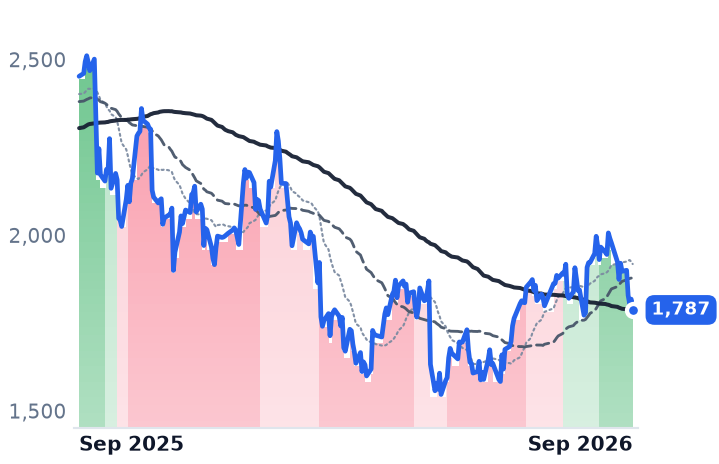
MELI | MercadoLibre | Online Marketplaces | 🌱 Emerging Bull | −7.0% | −27.1% |
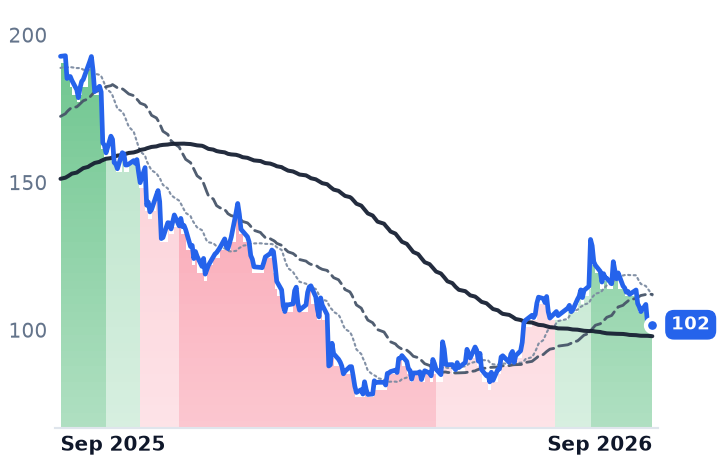
SE | Sea | Online Marketplaces | 🌱 Emerging Bull | −13.5% | −47.2% |
12-month price & trend
| Ticker | Mkt cap | P/E | P/E fwd | P/S | P/S fwd | P/GP | P/GP fwd | EV/EBITDA | FCF yld |
|---|---|---|---|---|---|---|---|---|---|
MELI | $90.6B | 48.6x | 47.1x | 2.6x | 2.2x | 6.0x | 5.1x | 32.3x | 13.8% |
SE | $61.1B | 37.6x | 27.7x | 2.2x | 1.9x | 5.0x | 4.4x | 21.6x | 5.1% |
Consensus projections
| Ticker | FY2026E | FY2027E | FY2028E | |
|---|---|---|---|---|
MELI | Revenue | +45.2% | +28.3% | +24.9% |
| EPS | −6.2% | +44.1% | +41.7% | |
SE | Revenue | +40.1% | +22.8% | +15.1% |
| EPS | +15.5% | +29.6% | +25.4% |
Forward fiscal years only. Blank means no analyst coverage for that year.
MercadoLibre has spent the past year cutting what it charges Brazilian sellers and holding down the order size at which shipping becomes free. The June quarter shows the bill. Revenue rose about 50% to $10.169bn, the company's first $10bn quarter, and operating income fell 17% to $683m.
That is the mechanism the last twelve months have actually repriced across Latin American and Southeast Asian e-commerce — a marketplace buying order volume out of its own gross margin. It is not the story the share prices imply. Both MercadoLibre, which runs Latin America's largest marketplace alongside the Mercado Pago payments and lending arm, and Sea Limited, whose Shopee marketplace competes with it directly in Brazil, have built large consumer-credit books inside a punishing rate regime, and the market has been marking them as part-lenders. The June quarters say the loans are the healthy part.
The credit books both passed
MercadoLibre's portfolio reached $16.4bn, up 75% year over year, with non-performing balances between 15 and 90 days at 7.0% of the book and 4.6% on credit cards — levels management called close to historical lows. Net interest margin after losses improved to 21% from 18% in the prior quarter. The company issued 2.6m Brazilian cards in the quarter against 1.6m a year earlier; that card portfolio runs at minus 2.5% margin after losses by design, with individual cohorts reaching breakeven in twelve to eighteen months. Card originations were $7.68bn of $15.93bn total for the quarter.
Sea's Monee loan book reached $11.1bn, up 52%, with 90-day non-performing loans steady at 1.0% and more than 40m active credit users. "Recent enhancements to our underwriting models have helped lead approval rates by around 10% when compared to previous models while maintaining a similar level of risk," chairman and chief executive Forrest Li told investors on the August 11 call.
What MercadoLibre is paying for
The damage is in the commerce line. Gross margin fell to 40.9% from 45.6%, and the operating margin contracted to 6.7% from 12.2%. Chief financial officer Martin de los Santos tied that to deliberate spending on shipping, selection, cards and cross-border trade, and argued the return shows up in engagement: customers active in both the marketplace and Mercado Pago grew 37% and generate 70% more merchandise volume than single-platform users. Items per buyer rose 19% and conversion improved 1.1 percentage points.
The market has taken the cost and discounted the return. Consensus now models 2026 operating profit of $3.323bn, down 3.6%, and earnings per share down 6.2%. JPMorgan downgraded the stock to Neutral, its analyst writing that "the company's competition does not seem to be easing, with Shopee reiterating its willingness to continue sacrificing margins in Brazil." At 48.6x trailing earnings against 47.1x forward, the two readings sit under 3% apart — the arithmetic of a year in which profits are expected to shrink.
Sea's meter reads the other way
Sea's revenue grew 48% to $7.788bn and operating income rose 28% to $626m, with gross margin essentially unchanged at 45.6%. Shopee's merchandise volume reached $38.3bn, up 28%, while core marketplace revenue rose 66% and advertising revenue 70% — a rising cut of each order, not a shrinking one. Garena, the games arm cast for years as a fading annuity, grew bookings 15% to $764m with adjusted profit up 17%. "With this solid momentum we are optimistic that Shopee will achieve the milestone of $1 billion in adjusted EBITDA for the full year," Li said.
The shares did the opposite. Sea has fallen 46.6% over twelve months against MercadoLibre's 27.8%, and the two declines are not the same event: MercadoLibre lost 18% during February on margin guidance, while Sea was still near $108 at month-end and gapped down 16.4% on March 3 — 26.8% at the intraday low, its worst session in two years — on a fourth-quarter earnings miss and higher credit provisions. Sea is now cheaper than MercadoLibre on every measure: 27.7x forward earnings, 21.6x trailing enterprise value to EBITDA against 32.3x, and 4.36x forward gross profit against 5.11x.
The verdict
MercadoLibre earns its de-rating. Operating profit is falling, the sell-side has cut the year, and the company has told investors it will keep paying for Brazilian volume out of margin. Sea's is a different matter: a business compounding operating profit, expanding its advertising take and holding its loan losses flat has lost nearly half its value, and the only thing its own accounts explain is the March provisioning scare. The rest is the discount rate — the Federal Reserve raised its benchmark to 3.75%-4.00% on September 16, its first increase since 2023, hours before Brazil's central bank cut the Selic to 13.75% — and the likelier reading of the gap between the two shares is that Brazil's subsidy war is being priced into the attacker as well as the defender.
Both are fighting for the same Brazilian order, and Brazil votes on October 4, with a runoff three weeks later and the polls a statistical tie. Neither company controls the currency that order is paid in, and only one of them has said out loud what it intends to charge for it.