

Banco Macro Cut Its 2026 Loan-Growth Target to 2–5% as Its Securities Income Fell 18%
Hypothesis Opus 5 · Research Opus 5 · Writing Opus 5 · Prompt v1.6
Seven Latin American bank shares get traded as one regional bet. Their June quarters say they are paid by three different machines, and only one of them is working better than its share price implies.
Banco Macro still holds a quarter of its assets in government paper and is watching that income shrink as Argentine disinflation grinds on, while its consumer bad-loan ratio climbed to 8.4%. Bladex, the dollar-funded Panamanian trade-finance lender, booked a record loan portfolio but grew profit 3.6% year over year as regional excess liquidity crushed lending spreads. Bradesco delivered a 16.2% return on average equity with delinquency at 4.6%, roughly half the Brazilian market average — and is the only one of the seven trading below book value.
Macro's marking-down looks earned. Bradesco's discount is the one its own numbers do not support.
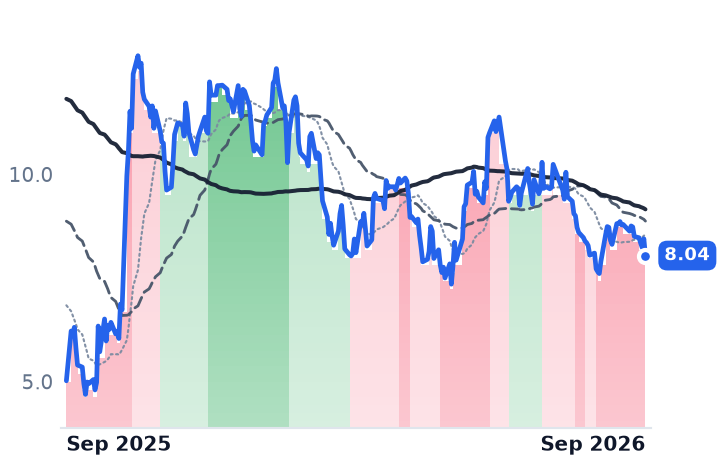
| Ticker | Company | Segment | Trend · 13mo | 30D | 1Y |
|---|---|---|---|---|---|
| The subject · what this brief is about | |||||
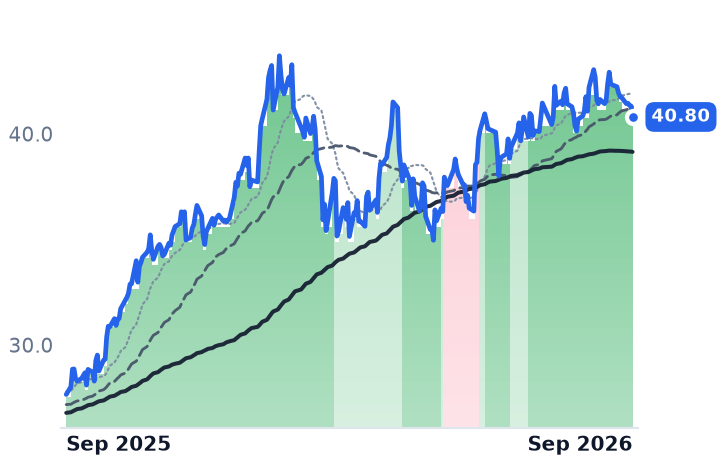
BMA | Banco Macro | Latin America & Caribbean Banks | 🟢 Cont. Bull | +4.2% | +94.1% |
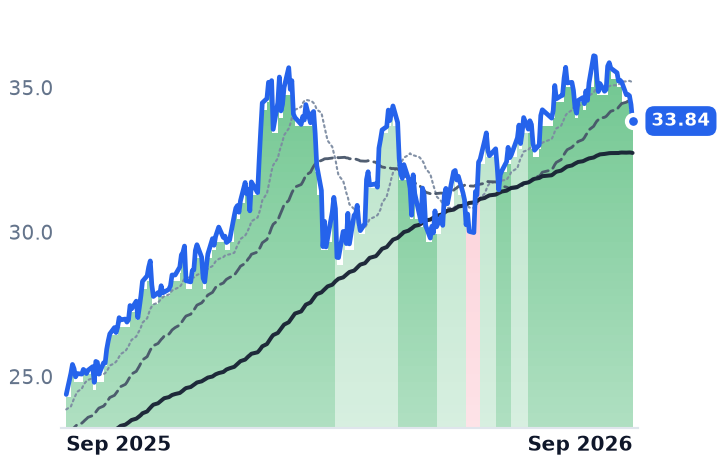
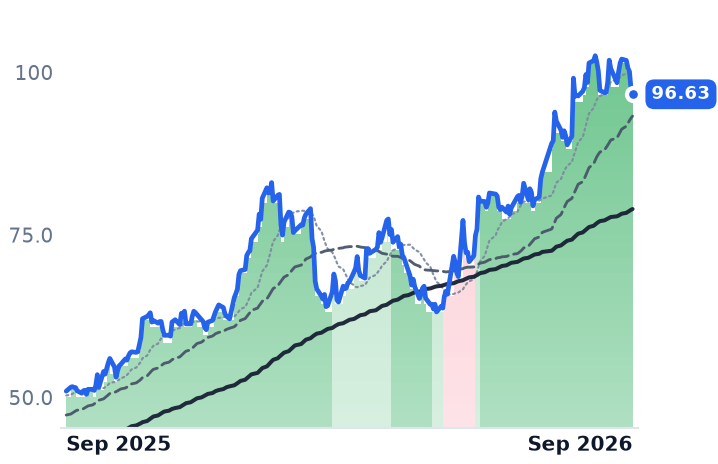
BLX | Bladex | Latin America & Caribbean Banks | 🟢 Cont. Bull | +0.8% | +17.7% |
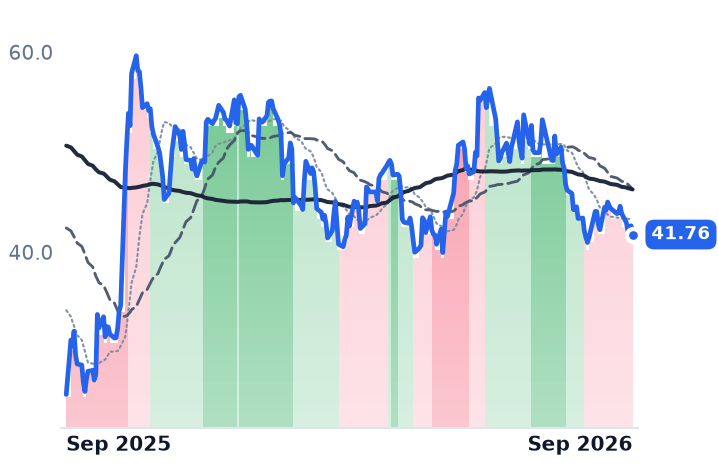
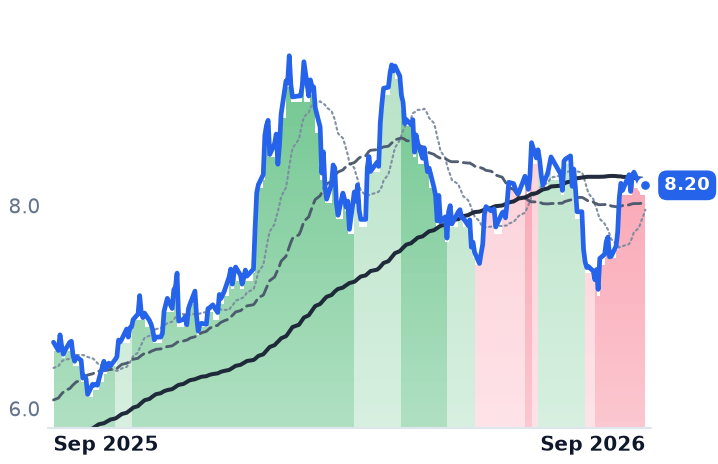
BBD | Banco Bradesco | Latin America & Caribbean Banks | ⚠️ Emerging Bear | +14.9% | +4.9% |
| Compared against · context, not the story | |||||
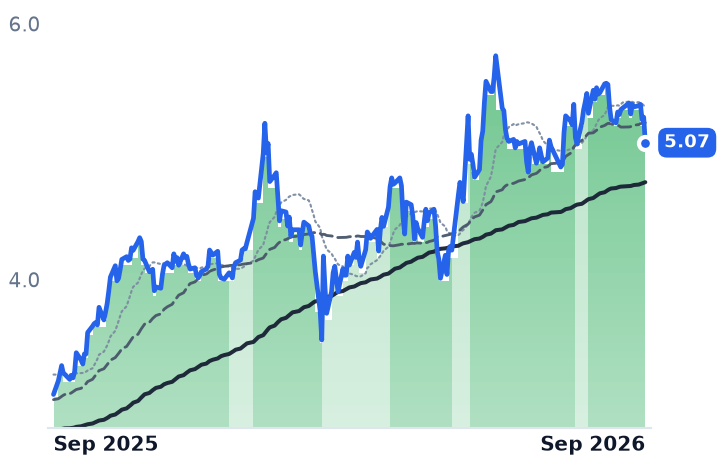
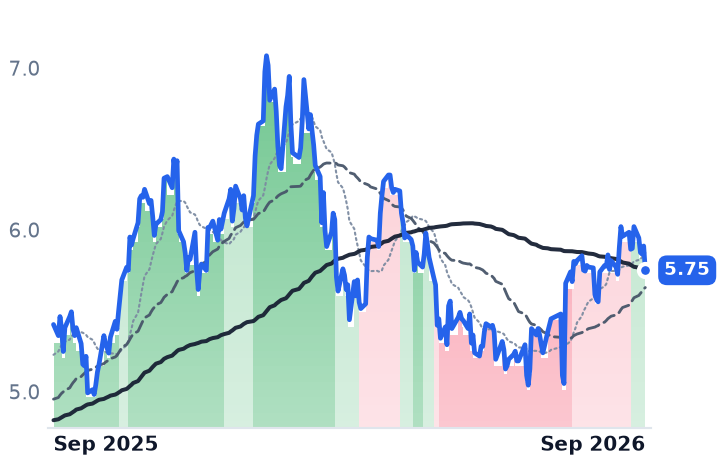
BBAR | Banco BBVA Argentina | Latin America & Caribbean Banks | 🟢 Cont. Bull | +0.9% | +75.3% |
BCH | Banco de Chile | Latin America & Caribbean Banks | 🟢 Cont. Bull | −0.7% | +47.5% |
BSAC | Banco Santander-Chile | Latin America & Caribbean Banks | 🟢 Cont. Bull | −2.1% | +38.8% |
AVAL | Grupo Aval Acciones y Valores | Latin America & Caribbean Banks | 🟢 Cont. Bull | −7.0% | +63.4% |
GGAL | Grupo Financiero Galicia | Latin America & Caribbean Banks | 🔴 Cont. Bear | +2.0% | +62.1% |
SUPV | Grupo Supervielle | Latin America & Caribbean Banks | 🔴 Cont. Bear | +5.7% | +60.2% |
CIB | Grupo Cibest | Other | 🟢 Cont. Bull | −1.8% | +89.6% |
ITUB | Itaú Unibanco | Major International Banks | ⚠️ Emerging Bear | +14.3% | +23.2% |
BSBR | Banco Santander (Brasil) | Latin America & Caribbean Banks | ⚠️ Emerging Bear | +3.5% | +6.2% |
12-month price & trend
| Ticker | Mkt cap | P/E | P/E fwd | P/S | P/S fwd | P/GP | P/GP fwd | EV/EBITDA | FCF yld |
|---|---|---|---|---|---|---|---|---|---|
BMA | $4.8B | 18.1x | — | 1.1x | — | 2.0x | — | 7.7x | 30.0% |
BLX | $1.5B | 8.9x | 8.3x | 2.6x | 4.1x | 4.7x | 7.5x | 17.5x | 25.3% |
BBD | $36.3B | 7.0x | — | 0.5x | — | 1.8x | — | 24.6x | 67.5% |
| Ticker | Mkt cap | P/E | P/E fwd | P/S | P/S fwd | P/GP | P/GP fwd | EV/EBITDA | FCF yld |
|---|---|---|---|---|---|---|---|---|---|
BBAR | $2.9B | 15.9x | — | 0.7x | — | 1.9x | — | 5.2x | 212.2% |
BCH | $20.6B | 16.4x | — | 4.9x | — | 7.3x | — | 20.9x | 1.6% |
BSAC | $15.9B | 14.0x | — | 3.0x | — | 5.6x | — | 17.4x | 9.4% |
| Ticker | Mkt cap | P/E | P/E fwd | P/S | P/S fwd | P/GP | P/GP fwd | EV/EBITDA | FCF yld |
|---|---|---|---|---|---|---|---|---|---|
AVAL | $6.0B | 11.2x | — | 0.5x | — | 1.0x | — | 12.1x | 10.9% |
GGAL | $6.6B | 19.3x | — | 0.9x | — | 2.2x | — | 27.3x | -8.9% |
SUPV | $656.6M | n/m | — | 0.5x | — | 1.3x | — | n/m | -65.8% |
| Ticker | Mkt cap | P/E | P/E fwd | P/S | P/S fwd | P/GP | P/GP fwd | EV/EBITDA | FCF yld |
|---|---|---|---|---|---|---|---|---|---|
CIB | $15.0B | 8.1x | — | 1.3x | — | 2.2x | — | 5.2x | 17.6% |
ITUB | $86.4B | 9.5x | — | 1.1x | — | 3.3x | — | 24.2x | 8.0% |
BSBR | $39.9B | 15.5x | — | 1.1x | — | 2.8x | — | 1.4x | 2.9% |
Consensus projections
| Ticker | FY2026E | FY2027E | FY2028E | |
|---|---|---|---|---|
BMA | Revenue | +38.0% | +15.9% | +20.6% |
| EPS | +114.8% | +58.9% | +31.2% | |
BLX | Revenue | +12.9% | +11.6% | +9.8% |
| EPS | +6.9% | +9.8% | +8.8% | |
BBD | Revenue | +9.1% | +8.3% | +7.8% |
| EPS | +12.5% | +10.7% | +10.7% | |
BBAR | Revenue | +32.7% | +27.8% | +20.6% |
| EPS | +188.2% | +34.8% | +41.5% | |
BCH | Revenue | +7.1% | +6.1% | +7.5% |
| EPS | +8.3% | +8.6% | +8.5% | |
BSAC | Revenue | +6.7% | +6.2% | +7.0% |
| EPS | +16.0% | +4.5% | +8.7% | |
AVAL | Revenue | +11.9% | +7.2% | +11.7% |
| EPS | +12.1% | +19.1% | +18.3% | |
GGAL | Revenue | +19.4% | +22.1% | +40.2% |
| EPS | +156.7% | +70.7% | +60.9% | |
SUPV | Revenue | +20.3% | +23.5% | +46.7% |
| EPS | −392.7% | +87.3% | +64.4% | |
CIB | Revenue | +5.6% | +7.3% | +7.0% |
| EPS | +1.5% | +6.5% | +7.4% | |
ITUB | Revenue | +8.3% | +8.5% | +7.1% |
| EPS | +9.7% | +11.3% | +9.9% | |
BSBR | Revenue | +5.4% | +8.0% | +6.4% |
| EPS | +6.4% | +13.3% | +9.2% |
Forward fiscal years only. Blank means no analyst coverage for that year.
Banco Macro told investors in August that it now expects its peso loan book to grow just 2–5% faster than inflation this year, against the 15–20% it had guided before. The Buenos Aires retail and corporate lender — deposit accounts, cards, personal and auto loans, working capital for companies — had been sold to the market as the vehicle for Argentine credit finally arriving. The credit is not arriving on schedule.
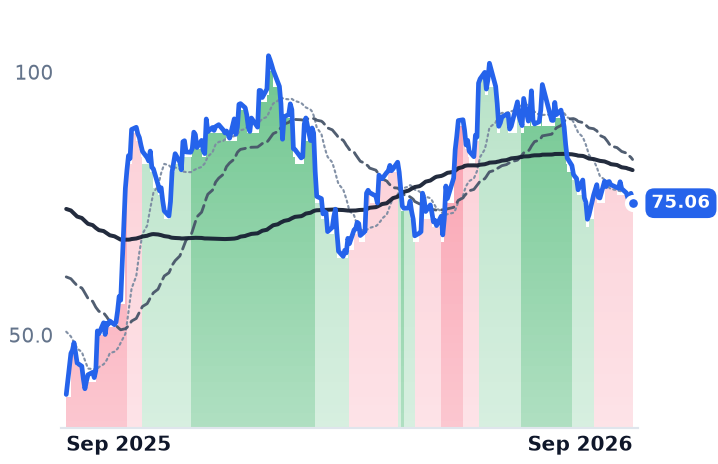
That matters because of what has been paying Banco Macro's bills instead. Government securities are still a quarter of its assets, and income from them fell 18% quarter on quarter in the June quarter after a one-off bond-sale gain in the first. Argentine banks have spent years earning a spread by holding state paper against nearly free deposits; as annual inflation has fallen to roughly 34% by July from about 210% at the start of Javier Milei's term, that spread compresses, and private lending has to replace it. Management's own structural case is penetration: loans worth 11% of Argentine output against 30–50% across the region.
The funding-cost race
What held Macro's margin together in the quarter was not lending. Asset yields fell 280 basis points from the prior quarter while funding costs fell 550, so the margin excluding currency effects widened slightly, to 23.5%. That offset stops working once deposit rates reach their floor. Meanwhile the non-performing ratio rose to 6.25% from 5.4%, driven by consumer loans at 8.4% against 6.9%, and coverage of bad loans slipped below 100%. Reported return on equity was 13.4%; management guides 2026 adjusted return to about 12%, with chief financial officer Jorge Scarinci telling the August 20 call, "In 2030, we are expecting to be in the area of about 20% ROE by 2030." Capital is not the constraint — the Tier 1 ratio is 28% against an 11.5% requirement — and the bank is cutting to roughly 370 branches from 402.
Banco Macro nonetheless carries the premium inside Argentina, at 1.23x book against 1.12x for BBVA Argentina, which guides to about 10% real loan growth and reported a marginally cleaner 6.09% bad-loan ratio.
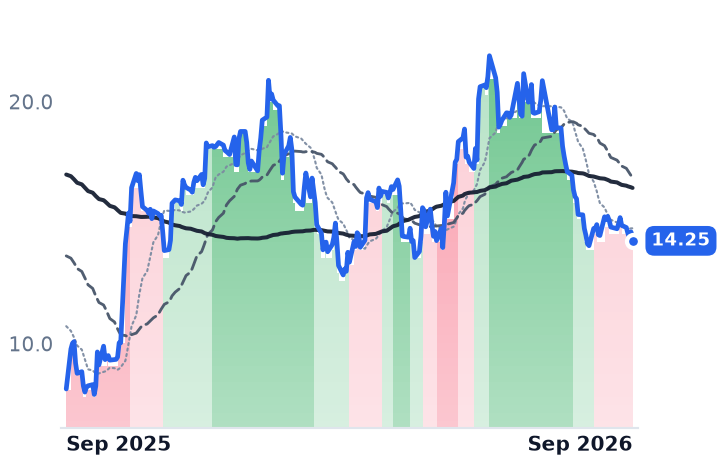
The shares tell a different story depending on where you start the clock. Over twelve months Argentina and Colombia did the work — Macro up 91%, BBVA Argentina 74%, Grupo Aval 60% — while Brazil's Bradesco added 3%. Over three months the Argentine names fell 26% to 35%, the break dated to MSCI's June 24 decision to keep Argentina classified as a Standalone Market rather than upgrade it, deferring close to $1bn of anticipated index buying.
Paid in dollars, squeezed anyway
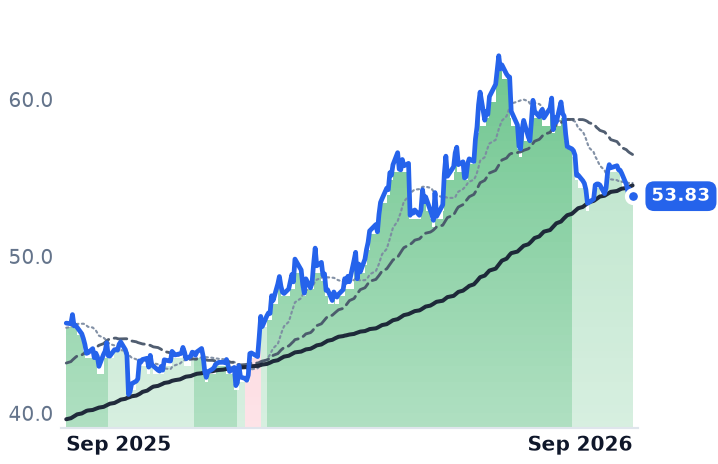
Bladex, the Panama-based trade-finance bank with 175 employees and no retail branches, is the group's opposite: dollar-funded, short-tenor lending to the region's best corporates and banks. Its credit portfolio hit a record $14.5bn at the end of June, up 19% year on year, and quarterly profit set a record at $66.5m — but that was only 3.6% above a year earlier, after two years of double-digit growth. The net interest margin narrowed to 2.24% from 2.34%. "The margin pressure was stronger than we initially expected," chief executive Jorge Salas told investors on the second-quarter call, naming the channel: almost 70% of the commercial book matures inside a year, so regional excess liquidity reprices against Bladex faster than against the average bank. This is competition for borrowers, not the policy cycle — the Federal Reserve raised its target range to 3.75–4.00% on September 16, its first increase since 2023. Fee income nearly doubled to a record and the efficiency ratio improved to 24.1%. At 8.9x trailing and 8.3x forward earnings on 1.15x book, with about 16.4% adjusted return on equity, the price looks like the business.
The one that disagrees
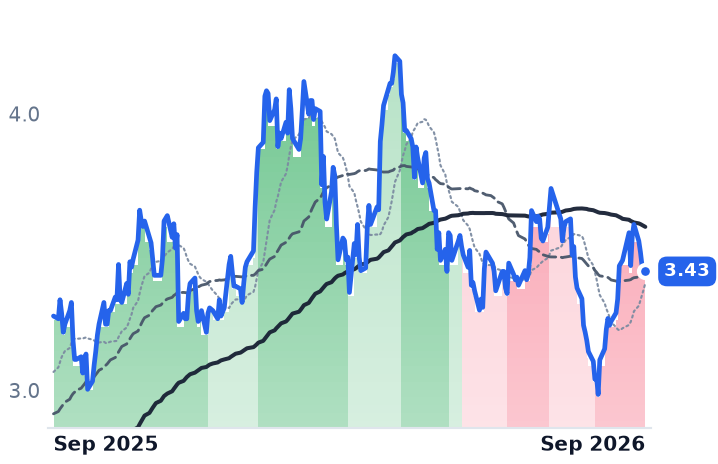
Bradesco, the 1943-founded Brazilian bank and insurer, has the best operating momentum in the group and the worst year. June-quarter profit rose 16% year on year for a 16.2% return on average equity; loans grew 11.6%. Delinquency ran 4.6% against a Brazilian market average of 8.9%, and much of the growth carries a state backstop — BRL31bn of BRL37bn of small-business expansion came through the government-backed guarantee funds FGO and FGI. "The level of loss is minimal," chief executive Marcelo Noronha told the August 6 call. The board approved a capital increase of up to about $2bn on July 29, with the controlling shareholders committing the bulk. Brazil's central bank cut the Selic to 13.75% on September 16, a fifth straight cut. Bradesco is the only one of these seven below book value, at 0.97x, and has gained 15% in the last thirty days.
The controls make the point. Banco de Chile at 3.50x book and Santander-Chile at 3.21x are priced off delivered returns — Santander-Chile earned 31.5% on average equity in the quarter, though it guides its margin down to about 4.1% as the inflation kicker fades. Grupo Aval sits at 1.07x on full-year return guidance of 9.25%, with Colombia's central bank still leaning toward higher rates.
So the licence is not the asset; the realized return is. Macro's year was earned by a funding-cost collapse it cannot repeat, and its marking-down since January is the market pricing a credit expansion that management has now postponed in its own guidance. Bladex's advance is supported by a record book, but the spread it earns is being competed away faster than volume replaces it. Bradesco is the single place where the delivered numbers and the price genuinely disagree — and the disagreement has begun to close only in the last month.
Brazil votes again on October 25, with the central bank easing into an election for the first time in two decades. The one bank here trading below the value of its own equity is also the one whose next two quarters are hostage to a ballot.