

Apartment Starts Sit 75% Below Their 2022 Peak; MAA's Blended Rents Turned Positive
Hypothesis Opus 5 · Research Opus 5 · Writing Opus 5 · Prompt v1.6
The delivery wave that broke Sunbelt apartment rents is draining, and the listed landlords are merging while it drains. AvalonBay and Equity Residential closed an all-stock merger of equals on 17 August to form Vivmark Residential, the largest apartment owner in the country; Independence Realty Trust agreed on 9 September to buy Centerspace in a combination carrying about $8.1bn of enterprise value.
MAA, the biggest standalone Sunbelt landlord, has now posted five consecutive quarters of improving lease spreads — new leases still down 5.3% in the second quarter, renewals up 5.2% — held full-year Core funds from operations guidance at $8.53 a share and cut its expense-growth forecast. The shares sit near 14.6 times that guidance.
The operating line is improving. The discount rate is not: the Federal Reserve raised rates on 16 September and the 10-year Treasury is above 5%.
| Ticker | Company | Segment | Trend · 13mo | 30D | 1Y |
|---|---|---|---|---|---|
| The subject · what this brief is about | |||||
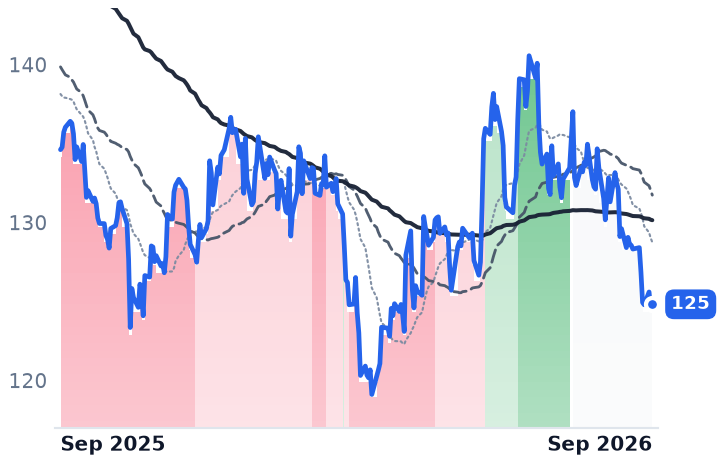
MAA | Mid-America Apartment Communities | Multifamily Apartments | 🌱 Emerging Bull | −5.1% | −7.3% |
AVB | AvalonBay Communities | Multifamily Apartments | 🌱 Emerging Bull | −63.0% | −63.5% |
| Compared against · context, not the story | |||||
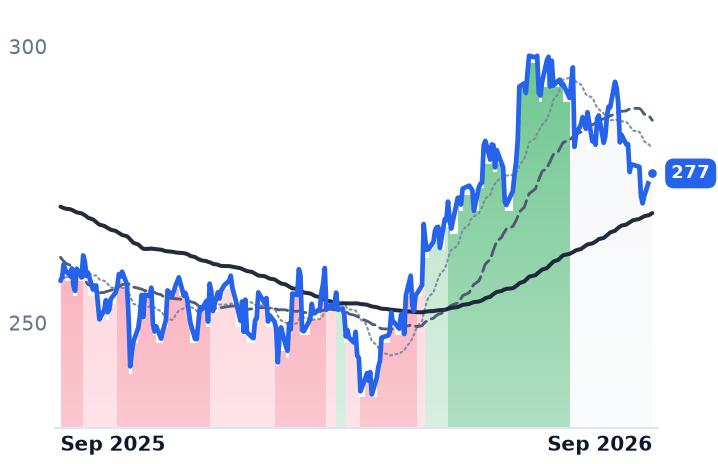
ESS | Essex Property Trust | Multifamily Apartments | 🌱 Emerging Bull | −2.0% | +7.5% |
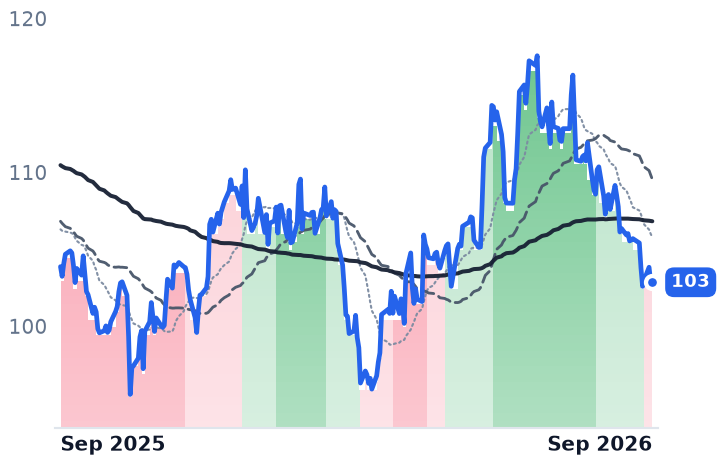
CPT | Camden Property Trust | Multifamily Apartments | 🌱 Emerging Bull | −5.2% | −1.0% |
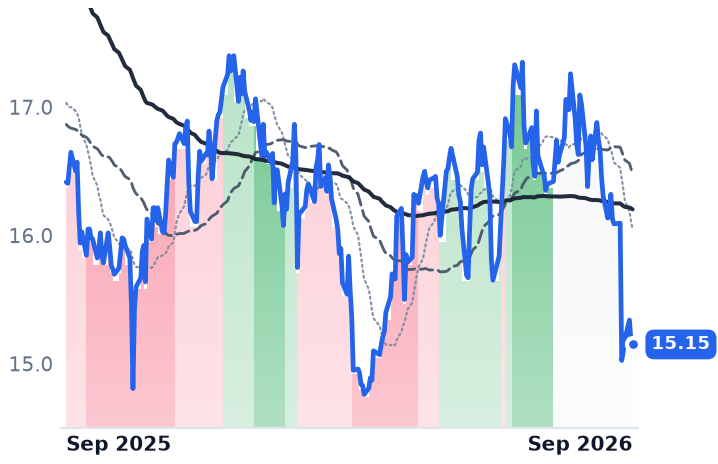
IRT | Independence Realty Trust | Multifamily Apartments | 🌱 Emerging Bull | −9.3% | −7.7% |
CSR | Centerspace | Multifamily Apartments | ⚠️ Emerging Bear | +5.7% | +5.4% |
EQR | Equity Residential | Multifamily Apartments | 🌱 Emerging Bull | −1.3% | +1.7% |
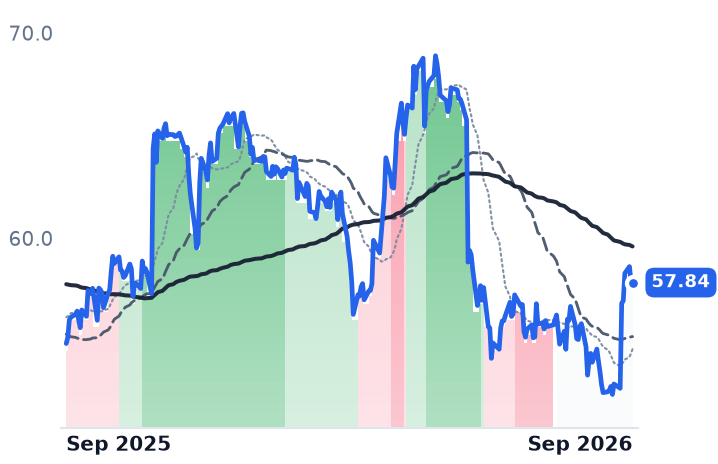
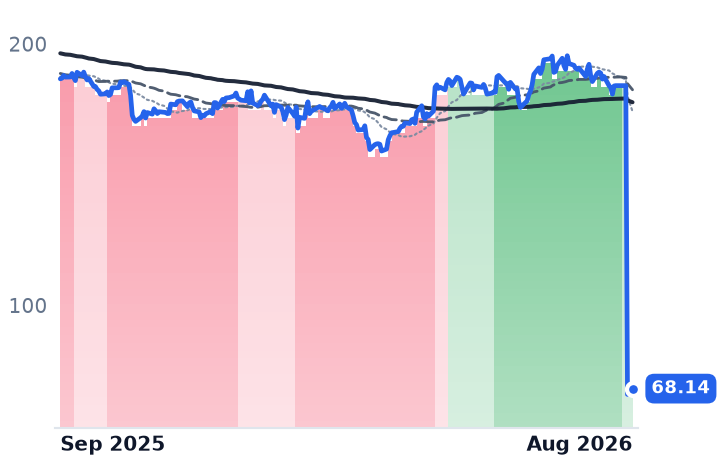
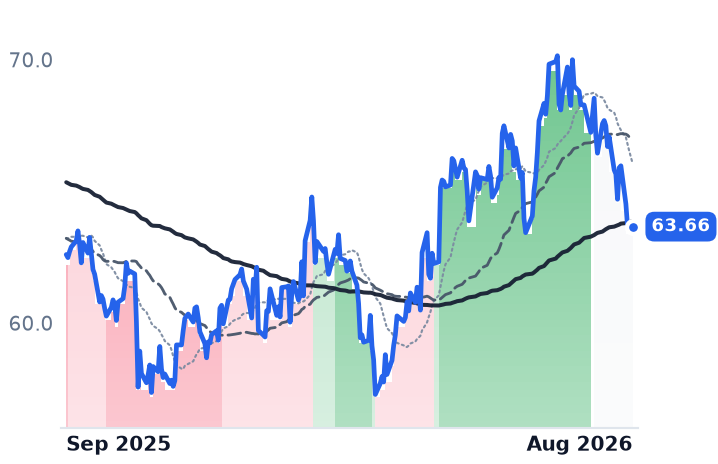
12-month price & trend
| Ticker | Mkt cap | P/E | P/E fwd | P/S | P/S fwd | P/GP | P/GP fwd | EV/EBITDA | FCF yld |
|---|---|---|---|---|---|---|---|---|---|
MAA | $14.2B | 35.6x | 33.1x | 6.4x | 6.4x | 13.5x | 13.5x | 15.7x | 4.0% |
ESS | $17.2B | 29.9x | 46.4x | 9.0x | 8.8x | 13.0x | 12.7x | 16.6x | 5.6% |
CPT | $10.3B | 27.7x | 66.5x | 6.6x | 6.6x | 15.5x | 15.6x | 12.5x | 6.9% |
| Ticker | Mkt cap | P/E | P/E fwd | P/S | P/S fwd | P/GP | P/GP fwd | EV/EBITDA | FCF yld |
|---|---|---|---|---|---|---|---|---|---|
IRT | $3.8B | 80.6x | 104.8x | 5.7x | 5.6x | 28.1x | 27.6x | 16.3x | 4.0% |
CSR | $1.1B | 134.9x | — | 4.1x | 4.2x | 10.8x | 10.9x | 12.5x | 6.2% |
AVB | $26.3B | 25.2x | 30.5x | 8.5x | 8.5x | 16.2x | 16.1x | 18.8x | 6.1% |
| Ticker | Mkt cap | P/E | P/E fwd | P/S | P/S fwd | P/GP | P/GP fwd | EV/EBITDA | FCF yld |
|---|---|---|---|---|---|---|---|---|---|
EQR | $23.9B | 25.2x | 45.9x | 7.7x | 7.6x | 16.6x | 16.3x | 13.9x | 5.3% |
Consensus projections
| Ticker | FY2026E | FY2027E | FY2028E | |
|---|---|---|---|---|
MAA | Revenue | +0.9% | +2.4% | +3.3% |
| EPS | −10.9% | −16.3% | +12.4% | |
ESS | Revenue | +3.9% | +3.2% | +4.0% |
| EPS | −45.2% | +5.1% | +9.0% | |
CPT | Revenue | −1.0% | +2.3% | +4.4% |
| EPS | −37.0% | −15.8% | +17.5% | |
IRT | Revenue | +2.2% | +3.1% | +6.5% |
| EPS | −17.9% | +11.0% | +64.2% | |
CSR | Revenue | −3.0% | +3.4% | −40.4% |
| EPS | −156.8% | −33.9% | −118.1% | |
AVB | Revenue | +2.8% | +4.3% | +5.3% |
| EPS | −18.5% | −11.3% | +7.5% | |
EQR | Revenue | +2.2% | +3.3% | +3.5% |
| EPS | −39.6% | +8.6% | +16.8% |
Forward fiscal years only. Blank means no analyst coverage for that year.
The two largest coastal apartment landlords in the United States stopped existing separately on 17 August, when AvalonBay and Equity Residential completed an all-stock merger of equals and began trading as Vivmark Residential. The combined company owns 184,000 rental apartments, enough to displace Greystar at the top of the National Multifamily Housing Council's owners list. AvalonBay shares no longer trade; each converted into 2.793 Equity Residential shares, a ratio worth about $185 when the deal was struck. Three weeks later Independence Realty Trust, a Sunbelt and Midwest landlord, agreed to absorb Centerspace in a deal carrying about $8.1bn of enterprise value and 44,354 units.
Consolidation is arriving at the precise moment the thing that damaged these businesses is running out. National multifamily completions fell from 695,000 units in 2024 to 531,000 in 2025, with roughly 382,000 projected for 2026 and another 24% decline expected in 2027. Starts are about 75% below their 2022 peak; units under construction are back to 2016 levels. The question the listed apartment market now poses is whether its shares are marking down rents or marking down the rate at which rents are discounted.
How an apartment dollar is earned
A landlord is paid per occupied unit per month, on twelve-month leases that reprice only when they roll. Two prices matter and they move against each other: what a new resident pays, and what a renewing one accepts. MAA, which holds interests in about 102,772 apartments across 16 states and the District of Columbia, concentrated in the Southeast, Southwest and Mid-Atlantic, reported second-quarter new leases down 5.3% and renewals up 5.2%, blending to plus 0.7% on 95.3% occupancy. That blend has inflected three quarters running — minus 1.7% in the fourth quarter of 2025, minus 0.3% in the first of 2026, then positive.
"We expect third quarter blended pricing to be better than the second quarter, a trend not seen in the last four years," chief operating officer Tim Argo told analysts on 29 July. At the Bank of America global real estate conference on 16 September, MAA said third-quarter blended rates had improved 300 to 500 basis points year over year, with renewals near 4.8% and the fourth quarter tracking around 5.5%. New-lease pricing is still negative, and management named Austin, Phoenix and Nashville as markets where deliveries continue to press.
The cost side, often the quiet destroyer of a landlord's year, is helping. MAA's insurance premiums fell more than 12% at renewal, a third consecutive annual decline, and same-store expense growth guidance was cut 90 basis points to about 1.75%. AvalonBay likewise lowered its operating-expense outlook and raised same-store net operating income alongside second-quarter results. Whatever is wrong with apartment shares, it is not the expense stack.
Coastal scarcity, Sunbelt absorption
The geographic split is real and earned. AvalonBay's coastal portfolio blended 2.6% in the second quarter on 96.2% occupancy, roughly 190 basis points ahead of MAA, on markets where permits are scarce. Six months of trading followed the same map: Essex Property Trust, a West Coast owner, gained 11.2% while MAA slipped 1.2%, Camden Property Trust added 2.1% and Independence Realty fell 3.6%. Over the past month Independence Realty is down 11.0% and Centerspace up 3.6% — the arithmetic of a fixed exchange ratio, not a verdict on either portfolio.
MAA's shares have ground from $166.65 in September 2024 to $124.82, without a gap anywhere in between. That puts them near 14.6 times unchanged full-year Core funds from operations guidance of $8.53 a share, and at 15.7 times trailing earnings before interest, taxes, depreciation and amortization against AvalonBay's 18.8 times before the merger. The de-rating happened by price, not by guidance cuts: second-quarter Core funds from operations of $2.08 beat the company's own forecast by two cents.
What the rents do not explain
On 16 September the Federal Reserve raised its target range 25 basis points to 3.75%–4.00%, its first increase in more than three years, with most participants expecting another. The 10-year Treasury moved above 5%. Leveraged, long-duration property cash flows are discounted off that number and apartment cap rates are anchored to it, so a lower multiple is doing rational work.
So the split verdict: the operating trend at MAA has improved for five quarters and the expense line improved with it, and none of that is in the price. But full-year same-store net operating income guidance is still negative, at minus 1.70% to minus 0.10%, with management conceding the new-lease recovery has run "somewhat slower than assumed in prior guidance." Consensus models revenue growth of about 2.5% next year and does not reach 6% until 2029. The rent recovery is real and slow; the discount rate moved fast. Both mergers say the same thing about capital: with AvalonBay's development pipeline projecting a 6.3% initial stabilized yield — barely 130 basis points over the risk-free rate for taking construction and lease-up risk — buying units through stock is the cheaper way to grow than building them.
Sunbelt vacancy stabilized at 6.3% against 4.1% elsewhere and is not expected to peak until early 2027. The trough that follows is already fixed by buildings nobody started.