

Gas Compressors Raised Horsepower Rates Into a $96 Crude Shock; Archrock's Fleet Shrank
Hypothesis Opus 5 · Research Opus 5 · Writing Opus 5 · Prompt v1.6
The crude spike that followed the closure of the Strait of Hormuz reached natural-gas compression operators through their lubricant bill rather than their revenue line. Kodiak Gas Services put the hit at roughly $18m a year; Archrock cut the top of its 2026 profit guidance by $30m and blamed lube oil and refurbishment work.
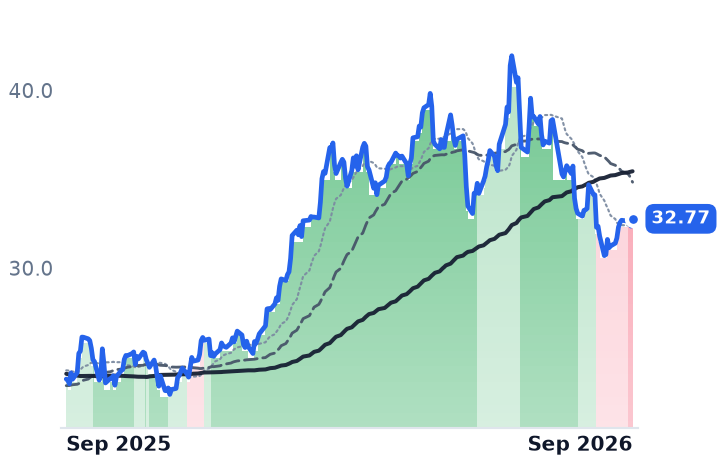
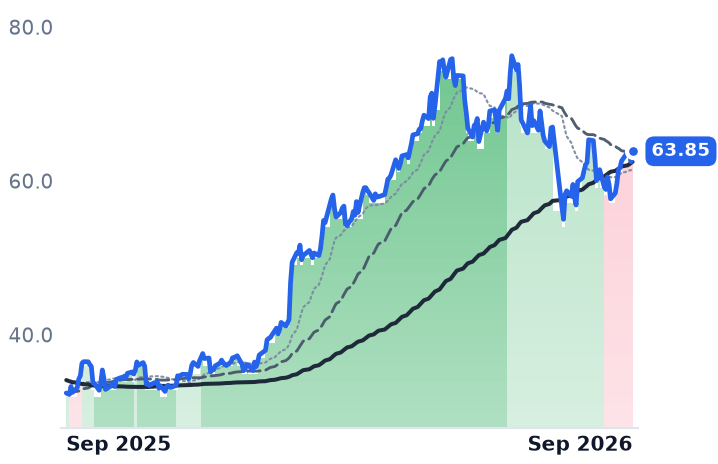
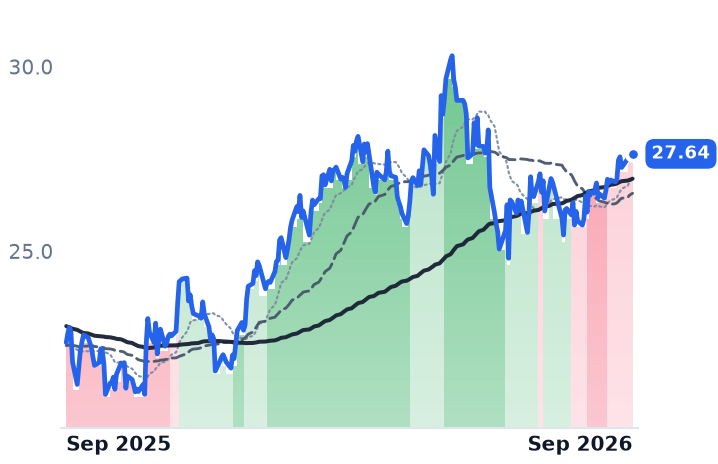
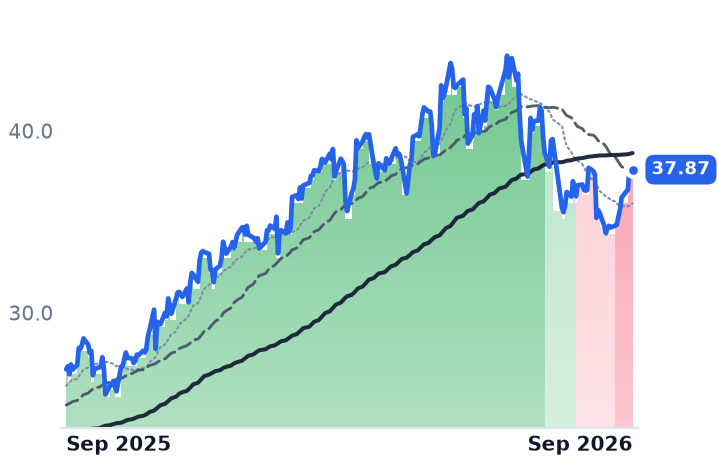
Pricing went the other way. Kodiak raised its monthly rate per horsepower 4.5% and still widened compression gross margin to 70%; Natural Gas Services and USA Compression also renewed higher, and three of the four operators raised full-year guidance. The exception is Archrock, whose revenue fell 3.1% as its operating fleet got smaller — the only one of the four whose business matches its share price. All four sit below their late-June highs.
| Ticker | Company | Segment | Trend · 13mo | 30D | 1Y |
|---|---|---|---|---|---|
| The subject · what this brief is about | |||||
AROC | Archrock | Compression & Gas Processing | ⚠️ Emerging Bear | −5.5% | +38.0% |
KGS | Kodiak Gas Services | Compression & Gas Processing | 🟢 Cont. Bull | −2.3% | +96.9% |
| Compared against · context, not the story | |||||
USAC | USA Compression Partners | Compression & Gas Processing | ⚠️ Emerging Bear | +3.8% | +22.7% |
NGS | Natural Gas Services | Compression & Gas Processing | ⚠️ Emerging Bear | −0.3% | +40.8% |
SPY | State Street SPDR S&P 500 ETF Trust | Asset Management | 🟢 Cont. Bull | −1.6% | +16.6% |
12-month price & trend
| Ticker | Mkt cap | P/E | P/E fwd | P/S | P/S fwd | P/GP | P/GP fwd | EV/EBITDA | FCF yld |
|---|---|---|---|---|---|---|---|---|---|
AROC | $5.7B | 17.6x | 19.1x | 3.8x | 3.8x | 6.6x | 6.5x | 10.1x | 5.1% |
KGS | $6.4B | 72.6x | 30.6x | 4.6x | 4.2x | 11.5x | 10.5x | 10.6x | 0.1% |
USAC | $4.0B | 25.9x | 21.5x | 3.4x | 2.9x | 7.6x | 6.5x | 10.4x | 7.7% |
| Ticker | Mkt cap | P/E | P/E fwd | P/S | P/S fwd | P/GP | P/GP fwd | EV/EBITDA | FCF yld |
|---|---|---|---|---|---|---|---|---|---|
NGS | $481.1M | 23.4x | 21.9x | 2.5x | 2.2x | 5.7x | 5.1x | 7.8x | -6.5% |
SPY | $773.0B | — | — | — | — | — | — | — | — |
Consensus projections
| Ticker | FY2026E | FY2027E | FY2028E | |
|---|---|---|---|---|
AROC | Revenue | +1.8% | +7.7% | +7.6% |
| EPS | +9.4% | +19.2% | +15.9% | |
KGS | Revenue | +16.7% | +16.1% | +16.1% |
| EPS | +87.2% | +46.0% | +34.5% | |
USAC | Revenue | +37.8% | +6.9% | +4.6% |
| EPS | +38.5% | +26.7% | +20.0% | |
NGS | Revenue | +25.8% | +18.8% | +8.3% |
| EPS | +7.2% | +45.8% | +14.5% |
Forward fiscal years only. Blank means no analyst coverage for that year.
Archrock, which rents natural-gas compression packages to gas gatherers and processors under fee-based contracts, told investors on August 5 that it no longer expects the top of its 2026 profit range. Full-year adjusted EBITDA guidance came down to $865m–$885m from $865m–$915m. The reason was a lubricant bill, plus the cost of refurbishing idle units for redeployment and higher stock compensation — not weaker demand for horsepower.
That is an unfamiliar way for the oil price to matter here. A compression operator's earnings are fleet horsepower multiplied by utilization multiplied by the monthly rate charged per horsepower, less field labor and consumables. Crude reaches that arithmetic in exactly two places: lube oil is a refined crude product, and expensive crude changes when customers schedule maintenance. With WTI trading near $96 after the US-Israeli conflict with Iran and the effective closure of the Strait of Hormuz, both channels opened at once — and the shares have been priced since late June as though something larger had gone wrong with demand.
The cost shock, quantified
Kodiak Gas Services, the large-horsepower operator concentrated in the Permian, sized the lube-oil headwind at roughly $18m annualized and said it was offsetting it through maintenance optimization and vendor supply agreements. USA Compression Partners, the master limited partnership that owns the largest US fleet by horsepower, flagged about $1m a month of incremental lubricant cost in the second half as contracts renew; it has no direct pass-through clauses and is trying to recover the money through renegotiation, with consumer-price escalators as a partial offset.
None of it won. Kodiak lifted its monthly rate to $23.80 per horsepower, up 4.5%, ran record fleet utilization of 98.2%, and still widened compression adjusted gross margin to 70%, 170 basis points better than a year earlier. Archrock's own contract-operations margin improved to 71%. Natural Gas Services, the Midland-based manufacturer-operator, reached record utilization of 88.3% at $28.06 per horsepower per month, more than 5% higher year on year, and raised its 2026 EBITDA guidance to $103m–$108m from $92.5m–$97.5m. USA Compression averaged $22.84 per horsepower, up 7%.
The supply side explains most of that pricing power. Caterpillar engine lead times are stable at roughly 195 weeks by Archrock's account — new orders land in 2029 — and have been extending further as data-center demand absorbs capacity. USA Compression has already contracted about half its 2027 deliveries. On the demand side the volumes compression is bolted to keep growing: the Energy Information Administration expects gross LNG exports of 16.7 billion cubic feet a day in 2026 against 15.1 in 2025, with the Permian adding 1.4. Permian rig counts have fallen — 242 in late January, down about 20% year on year — but well productivity has kept output rising anyway, so the associated-gas stream has not thinned.
The one that shrank
Archrock is the exception, and its problem is its own. June-quarter revenue fell 3.1% to $371.2m, operating income dropped 53.7% to $93.0m, and the operating fleet declined to 4.5m horsepower from 4.7m, with utilization at 94.4%. Aftermarket Services — parts and maintenance sold to customers who own their own units — fell 35% to $42m as those customers deferred work while oil was expensive; Archrock's management characterized the deferral as temporary, "pay us now or pay us later." Consensus has 2026 earnings per share at $1.72, below the $1.84 Archrock actually earned in 2025. Against that, it signed an eight-year contract covering 665,000 horsepower with an existing midstream customer, cut leverage to 2.6x from 3.3x and raised the dividend 10%.
The valuations have not sorted this out. Archrock trades at about 10.1x trailing enterprise value to EBITDA and Kodiak at 10.6x — near parity between a fleet that contracted and one whose revenue grew 21% to $391.1m. Archrock's forward price-to-earnings of 19.1x sits above its 17.6x trailing, the arithmetic of expected declining earnings, and against the 21.8x trailing it carried in May. Natural Gas Services is the cheapest of the four at 7.8x, with the lowest leverage.
What the shares are arguing
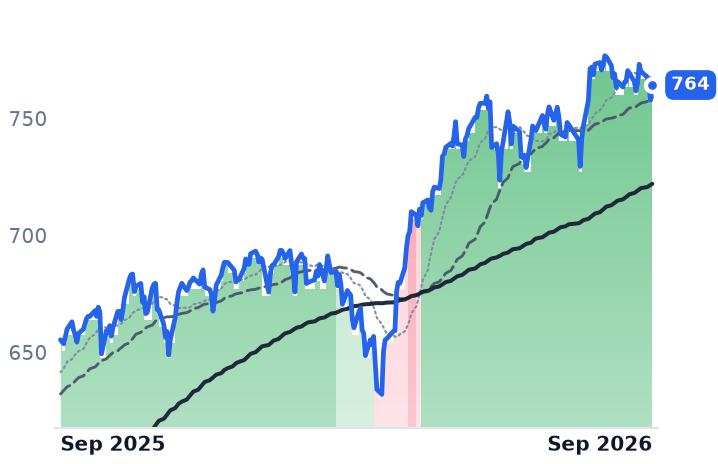
All four peaked between May 19 and June 26 and sit 9% to 22% below those highs; over the past month three of them rose. Archrock's moving-average trend signal turned decisively negative on September 8 even though the stock had bottomed at $30.70 on August 24 and recovered since, and no company-specific news was discoverable in that window — the likelier reading is a lagging signal catching up to the summer decline, with J.P. Morgan having put a Buy on the name on September 2.
So the verdict splits. The crude shock is a genuine margin tax, and it is the reason one company's guidance came down — but renewal pricing has outrun it at every operator that has reported, which is the opposite of the demand fade a 20% de-rating implies. Archrock's decline is earned by a smaller fleet and falling forecast earnings. The other three have not yet produced a number that justifies theirs.
Kodiak's next answer comes from a different business entirely: its power arm already runs a 405 MW fleet earning a 64.5% gross margin, it has an equipment agreement with Baker Hughes framing a pathway to 1.8 GW by 2030, and its first behind-the-meter contract with a hyperscaler in West Texas is still only at limited notice to proceed. The definitive version is promised before year-end.