

Limbach Raised Revenue Guidance and Cut Profit Guidance 11% as Owner-Direct Margin Fell
Hypothesis Opus 5 · Research Opus 5 · Writing Opus 5 · Prompt v1.6
Limbach built its business on the premise that owner-direct service and maintenance work would insulate it from the job-by-job margin risk of construction. In the June quarter that premise broke. The owner-direct segment, 74% of revenue, saw gross margin fall to 24% from 29% on labor and materials inflation in data-center work and a lower-margin acquisition, and its organic revenue declined 3.4%.
Comfort Systems, paid the opposite way — job by job, against estimated cost to complete — expanded gross margin for a fifth straight quarter and booked record backlog of $14.06bn. Its shares have fallen from their June peak all the same, which reads as compression of an outlier premium rather than an order-book event: buyers still pay roughly twice EMCOR's price for a dollar of gross profit. Limbach's decline is the one its own numbers earned.
| Ticker | Company | Segment | Trend · 13mo | 30D | 1Y |
|---|---|---|---|---|---|
| The subject · what this brief is about | |||||
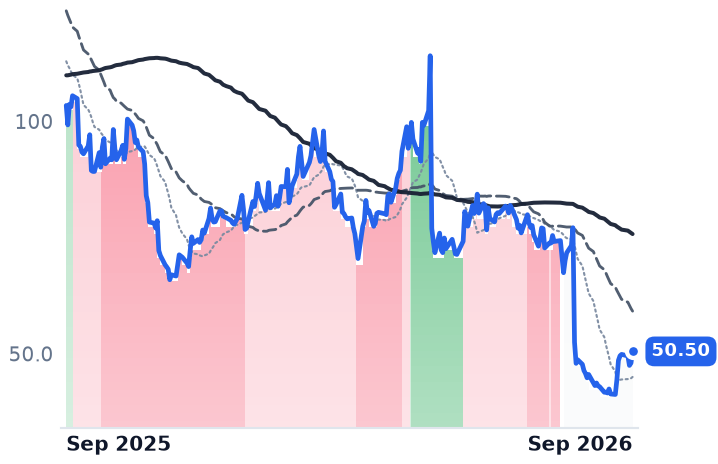
LMB | Limbach | MEP & Building Systems | 🔴 Cont. Bear | +10.9% | −51.2% |
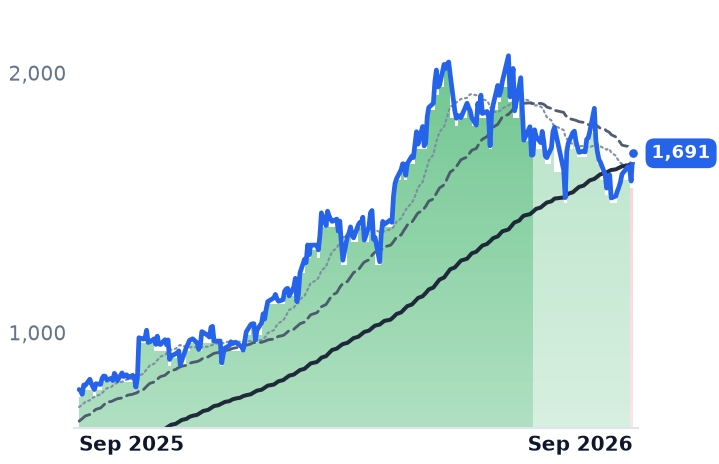
FIX | Comfort Systems USA | MEP & Building Systems | 🟢 Cont. Bull | −4.7% | +116.4% |
| Compared against · context, not the story | |||||
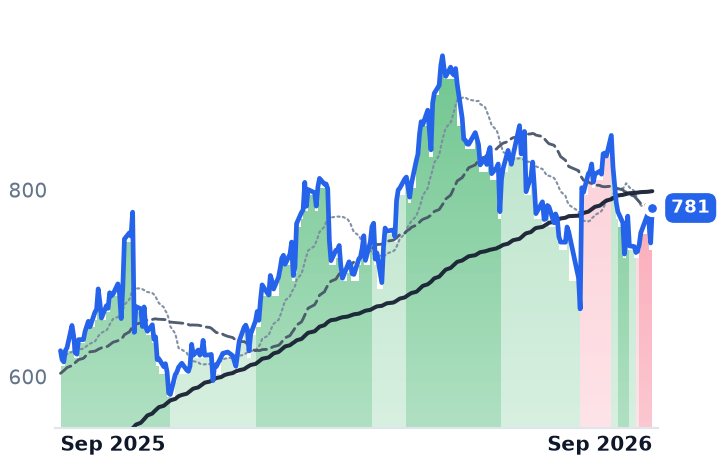
EME | EMCOR | Electrical & Power Infrastructure | ⚠️ Emerging Bear | −6.7% | +24.3% |
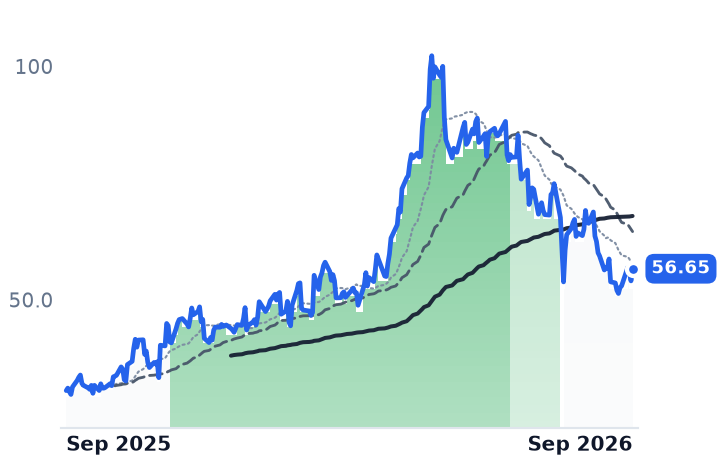
LGN | Legence | MEP & Building Systems | 🟢 Cont. Bull | −14.7% | +85.4% |
IESC | IES | MEP & Building Systems | 🟢 Cont. Bull | −54.3% | −6.5% |
12-month price & trend
| Ticker | Mkt cap | P/E | P/E fwd | P/S | P/S fwd | P/GP | P/GP fwd | EV/EBITDA | FCF yld |
|---|---|---|---|---|---|---|---|---|---|
LMB | $602.0M | 19.5x | 12.7x | 0.9x | 0.8x | 3.7x | 3.2x | 10.8x | 8.4% |
FIX | $59.5B | 41.5x | 34.5x | 5.3x | 4.6x | 20.6x | 17.9x | 29.6x | 3.6% |
EME | $34.4B | 24.4x | 23.7x | 1.9x | 1.7x | 9.4x | 8.6x | 15.3x | 3.4% |
| Ticker | Mkt cap | P/E | P/E fwd | P/S | P/S fwd | P/GP | P/GP fwd | EV/EBITDA | FCF yld |
|---|---|---|---|---|---|---|---|---|---|
LGN | $6.9B | n/m | 43.1x | 1.8x | 1.4x | 10.9x | 8.6x | 40.2x | 4.7% |
IESC | $13.8B | 30.3x | 29.9x | 3.5x | 3.3x | 13.3x | 12.6x | 23.0x | 1.7% |
Consensus projections
| Ticker | FY2026E | FY2027E | FY2028E | |
|---|---|---|---|---|
LMB | Revenue | +19.9% | +14.4% | +15.2% |
| EPS | −4.2% | +16.6% | +13.1% | |
FIX | Revenue | +47.7% | +19.0% | +14.1% |
| EPS | +86.6% | +22.8% | +23.4% | |
EME | Revenue | +21.4% | +10.9% | +8.3% |
| EPS | +30.1% | +13.0% | +13.2% | |
LGN | Revenue | +96.7% | +13.8% | +12.3% |
| EPS | −734.1% | +113.5% | +24.3% | |
IESC | Revenue | +27.7% | +48.1% | +18.8% |
| EPS | +76.1% | +16.3% | +17.1% |
Forward fiscal years only. Blank means no analyst coverage for that year.
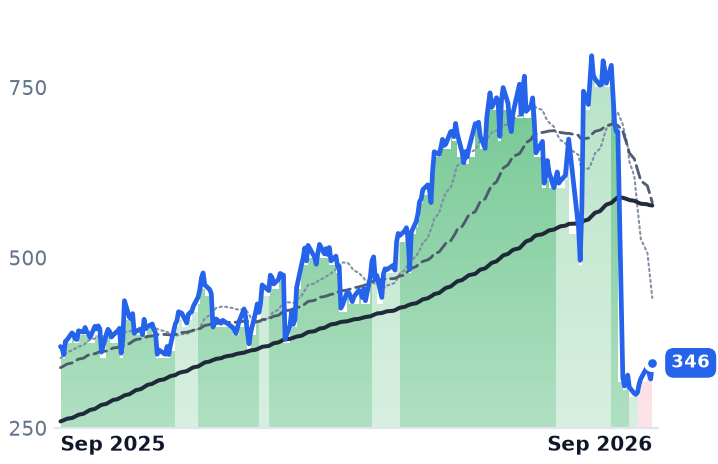
Limbach told investors in August that it expected to sell more and earn less. The building-systems contractor, which installs and maintains heating, plumbing, electrical and control systems for hospitals, universities, factories and data centers, raised its full-year revenue outlook to $760–790m while cutting full-year adjusted earnings before interest, taxes, depreciation and amortization to $78–84m from $90–94m — roughly 11% lower at the midpoint. The shares fell 32% that session, from $77.11 to $52.46.
What makes the cut worth more than a day's trading is where the margin went. Limbach has spent years shrinking the work it wins through general contractors in order to grow owner-direct service, maintenance and small-project work sold straight to building owners — an installed base meant to pay like an annuity, at roughly double the gross margin of construction. In the June quarter that segment was 74% of revenue at $128.4m, and its gross margin fell to 24% from 29%. Management attributed the drop to the lower-margin baseline of Pioneer Power, an acquisition that supplied all of the segment's growth, and to labor and materials inflation on data-center work. The annuity absorbed job-cost inflation the way a job does.
How the profit is actually booked
Mechanical contractors recognize revenue as work progresses, which means a quarter's reported profit is a function of what it currently costs to finish the contracts in hand. One revised estimate on a large fixed-price job lands directly in gross margin. Comfort Systems lists "use of incorrect estimates for bidding a fixed-price contract" among the factors that could make its results differ materially.
At Comfort Systems the mechanism ran the other way. Second-quarter revenue rose 50.3% to $3.27bn, and gross margin reached 25.9% against 23.5% a year earlier — a fifth consecutive quarterly expansion, which the company said was bolstered by favorable project estimates and the successful resolution of change orders. Operating income grew 86%. Backlog finished the quarter at $14.06bn, 73% above a year earlier. Excluding acquisitions, backlog rose $1.39bn in three months against $3.27bn of revenue — bookings running near one and a half times the work burned.
The composition is narrower than the total suggests. Technology work, mostly data centers, was 58% of first-half revenue against 40% a year before, and the sequential backlog growth came chiefly from two Texas operations — an electrical business that added $1.00bn and a modular business that added $510.2m. New construction is now 74.8% of year-to-date revenue, up from 63.2% for 2025, so more of the company's revenue sits in the part of the model where an estimate decides the margin. Chief executive Brian Lane told analysts on the July 24 call that the constraint is self-imposed: "we only take work that we know we can perform... We don't out-kick our coverage."
Limbach's bookings held; its margins did not
Limbach's revenue grew 21.9% to $173.5m in the quarter while gross profit fell 6.4%, taking group gross margin to 21.5% from 28%. The general-contractor segment grew revenue 35% to $45m with gross margin down to 14.5% from 24.7%, which the company called primarily timing. Demand was not the problem: $182m of work was booked in the quarter, $616m over three quarters, and the general-contractor backlog was rebuilt to about $200m after quarter-end. Limbach also bought Simpcore for $30m, a data-center program-management platform overseeing customer budgets of more than $8bn, targeting $12m of revenue in 2027. "The data center cares about its time and schedule," chief executive Michael McCann said on the August 5 call. "So they will pay up for somebody who is gonna move really quickly."
The end market was not decelerating while any of this happened: US data-center construction spending reached $75bn in July, 57% above the prior year. EMCOR, the scale rival for the same fit-out work, posted record remaining performance obligations of $17.14bn, up 44%, and raised full-year earnings guidance — while its mechanical margin fell 110 basis points because it deliberately moved roughly a tenth of its work to guaranteed-maximum-price and construction-manager roles that carry lower markup on complex artificial-intelligence jobs. Legence raised its own full-year guidance in August and reports no shortage of skilled trades across an 11,000-person workforce.
What each decline earns
Comfort Systems is 18.2% below its June 22 peak of $2,066.51. A dollar of its trailing gross profit now costs 20.6x, against 27.2x in early May — but also against 9.4x at EMCOR, 10.9x at Legence and 3.7x at Limbach for physically comparable work. That is an outlier premium being compressed, and nothing in the June quarter marks down the order book; the selling arrived alongside the 30-year Treasury yield touching a 19-year high of 5.33% on August 18, a discount-rate event for long-duration backlogs.
Limbach's fall is the one its numbers earned. Consensus now has it earning $3.99 a share this year, down 4.2%, and the stock at 12.7x that figure is the cheapest in the group on every measure — but it is cheap against declining near-term earnings. The useful conclusion is about where risk now sits. Comfort Systems is shifting its revenue toward the construction work whose margin depends on estimates it has so far revised in its own favor, while Limbach has learned that selling direct to the owner does not exempt it from the cost inflation that spoils a job.
The next print settles the open question: whether 24% was Pioneer Power's arithmetic working through the average, or the price of doing business inside a data center.