

IES Holdings Grew Revenue 40% at a Record 27.4% Gross Margin, Then Split Its Stock
Hypothesis Opus 5 · Research Opus 5 · Writing Opus 5 · Prompt v1.6
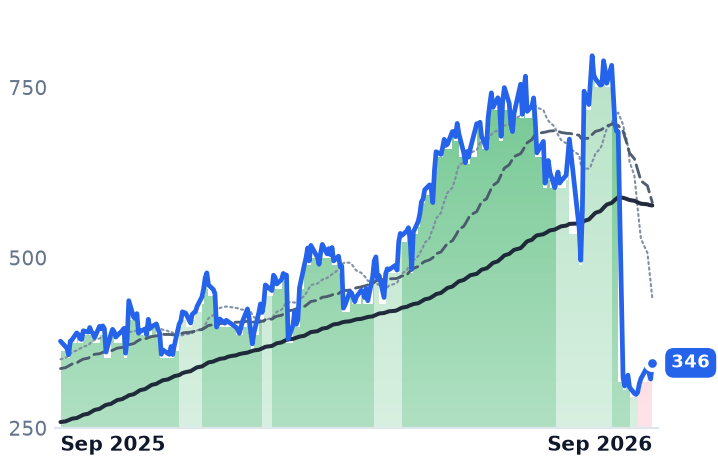
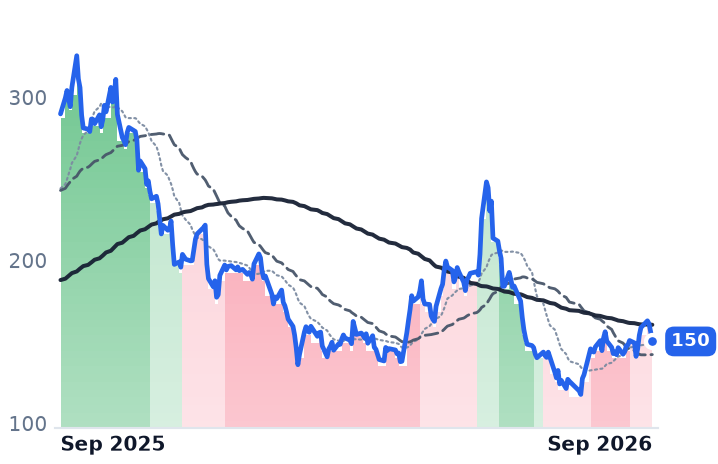
The one name in the data-center electrical trade that looks broken on a price chart is the one having its best year. IES Holdings' shares appear to have halved in a single August session; they did so because the board split them two-for-one, with an ex-distribution date of 24 August. The quarter underneath was a record: net income up 98.1% to $153.0m, backlog of $4.5bn at 30 June, up 91% since the fiscal year-end. Split-adjusted, the shares have risen about 39% since the day before those results.
Comfort Systems and EMCOR are compounding just as hard and de-rated anyway through late August with no disclosure from any of them. The unresolved question at IES is self-inflicted: a $650m purchase of DBM Global bolts roughly $1.3bn of structural-steel revenue onto an electrical contractor.
| Ticker | Company | Segment | Trend · 13mo | 30D | 1Y |
|---|---|---|---|---|---|
| The subject · what this brief is about | |||||
IESC | IES | MEP & Building Systems | 🟢 Cont. Bull | −55.4% | −8.4% |
FIX | Comfort Systems USA | MEP & Building Systems | 🟢 Cont. Bull | −3.4% | +124.6% |
EME | EMCOR | Electrical & Power Infrastructure | ⚠️ Emerging Bear | −7.0% | +24.3% |
| Compared against · context, not the story | |||||
STRL | Sterling Infrastructure | Infrastructure & Civil Construction | ⚠️ Emerging Bear | −7.9% | +63.0% |
ORCL | Oracle | Cloud Infrastructure & Platforms | 🔴 Cont. Bear | −3.8% | −48.2% |
12-month price & trend
| Ticker | Mkt cap | P/E | P/E fwd | P/S | P/S fwd | P/GP | P/GP fwd | EV/EBITDA | FCF yld |
|---|---|---|---|---|---|---|---|---|---|
IESC | $13.8B | 30.3x | 29.9x | 3.5x | 3.3x | 13.3x | 12.6x | 23.0x | 1.7% |
FIX | $59.5B | 41.5x | 34.5x | 5.3x | 4.6x | 20.6x | 17.9x | 29.6x | 3.6% |
EME | $34.4B | 24.4x | 23.7x | 1.9x | 1.7x | 9.4x | 8.6x | 15.3x | 3.4% |
| Ticker | Mkt cap | P/E | P/E fwd | P/S | P/S fwd | P/GP | P/GP fwd | EV/EBITDA | FCF yld |
|---|---|---|---|---|---|---|---|---|---|
STRL | $15.3B | 35.6x | 25.2x | 4.5x | 3.8x | 18.9x | 16.0x | 21.1x | 3.1% |
ORCL | $433.0B | 25.3x | 18.7x | 6.4x | 4.8x | 9.8x | 7.3x | 17.4x | -5.5% |
Consensus projections
| Ticker | FY2026E | FY2027E | FY2028E | |
|---|---|---|---|---|
IESC | Revenue | +27.7% | +48.1% | +18.8% |
| EPS | +76.1% | +16.3% | +17.1% | |
FIX | Revenue | +47.7% | +19.0% | +14.1% |
| EPS | +86.6% | +22.8% | +23.4% | |
EME | Revenue | +21.4% | +10.9% | +8.3% |
| EPS | +30.1% | +13.0% | +13.2% | |
STRL | Revenue | +71.5% | +21.2% | +17.3% |
| EPS | +91.2% | +28.0% | +20.6% | |
ORCL | Revenue | +17.8% | +33.2% | +45.5% |
| EPS | +25.3% | +7.6% | +35.6% |
Forward fiscal years only. Blank means no analyst coverage for that year.
On an unadjusted price chart, IES Holdings looks like the link that snapped in the chain that wires AI data centers: its shares halved in a single August session. They halved because the company split them two-for-one, with an ex-distribution date of 24 August, and the business underneath had just printed its best quarter on record — net income nearly doubled, and backlog reached $4.5bn at the end of June.
The electrical contractors selling installed labor into data-center construction are growing faster than they have in any prior cycle, and their shares fell through late August with no disclosure from any of them. The open question at IES is its own: a $650m purchase of DBM Global adds about $1.3bn of structural-steel revenue to a company whose electrical work carries a 27.4% gross margin.
IES Holdings, a Houston company that engineers and installs electrical and network systems for data centers, homebuilders and industrial plants, nearly doubled its quarterly profit in the three months to 30 June and now trades at roughly half its mid-August price. The halving is arithmetic: the board approved a two-for-one stock split on 29 July, payable as a stock dividend, with an ex-distribution date of 24 August. Nothing was lost. Split-adjusted, the shares are up about 39% since the day before the results.
The distinction matters because IES is the smallest and fastest-growing of the three listed contractors whose revenue line is installed mechanical and electrical labor, and because a company-specific crack at one of them would be evidence that the data-center order books are turning. There is no crack. What IES has instead is a mix decision it has not yet been paid for or punished for.
The quarter
Fiscal third-quarter revenue rose 40% to $1.243bn, gross margin reached a record 27.4% against 26.9% a year earlier, and net income rose 98.1% to $153.0m. Backlog stood at $4.5bn at 30 June, up 91% since the end of fiscal 2025. The shares rose about 30% on 31 July in response.
That margin exists because of a labor shortage. Electrical work accounts for 45% to 70% of data-center construction cost and about half of all on-site labor; the United States needs more than 300,000 additional electricians while roughly 20,000 retire each year. Wage growth for commercial electricians ran 9.9% in 2026 against 3.4% construction-wide. Contractors who can staff a 200-megawatt campus set the price.
The thing that changes the mix
On 10 August IES agreed to buy DBM Global from INNOVATE Corp for about $650m in cash and stock — a structural-steel fabrication and erection platform trading as Schuff Steel and Banker Steel, with roughly $1.3bn of trailing revenue and 3,400 employees. Closing is expected in the quarter ending 31 December. Steel fabrication is not installed electrical labor, and IES already converts cash the least well of the three, on a trailing free-cash-flow yield of 1.66%.
The two larger mirrors
Comfort Systems USA, the mechanical and electrical roll-up that now owns more than 3.5 million square feet of modular production capacity, grew revenue 50.3% last quarter with same-store growth of 44%, and its backlog reached a record $14.06bn. Technology work rose to 58% of first-half revenue from 40%. "Demand remains strong, especially in technology, as we continue to book work with good margins and favorable working conditions for our valuable people," chief executive Brian Lane told investors on the July 23 call. EMCOR Group, the larger and more diversified electrical, mechanical and facilities house, lifted full-year earnings guidance to $32.00–33.25 a share from $29.75–30.75 and carries record remaining performance obligations of $17.14bn, 95% of it organic.
Per dollar of gross profit — the value these companies add, since they sell hours rather than product — EMCOR is the cheapest at 8.61x forward, IES sits at 13.34x trailing, and Comfort Systems is the most expensive at 17.86x forward, or 34.50x forward earnings, down from roughly 46x in May while consensus 2026 earnings rose to $49.01 a share. IES's own 29.88x forward earnings multiple rests on a single analyst's estimate and should be read lightly.
What the businesses earn and what they don't
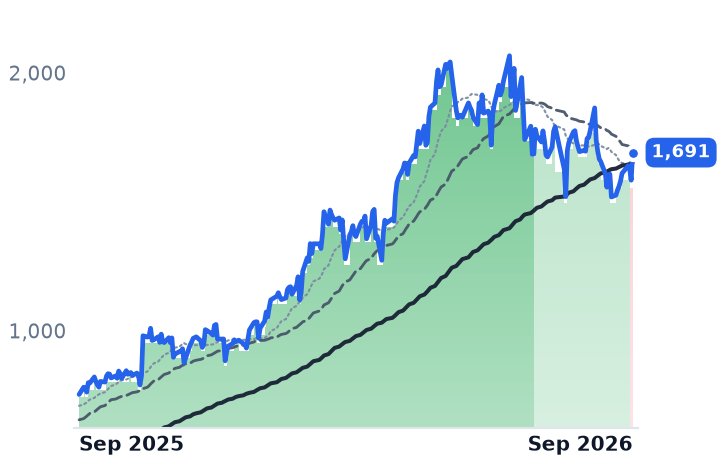
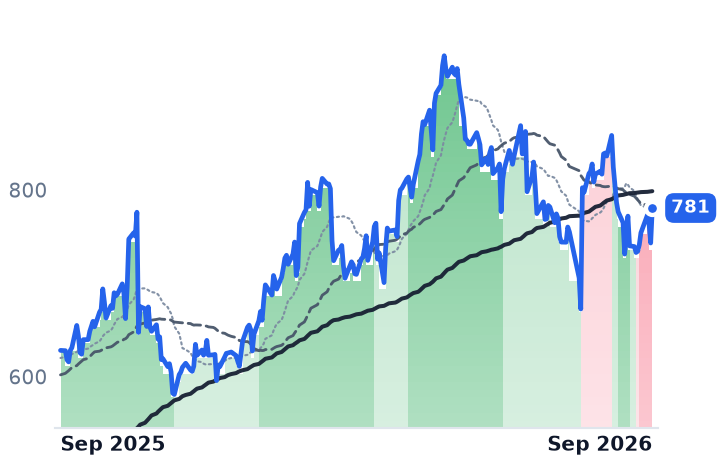
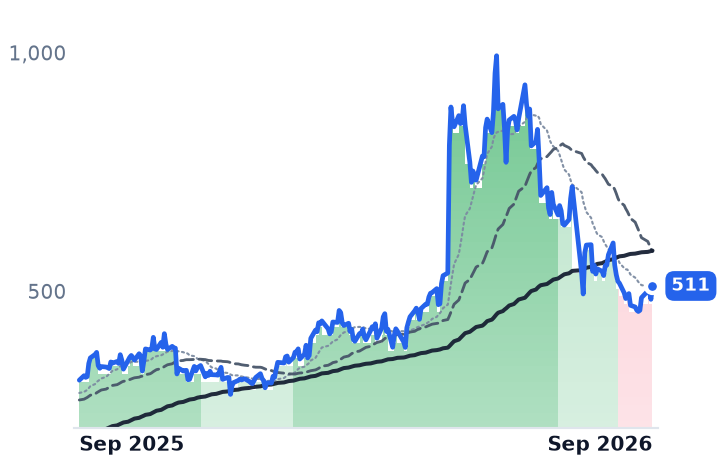
Growth and margin at all three are documented and accelerating; the de-rating from the 17 August peak — Comfort Systems fell 18.5% into 28 August, EMCOR 14.8% — came with no disclosure from any of them. The likelier reading is a discount on order books that convert further out: EMCOR now expects 75–76% of obligations to burn within twelve months against 85% historically, and the 30-year Treasury yield stood at 5.36% on 11 September with futures pricing the funds rate higher by December rather than lower. On 11 September all three rose between 5% and 7.4% after Oracle reported a $664bn contracted backlog and 850 megawatts of added capacity.
So the group's supposed casualty is its strongest operator, and the real test at IES is not demand. By the December quarter it will be reporting a business roughly a third larger, with the added third earning steel-fabrication margins rather than electrician ones.