

Hallador Sold Its Capacity Through 2040 to a Utility, Not a Data Center
Hypothesis Opus 5 · Research Opus 5 · Writing Opus 5 · Prompt v1.6
Hallador Energy spent six years converting itself from an Indiana coal miner into a seller of power-plant capacity, and the quarter that vindicated the strategy also exposed its hole. The forward energy and capacity book jumped to $1.6bn at June 30 from $571.2m three months earlier, on agreements that pay for standing ready and explicitly exclude selling electricity — and electricity is where the money was lost. A 60-day outage at Merom Unit 1 forced purchases of replacement power, and gross margin fell to 5.4% from 55.1% a year earlier.
The counterparty on the 12-year deal is a utility subsidiary; no data-center offtake has been disclosed. Alliance Resource Partners, filed under the same coal heading, is paid a different way entirely — tons sold years ahead, with Appalachian cost per ton down 29.7% and distribution coverage at 1.39x.
| Ticker | Company | Segment | Trend · 13mo | 30D | 1Y |
|---|---|---|---|---|---|
| The subject · what this brief is about | |||||
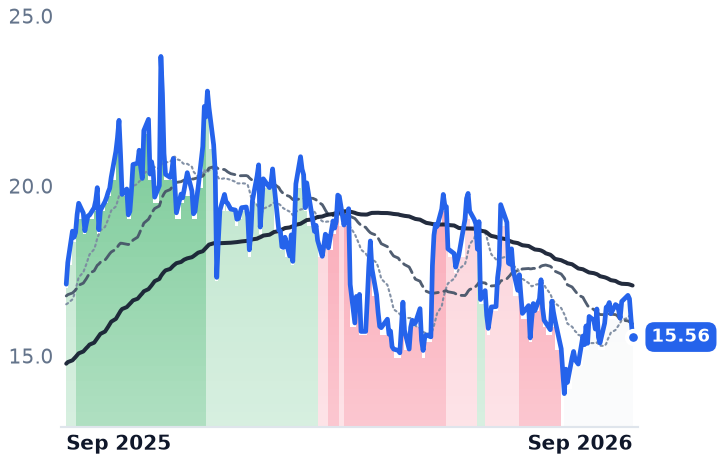
HNRG | Hallador Energy | Thermal Coal Producers | ⚠️ Emerging Bear | −2.0% | −9.1% |
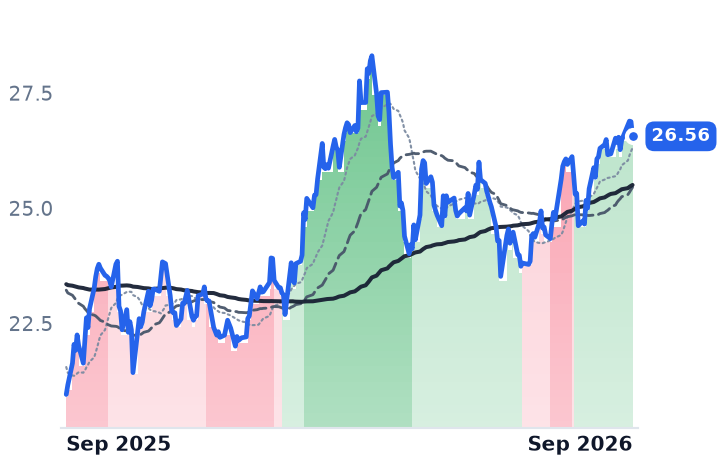
ARLP | Alliance Resource Partners | Thermal Coal Producers | 🌱 Emerging Bull | +5.5% | +26.7% |
| Compared against · context, not the story | |||||
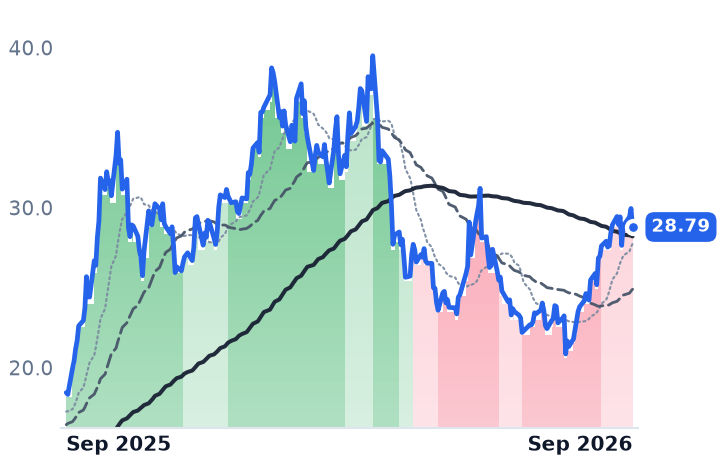
BTU | Peabody Energy | Thermal Coal Producers | ⚠️ Emerging Bear | +18.2% | +56.1% |
12-month price & trend
| Ticker | Mkt cap | P/E | P/E fwd | P/S | P/S fwd | P/GP | P/GP fwd | EV/EBITDA | FCF yld |
|---|---|---|---|---|---|---|---|---|---|
HNRG | $734.0M | 452.7x | — | 1.6x | 1.6x | — | — | 12.4x | -6.9% |
ARLP | $3.4B | 12.9x | 11.0x | 1.6x | 1.5x | 6.4x | 6.3x | 6.0x | 10.2% |
BTU | $3.5B | n/m | — | 0.9x | 0.8x | 39.6x | 37.1x | 11.8x | 13.0% |
Consensus projections
| Ticker | FY2026E | FY2027E | FY2028E | |
|---|---|---|---|---|
HNRG | Revenue | −4.7% | +6.5% | +10.2% |
| EPS | −126.1% | −320.1% | +121.5% | |
ARLP | Revenue | +0.7% | +3.7% | +2.3% |
| EPS | +2.4% | +21.7% | +3.7% | |
BTU | Revenue | +11.1% | +8.3% | −0.7% |
| EPS | −59.9% | −1581.4% | +3.9% |
Forward fiscal years only. Blank means no analyst coverage for that year.
Hallador Energy owns a one-gigawatt grid connection in western Indiana, the coal plant behind it and the underground mines that feed it. In the June quarter it sold the right to call on that plant for most of the next fourteen years.
The company's forward book of contracted energy and capacity revenue stood at $1.6bn on June 30 against $571.2m three months earlier. Add third-party coal commitments of $236.5m and the coal Hallador sells to its own plant, and the segment-level figure is $2.4bn. That is the whole investment case in one line: a company with a market value of roughly $734m has booked years of revenue it has not yet recognized, on paper signed with counterparties who want a generator kept alive.
"Six years ago, we were an underground coal mining company. We acquired a 1-gigawatt interconnection, then the plant that utilizes it," chairman and chief executive Brent Bilsland told investors on the August 10 call. The agreements, he said, place Hallador "in a substantially sold forward position on accredited capacity for approximately the next 14 consecutive years with commitments extending through 2040."
What the contracts leave out
They do not sell electricity. The 12-year agreement signed May 1, covering planning years 2028 through 2040 and worth with an earlier three-year deal roughly $1.1bn, is capacity-only and excludes energy sales. The counterparty is a subsidiary of a utility; no data-center offtake has been disclosed, and the deal still needs regulatory approvals expected in the second half of 2026. The data centers are adjacent rather than contractual — one project has broken ground on a 1,000-acre site next to Merom, another developer has bought land on the far side of the plant.
Leaving the energy position open is deliberate, and in the June quarter it hurt. A 60-day planned outage on Merom Unit 1 and unplanned Unit 2 downtime landed in high-price hours, forcing Hallador to buy replacement power; adjusted EBITDA came in at -$2.9m, and the realized energy price fell to $41.69 per megawatt-hour from $52.66. Third-party coal sales actually rose 6.6% to $40.6m, still about 40% of revenue. Nothing here was caused by the coal price.
The price of the thing Hallador has sold is administratively pinned. PJM's auction for 2028/2029, announced July 14, cleared at the federally approved cap of $325 per megawatt-day for a third consecutive year, slightly below each of the two prior caps. The grid operator bought 138,318 megawatts, 5.6% short of its own reliability requirement, and reckons the auction would have cleared at $555 without the cap. The scarcity is genuine; most of its value accrues to buyers.
The other way to be paid
Alliance Resource Partners, the Tulsa partnership mining the Illinois Basin and Northern Appalachia with an oil and gas mineral royalty book attached, sells tons years forward. In the quarter it added 21.2m committed-and-priced tons and now has 29.4m priced for 2027 delivery. "Our expected 2026 coal sales tons are essentially fully committed at the midpoint of guidance," chief executive Joseph W. Craft III said on July 27.
Spot moves reach that book only as contracts roll, and when Appalachian realized price rolled down to $63.57 a ton on legacy Tunnel Ridge tonnage expiring, cost per ton fell 29.7% to $46.22 — the margin per ton widened. Net income rose 33.9% to $79.6m, royalty segment EBITDA set a record at $38.0m, about a fifth of the total, and distribution coverage reached 1.39x on the maintained $0.60 quarterly payout. The units trade at 11.0x forward earnings against 12.9x trailing, 6.0x trailing EV/EBITDA and a 10.2% free cash flow yield, on earnings consensus has near a cycle low before a rebound of roughly 22% in 2027.
The twelve-month gain in this corner of energy belongs largely to Peabody Energy, up 55%, and it is earned on something neither of the others touches: seaborne metallurgical coal priced off indexes, with coking coal futures lately near $275 a ton. Peabody lost $90.6m in the June quarter on revenue of $1.003bn and is left ramping its Centurion mine after terminating the $2.32bn purchase of Anglo American's Australian coking coal assets.
The verdict
One heading, three unrelated payment mechanisms. Alliance's advance is earned in the accounts — cost per ton, not price per ton, and a royalty stream with no mine attached. Hallador's de-rating is also earned: two straight quarters of negative operating income, consensus at a 2026 loss of $0.25 a share, and 12.4x trailing EV/EBITDA on cash earnings that have collapsed. What is not in those numbers is the backlog, the sub-$800m Turtle Creek gas peaker at roughly $1,700 per kilowatt, and $84.2m of liquidity that has to fund it.
Hallador has sold the next fourteen years of standing ready, at a price a federal cap holds down. What it kept for itself is the power the plant actually generates — the part that requires the plant to run.