

Cinemark's First $1bn Quarter Drew 63.7m Patrons as IMAX's Backlog Shrank to 421 Systems
Hypothesis Opus 5 · Research Opus 5 · Writing Opus 5 · Prompt v1.6
The best summer American movie theaters have ever had paid four companies filed under one heading in four different ways, and only one of them is paid for tickets. Cinemark's June quarter was its first to pass $1bn in worldwide revenue, on attendance of 63.7 million against 57.9 million a year earlier, with the studios' cut of U.S. admissions at 53.5% — just 30 basis points higher than last year, so the house kept its share of the boom.
IMAX licenses rather than exhibits, and its meters are less settled: a record $728m summer box office, but a contracted system backlog that fell from 434 at the end of 2025 to 421, because installations outran new signings. Cinemark trades at 14.8x forward earnings, IMAX at 28.1x. The slate, not the consumer, is the forward risk.
| Ticker | Company | Segment | Trend · 13mo | 30D | 1Y |
|---|---|---|---|---|---|
| The subject · what this brief is about | |||||
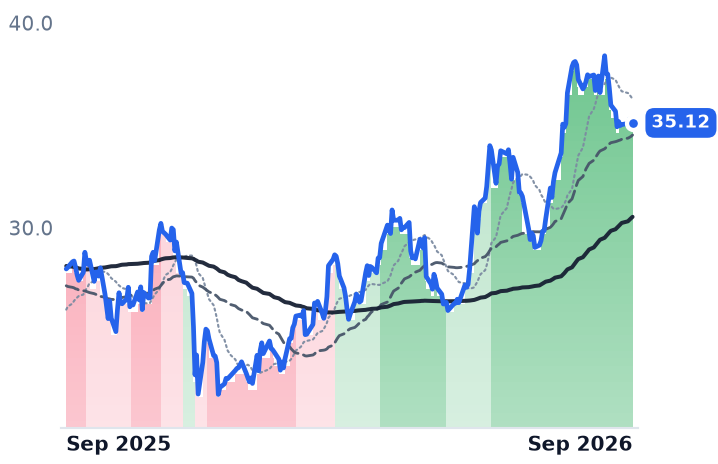
CNK | Cinemark | Movie Theatres | 🌱 Emerging Bull | −5.5% | +25.5% |
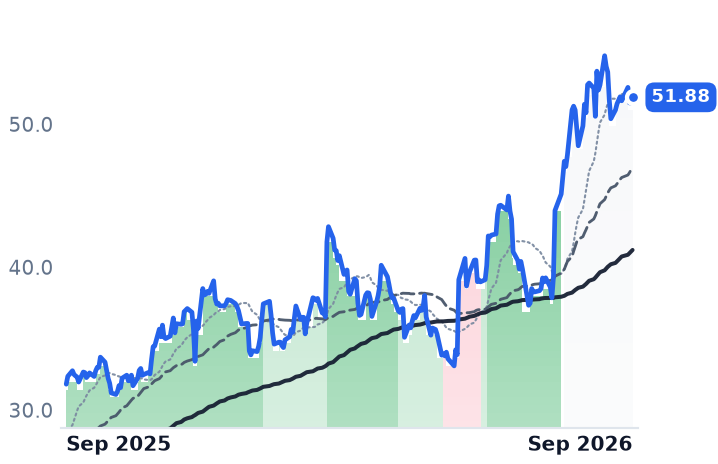
IMAX | IMAX | Movie Theatres | 🟢 Cont. Bull | +2.1% | +63.1% |
| Compared against · context, not the story | |||||
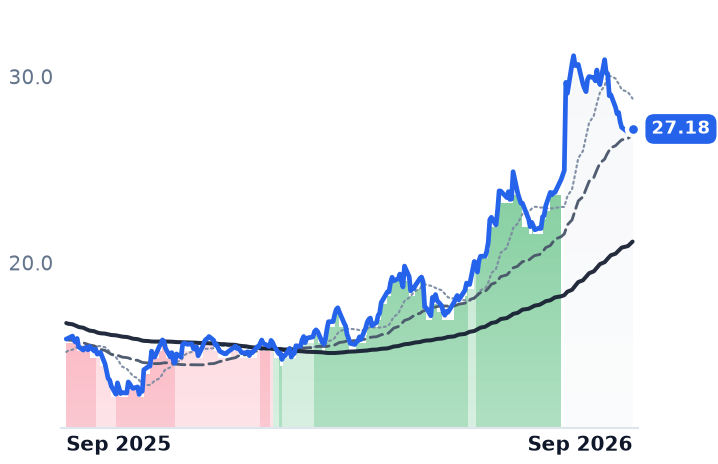
MCS | The Marcus | Movie Theatres | 🌱 Emerging Bull | −6.9% | +70.9% |
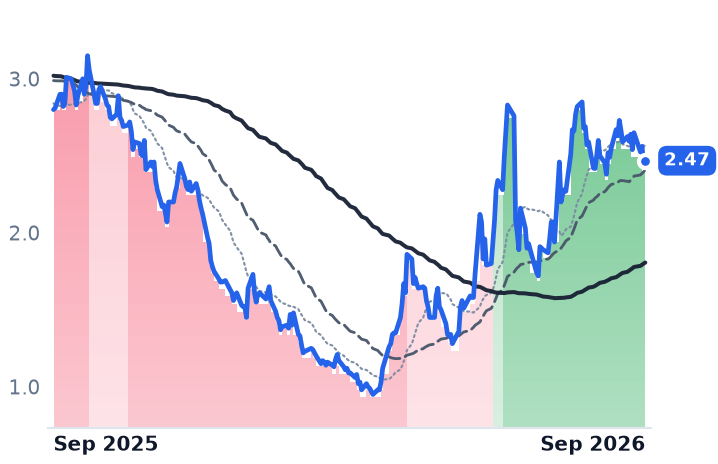
AMC | AMC Entertainment | Movie Theatres | 🌱 Emerging Bull | −1.3% | −11.8% |
SPY | State Street SPDR S&P 500 ETF Trust | Asset Management | 🟢 Cont. Bull | −1.9% | +16.2% |
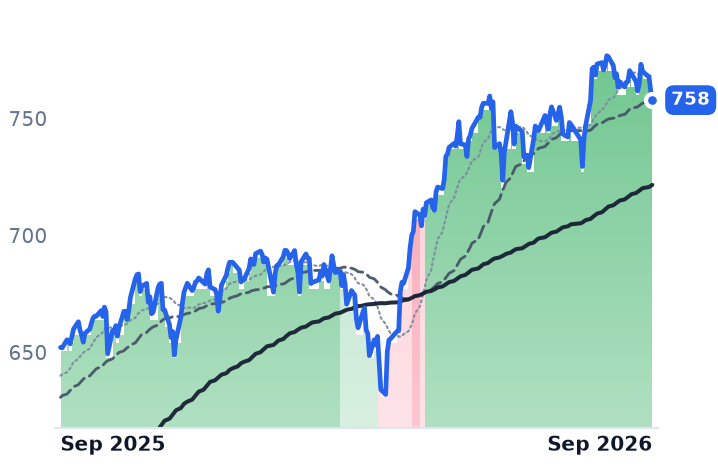
12-month price & trend
| Ticker | Mkt cap | P/E | P/E fwd | P/S | P/S fwd | P/GP | P/GP fwd | EV/EBITDA | FCF yld |
|---|---|---|---|---|---|---|---|---|---|
CNK | $4.1B | 18.9x | 14.8x | 1.2x | 1.1x | 4.0x | 3.8x | 9.0x | 7.7% |
IMAX | $2.9B | 69.5x | 28.1x | 6.9x | 6.2x | 11.6x | 10.5x | 22.9x | 4.4% |
MCS | $837.2M | 37.2x | 36.0x | 1.1x | 1.0x | 0.9x | 0.9x | 10.7x | 8.0% |
| Ticker | Mkt cap | P/E | P/E fwd | P/S | P/S fwd | P/GP | P/GP fwd | EV/EBITDA | FCF yld |
|---|---|---|---|---|---|---|---|---|---|
AMC | $2.2B | n/m | — | 0.4x | 0.4x | 0.6x | 0.6x | 21.2x | -1.0% |
SPY | $773.0B | — | — | — | — | — | — | — | — |
Consensus projections
| Ticker | FY2026E | FY2027E | FY2028E | |
|---|---|---|---|---|
CNK | Revenue | +14.3% | +3.3% | +4.0% |
| EPS | +126.1% | +9.8% | +8.1% | |
IMAX | Revenue | +13.8% | +4.7% | +5.1% |
| EPS | +39.2% | +11.7% | +12.6% | |
MCS | Revenue | +7.4% | +2.7% | +1.5% |
| EPS | +172.6% | +23.0% | +21.9% | |
AMC | Revenue | +14.1% | +4.4% | +5.1% |
| EPS | −81.3% | −72.5% | −145.6% |
Forward fiscal years only. Blank means no analyst coverage for that year.
American theaters just had their biggest summer on record, and the four companies filed under "movie theaters" got paid for it by four different mechanisms. Domestic summer box office reached $4.765bn, narrowly beating the 2013 record and running more than $1bn ahead of summer 2025; the year-to-date domestic total stood at $7.3bn on 7 September, 20.8% ahead of the same point last year.
That is the input. What matters to investors is how it splits. An exhibitor hands most of a ticket back to the studio on a sliding scale that takes the most from the biggest openings, and keeps the concession stand. A licensor like IMAX Corporation, which sells and leases its projection systems to exhibitors, takes a percentage of the box office its branded screens generate and charges studios a fee to remaster films into its format. The same tailwind lands in different places on each income statement — and this year, in very different valuations.
The house kept its share
Cinemark Holdings, which operates theaters across the United States, South and Central America, reported worldwide revenue of $1,086.4m in the June quarter, up 15.5%, with operating income up 34.3%. "For the first time in our history, our quarterly worldwide revenue exceeded $1 billion, supported by record high results across all key revenue categories," chief executive Sean Gamble told investors on 30 July.
The split is the finding. Admissions were $540.0m and concessions $433.3m on 63.7 million patrons, with worldwide average ticket price of $8.48 and concession revenue per patron of $6.80 — $10.83 and $8.70 respectively in the U.S. Film rentals and advertising took 53.5% of U.S.-segment admissions revenue, only 30 basis points more than a year earlier. Against a cost base management put at roughly 40% fixed, attendance up about 10% is what produced adjusted EBITDA of $294m at a 27.1% margin, the highest quarterly figure in company history. Gamble also flagged a new cost line: electricity rates in Texas and other markets rising on data-center demand.
The Marcus Corporation, a regional operator of about 1,064 screens with a hotel division attached, gives the cleanest decomposition. Theater revenue rose 14.4%, with attendance up 10.9% against average admission price up 5.2% — bodies did roughly two-thirds of the work — and incremental earnings flow-through on new box office ran at 52%. Marcus counted nine films grossing over $100m in the quarter, against seven a year earlier.
Converted, not replenished
IMAX's summer was the loudest number in the group: $728m of worldwide box office, up 73% over its previous record, a record 5.8% share of global box office from a network of just over 1,800 screens — under 1% of the world's total. Revenue rose 12.2% to $102.8m with operating income up 33.7%, and adjusted earnings margin near 46.6%. "The Odyssey is the purest and most complete expression yet of the power of IMAX," chief executive Rich Gelfond said on the 23 July call; Christopher Nolan's film opened to $52m in the format, the largest in company history.
The network meter is softer. IMAX installed 38 systems and signed 36, leaving a contracted backlog of 421 against 434 at the end of 2025. Growth is being converted out of inventory rather than replenished into it. And IMAX China's first-half revenue fell to $34.4m from $57.8m, tracking a Chinese box office down 40.6% against a record Lunar New Year comparison.
What the shares paid for
IMAX is up 63.1% over twelve months and Marcus 69.2%, Cinemark 24.7%. AMC Entertainment, the largest exhibitor by screens, fell 11.8% — its revenue grew 14.2% and it still posted a net loss, while its shares outstanding went from roughly 433 million to nearly 893 million as it raised equity and retired debt. Dilution, not the box office, set AMC's price. Cinemark has drifted down from $38.40 on 24 August with no discoverable company news; the likelier readings are the fall slate and studio consolidation.
Cinemark trades at 14.8x forward earnings against 18.9x trailing, 9.0x trailing enterprise value to EBITDA, on a 7.7% trailing free-cash-flow yield. IMAX trades at 28.1x forward against 69.5x trailing and 22.9x EV/EBITDA, roughly two and a half times Cinemark's, against consensus revenue growth that falls from 13.8% in 2026 to 4.7% in 2027. Marcus, at 10.7x EV/EBITDA, is priced between them on a per-share estimate analysts cannot agree on.
So the verdict divides. Cinemark's advance is earned by the operating record — attendance, concession spend and a studio cut that did not widen. IMAX's re-rating is a bet that the premium-format share keeps compounding; its own backlog says the installed base grew this year by spending contracts already signed, and the Greater China half of the story shrank. Both are priced off a 2026 slate that consensus expects to flatten in 2027.
Which is why the fight in Washington matters more than the one in the multiplex. Paramount Skydance's pursuit of Warner Bros. Discovery would fold two of the biggest theatrical suppliers together; Paramount has offered to commit in writing to 30 films a year and a 45-day theatrical window, and the exhibitors' trade body opposes the deal anyway. No studio has released 30 films in a year in a quarter century. The consumer showed up this summer; the supply of things to show them is the variable nobody in this group controls.