

Digital Realty Renewed Leases 25.4% Higher as $64bn of New Data Centers Sat Blocked
Hypothesis Opus 5 · Research Opus 5 · Writing Opus 5 · Prompt v1.6
A permitting revolt is doing to data-center supply what no landlord could arrange for itself. New York has imposed the first statewide one-year moratorium on new data centers, some 50 local moratoriums are active, and Northern Virginia's vacancy rate has fallen to roughly 0.24% — about 10.8 megawatts available in the largest market on earth.
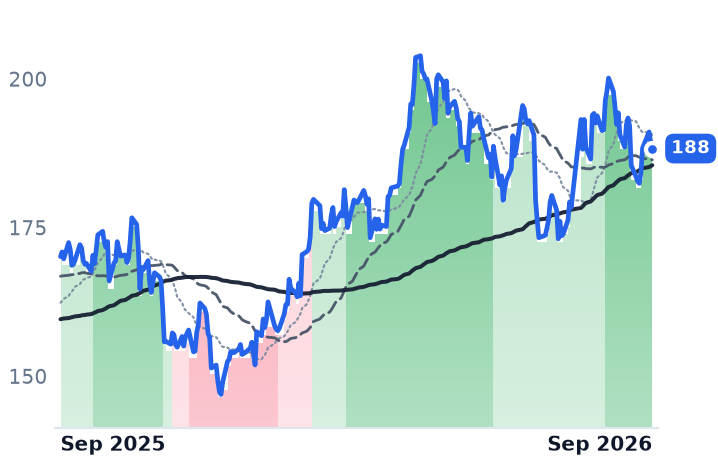
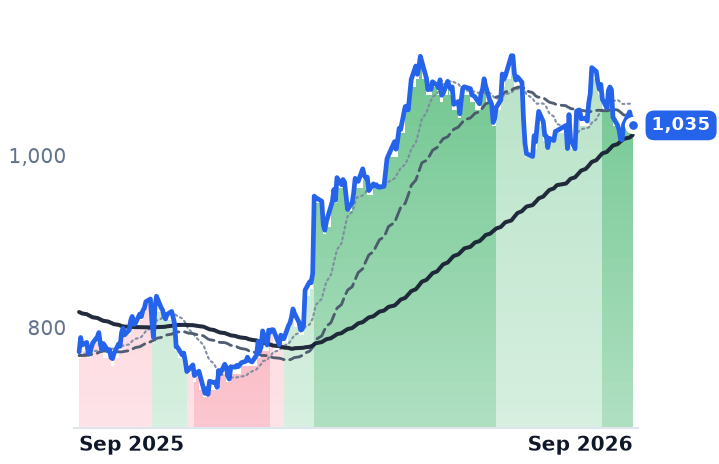
That is new since July, when both listed landlords of computing space reported accelerating businesses: Digital Realty's revenue grew 28.9% year on year with a record signed-not-commenced backlog, and Equinix's cabinet churn ran at 1.8%, the low end of its own range. Both stocks peaked on the same August session and have faded about 6% since, tracking the long bond rather than leasing.
Scarcity protects in-place megawatts. It also taxes the pipelines both companies are valued on. Digital Realty trades near 23.0x guided 2026 core funds from operations against a 22–25x band; Equinix near 24.1x guided adjusted funds from operations against the 25–30x its interconnection franchise historically commanded.
| Ticker | Company | Segment | Trend · 13mo | 30D | 1Y |
|---|---|---|---|---|---|
DLR | Digital Realty Trust | Data Center & Colocation | 🟢 Cont. Bull | −1.6% | +10.7% |
EQIX | Equinix | Data Center & Colocation | 🟢 Cont. Bull | −0.5% | +34.1% |
12-month price & trend
| Ticker | Mkt cap | P/E | P/E fwd | P/S | P/S fwd | P/GP | P/GP fwd | EV/EBITDA | FCF yld |
|---|---|---|---|---|---|---|---|---|---|
DLR | $69.7B | 86.8x | 69.5x | 10.2x | 9.8x | 73.9x | 71.5x | 25.2x | 2.0% |
EQIX | $102.1B | 66.3x | 60.1x | 10.4x | 9.9x | 20.1x | 19.3x | 27.7x | 1.3% |
Consensus projections
| Ticker | FY2026E | FY2027E | FY2028E | |
|---|---|---|---|---|
DLR | Revenue | +17.0% | +11.1% | +14.1% |
| EPS | −26.0% | −4.6% | +23.9% | |
EQIX | Revenue | +11.0% | +10.6% | +11.4% |
| EPS | +16.6% | +9.3% | +12.4% |
Forward fiscal years only. Blank means no analyst coverage for that year.
New York has become the first state to freeze new data-center construction for a year, and around the country roughly $64bn of projects are now blocked or delayed by local, bipartisan opposition — some 50 active local moratoriums, with Loudoun and Spotsylvania counties, the heart of Data Center Alley, weighing bans of their own. None of this existed in the July earnings reports that set expectations for the two big listed landlords of computing space.
It matters because it changes which side of these businesses is scarce. Digital Realty, which rents wholesale halls by the megawatt to cloud and enterprise tenants across 309 facilities, and Equinix, which sells cabinets and cross-connects inside its interconnection-heavy centers, both earn money two ways: rent on the buildings they already own, and returns on the buildings they are still constructing. A permitting freeze raises the value of the first and threatens the second.
The buildings that already exist
The supply data says the first effect is real. CBRE put North American primary-market inventory at a record 10,903 megawatts in the first half, up 33.7% year on year — and vacancy still fell, to 1.4%. In Northern Virginia it reached about 0.24%, with 10.8 megawatts available and contiguous blocks of 5 to 10 megawatts hard to find at all. Power, land and permits, not tenant appetite, are the gating item, and leases there are shifting toward triple-net structures and "pay-or-lose" power floors.
That pricing power shows up in the quarters. Digital Realty renewed $262m of annualized cash rent in the June quarter at rates 25.4% above expiring levels, grew revenue 28.9% to $1.9bn, carried a record $1.9bn backlog of signed-but-not-commenced rent at full share — $1.4bn at its own share, the rest accruing to joint-venture partners — and raised 2026 core funds-from-operations guidance to $8.15–$8.20 a share excluding promote income. "Digital Realty delivered record Core FFO per share in the quarter, reflecting robust customer demand and strong execution," chief executive Andy Power said on July 23.
Equinix accelerated too: revenue up 16.4%, operating margin widened to 25.3% from 21.9%, adjusted funds from operations per share up 18%, a record 9,700 net interconnections added and churn of 1.8% against a 2–2.5% target range. "Customer demand is broad-based and growing," chief executive Adaire Fox-Martin said on July 29, announcing raised 2026 guidance of $10.205–$10.285bn of revenue and $42.69–$43.29 of adjusted funds from operations per share.
The buildings that do not exist yet
Both are also enormous builders. Digital Realty's construction pipeline doubled in the first half to 1.4 gigawatts costing $20bn, 63% pre-leased at an expected stabilized yield near 11.5%. Equinix guided 2026 capital spending to $5.0–$6.0bn, told investors its blended cost of capital would rise by about 150 basis points, and set a through-2029 outlook of 9–12% annual growth in adjusted funds from operations per share — a step down from the 11–13% guided for this year.
That is the pipeline the moratorium wave taxes. "There is a lot more pushback in the communities across the U.S.," Berkshire Hathaway chief executive Greg Abel told CNBC on September 2. Mizuho's Vikram Malhotra reads it the other way for incumbents: while new projects may be delayed, it "could be a positive for existing projects/DC REITs which have pricing power".
What the shares have been doing instead
Neither argument moved the price in August. Both stocks topped out on the same session, August 14 — Digital Realty at $200.15, Equinix at $1,102.10 — and have given back about 6% since, the day the 30-year Treasury printed 5.34%, its highest since 2007. Both bottomed in the first days of September and have recovered as yields eased. Very long rent streams get discounted at the long bond; a synchronized fade in two businesses whose operating numbers both accelerated is a discount-rate event.
So the honest split: the operating results earn what they show, and the political overhang is not yet visible in any reported meter. What the moratoriums do is turn a growth story into a scarcity story — good for the 3.0 gigawatts Digital Realty already runs and the 82%-utilized estate Equinix already owns, worse for the compounding both managements have guided investors to expect from capital not yet in the ground. Digital Realty's key risks were always power availability and rate sensitivity; September added the county board.
The test arrives with the third-quarter prints, and one number will settle more than the others: whether a market with 10.8 free megawatts in its biggest metro shows up as rent, or as projects that never get built.