

Universal Earned a 38.8% Return on Equity in an Atlantic Season With Zero Hurricanes
Hypothesis Opus 5 · Research Opus 5 · Writing Opus 5 · Prompt v1.6
Florida's listed coastal insurers are posting outsized profits in a hurricane season that has produced no hurricanes, and the market has already conceded the run ends. For both Universal Insurance Holdings and HCI Group the forward earnings multiple sits above the trailing one — Universal at 9.0x against 5.5x, HCI at 10.0x against 7.2x — because consensus models an earnings decline off a storm-free base.
Reinsurance got sharply cheaper at the June 1 renewal, and both companies spent the saving on more cover rather than more retained risk: Universal's first-event retention is unchanged at $45m. HCI's chief executive says the cheaper protection goes into a rate filing late this year, handing the margin back to homeowners.
Universal's underwriting is genuinely improving. HCI's operating margin has given back 13.5 points in six months.
| Ticker | Company | Segment | Trend · 13mo | 30D | 1Y |
|---|---|---|---|---|---|
| The subject · what this brief is about | |||||
UVE | Universal Insurance | Coastal & Specialty Property | 🟢 Cont. Bull | +0.6% | +81.0% |
HCI | HCI | Coastal & Specialty Property | 🟢 Cont. Bull | +0.6% | +5.9% |
| Compared against · context, not the story | |||||
ACIC | American Coastal Insurance | Coastal & Specialty Property | ⚠️ Emerging Bear | −6.3% | −8.5% |
HRTG | Heritage Insurance | Coastal & Specialty Property | ⚠️ Emerging Bear | +4.1% | +54.5% |
SLDE | Slide Insurance | Coastal & Specialty Property | 🟢 Cont. Bull | +18.3% | +81.4% |
12-month price & trend
| Ticker | Mkt cap | P/E | P/E fwd | P/S | P/S fwd | P/GP | P/GP fwd | EV/EBITDA | FCF yld |
|---|---|---|---|---|---|---|---|---|---|
UVE | $1.2B | 5.5x | 9.0x | 0.7x | 0.5x | 2.0x | 1.4x | 2.6x | 27.9% |
HCI | $2.4B | 7.2x | 10.0x | 2.5x | 2.4x | 3.6x | 3.5x | 3.3x | 17.2% |
ACIC | $525.8M | 5.0x | 7.7x | 1.6x | 0.9x | 2.2x | 1.3x | 2.7x | 7.4% |
| Ticker | Mkt cap | P/E | P/E fwd | P/S | P/S fwd | P/GP | P/GP fwd | EV/EBITDA | FCF yld |
|---|---|---|---|---|---|---|---|---|---|
HRTG | $710.8M | 3.6x | 5.5x | 0.9x | 0.8x | 1.8x | 1.6x | 1.0x | 28.3% |
SLDE | $2.2B | 4.7x | 5.3x | 1.7x | 1.3x | 2.1x | 1.6x | 1.5x | 45.8% |
Consensus projections
| Ticker | FY2026E | FY2027E | FY2028E | |
|---|---|---|---|---|
UVE | Revenue | +4.4% | +3.0% | −27.3% |
| EPS | −8.7% | −2.1% | +15.8% | |
HCI | Revenue | +10.3% | +6.4% | +7.8% |
| EPS | −8.6% | +2.1% | −0.8% | |
ACIC | Revenue | −11.8% | +0.1% | — |
| EPS | −29.4% | +8.5% | — | |
HRTG | Revenue | +1.9% | +4.4% | — |
| EPS | −27.3% | +8.3% | — | |
SLDE | Revenue | +12.2% | +0.1% | −4.9% |
| EPS | +17.8% | −0.2% | +1.1% |
Forward fiscal years only. Blank means no analyst coverage for that year.
Universal Insurance Holdings, which writes homeowners, condominium and dwelling cover through Florida's independent agents and its own Clovered.com digital agency, reported second-quarter net income available to common stockholders of $59.2m and a net combined ratio of 91.6%. Both numbers were produced by an empty sky: through early September the Atlantic had generated five named storms, no hurricanes and the lowest accumulated cyclone energy on modern record, the least active start in at least 60 years.
A Florida homeowners carrier's year is decided by three variables its income statement never displays: what it pays for reinsurance each June 1, the litigation rules the legislature rewrote in 2022, and the storm count. All three broke the same way this year, and the market has already conceded they will not stay that way — at Universal and at HCI Group, the Tampa insurer that also controls the underwriting-software business Exzeo, the forward earnings multiple sits above the trailing one.
The revenue line is a residual
Universal wrote $621.3m of direct premiums in the June quarter and ceded 30.8% of premium away before it could earn any of it, leaving $377.3m of net premiums earned. That is why the reported top line behaves like an accounting remainder rather than a demand signal: revenue rose 6.2% in the second quarter after falling 0.9% in the first. Sitting ahead of any retained risk are fee streams that get paid on volume written — policy fees collected by Universal's wholly owned managing general agent, brokerage commissions on the reinsurance it places through its in-house intermediary Blue Atlantic Reinsurance Corporation, and installment fees from policyholders.
They bought more cover, not more risk
The June 1 renewal was the cheapest in years. Guy Carpenter put Florida property-catastrophe pricing down 15% to 20% risk-adjusted across many layers, with individual accounts down as much as 25%; the state-run Citizens Property Insurance renewed its $2.82bn program at a net rate on line of 8.46%, against 11.95% a year earlier.
Neither protagonist used the discount to keep more risk. Universal lifted the top of its combined tower by about $50m to $2.623bn while leaving its first-event statutory retention unchanged at $45m, and locked in $352m of capacity extending into the 2027-2028 treaty year, most of it below the Florida Hurricane Catastrophe Fund layer. The renewal is "now fully supported and secured," chief executive Stephen Donaghy said. HCI renewed about $4.1bn of catastrophe excess-of-loss limit, a 16% increase, for $381m of net reinsurance premium, down 10%, with its maximum first-event retention up 4% to $163m.
Cheaper input costs in a regulated line do not stay with the carrier. On HCI's August 6 call, chairman and chief executive Paresh Patel said the saving would be incorporated into a future rate filing, likely late this year, after actuarial review. The giveback is already visible statewide: Florida's insurance regulator reports rates falling in 51 of the state's 67 counties, with an approved 8.7% average decrease for Citizens, and seventeen new carriers have entered since the 2022 and 2023 reforms.
Two businesses, moving apart
Universal's quarter was a margin story rather than a volume one: gross margin of 42.5% against 19.5% a year earlier, direct premiums up 4.1%, book value per share of $22.89, up 39.7%. "In the quarter, we delivered a very strong 38.8% annualized return on common equity, driven by solid underwriting and revenue performance," Donaghy said on July 24.
HCI's is decelerating. Revenue grew 11.1% and net income attributable to shareholders 11.5%, against triple-digit growth in the two quarters prior, and operating margin has fallen from 58.5% in the fourth quarter of 2025 to 45.0%. The pivot away from hurricane risk is real but small: other revenue was $5m in the quarter, roughly 2% of the total, even though Exzeo's November 2025 initial public offering valued that arm near $1.75bn against HCI's own $2.39bn market capitalization. Growth has migrated to new vehicles — TypTap's premiums were flat at $123m while the Tailrow reciprocal exchange's gross premiums earned rose 236% to $29.7m — and the policy pipeline that fed the whole group is draining, with Citizens down to roughly 391,768 policies from a peak near 1.4 million.
What the shares already know
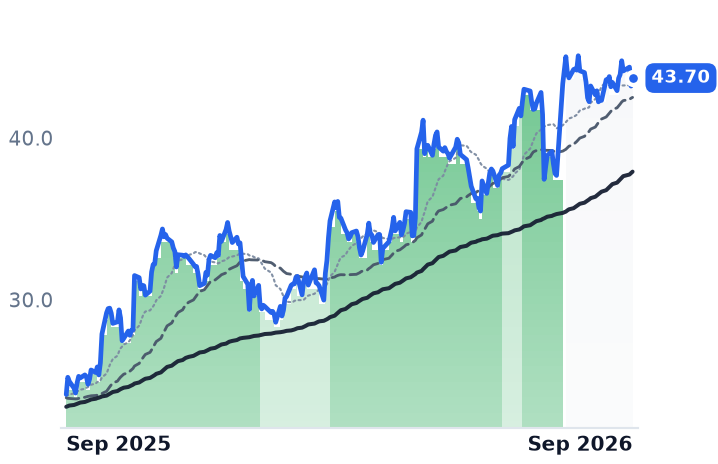
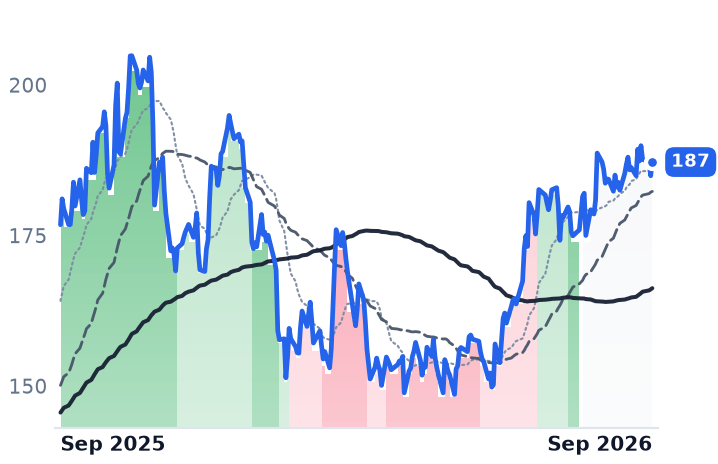
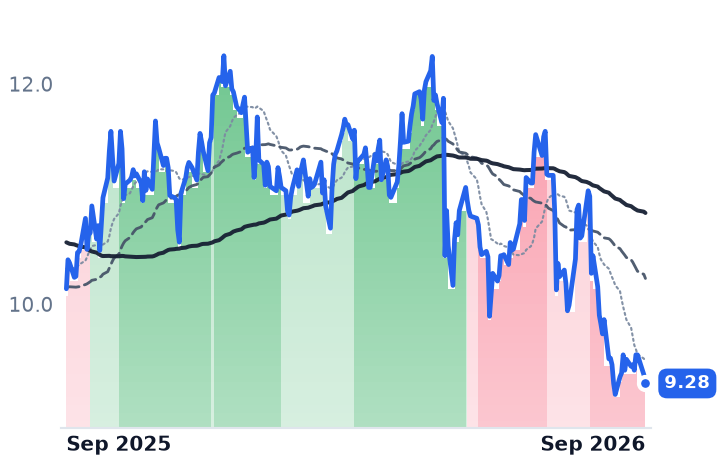
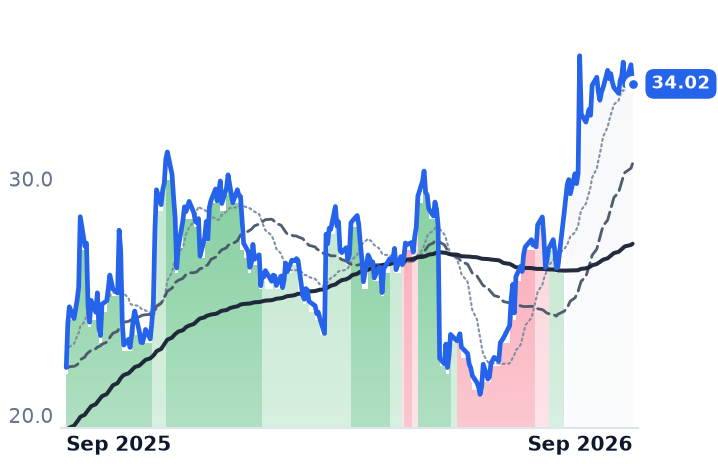
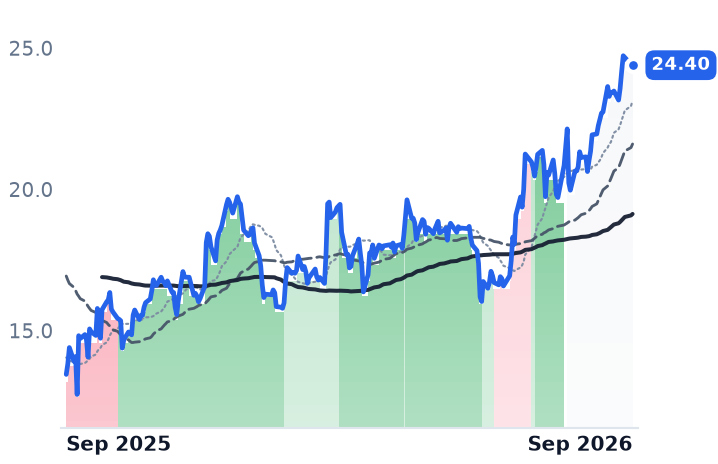
Universal's stock is up 74.1% over twelve months, and the path was not a grind: it fell 9.7% in one session on July 15 after Piper Sandler cut it to Neutral on valuation, then gapped 15.0% higher across the second-quarter release. HCI is up 5.8% over the same year; American Coastal Insurance, the commercial-residential specialist in the same corner, is down 16.1%.
The verdict splits cleanly. Universal's improvement is earned — a six-point better combined ratio, a compounding book value, a cheaper reinsurance tower with unchanged attachment. What the business does not explain is the multiple: at 1.91x book and 5.5x trailing earnings against 9.0x forward, the price outran book value, and consensus already models 2026 earnings per share of $4.85 against $6.32 delivered in 2025. HCI trades richer on every measure — 7.2x trailing, 10.0x forward, 1.97x book — on decelerating earnings and a software business still too small to carry the story. A single-digit earnings multiple here is a storm count, not a valuation.
Both retentions were set on June 1 and neither has been tested by an event. Forecasters put roughly 60% of a typical Atlantic season's activity after September 10, and this one runs to the end of October.