

Six Flags Sold Seven Parks to Cut Debt and Owes an Estimated $332.6m in January
Hypothesis Opus 5 · Research Opus 5 · Writing Opus 5 · Prompt v1.6
Six Flags' remaining parks got busier this summer while its shares lost more than a third of their value over twelve months. Same-park attendance rose 4% in the June quarter and adjusted earnings before interest, tax, depreciation and amortization rose 7% — but the company carries about $4.9bn of net debt against a $1.46bn market value, sold seven properties to pay lenders down, and faces a nine-figure partnership buyout early next year. The de-rating is earned by the balance sheet rather than the turnstiles.
United Parks, the SeaWorld and Busch Gardens operator, is the mirror image: revenue slipped 1.4% and adjusted EBITDA fell, yet per-share earnings dropped only 11% because 12.4% of the share count was retired. In-park spending per guest hit a record $39.51.
| Ticker | Company | Segment | Trend · 13mo | 30D | 1Y |
|---|---|---|---|---|---|
| The subject · what this brief is about | |||||
FUN | Six Flags Entertainment | Theme Parks & Attractions | 🌱 Emerging Bull | −12.0% | −34.0% |
PRKS | United Parks & Resorts | Theme Parks & Attractions | 🌱 Emerging Bull | −12.8% | −22.8% |
| Compared against · context, not the story | |||||
EPR | EPR Properties | Experiential Recreation | 🟢 Cont. Bull | −0.1% | +13.4% |
CMCSA | Comcast | Broadband & Fixed Services | 🔴 Cont. Bear | −4.7% | −19.8% |
DIS | The Walt Disney | Streaming Video Platforms | 🔴 Cont. Bear | +1.2% | −9.3% |
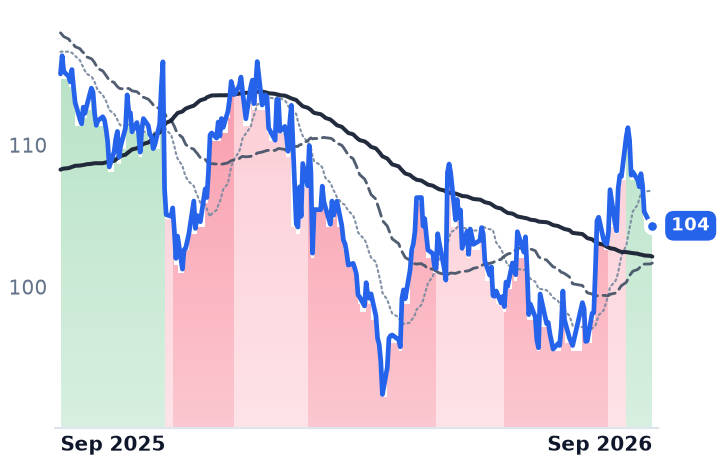
12-month price & trend
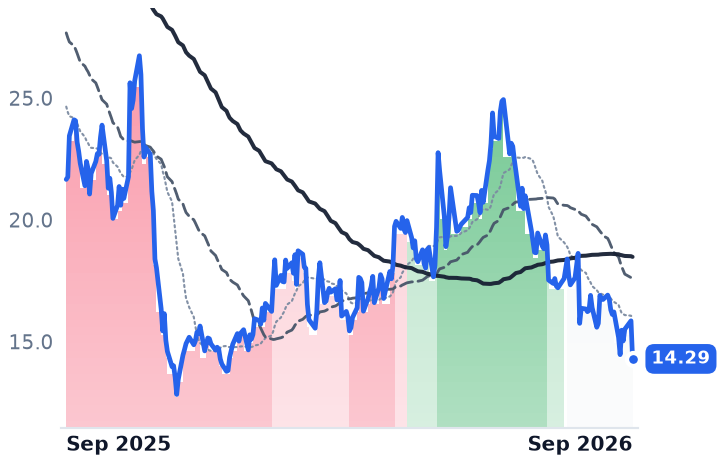
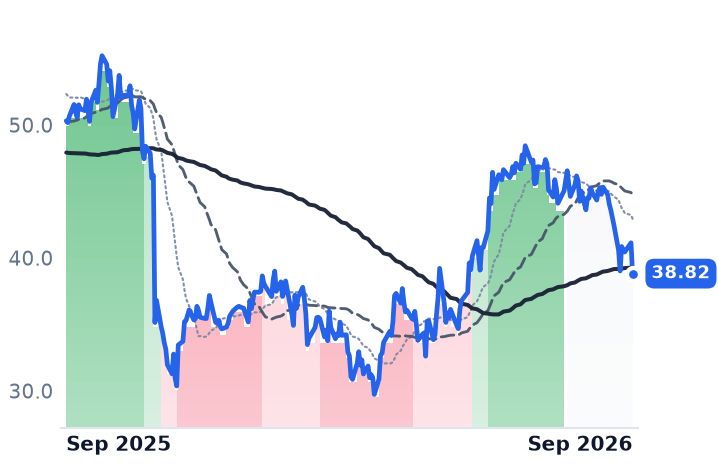
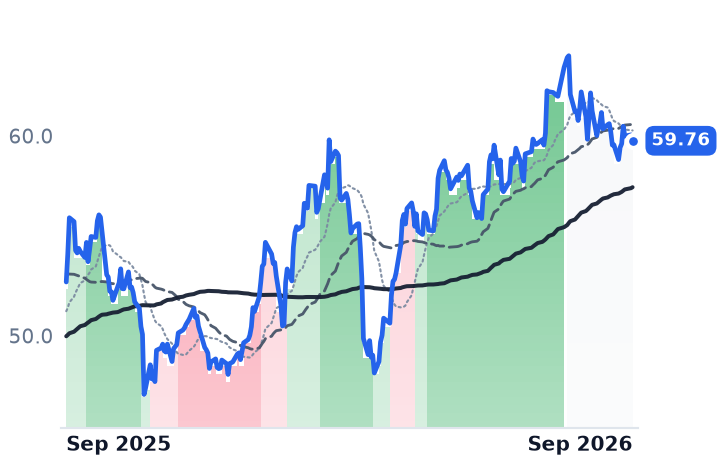
| Ticker | Mkt cap | P/E | P/E fwd | P/S | P/S fwd | P/GP | P/GP fwd | EV/EBITDA | FCF yld |
|---|---|---|---|---|---|---|---|---|---|
FUN | $1.5B | n/m | — | 0.5x | 0.5x | 1.5x | 1.4x | n/m | 10.3% |
PRKS | $1.8B | 15.4x | 13.0x | 1.1x | 1.1x | 1.7x | 1.7x | 8.6x | 14.5% |
EPR | $4.4B | 16.1x | 18.9x | 6.3x | 6.9x | 9.5x | 10.4x | 12.8x | 9.9% |
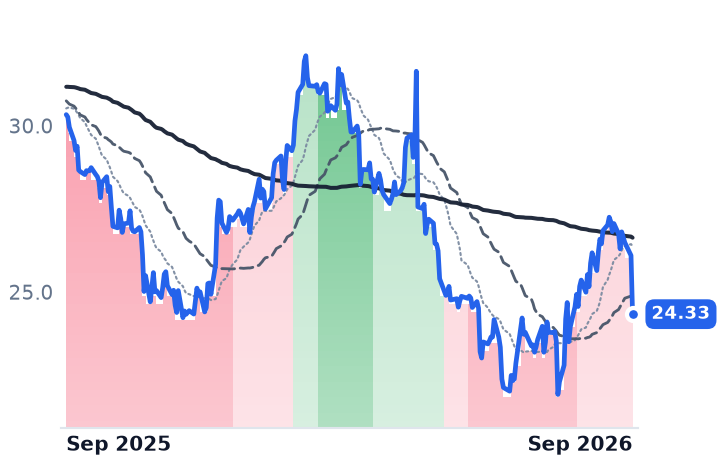
| Ticker | Mkt cap | P/E | P/E fwd | P/S | P/S fwd | P/GP | P/GP fwd | EV/EBITDA | FCF yld |
|---|---|---|---|---|---|---|---|---|---|
CMCSA | $88.4B | 4.8x | 7.0x | 0.7x | 0.7x | 1.1x | 1.2x | 3.9x | 23.1% |
DIS | $178.4B | 16.2x | 15.0x | 1.8x | 1.7x | 4.9x | 4.7x | 10.6x | 4.0% |
Consensus projections
| Ticker | FY2026E | FY2027E | FY2028E | |
|---|---|---|---|---|
FUN | Revenue | −4.7% | +4.0% | +2.2% |
| EPS | −81.3% | −96.4% | −569.7% | |
PRKS | Revenue | −0.2% | +3.0% | +2.7% |
| EPS | −10.4% | +22.6% | +3.4% | |
EPR | Revenue | +7.0% | +3.3% | +6.7% |
| EPS | −2.6% | +5.3% | +5.5% | |
CMCSA | Revenue | −1.6% | −1.3% | +2.5% |
| EPS | −12.7% | +8.2% | +10.1% | |
DIS | Revenue | +7.6% | +4.2% | +4.4% |
| EPS | +16.3% | +9.3% | +11.6% |
Forward fiscal years only. Blank means no analyst coverage for that year.
Six Flags' remaining parks are working better than the share price implies, and that is the problem: the improvement is spoken for before it reaches shareholders. Same-park attendance rose 4% in the June quarter, adjusted earnings before interest, tax, depreciation and amortization rose 7%, and the active pass base grew 6% — while the equity fell 37.9% over twelve months. With about $4.9bn of net debt against a $1.46bn market value, shareholders hold roughly a quarter of the enterprise.
United Parks is the mirror. Revenue slipped 1.4% and adjusted EBITDA fell, yet per-share earnings dropped only 11% because 12.4% of the share count was retired. One operator has been de-rated by its balance sheet; the other by a softening Orlando market and the arithmetic holding up its earnings per share.
An operator that got busier and cheaper
Six Flags Entertainment, which runs amusement and water parks across 17 US states, Canada and Mexico under licences including Looney Tunes and DC Comics, closed the sale of six American parks to the landlord EPR Properties in April, part of a seven-property deal worth about $331m, and directed the cash to debt. The parks it kept then had a better summer than the year before. Same-park attendance rose 4% to 13.1 million visits in the June quarter, the company reported on August 6, and adjusted earnings before interest, tax, depreciation and amortization rose 7% to $243m.
The shares fell 37.9% over the past twelve months regardless, to $14.29. The reason is not at the turnstile. Six Flags ended the quarter with roughly $4.9bn of net debt against a market value near $1.46bn — shareholders own about 23% of the enterprise — and in January it owes an estimated $332.6m to buy the remaining 68.5% limited-partnership stake in Six Flags Over Georgia and two nearby water parks, a price indexed to consumer prices since 1997 and not yet finally fixed.
The meter these companies publish
Neither operator is paid at the gate for most of what it sells. Season passes and memberships are sold at a discount months ahead, booked as deferred revenue, and recognized across the operating season — so the deferred balance, not reported sales, is the forward reading. Six Flags carried $431m of it at June 28, lower on a reported basis after the disposals but up $8m, or 2%, on a same-park basis, which the company attributed to membership and advance sales.
The cost of that pass base shows up in per-capita spending, which slipped 1% to $62.88 same-park. Six Flags said the decline "primarily reflected lower admissions per capita spending associated with expanded season pass benefits and increased cross-park visitation, partially offset by continued strength in guest spending on food, extra-charge attractions and other in-park offerings." Sell the pass cheaper, recover it inside the gate: season-to-date pass sales rose 7% and the pass base 6%.
Where the operating result goes
Below adjusted EBITDA the reported line moved the other way — a $203m net loss against $100m a year earlier, carrying a $38.6m impairment on the Six Flags and Schlitterbahn trade names and a $37.8m loss on the disposal group across the first half. After a $1.6bn loss in fiscal 2025 and leverage above 7x, management now targets about 4x net leverage while spending $400–425m of capital expenditure. Consensus has revenue falling 4.7% this year to $2.91bn with EBITDA of $414m, recovering to $669m in 2027 — enterprise value near 15x the current-year figure and 9.5x next year's, with earnings per share still negative in both. There has been no dividend since July 2024.
United Parks runs the same machine, differently
United Parks & Resorts, the Orlando operator of twelve SeaWorld, Busch Gardens, Aquatica and Sesame Place properties, sells the same passes to a smaller, richer park set: about $32 of adjusted EBITDA per guest last quarter against Six Flags' $18.6. June-quarter revenue fell 1.4% to $483.3m and attendance 2.9% to 6.1 million, with adjusted EBITDA down $10.8m to $195.5m. In-park spending per guest hit a record $39.51, up 5.1%; deferred revenue rose 2% to $211.9m; the paid pass base was down 1%.
The per-share numbers are arithmetic. Net income fell 21% to $63.3m while diluted earnings per share fell only 11%, to $1.29, because 12.4% of the shares were retired — $217.7m of buybacks in the first half, leaving $19m of cash and $658m of liquidity entering peak season, and shareholders' equity negative. Management blames the market and itself: Orlando softened broadly, with Comcast reporting attendance across the market weakening from June and international visitation falling for every operator. "We've had less than stellar execution in our marketing activities this year," chief executive Marc Swanson told investors on the August 4 call. He also argued that "multiple highly credible third parties assign significant value to our real estate that we do not believe is currently reflected in the public market price of our common equity." The shares trade at 12.98x forward earnings against 15.4x trailing, 8.55x trailing enterprise value to EBITDA, on a 14.5% trailing free-cash-flow yield.
What the businesses earn and what they do not
Both stocks rallied into late July and have given the whole move back — Six Flags down 18.8% from its July 27 close, United Parks 13.8%. Neither drop on September 9, when Six Flags fell 9.9% and United Parks 5.6%, maps to any company announcement; the likelier reading is that heavily indebted, drive-to leisure names amplified a day when Brent rose 3.4% to $101.21 and the ten-year Treasury yield reached 4.857%.
Six Flags' de-rating is earned, but by the balance sheet rather than the parks: attendance, passes and deferred revenue all improved same-park, and every dollar of that recovery is committed to lenders and to a January cash call. United Parks is the harder case, because its operating slippage is modest and largely explained by a weak Orlando, while the durability of its earnings per share depends on retiring stock with liquidity that a bad weather season would need.
The next honest reading for each is a date, not a quarter. For Six Flags it is the Georgia payment in January. For United Parks it is Black Friday, when the relaunched 2027 pass goes on sale and the deferred balance either builds or does not.