

La-Z-Boy Wrote 3% Same-Store Order Growth as Arhaus Wrote 12.5% in the Same Quarter
Hypothesis Opus 5 · Research Opus 5 · Writing Opus 5 · Prompt v1.6
La-Z-Boy's most encouraging line last quarter was a legal windfall. Adjusted gross margin widened by 2.9 percentage points in the three months to July 25, and 2.4 of those points came from refunds of tariffs the Supreme Court struck down in February plus pricing — a one-off that has to be claimed entry by entry.
Underneath it the quarter ended in a net loss, wholesale shipments shrank, and retail's double-digit written-order growth was store openings: same-store written orders grew 3%, against Arhaus's 12.5% comparable written growth in the same calendar quarter. MillerKnoll, filed under the same furniture label, is the opposite case — profitable again after a loss year and cheaper on forward earnings, but its consolidated orders fell 6.3% and its backlog is smaller than a year ago.
| Ticker | Company | Segment | Trend · 13mo | 30D | 1Y |
|---|---|---|---|---|---|
| The subject · what this brief is about | |||||
LZB | La-Z-Boy Incorporated | Furniture | 🌱 Emerging Bull | −24.4% | −9.3% |
MLKN | MillerKnoll | Furniture | 🔴 Cont. Bear | −9.4% | +8.5% |
| Compared against · context, not the story | |||||
ARHS | Arhaus | Home Improvement | 🟢 Cont. Bull | −15.2% | −22.0% |
W | Wayfair | Home Furnishings & Decor | ⚠️ Emerging Bear | −7.4% | +14.7% |
MHK | Mohawk Industries | Flooring Products | 🌱 Emerging Bull | −3.6% | −4.9% |
RH | Rh | Home Furnishings & Decor | 🔴 Cont. Bear | −27.6% | −40.2% |
SPY | State Street SPDR S&P 500 ETF Trust | Asset Management | 🟢 Cont. Bull | −1.5% | +18.2% |
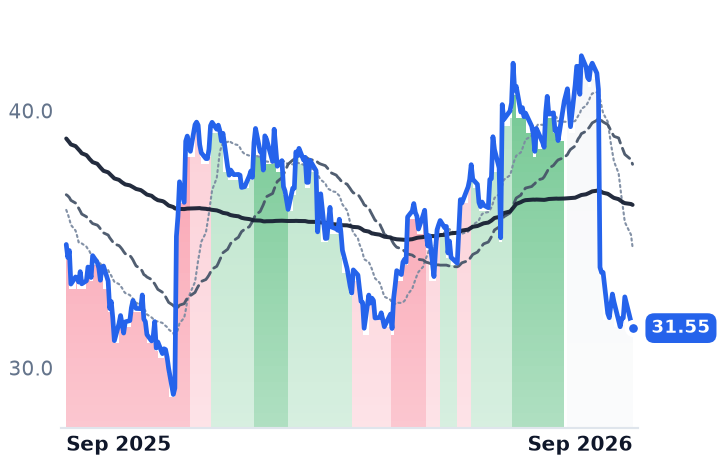
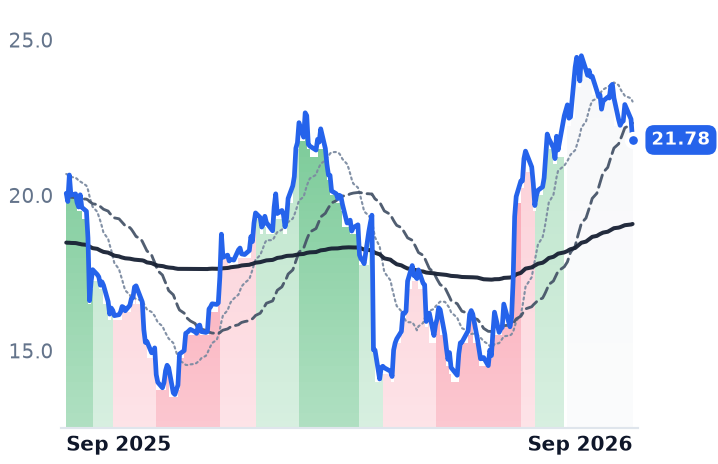
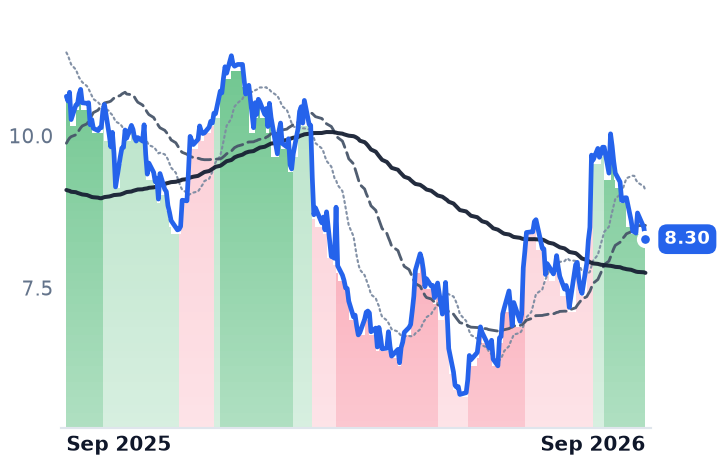
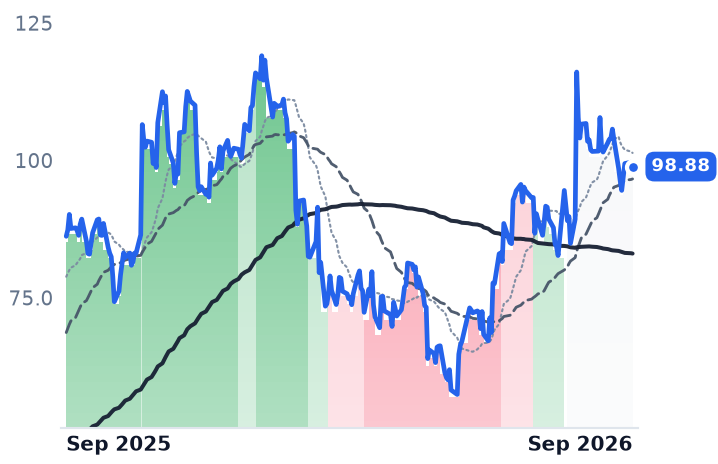
12-month price & trend
| Ticker | Mkt cap | P/E | P/E fwd | P/S | P/S fwd | P/GP | P/GP fwd | EV/EBITDA | FCF yld |
|---|---|---|---|---|---|---|---|---|---|
LZB | $1.3B | 15.9x | 12.6x | 0.6x | 0.6x | 1.4x | 1.4x | 12.2x | 8.2% |
MLKN | $1.5B | 16.5x | 10.8x | 0.4x | 0.4x | 1.0x | 1.0x | 6.7x | 9.3% |
ARHS | $813.9M | 12.5x | 12.1x | 0.6x | 0.6x | 1.5x | 1.5x | 6.8x | 1.7% |
| Ticker | Mkt cap | P/E | P/E fwd | P/S | P/S fwd | P/GP | P/GP fwd | EV/EBITDA | FCF yld |
|---|---|---|---|---|---|---|---|---|---|
W | $7.7B | n/m | 21.3x | 0.6x | 0.6x | 2.0x | 1.9x | 50.1x | 5.9% |
MHK | $5.9B | 14.3x | 11.2x | 0.5x | 0.5x | 2.2x | 2.2x | 4.9x | 12.1% |
RH | $2.3B | 18.5x | 23.4x | 0.7x | 0.6x | 1.5x | 1.5x | 12.5x | 10.8% |
| Ticker | Mkt cap | P/E | P/E fwd | P/S | P/S fwd | P/GP | P/GP fwd | EV/EBITDA | FCF yld |
|---|---|---|---|---|---|---|---|---|---|
SPY | $773.0B | — | — | — | — | — | — | — | — |
Consensus projections
| Ticker | FY2026E | FY2027E | FY2028E | |
|---|---|---|---|---|
LZB | Revenue | +1.4% | −1.7% | +3.5% |
| EPS | −11.7% | −3.2% | +11.8% | |
MLKN | Revenue | +5.2% | +4.7% | +4.7% |
| EPS | +1.7% | +11.0% | +16.5% | |
ARHS | Revenue | +5.8% | +6.4% | +7.7% |
| EPS | +3.0% | +15.2% | +13.8% | |
W | Revenue | +5.8% | +5.8% | +6.3% |
| EPS | +14.1% | +33.2% | +25.3% | |
MHK | Revenue | +1.7% | +3.1% | +3.9% |
| EPS | −3.9% | +15.2% | +15.8% | |
RH | Revenue | +8.5% | +4.3% | +9.3% |
| EPS | +19.8% | −24.0% | +74.2% |
Forward fiscal years only. Blank means no analyst coverage for that year.
La-Z-Boy's best-looking number in the quarter to July 25 was a refund. The Michigan recliner maker, which builds more than 90% of its upholstery in the United States and also owns most of the stores that sell it, reported adjusted gross margin up 2.9 percentage points year over year — and 2.4 of those points came from tariff refunds and pricing, after the Supreme Court ruled in February that the International Emergency Economic Powers Act gives the president no power to impose tariffs of indefinite scope.
That is money back on duties already paid, and it arrives once. Refunds are not automatic: importers must document each entry and generally have 180 days after liquidation to protest to Customs. Set the windfall aside and the quarter reads the way the shares traded — revenue down 3.4% to $475.7m, operating income down 67.3%, and a $2.3m net loss against $18.2m of profit a year earlier. Adjusted selling and administrative costs deleveraged by 3.8 points on retail's fixed-cost base and lower factory volume.
Written orders versus delivered furniture
La-Z-Boy is unusual in reporting orders taken at the point of sale months before they become shipped revenue, which makes it one of the few clean reads on big-ticket discretionary demand. Its press release led on retail written sales up 16%. Almost all of that gap over same-store demand is square footage: the company ended the quarter with 234 company-owned stores out of a roughly 380-store gallery network, having opened four and bought three, and it is targeting 450 locations at about ten a year. "Written same-store sales, which exclude the benefit of new and acquired stores, grew 3% for the quarter, which is also a significant sequential improvement versus fourth quarter," chief executive Melinda Whittington told investors on August 19.
Three percent is the number that matters, and rivals selling into the same July quarter did better: Arhaus reported comparable written sales up 12.5% on record revenue of $385m, and Havertys posted comparable store sales up 8.0% in its fourth straight quarter of written, delivered and comparable growth. The housing turnover under all of them is flat — existing-home sales ran at a 4.06m annual rate in July, 0.7% above a year earlier, with 30-year mortgages near 6.71%. So La-Z-Boy's 3% is share, not weather.
The manufacturing half is worse. Wholesale delivered sales fell 9% to $323m on order patterns management called choppy, and wholesale segment margin slipped to 6.8% from 7.5% while retail's edged up to 6.5%. Joybird, the online-only brand, saw written sales fall 17%. Sum the two segments and $76m of intercompany sales disappear in elimination — roughly a seventh of the gross figure — because the factory sells to its own stores.
The price, and the balance sheet under it
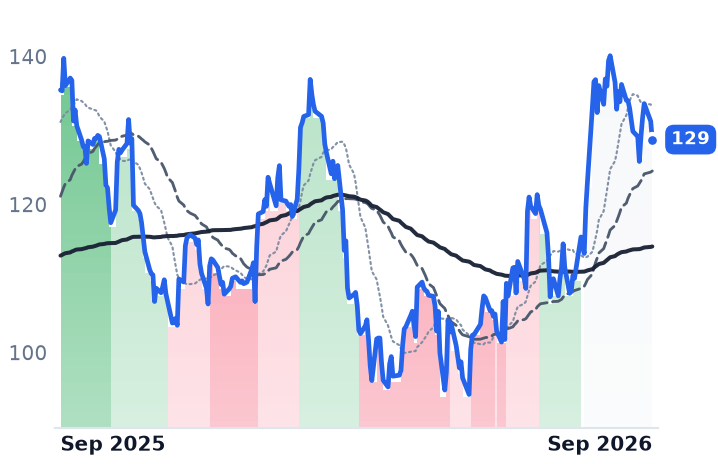
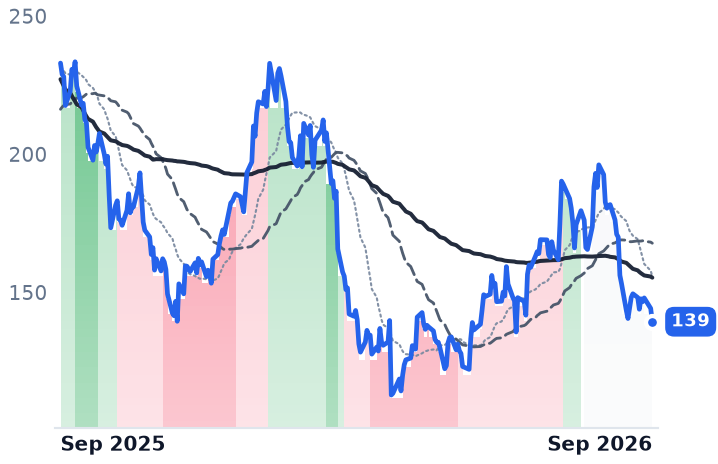
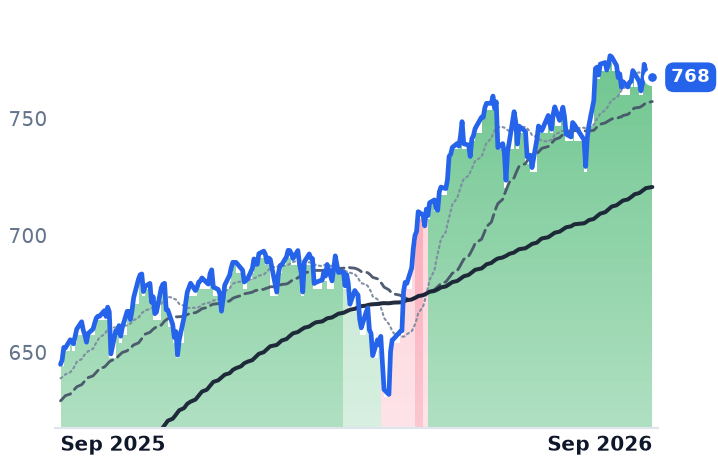
The entire thirty-day decline is one session: the shares fell 16.95% on August 19, from $40.83 to $33.91, on a sales figure that missed forecasts of about $501m. Over three months La-Z-Boy is down 15.5% while Wayfair rose 38.6%, Arhaus 24.3% and Mohawk 20.5% — this is name-specific. At 12.55x forward earnings against 15.85x trailing, the forward figure looks cheaper only because the price fell: consensus fiscal 2027 earnings per share of $2.52 are 3.2% below fiscal 2026's, and annual operating margin has fallen every year since 9.0% in fiscal 2023. The counterweight is real: $267m of cash and no external debt, about a fifth of the $1.26bn market value, and a trailing free-cash-flow yield above 8%.
The office group is not the same trade
The furniture label pairs La-Z-Boy with MillerKnoll, the Herman Miller and Knoll office contract group with a Design Within Reach retail arm, whose shares are up 45% in three months on the opposite fundamental. Fiscal 2026 net income of $91.5m reversed a $36.9m loss, and fourth-quarter revenue rose 4.4%. The order book disagrees: consolidated orders fell 6.3% in the quarter and backlog ended the year at $679m against $761m, though management attributed $55-60m of the shortfall to prior-year North American orders pulled forward ahead of price increases. Net debt sits at 2.8 times EBITDA against a 2.0-2.5x target, and interim chief executive Jeff Stutz — in the job since Andi Owen's retirement on June 30 — has set cost and balance-sheet discipline as the year's priorities. At 10.81x forward earnings with consensus profit up 11%, it is the cheaper of the two on what it is expected to earn.
One of these companies is being repriced for a real deterioration and the other for the absence of one. La-Z-Boy's margin improvement was borrowed from a court, its top-line growth was bought with stores, and its underlying demand is running several points behind listed peers; nothing in the quarter argues the cycle turned. MillerKnoll's profit recovery is genuine and its order book has not yet joined it, which its September 22 first-quarter report will settle one way or the other.
One thing does go La-Z-Boy's way without a courtroom. The 25% duty on imported wood furniture was scheduled to rise this January before the increase was deferred by a year — and when it lands, everyone who ships from overseas pays it and the company that builds at home does not.