

ASUR Closed a $936m Deal for 20 Airports as Cancún's June Traffic Fell 11.5%
Hypothesis Opus 5 · Research Opus 5 · Writing Opus 5 · Prompt v1.6
ASUR bought a second airport portfolio the same season its first one stopped growing. On September 1 it completed the purchase of Motiva's interests in 20 airports across Brazil, Ecuador, Costa Rica and Curaçao — roughly 45 million passengers a year — while Cancún, the terminal that carries its economics, lost passengers for a sixth straight month as US airlines pulled seats off Mexican routes.
The damage is in the margin, not the headcount alone: adjusted EBITDA margin fell 560 basis points to 62% in the second quarter and operating income has declined year over year in each of the last four reported quarters. At 8.0x trailing EV/EBITDA the shares are the cheapest of the three Mexican airport groups — and that multiple counts none of the newly acquired traffic. Grupo Aeroportuario del Pacífico is the mirror image: EBITDA up 8.4% on 5.6% fewer passengers, and its shares fell anyway.
| Ticker | Company | Segment | Trend · 13mo | 30D | 1Y |
|---|---|---|---|---|---|
| The subject · what this brief is about | |||||
ASR | Grupo Aeroportuario del Sureste, S. A. B. de C. V | Airport Operators | ⚠️ Emerging Bear | −5.5% | −24.0% |
PAC | Grupo Aeroportuario del Pacífico, S.A.B. de C.V | Airport Operators | ⚠️ Emerging Bear | −4.4% | −16.8% |
| Compared against · context, not the story | |||||
OMAB | Grupo Aeroportuario del Centro Norte, S.A.B. de C.V | Airport Operators | ⚠️ Emerging Bear | −7.3% | −4.2% |
VLRS | Controladora Vuela Compañía de Aviación, S.A.B. de C.V | Latin American Airlines | ⚠️ Emerging Bear | −14.8% | +14.4% |
EWW | iShares MSCI Mexico ETF | Asset Management - Global | ⚠️ Emerging Bear | −0.7% | +21.7% |
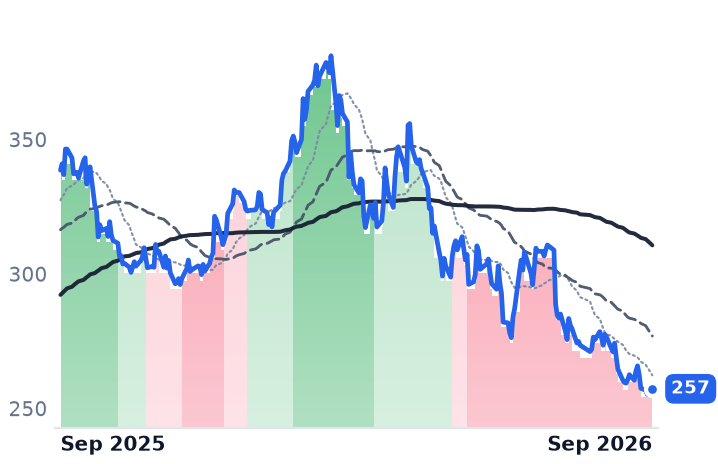
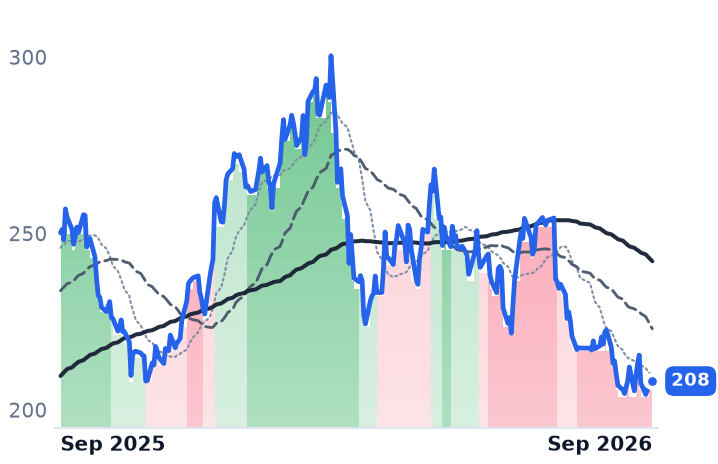
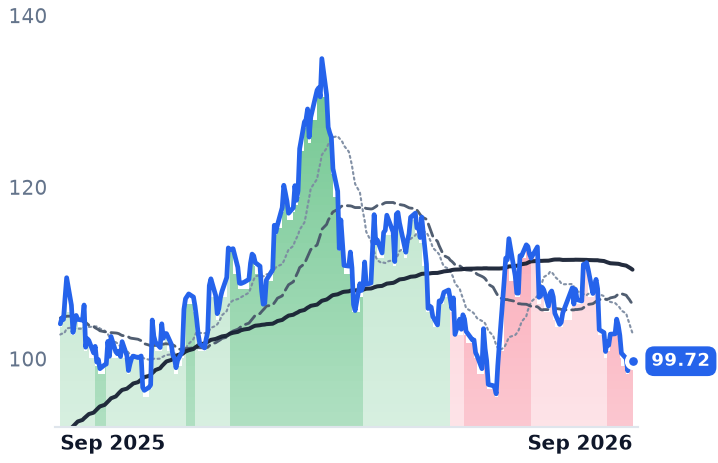
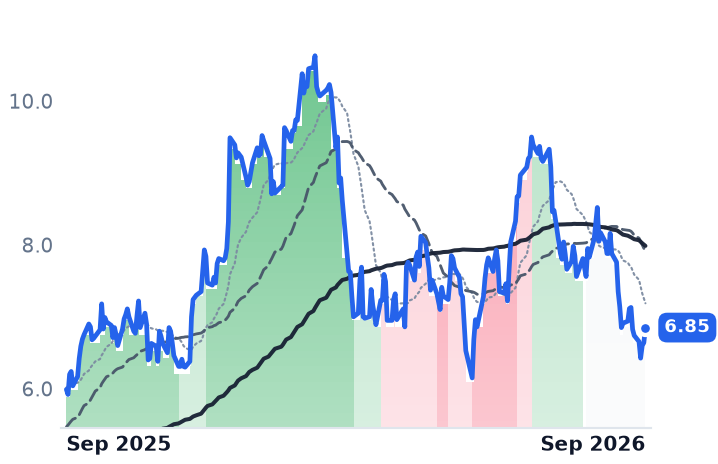
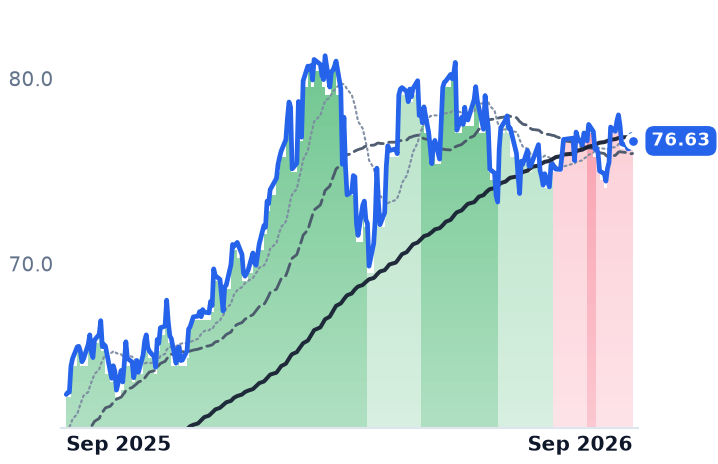
12-month price & trend
| Ticker | Mkt cap | P/E | P/E fwd | P/S | P/S fwd | P/GP | P/GP fwd | EV/EBITDA | FCF yld |
|---|---|---|---|---|---|---|---|---|---|
ASR | $7.7B | 13.3x | — | 3.5x | — | 13.6x | — | 8.0x | 1.2% |
PAC | $10.8B | 17.7x | — | 4.4x | — | 7.9x | — | 10.3x | 2.0% |
OMAB | $4.8B | 15.0x | — | 5.0x | — | 7.4x | — | 9.2x | 6.0% |
| Ticker | Mkt cap | P/E | P/E fwd | P/S | P/S fwd | P/GP | P/GP fwd | EV/EBITDA | FCF yld |
|---|---|---|---|---|---|---|---|---|---|
VLRS | $750.0M | n/m | — | 0.2x | 0.2x | 4.3x | 3.7x | 21.9x | 57.1% |
EWW | $2.0B | — | — | — | — | — | — | — | — |
Consensus projections
| Ticker | FY2026E | FY2027E | FY2028E | |
|---|---|---|---|---|
ASR | Revenue | +8.6% | +13.2% | +5.2% |
| EPS | −2.9% | +16.1% | +8.0% | |
PAC | Revenue | +6.6% | +14.0% | +9.4% |
| EPS | −0.6% | +17.1% | +19.5% | |
OMAB | Revenue | +6.9% | +11.2% | +13.4% |
| EPS | +8.1% | +17.4% | +14.7% | |
VLRS | Revenue | +15.8% | +8.6% | +8.8% |
| EPS | +82.1% | −97.2% | −3701.0% |
Forward fiscal years only. Blank means no analyst coverage for that year.
Grupo Aeroportuario del Sureste, which holds the concessions for nine airports in southeastern Mexico including Cancún, plus San Juan in Puerto Rico and a Colombian cluster around Medellín, closed its acquisition of Motiva's airport interests on September 1. The price was R$5.1bn, about $936m, for 20 airports — 17 in Brazil plus Quito, San José and Curaçao — in what the company calls the largest international expansion in its history.
It bought them at the low point of its own operating cycle. That is the stake: a company whose franchise asset is contracting has just added a portfolio carrying roughly 45 million passengers a year, and none of those airports appear in the earnings the market is currently pricing.
Cancún is losing seats, not visitors
Cancún International handled 2.11 million passengers in June, down 11.5% year over year, with international traffic down 13.1%; first-half volume of 14.76 million was 4.7% below a year earlier. The cause is upstream. US carriers removed more than a million seats from Mexico–US routes for the summer 2026 season, with Alaska Airlines cutting about 240,000 over the past year, American more than 170,000, and Spirit Airlines' bankruptcy taking roughly 260,000 transborder seats out altogether.
"The summer is lost, and we are expecting the recuperation process up to the end of the summer season," chief executive Adolfo Castro told investors on the July 24 call. "Winter season, we see a better outlook, and I would say more seats, more offered seats than what we had last year."
The margin problem is structural
Second-quarter adjusted EBITDA margin fell 560 basis points to 62%, with Mexican EBITDA down 9% and Puerto Rico down 17%. Administrative expenses rose about 30% and medical insurance costs 39% on Mexican tax reform, both described as recurring. Sitting underneath all of it is the federal concession fee on gross revenue, raised from 5% to 9% in January 2024 — a permanent subtraction no traffic recovery reverses. Operating income has fallen year over year for four consecutive quarters.
The commercial annuity is thinning too. Group commercial revenue per passenger rose 13% to MXN 153, but only because a newly consolidated US concessions business joined the numerator; Mexico's figure fell to Ps.145.7. Castro was blunt about what was added: "Today's EBITDA margin in the U.S. operations is around 9%… It is a completely different business in comparison with what we have in Mexico, Puerto Rico, and Colombia."
What the discount measures
ASUR trades at 8.02x trailing EV/EBITDA against OMA at 9.20x and GAP at 10.25x, with the shares at 257.33 against a twelve-month range of 255.23 to 381.16. JPMorgan cut the stock to Underweight on weak traffic, trimming its target to MXN 615 while acknowledging the 14% discount to peers. Cash generation is not the complaint: first-half operating cash flow of MXN 7.3bn was up 21%, net debt is 0.9x EBITDA, and two extraordinary dividends of MXN 10 a share are proposed for November 24 and December 15.
Grupo Aeroportuario del Pacífico, which runs twelve Mexican airports including Guadalajara and Tijuana, is the same regulator and the opposite result. "Passengers traffic declined by 5.6%… EBITDA grew by 8.4%, and EBITDA margin expanded by 230 basis points to 69.3%," chief executive Raúl Revuelta said of the second quarter, with non-aeronautical revenue up 23.9% on parking, advertising and the Cross Border Xpress bridge it operates itself. August traffic rose 0.5%, with Guadalajara up 10.5%. Its shares still fell 15.7% over twelve months, and its trailing free-cash-flow yield is 2.01% against OMA's 6.00% — the arithmetic of a MX$52bn 2025–2029 build program, close to MX$19bn of it at Guadalajara, that consumes cash years before the regulated tariff recovers it.
So the two names fell together for unrelated reasons, and the common explanations do not survive. It is not the Mexican market: the iShares MSCI Mexico ETF rose 21.5% over the same twelve months in which ASUR fell 23.3%. It is not translation either — the peso closed at 16.87 per dollar on September 4, up roughly a fifth since January 2025, which means each peso of earnings converts into more dollars and ASUR's decline understates the local de-rating. ASUR's discount is earned by a real margin break at Cancún and San Juan. GAP's is a cash-flow timing charge on a build it has committed to.
What is unexplained is the denominator. The multiple the market is marking ASUR down on reflects a company of nine Mexican airports, one Puerto Rican and a Colombian cluster. Since September 1 it has been something else, and management has told investors to expect "business as usual" from the new airports — no significant synergies, no partial divestment. Cancún's Terminal 1 opens in the fourth quarter. The next monthly traffic release will say whether Castro's lost summer ended when he said it would.