

Upstart's August Loan Volume Rose 57% With Its Default Index Stuck at 1.50
Hypothesis Opus 5 · Research Opus 5 · Writing Opus 5 · Prompt v1.6
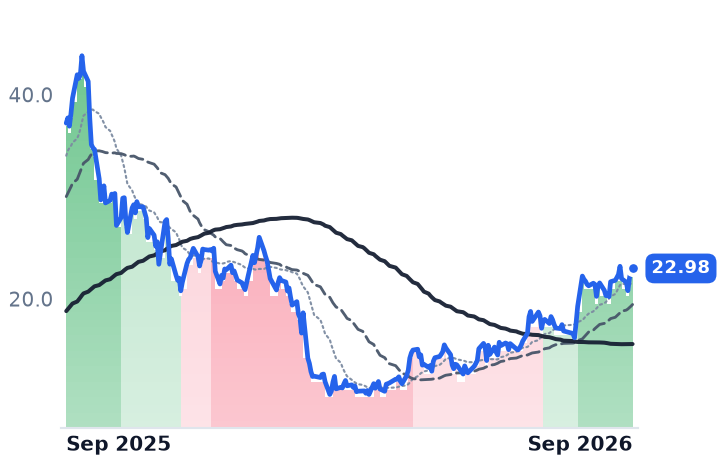
Upstart placed $1.34bn of loans in August, its fastest year-over-year growth of 2026, and the shares still sit 58% below where they traded a year ago. The company keeps almost none of that paper — loans on its own balance sheet were $1.06bn at the end of June, 5.9% of outstandings — so the monthly volume figure is a direct readout on what banks and institutional buyers are willing to fund.
The credit line beneath it did not improve. Upstart's Macro Index held at 1.50 for a second reading, meaning defaults are running roughly half again above a normal-economy baseline. Affirm shows the mirror image: funding costs down 1.26 percentage points to 5.8% in fiscal 2026, revenue less transaction costs at 4.2% of volume, and $9.56bn of loans held for investment carrying the rate risk directly.
Neither disclosure explains the selling in both names last month. The long end of the Treasury curve is the likelier culprit.
| Ticker | Company | Segment | Trend · 13mo | 30D | 1Y |
|---|---|---|---|---|---|
| The subject · what this brief is about | |||||
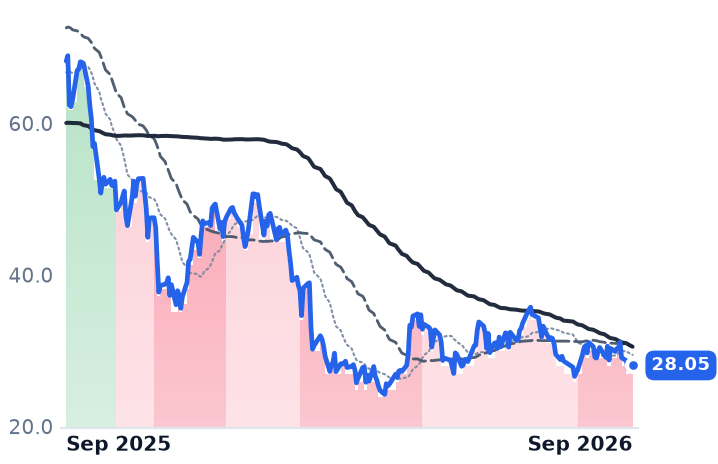
UPST | Upstart | Digital Payments & Fintech Platforms | 🔴 Cont. Bear | −9.8% | −58.9% |
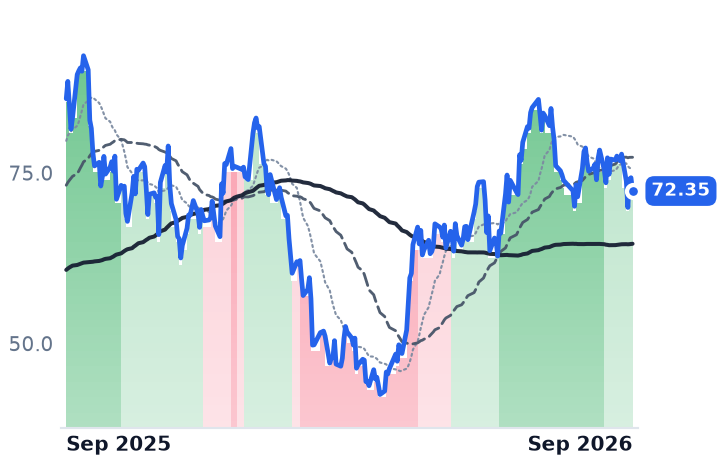
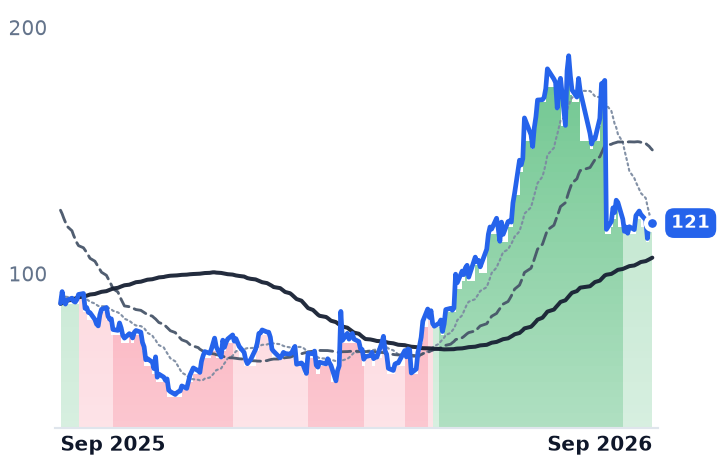
AFRM | Affirm | Consumer Fintech & Lending | 🌱 Emerging Bull | −3.9% | −15.8% |
| Compared against · context, not the story | |||||
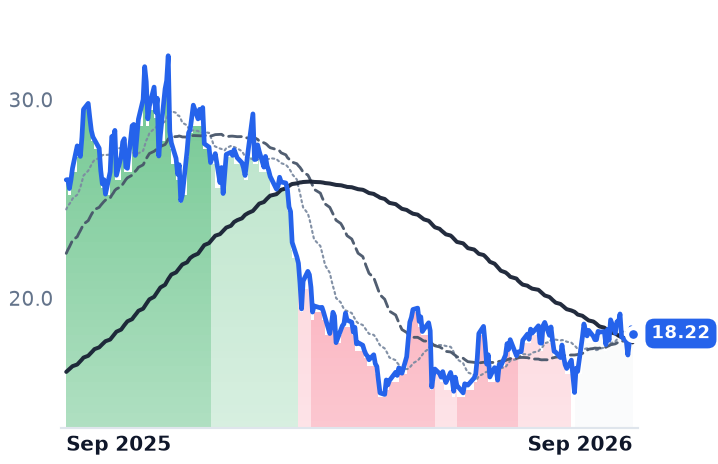
SOFI | SoFi Technologies | Digital Payments & Fintech Platforms | ⚠️ Emerging Bear | −0.9% | −29.8% |
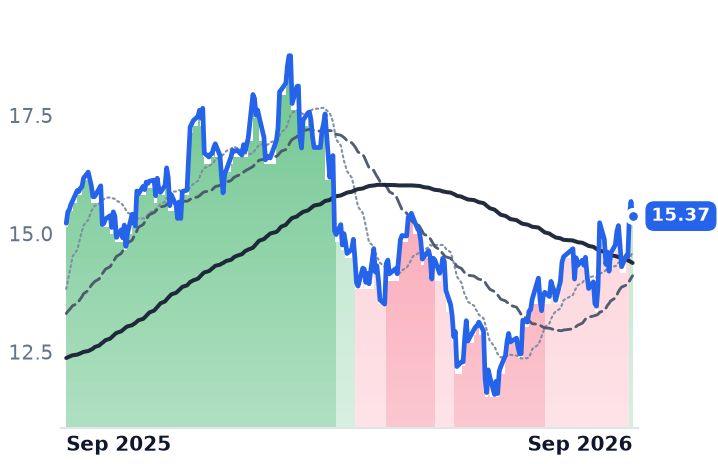
NU | Nu | Emerging Markets & Specialized Banking | ⚠️ Emerging Bear | +11.1% | +1.0% |
PGY | Pagaya Technologies | Fintech Data & AI | 🌱 Emerging Bull | +8.0% | −38.2% |
SEZL | Sezzle | Digital Payments & Fintech Platforms | 🌱 Emerging Bull | +2.2% | +37.0% |
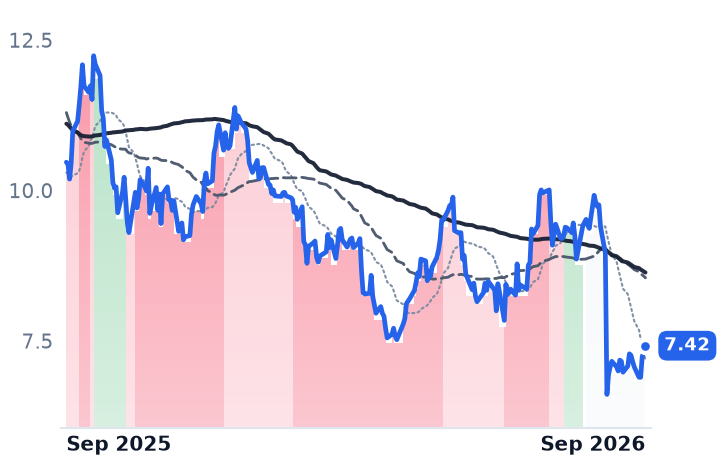
OPFI | OppFi | Fintech & Digital Finance | 🔴 Cont. Bear | −21.1% | −29.1% |
ENVA | Enova International | Other | 🟢 Cont. Bull | −8.7% | +94.8% |
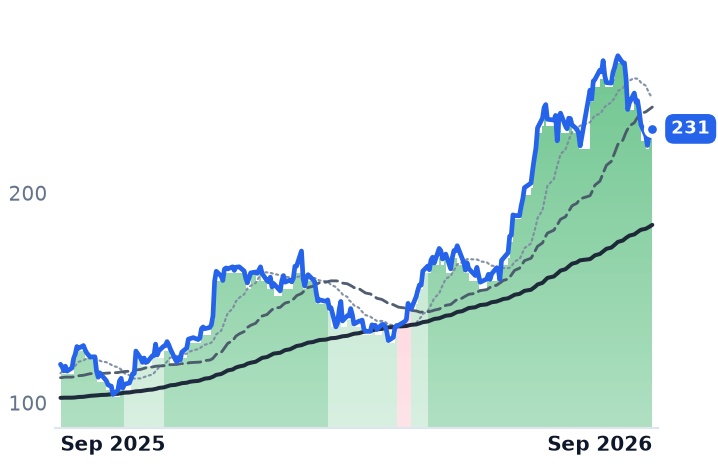
DAVE | Dave | Fintech & Digital Finance | 🟢 Cont. Bull | +19.7% | +95.0% |
HOOD | Robinhood Markets | Retail & Digital Brokerage | 🟢 Cont. Bull | +30.9% | +4.1% |
BILL | Bill.com | Fintech & Digital Finance | 🌱 Emerging Bull | +2.4% | −2.1% |
SCHW | The Charles Schwab | Wealth Management & Advisory | 🟢 Cont. Bull | +1.6% | +18.1% |
PYPL | PayPal | Digital Payments & Fintech Platforms | 🔴 Cont. Bear | −7.0% | −19.2% |
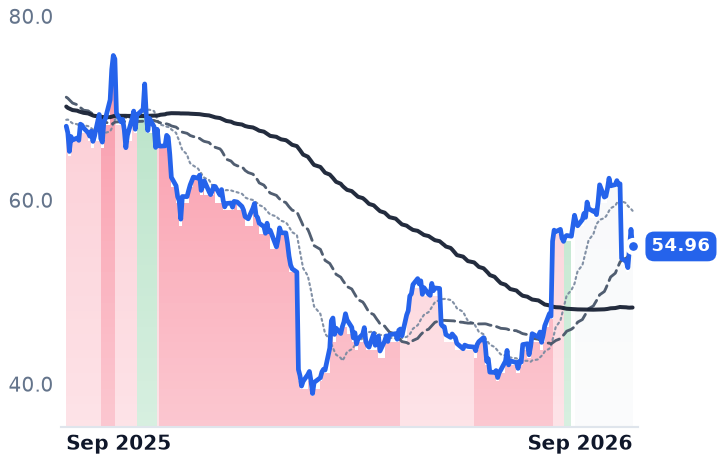
12-month price & trend
| Ticker | Mkt cap | P/E | P/E fwd | P/S | P/S fwd | P/GP | P/GP fwd | EV/EBITDA | FCF yld |
|---|---|---|---|---|---|---|---|---|---|
UPST | $2.7B | 45.1x | 40.2x | 2.1x | 1.9x | 2.2x | 2.0x | 48.8x | -11.1% |
AFRM | $24.2B | 12.7x | 36.7x | 5.8x | 4.4x | 8.5x | 6.5x | 25.3x | 4.1% |
SOFI | $20.0B | 34.5x | 26.0x | 3.9x | 4.3x | 5.1x | 5.6x | 20.4x | -12.6% |
| Ticker | Mkt cap | P/E | P/E fwd | P/S | P/S fwd | P/GP | P/GP fwd | EV/EBITDA | FCF yld |
|---|---|---|---|---|---|---|---|---|---|
NU | $58.9B | 18.6x | 14.0x | 3.4x | 2.7x | 7.7x | 6.2x | 21.4x | 6.4% |
PGY | $1.1B | 12.2x | 9.9x | 0.9x | 0.8x | 2.1x | 1.8x | 9.4x | 20.9% |
SEZL | $3.3B | 22.5x | 19.4x | 6.9x | 5.6x | 7.8x | 6.3x | 17.3x | 7.2% |
| Ticker | Mkt cap | P/E | P/E fwd | P/S | P/S fwd | P/GP | P/GP fwd | EV/EBITDA | FCF yld |
|---|---|---|---|---|---|---|---|---|---|
OPFI | $611.4M | 2.1x | 5.1x | 1.1x | 1.0x | 1.0x | 0.9x | 7.0x | 63.6% |
ENVA | $4.1B | 12.5x | 10.0x | 1.2x | 1.1x | 1.9x | 1.7x | 13.7x | 45.5% |
DAVE | $4.6B | 20.6x | 25.2x | 7.1x | 6.3x | 8.6x | 7.6x | 15.8x | 7.1% |
| Ticker | Mkt cap | P/E | P/E fwd | P/S | P/S fwd | P/GP | P/GP fwd | EV/EBITDA | FCF yld |
|---|---|---|---|---|---|---|---|---|---|
HOOD | $69.5B | 36.6x | 42.0x | 15.1x | 13.9x | 18.3x | 16.9x | 29.0x | 3.1% |
BILL | $5.0B | n/m | 13.4x | 3.0x | 2.7x | 3.8x | 3.5x | 58.7x | 9.6% |
SCHW | $158.1B | 16.8x | 15.1x | 5.6x | 5.9x | 6.5x | 6.9x | 10.4x | 6.2% |
| Ticker | Mkt cap | P/E | P/E fwd | P/S | P/S fwd | P/GP | P/GP fwd | EV/EBITDA | FCF yld |
|---|---|---|---|---|---|---|---|---|---|
PYPL | $39.2B | 8.0x | 8.4x | 1.2x | 1.1x | 2.5x | 2.5x | 5.8x | 14.1% |
Consensus projections
| Ticker | FY2026E | FY2027E | FY2028E | |
|---|---|---|---|---|
UPST | Revenue | +37.1% | +30.9% | +28.7% |
| EPS | −58.2% | +163.5% | +60.1% | |
AFRM | Revenue | +32.0% | +30.3% | +24.7% |
| EPS | +2220.4% | +59.0% | +45.6% | |
SOFI | Revenue | +31.3% | +22.3% | +23.6% |
| EPS | +64.3% | +34.3% | +26.0% | |
NU | Revenue | +54.4% | +21.7% | +14.0% |
| EPS | +42.6% | +32.7% | +26.4% | |
PGY | Revenue | +11.8% | +13.4% | +11.9% |
| EPS | +53.5% | +38.6% | +48.1% | |
SEZL | Revenue | +32.4% | +27.0% | — |
| EPS | +51.5% | +27.4% | — | |
OPFI | Revenue | +2.5% | +16.8% | +30.3% |
| EPS | −10.2% | +35.6% | +38.4% | |
ENVA | Revenue | +19.9% | +17.3% | +25.1% |
| EPS | +28.4% | +21.5% | +32.5% | |
DAVE | Revenue | +32.5% | +21.9% | +27.1% |
| EPS | +8.9% | +46.5% | +38.8% | |
HOOD | Revenue | +9.9% | +22.8% | +15.3% |
| EPS | −9.8% | +37.0% | +18.0% | |
BILL | Revenue | +13.2% | +11.3% | +10.5% |
| EPS | +26.1% | +41.5% | +17.6% | |
SCHW | Revenue | +11.6% | +10.0% | +9.3% |
| EPS | +23.5% | +17.5% | +15.9% | |
PYPL | Revenue | +3.2% | +4.1% | +4.4% |
| EPS | −1.0% | +8.6% | +9.0% |
Forward fiscal years only. Blank means no analyst coverage for that year.
Upstart disclosed on September 3 that it originated $1,342.1m of loans in August, up 57% year over year across 26.5 origination days. That is an acceleration on two fronts: the June quarter ran 50% growth, and July — the figure management cited on the August 4 call — ran 34%. The same release held the Upstart Macro Index at 1.50, unchanged from the August reading.
Those two numbers are the whole business in miniature. Upstart, which runs an artificial-intelligence underwriting platform for personal, auto and home loans and employs 1,405 people under co-founder and chief executive Paul Gu, is not the lender its industry label implies. It scores a borrower, hands the loan to a bank partner or an institutional buyer, and books a fee. Loans held on its own balance sheet were $1.06bn at June 30, up only 5% year over year and 5.9% of total outstandings — the lowest in about two years. Volume growth of 57% in a month when the company's own default index says losses are running about 50% above a normal-economy baseline means third-party capital is still bidding, at a price it finds acceptable.
The capital came in, the credit went sideways
Upstart has signed $10.8bn of incremental committed capacity so far this year, including three deals worth $5bn since the May call, and completed a $569m securitization it describes as its largest since 2021 and priced at the tightest spreads in three years. Its institutional capital partners have renewed at 100% since 2023. June-quarter revenue grew 42% to $377.2m on a 96.7% gross margin, with conversion rising to 19.7% from 18.5% and 91% of loans fully automated.
"We grew, our credit performed, and we expanded margins. We didn't have to trade one for another," Gu told investors on August 4. The caveat sits in the index he publishes himself: 1.50 in September against 1.50 in August and 1.49 on July 8 — flat at an elevated level, below the 2024 peak of 1.68 but above 1.0 continuously since early 2022. Separately, Upstart won conditional approval from the Office of the Comptroller of the Currency on July 23 to build a national bank, targeted for early 2027; management says it does not change the third-party funding strategy.
Affirm carries the rate risk on its own books
Affirm, the point-of-sale installment platform run by Max Levchin, bills the same consumer through a different meter and keeps the paper. Its June quarter put gross merchandise volume up 36% to $14.1bn and revenue less transaction costs up 39% to $589m, or 4.2% of volume — the take rate expanded. The engine was funding: costs fell 126 basis points to 5.8% in fiscal 2026, and chief financial officer Rob O'Hare guided fiscal 2027 take rates broadly consistent with fiscal 2026 on a similar funding mix. "Fiscal fourth quarter was our most profitable quarter ever, even without the tax allowance release," Levchin said on the August 27 call. Operating margin reached 24.3% against 6.6% a year earlier.
The exposure sits in the balance sheet: loans held for investment of $9.56bn against $7.03bn a year earlier, with funding debt doubled to $3.3bn. Thirty-day delinquencies on monthly installment loans were 2.5%, against 2.7% to 2.8% in the prior three quarters, with 44% of receivables non-prime. SoFi's deposit-funded personal-loan book tells the same story from the other side — net charge-offs of 3.7%, down 70 basis points sequentially excluding delinquent loan sales.
What the month's selling was actually about
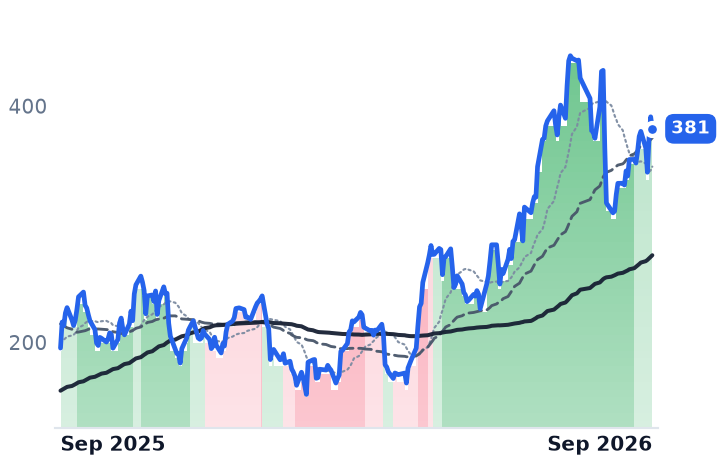
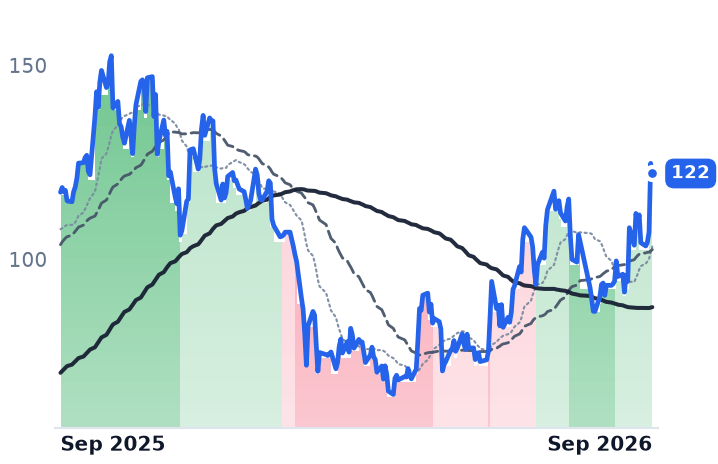
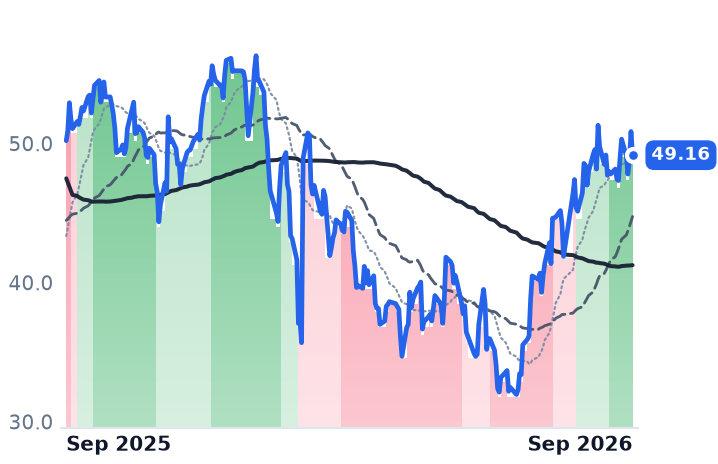
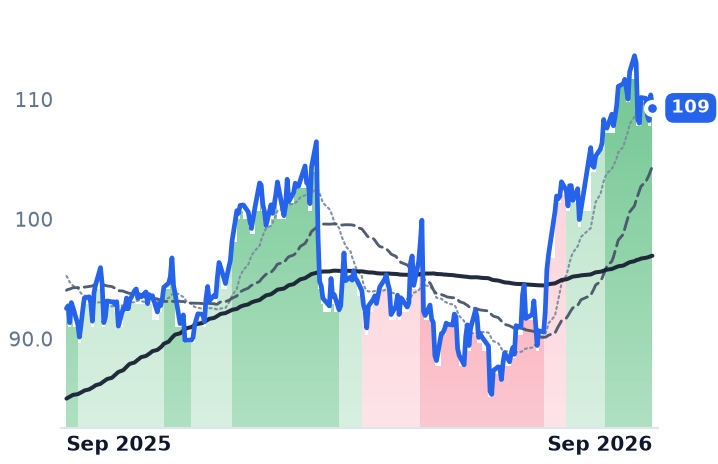
Both stocks fell roughly 8% over the thirty days to September 4 — Affirm from $78.66 to $72.35, Upstart from $30.68 to $28.05 — while sell-side targets on Affirm went up and Mizuho initiated coverage with a Buy on September 3. Affirm's sharpest leg, a 10.1% slide from $77.76 on August 28 to $69.94 on September 1, began the day long-dated yields hit one-year highs and came with no company news attached.
The hypothesis that these shares are riding easing money has it backwards. The Federal Reserve has not cut in 2026, holding at 3.50–3.75% into the September 16 meeting, and the 30-year Treasury yield eased only to 5.25% on September 4 after touching 5.34% in mid-August, its highest since 2007. The Treasury will double its long-end buyback operations to at least $4bn from September 9. The funding curve moved against these companies during the drawdown, not for them.
So the verdict splits. Affirm's advance over three months is earned — gross profit stepped up faster than the share price, taking price to trailing gross profit from roughly 9.63x in mid-August to 8.50x now, with 6.49x forward against 30% consensus revenue growth for fiscal 2027. Upstart's 2.19x trailing and 1.98x forward on the same measure is about a quarter of Affirm's, on similar expected growth, and nothing in the August print justifies it; the honest offset is that at 40.2x forward earnings on consensus of $0.70 a share for this year, and a trailing free-cash-flow yield of −11.1% because loan purchases run through operating cash flow, the cheapness only exists on one lens. Affirm's trailing price-to-earnings of 12.7x is unusable — fiscal 2026 net income of $1.93bn contains a one-off deferred-tax valuation-allowance release.
The monthly disclosure is the rare piece of financial reporting that arrives before the quarter is written. Early October brings the September figure, and it will say whether the buyers who absorbed $1.34bn of Upstart paper in August still want it with the long bond above 5%.