

Universal Display's Emitter Sales Fell 26% Even as Gen 8.6 OLED Lines Went Live
Hypothesis Opus 5 · Research Opus 5 · Writing Opus 5 · Prompt v1.6
Universal Display gets paid twice on every OLED panel — a running royalty, and a per-gram sale of the emitter chemistry that goes into it — and in the June quarter the two meters pointed opposite ways. Material sales fell to $66m while royalty and license fees rose 6.6% to $81m, flattered by roughly $10m of cumulative catch-up adjustments booked across the first half. Headline revenue fell 11.4% to $152.2m, so the underlying volume decline is worse than the top line shows.
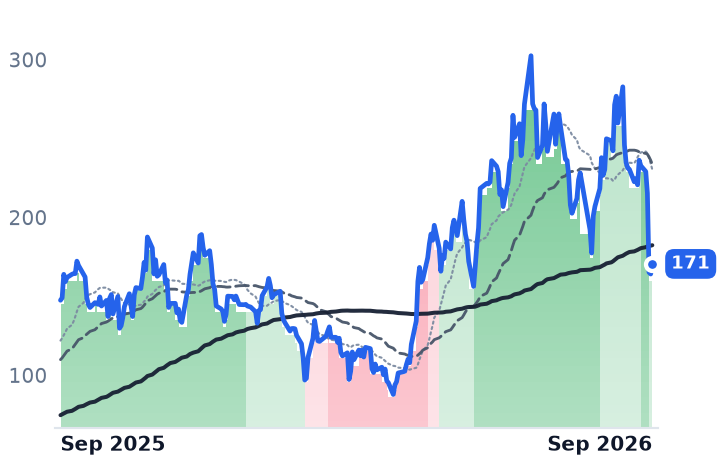
The cause is not price: management says five-year contracts hold selling prices steady, and volume and mix did the damage as memory-cost inflation from AI data centers raised phone bills of materials. Full-year revenue was guided to the low end of $630–670m. At 19.84x trailing and 19.67x forward earnings, the shares price essentially zero earnings growth — a de-rating the business, for now, earns.
| Ticker | Company | Segment | Trend · 13mo | 30D | 1Y |
|---|---|---|---|---|---|
| The subject · what this brief is about | |||||
OLED | Universal Display | Display & Optical Materials | 🔴 Cont. Bear | −9.7% | −42.7% |
GLW | Corning | Display & Optical Materials | 🟢 Cont. Bull | −6.9% | +115.0% |
LPTH | LightPath Technologies | Display & Optical Materials | ⚠️ Emerging Bear | −26.0% | +82.1% |
| Compared against · context, not the story | |||||
APH | Amphenol | Connectors & Interconnect Systems | 🟢 Cont. Bull | −51.1% | −24.7% |
CRDO | Credo Technology | Optical Transport & Switching | 🟢 Cont. Bull | −31.7% | +15.6% |
AAOI | Applied Optoelectronics | RF & Wireless | ⚠️ Emerging Bear | −22.2% | +346.6% |
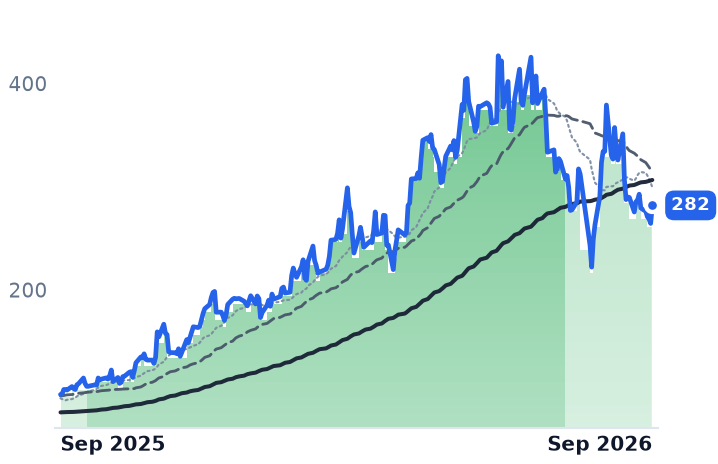
COHR | Coherent | Instrumentation & Test Equipment | 🟢 Cont. Bull | −25.7% | +185.7% |
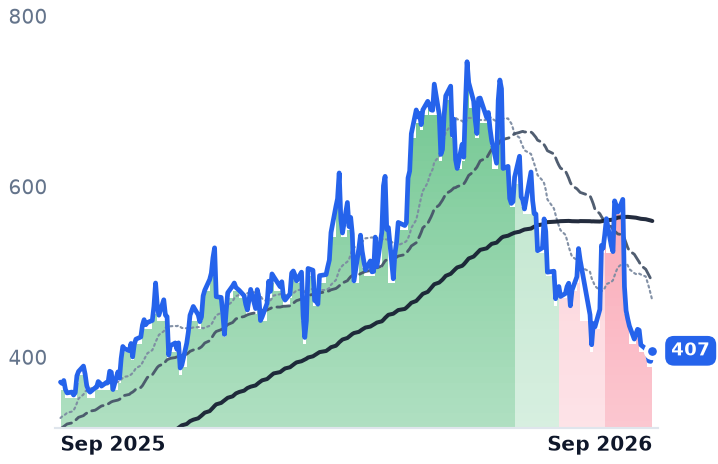
FN | Fabrinet | Specialty Manufacturing & Components | ⚠️ Emerging Bear | −27.6% | +9.9% |
LITE | Lumentum | Optical Transport & Switching | 🟢 Cont. Bull | −1.0% | +489.9% |
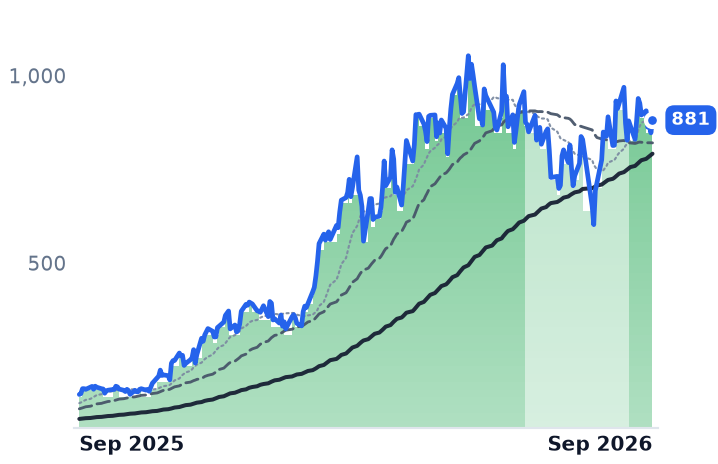
12-month price & trend
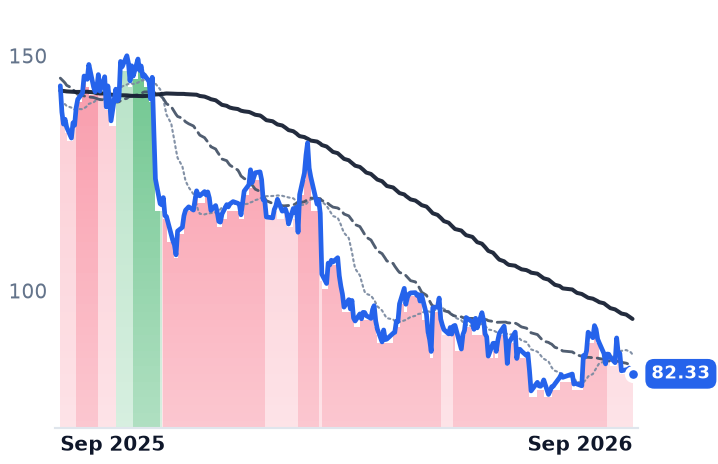
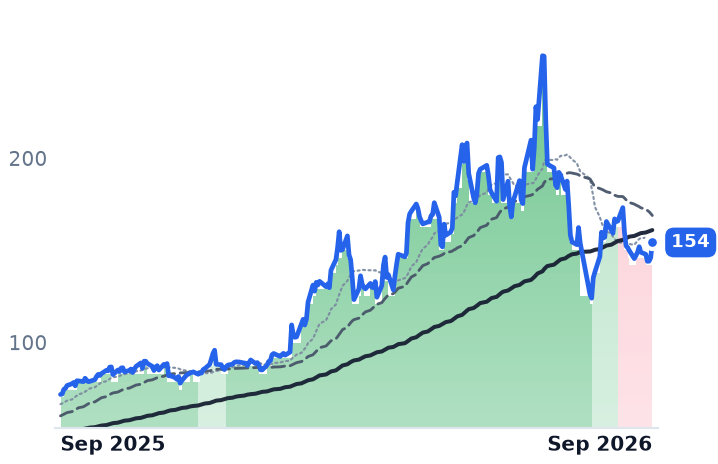
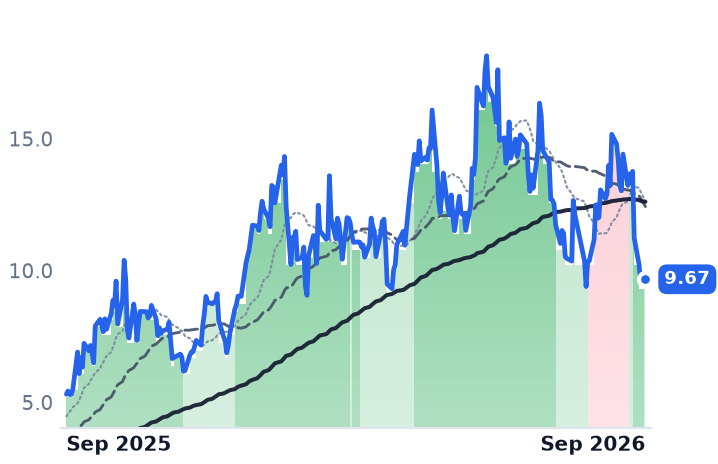
| Ticker | Mkt cap | P/E | P/E fwd | P/S | P/S fwd | P/GP | P/GP fwd | EV/EBITDA | FCF yld |
|---|---|---|---|---|---|---|---|---|---|
OLED | $3.8B | 19.8x | 19.7x | 6.2x | 6.0x | 8.3x | 8.0x | 14.3x | 4.5% |
GLW | $132.9B | 69.8x | 47.1x | 7.8x | 6.9x | 21.6x | 19.1x | 35.8x | 1.8% |
LPTH | $607.2M | n/m | 439.5x | 9.7x | 5.9x | 30.1x | 18.2x | n/m | -1.7% |
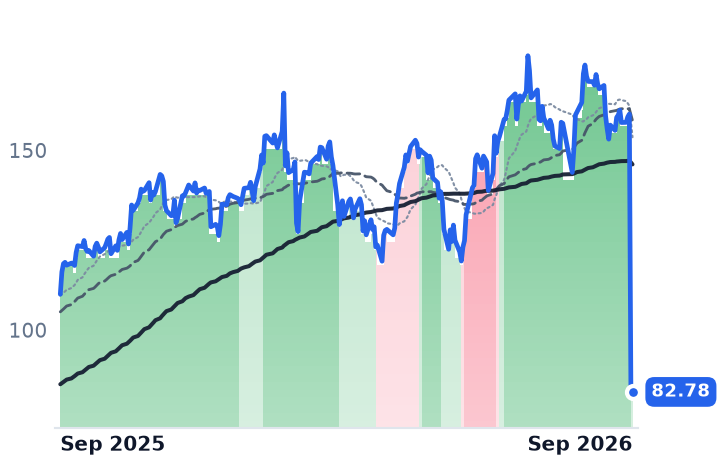
| Ticker | Mkt cap | P/E | P/E fwd | P/S | P/S fwd | P/GP | P/GP fwd | EV/EBITDA | FCF yld |
|---|---|---|---|---|---|---|---|---|---|
APH | $192.7B | 37.2x | 29.7x | 6.6x | 5.5x | 17.3x | 14.2x | 22.1x | 2.4% |
CRDO | $43.0B | 88.0x | 37.3x | 32.2x | 17.5x | 47.3x | 25.7x | 82.0x | 0.9% |
AAOI | $9.1B | n/m | 153.1x | 15.3x | 8.7x | 52.7x | 30.0x | n/m | -4.5% |
| Ticker | Mkt cap | P/E | P/E fwd | P/S | P/S fwd | P/GP | P/GP fwd | EV/EBITDA | FCF yld |
|---|---|---|---|---|---|---|---|---|---|
COHR | $57.6B | 67.7x | 31.2x | 8.1x | 5.4x | 21.6x | 14.5x | 38.5x | -1.8% |
FN | $15.6B | 33.1x | 24.0x | 3.4x | 2.6x | 28.1x | 21.4x | 27.6x | 0.0% |
LITE | $74.4B | n/m | 44.5x | 24.7x | 12.0x | 59.2x | 28.7x | n/m | 0.7% |
Consensus projections
| Ticker | FY2026E | FY2027E | FY2028E | |
|---|---|---|---|---|
OLED | Revenue | −3.2% | +7.7% | +11.9% |
| EPS | −15.3% | +12.5% | +22.1% | |
GLW | Revenue | +17.4% | +18.7% | +21.5% |
| EPS | +29.9% | +31.8% | +37.3% | |
LPTH | Revenue | +91.0% | +45.8% | +34.5% |
| EPS | −0.2% | −109.8% | +2218.2% | |
APH | Revenue | +54.2% | +17.4% | +12.5% |
| EPS | +59.1% | +21.8% | +13.3% | |
CRDO | Revenue | +211.9% | +85.0% | +49.7% |
| EPS | +423.2% | +86.8% | +48.2% | |
AAOI | Revenue | +131.7% | +182.3% | +72.7% |
| EPS | −327.3% | +650.2% | +92.2% | |
COHR | Revenue | +22.1% | +49.9% | +37.5% |
| EPS | +56.5% | +72.3% | +48.9% | |
FN | Revenue | +35.6% | +32.3% | +19.4% |
| EPS | +36.2% | +31.5% | +19.4% | |
LITE | Revenue | +83.9% | +107.3% | +52.3% |
| EPS | +314.0% | +161.3% | +54.6% |
Forward fiscal years only. Blank means no analyst coverage for that year.
Universal Display sells the light-emitting chemistry inside OLED screens and licenses the patents that make them work — roughly 5,500 granted and pending patents, 469 employees, and a customer list that is effectively every large panel maker in Korea and China. It bills two ways: a running royalty on panels manufactured, and a per-gram sale of UniversalPHOLED emitter material. In the June quarter the per-gram meter fell 26% to $66m, with green emitter sales down to $51m from $64m and red to $15m from $24m.
That is the number that matters, because the gram is the unit of actual demand. Royalty and license fees rose 6.6% to $81m, but roughly $10m of that first-half figure was cumulative catch-up adjustment rather than current-period panel output. Reported revenue fell 11.4% to $152.2m — the third decline in four quarters — and the volume story underneath is worse than that.
Not price, and not the fabs
Management was explicit that pricing held: the decline came from lower unit volumes and unfavorable product mix, with long-term five-year customer contracts keeping average selling prices consistent. Nor is the problem a shortage of capacity. Gen 8.6 OLED production is now commercial — Samsung Display and BOE have begun mass production, Visionox and TCL China Star are advancing greenfield builds, and LG Display and Samsung Display are adding Gen 6 lines. Only some of that ramp sits inside 2026 guidance; the company expects material uplift from 2027, when new fabs run full twelve-month periods at higher utilization.
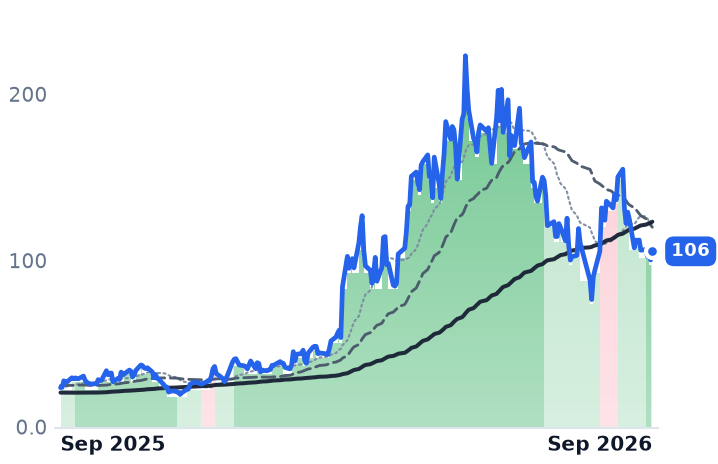
What shrank was the area being manufactured. Counterpoint Research forecasts global OLED panel shipments flat in 2026, down from 3% growth in 2025, with smartphone OLED shipments falling 3% — because memory prices, bid up by AI data-center demand, inflate the bill of materials most sharply in mid-range and entry-level phones. The same buildout that has nearly doubled Corning's AI data-center optical sales is taxing the handset market Universal Display depends on. The offset is information-technology panels: OLED monitor shipments are forecast up 45% in 2026, laptops up 33% and tablets up 13%, and Omdia expects large-area OLED shipments to rise 18.8% to 38.8 million units. Bigger panels carry more emitter per unit, but there are far fewer of them than phones.
"While demand expectations have softened in the near term, we believe the industry's fundamental growth drivers remain firmly intact," chief executive Steven Abramson told investors on the July 30 call. On the one product that would raise content per panel regardless of how many panels ship — phosphorescent blue — he said it "continues to be" among the most important opportunities on the roadmap, while the company said commercialization timing depends on customer roadmaps. LG showcased a tablet-sized hybrid tandem product using phosphorescent blue at SID Display Week; sample sales remain low and customers remain at prototype stage. There is no date.
What the shares now assume
Operating margin compressed to 35.3% from 39.9% a year earlier and net income fell 26.5%, on a gross margin still above 75% — this is a royalty business with a materials cost, so the leverage runs both ways. Full-year revenue was guided to the low end of $630–670m, and consensus has 2026 earnings per share falling 15.3% to $4.19 before recovering to $4.71 in 2027.
The equity, at $3.78bn, trades at 19.84x trailing earnings and 19.67x forward — a gap so narrow it amounts to paying for no growth at all, against roughly 36x forward at the twelve-month high. Free cash flow yields 4.5% trailing, the company holds $855m of cash, returned $238m to shareholders over the past year and repurchased 531,000 shares for $48m in the quarter.
So the de-rating is earned, and this is not a business whose meters kept climbing while the multiple fell. The unresolved part is the timing gap the company itself described: the capacity that would consume more emitter is built and starting to run, while the panel area that generates today's grams is contracting for a reason — memory pricing — that has nothing to do with displays. If phone panel area stops shrinking in 2027, the shares are priced for a recovery no one is paying for. If it does not, the 2027 consensus is the thing that breaks next.
Capacity is a stock; grams are a flow. Universal Display only gets paid for the second, and 2026 is the year the industry built the first and did not fill it.