

Enphase Booked $84.3m of June-Quarter Revenue for Systems Not Installed Until 2028
Hypothesis Opus 5 · Research Opus 5 · Writing Opus 5 · Prompt v1.6
Enphase's demand meter broke by statute, and the company's own disclosures now show how much of its revenue is not current demand at all. US sell-through — installations actually completed — fell 34% year on year in the June quarter, while reported revenue fell 19.6% to $291.9m, the third consecutive decline of roughly that size.
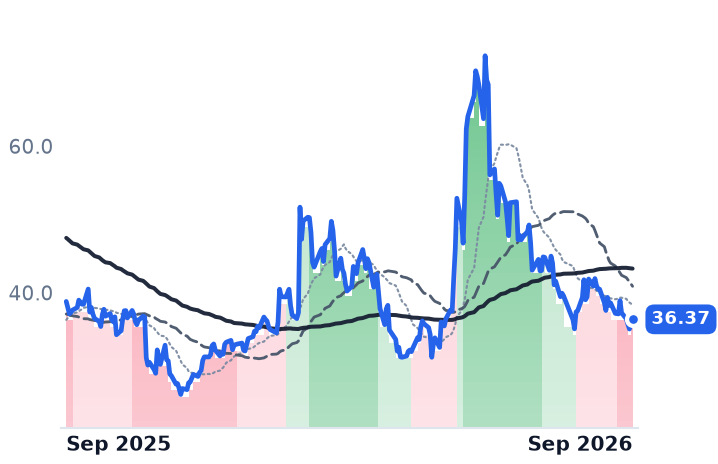
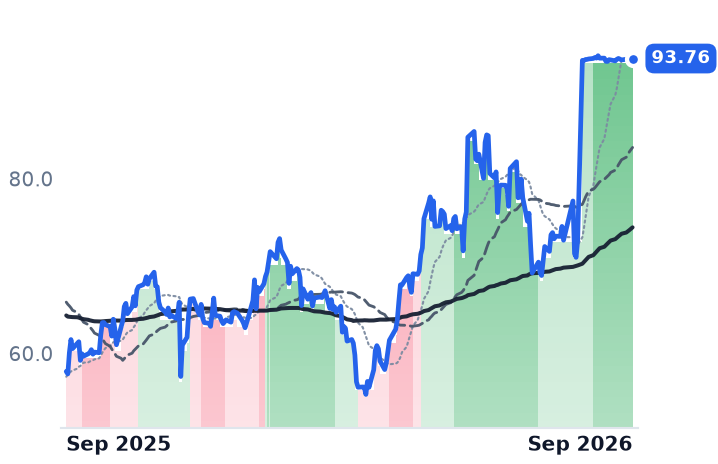
Roughly 29% of that revenue was equipment stockpiled by lease financiers for projects that will not be built for years. Reported profits went the other way, lifted by manufacturing credits and a tariff refund. The share price has followed the business down rather than ahead of it: at 7.71x trailing gross profit against 14.55x in May, with the forward multiple above the trailing one, gross profit is priced to shrink from here.
| Ticker | Company | Segment | Trend · 13mo | 30D | 1Y |
|---|---|---|---|---|---|
| The subject · what this brief is about | |||||
ENPH | Enphase Energy | Inverters & Power Electronics | 🔴 Cont. Bear | −13.1% | −6.3% |
| Compared against · context, not the story | |||||
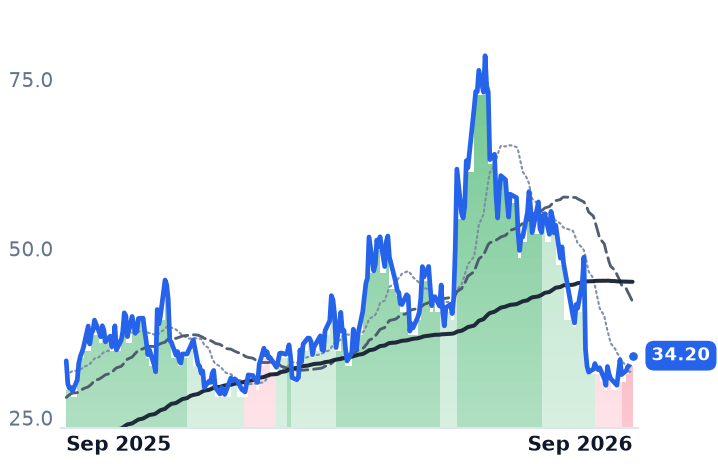
SEDG | SolarEdge Technologies | Inverters & Power Electronics | ⚠️ Emerging Bear | +7.7% | +2.3% |
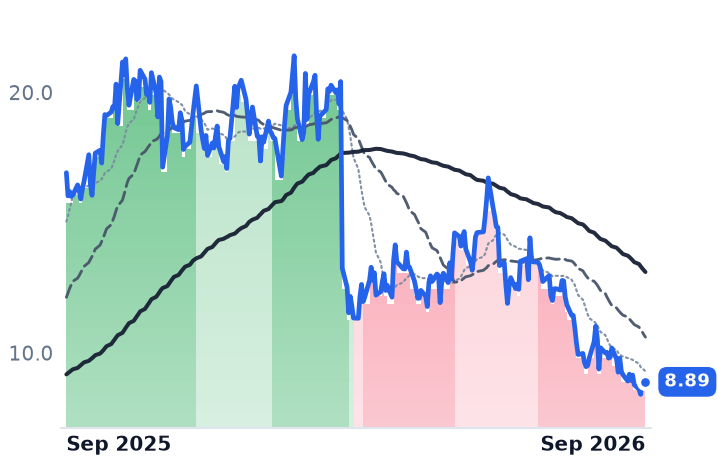
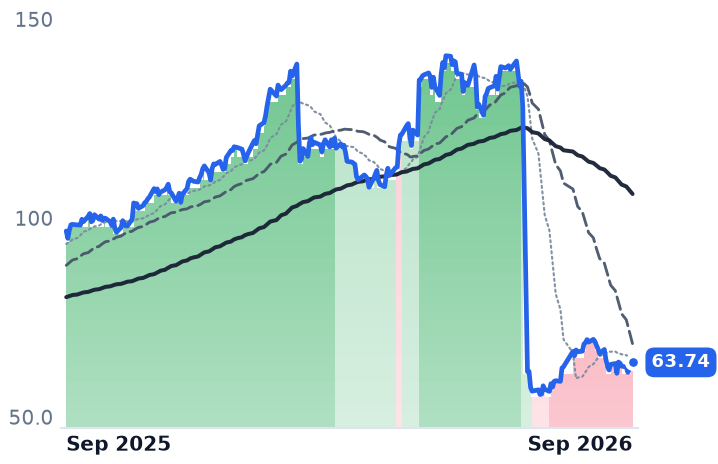
RUN | Sunrun | Residential Solar Installers | ⚠️ Emerging Bear | −12.8% | −47.5% |
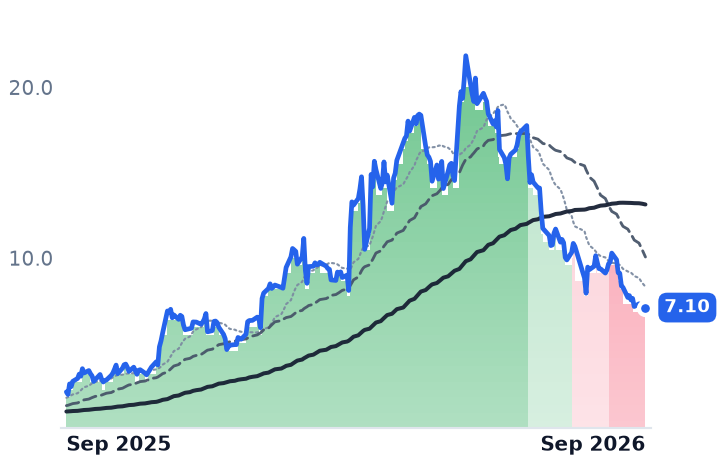
BW | Babcock & Wilcox Enterprises | Other | ⚠️ Emerging Bear | −24.2% | +228.7% |
ATKR | Atkore | Electrical Infrastructure Products | 🌱 Emerging Bull | +0.1% | +61.8% |
MLI | Mueller Industries | Copper & Brass Products | ⚠️ Emerging Bear | −7.4% | −34.1% |
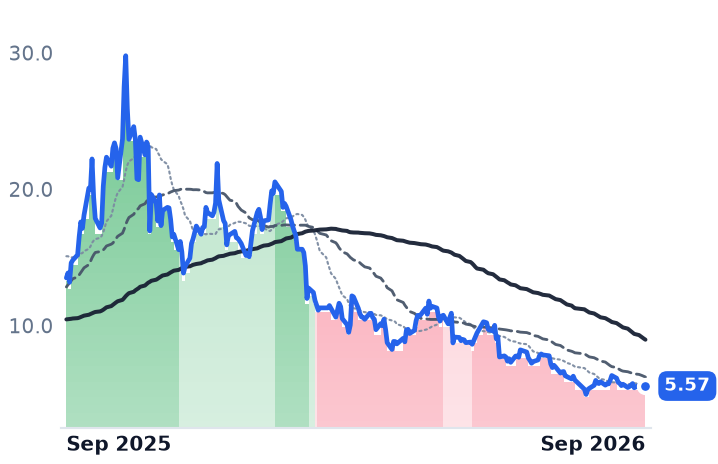
STEM | Stem | Renewable Utilities | ⚠️ Emerging Bear | −5.3% | −58.7% |
12-month price & trend
| Ticker | Mkt cap | P/E | P/E fwd | P/S | P/S fwd | P/GP | P/GP fwd | EV/EBITDA | FCF yld |
|---|---|---|---|---|---|---|---|---|---|
ENPH | $4.8B | 35.7x | 18.2x | 3.6x | 4.0x | 7.7x | 8.6x | 27.5x | 3.2% |
SEDG | $2.0B | n/m | — | 1.5x | 1.5x | 6.8x | 6.8x | n/m | 4.5% |
RUN | $2.1B | 5.2x | 7.0x | 0.6x | 0.7x | 1.8x | 2.0x | 23.4x | -64.2% |
| Ticker | Mkt cap | P/E | P/E fwd | P/S | P/S fwd | P/GP | P/GP fwd | EV/EBITDA | FCF yld |
|---|---|---|---|---|---|---|---|---|---|
BW | $1.1B | n/m | 49.2x | 1.3x | 1.0x | 6.3x | 5.1x | n/m | -5.5% |
ATKR | $3.2B | n/m | 16.5x | 1.1x | 1.1x | 5.5x | 5.4x | n/m | 1.8% |
MLI | $14.1B | 16.3x | 15.3x | 3.0x | 2.8x | 11.1x | 10.2x | 10.6x | 2.7% |
| Ticker | Mkt cap | P/E | P/E fwd | P/S | P/S fwd | P/GP | P/GP fwd | EV/EBITDA | FCF yld |
|---|---|---|---|---|---|---|---|---|---|
STEM | $49.4M | n/m | — | 0.3x | 0.3x | 0.9x | 0.9x | n/m | 11.8% |
Consensus projections
| Ticker | FY2026E | FY2027E | FY2028E | |
|---|---|---|---|---|
ENPH | Revenue | −19.1% | +6.2% | +10.8% |
| EPS | −28.8% | +11.5% | +16.5% | |
SEDG | Revenue | +12.0% | +11.1% | +11.4% |
| EPS | −86.2% | −370.0% | +91.7% | |
RUN | Revenue | +29.7% | +3.5% | +12.9% |
| EPS | −8.2% | −65.9% | −38.3% | |
BW | Revenue | +68.2% | +22.2% | +25.9% |
| EPS | −139.6% | +194.3% | +53.9% | |
ATKR | Revenue | +5.0% | +4.7% | +6.6% |
| EPS | −13.4% | +11.5% | +13.6% | |
MLI | Revenue | +21.1% | +7.7% | +8.8% |
| EPS | +16.5% | +6.0% | +11.4% | |
STEM | Revenue | +0.1% | +17.5% | +22.8% |
| EPS | +31.7% | −13.6% | −43.0% |
Forward fiscal years only. Blank means no analyst coverage for that year.
Enphase's American customer disappeared by statute at the end of last year, and the June quarter is the first clean look at what replaced him. US sell-through fell 34% year on year, while $84.3m of the $291.9m the company reported — roughly 29% — was equipment stockpiled by third-party owners for systems that will not go on roofs until 2028 or later.
The buyer is no longer a homeowner choosing a premium inverter; it is an installer or a lease financier running a procurement desk. Wood Mackenzie has Tesla at 33.4% of the US residential inverter market in the fourth quarter of 2025, ahead of both Enphase and SolarEdge, after gaining 16.5 points in a year. Who picks the hardware has changed, and so has how much that pick is worth.
Enphase Energy makes semiconductor-based microinverters that convert sunlight to household current one solar module at a time, plus batteries and monitoring software, and it sells none of it to homeowners. It sells to distributors and installers. For a decade that distinction barely mattered, because the person choosing the equipment and the person paying for it were the same household — one claiming the Section 25D federal credit against a system it owned. That credit died on 31 December 2025 under the One Big Beautiful Bill Act, while the commercial 48E credit survived for leases and power-purchase agreements. Federal value now flows only to systems somebody else owns.
Reported revenue of $291.9m was down 19.6%, the third consecutive decline of that order after drops of 10.3% and 20.6% in the two quarters before. Consensus has full-year 2026 revenue at $1.187bn, a 19.1% fall, with earnings per share down 28.8% to $2.00.
What is actually in the revenue line
A large share of what Enphase did book is not this year's demand. The $84.3m of safe-harbor revenue is equipment bought now by third-party owners to lock in tax treatment for projects installed years later. Enphase has executed roughly $1.1bn of such agreements, $878.6m of it under the physical work test, with revenue recognition beginning in 2028. Third-quarter guidance of $290–320m again includes $75m of it. Strip safe harbor out and the core business shrank sequentially.
The manufacturing subsidy, already visible in the margin line, is not the near-term problem. Under current law the 45X advanced manufacturing credit pays in full on inverters sold before 2030, stepping down only across 2030 to 2032. Enphase generated $85.2m of it in the first half, on $574.8m of revenue, which is why gross margin reached 60.0% and operating income rose 39.2% in a quarter when the top line fell by a fifth. The credit is real cash — the company sold $235m of its 2025 credits for 93 cents on the dollar — but it is not demand.
The procurement desk picks the inverter
When the lessor owns the system, the lessor specifies the hardware, and per-module architecture has to survive a bid comparison. Wood Mackenzie's 2025 review found the US residential inverter market converged to a three-way split — Enphase 31.7%, SolarEdge 31.3%, Tesla Energy 29.6% — ending a duopoly that had held more than 80% since 2019. Enphase's answer is Propel, a lease platform bundling its equipment with third-party financing and distribution, running about 200 originations a week at a 75% battery attach rate across six states and some 290 installers — promising, and small against a market Wood Mackenzie and the Solar Energy Industries Association expect to contract 21% this year.
Europe is carrying the offset. Enphase's European revenue rose 35% sequentially, with Dutch battery activations roughly doubling ahead of the end of net metering on 1 January 2027. But SolarEdge, the Israeli maker of DC-optimized inverter systems, posted European revenue up 36% sequentially on the same mechanism and grew group revenue 19.6% to $346.2m — more than Enphase sold. Both named the same US bottleneck: tax-equity funding stalled pending Treasury guidance on foreign-entity rules, expected in the first half of 2027.
The verdict
The decline in the shares — 35% over three months, to $36.37 — is earned by the business rather than running ahead of it. Enphase trades at 7.71x trailing gross profit against 14.55x in May, and its 8.63x forward multiple sits above the trailing figure, meaning gross profit is priced to shrink. SolarEdge fetches 6.82x forward gross profit while growing revenue, and Sunrun, the installer-lessor that now decides what goes on the roof, fetches 1.97x; Enphase's multiple is the highest of the three on either measure. It is also the one still holding shipments below sell-through, with microinverter channel inventory slightly elevated.
What the quarter does not settle is whether Enphase keeps a third of a shrinking market or a quarter of it. Its two named growth engines — the $878.6m safe-harbor book and a solid-state transformer aimed at data centers, with pilots in 2027 — both begin recognizing revenue in 2028. Between now and then it sells inverters to buyers who compare prices for a living.