

Asana Sold a Quarter of Its New Business as AI Credits, and Gross Profit Grew 5.3%
Hypothesis Opus 5 · Research Opus 5 · Writing Opus 5 · Prompt v1.6
Work-management software has one billing meter — a seat, per user, per month — and both listed pure-plays are bolting on a second that charges for AI consumption instead. Asana's is now the largest disclosed in the category: AI Studio and AI Teammates supplied about 25% of net new annual recurring revenue last quarter, up from 17%.
It has not fixed the first meter. Dollar-based net retention was 97%, improving for a fifth straight quarter but still under the line where existing customers stop shrinking, and the new dollars arrive carrying compute cost — gross margin fell to 86.0% from 89.7%, so gross profit grew 5.3% on 9.9% revenue growth.
monday.com's version is smaller, roughly 1% of recurring revenue, and its recovery rests on margin and cash rather than faster sales. The open question is no longer seat counts but what a dollar of consumption revenue is worth at the gross line.
| Ticker | Company | Segment | Trend · 13mo | 30D | 1Y |
|---|---|---|---|---|---|
| The subject · what this brief is about | |||||
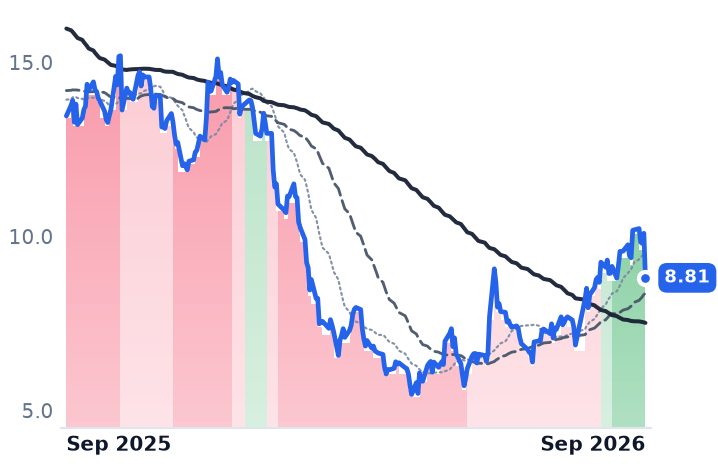
ASAN | Asana | Other | 🌱 Emerging Bull | +1.5% | −34.5% |
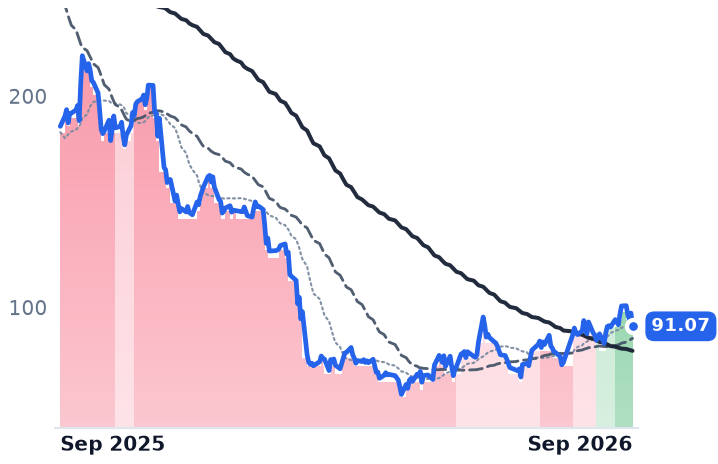
MNDY | monday.com | Other | 🔴 Cont. Bear | +4.0% | −51.0% |
| Compared against · context, not the story | |||||
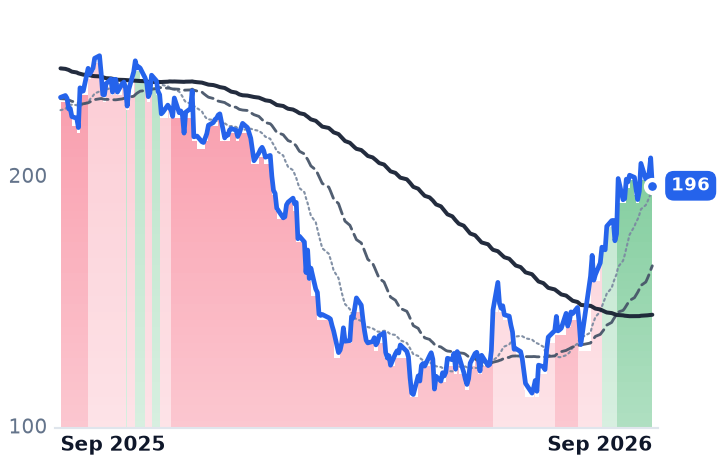
WDAY | Workday | Enterprise Resource Planning | 🌱 Emerging Bull | +15.0% | −15.3% |
PAYC | Paycom Software | HR & Workforce Management | 🌱 Emerging Bull | +7.3% | +3.9% |
IOT | Samsara | IoT & Connected Operations | 🌱 Emerging Bull | +11.6% | +1.1% |
GWRE | Guidewire Software | Financial Services Software | 🔴 Cont. Bear | +26.8% | −22.2% |
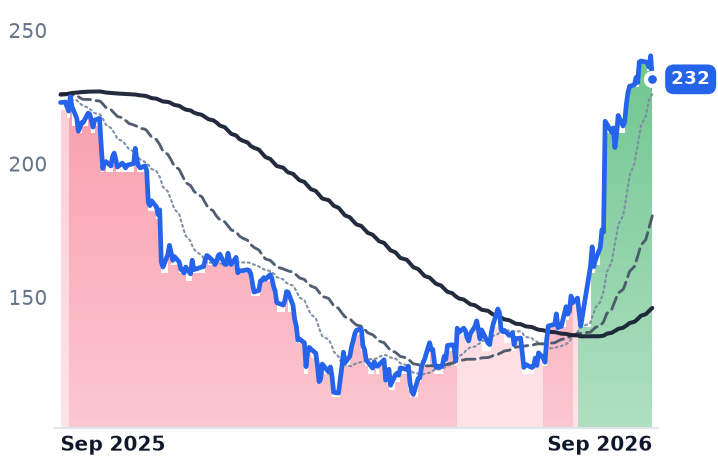
TEAM | Atlassian | Developer Tools & DevOps | 🌱 Emerging Bull | +77.4% | +12.9% |
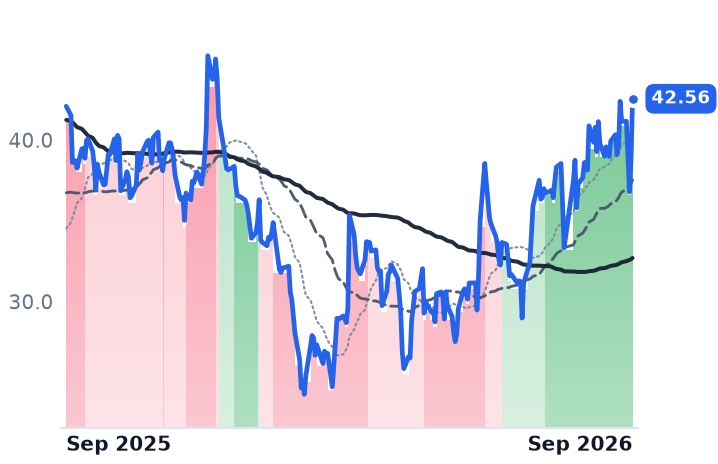
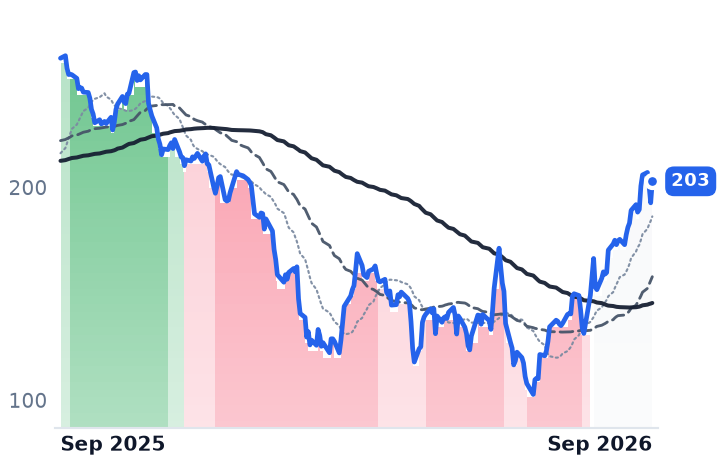
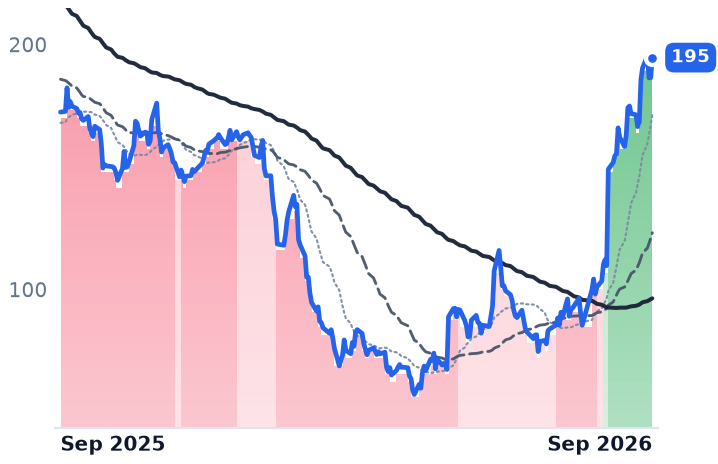
12-month price & trend
| Ticker | Mkt cap | P/E | P/E fwd | P/S | P/S fwd | P/GP | P/GP fwd | EV/EBITDA | FCF yld |
|---|---|---|---|---|---|---|---|---|---|
ASAN | $2.1B | n/m | 23.7x | 2.5x | 2.4x | 2.9x | 2.8x | n/m | 5.6% |
MNDY | $3.8B | 38.1x | 16.7x | 2.8x | 2.6x | 3.2x | 2.9x | 34.3x | 7.8% |
WDAY | $54.0B | 41.7x | 18.6x | 5.3x | 5.1x | 7.0x | 6.7x | 34.3x | 5.3% |
| Ticker | Mkt cap | P/E | P/E fwd | P/S | P/S fwd | P/GP | P/GP fwd | EV/EBITDA | FCF yld |
|---|---|---|---|---|---|---|---|---|---|
PAYC | $10.8B | 25.5x | 19.9x | 5.1x | 4.9x | 6.3x | 6.1x | 12.9x | 7.0% |
IOT | $22.5B | 382.2x | 54.4x | 13.0x | 11.2x | 17.1x | 14.7x | 230.4x | 1.0% |
GWRE | $11.1B | 58.3x | 37.0x | 8.2x | 7.7x | 12.9x | 12.0x | 57.6x | 2.8% |
| Ticker | Mkt cap | P/E | P/E fwd | P/S | P/S fwd | P/GP | P/GP fwd | EV/EBITDA | FCF yld |
|---|---|---|---|---|---|---|---|---|---|
TEAM | $50.0B | n/m | 34.6x | 7.6x | 6.7x | 9.0x | 7.9x | 331.1x | 2.6% |
Consensus projections
| Ticker | FY2026E | FY2027E | FY2028E | |
|---|---|---|---|---|
ASAN | Revenue | +9.2% | +9.0% | +7.8% |
| EPS | −273.0% | +45.1% | +21.9% | |
MNDY | Revenue | +19.8% | +15.1% | +14.6% |
| EPS | +27.8% | +22.3% | +19.1% | |
WDAY | Revenue | +13.4% | +11.8% | +10.5% |
| EPS | +26.5% | +21.9% | +19.5% | |
PAYC | Revenue | +7.7% | +7.2% | +8.3% |
| EPS | +30.9% | +15.5% | +11.1% | |
IOT | Revenue | +28.9% | +25.9% | +19.7% |
| EPS | +129.2% | +41.5% | +26.7% | |
GWRE | Revenue | +21.9% | +15.8% | +15.1% |
| EPS | +43.5% | +21.2% | +26.6% | |
TEAM | Revenue | +24.7% | +15.4% | +14.7% |
| EPS | +55.5% | −0.1% | +21.6% |
Forward fiscal years only. Blank means no analyst coverage for that year.
Asana's AI products supplied about a quarter of the company's net new annual recurring revenue last quarter, chief executive Dan Rogers told investors on 3 September. That is ahead of the 15% full-year target management set in March; the next session the shares fell 12.7% to $8.81, dragging monday.com down 6.4% with them.
The reason it matters beyond one print: work-management software — Asana's platform coordinates teams' tasks and projects, monday.com sells a configurable work operating system plus dedicated customer-relationship, marketing and development products — is sold per seat per month. Its revenue base is the number of knowledge workers a customer chooses to license, precisely the count that flat white-collar hiring and AI-assisted headcount discipline are supposed to compress. Both companies are attaching a consumption-priced second meter to escape that link. Asana's is now big enough to measure, and what it shows is that the escape carries a price of its own.
The new meter arrives with cost
Asana's revenue reached $216.4m, up 9.9% year over year and above the top of guidance, with growth inching higher for a third straight quarter. Retention improved too: dollar-based net retention of 97%, with customers spending $100,000 or more at 98% against 96% a year earlier, and those spending $5,000 or more up 7% to 26,778. Five consecutive quarters of improvement, all of it still below 100% — existing customers are shrinking, just more slowly.
The cost shows up one line down. Gross margin fell to 86.0% from 89.7%, about 120 basis points of that sequentially on AI compute and the small StackAI acquisition, with roughly another 150 points of headwind flagged for the second half. Gross profit grew 5.3% while revenue grew 9.9%. Guidance compounds it: third-quarter revenue of $217–219m implies 8–9% growth, a step down, with adjusted earnings of $0.08 against the $0.09 analysts expected.
Chief financial officer Aziz Megji named the trade-off on the call: "The seeding should accelerate adoption in users, but it can push out the timing of incremental paid consumption." Management also described the free tier as clogged with "heavy tire kickers" below $5,000 of spend, a drag it assumes will not recover this fiscal year.
monday.com's version is smaller, and its recovery is not revenue
monday.com doubled its AI recurring revenue quarter on quarter to 17% of net new business — still about 1% of a book that crossed $1.5bn in July. Its expansion comes from selling more products into the same accounts: customers above $100,000 of annual recurring revenue rose 37% to 2,019 while accounts with more than ten users grew 6%. Net retention was 109%, guided down to 108% as past price increases lap.
Revenue growth is decelerating — 26% a year ago, 22% last quarter, 16–17% guided for the current one. What improved is the profit and loss account: GAAP operating margin turned positive at 5.5%, free-cash-flow margin is guided to 19–20%, the $870m repurchase authorization has been completed, and about 630 jobs went in July, roughly a fifth of staff, for some $100m of annual savings.
What each side earns
monday.com's advance since its March low is paid for by margin and cash, not by faster sales; at 16.7x forward earnings and 2.95x forward gross profit for a 19–20% grower, that is a defensible price for a decelerating business. Asana trades at 2.77x forward gross profit — a discount of only about 6% for less than half the growth — and its trailing price-to-earnings ratio is negative because the company still loses money on a GAAP basis. On 4 September the seat-metered complex sold off together, Workday and Paycom included, after 162,000 August payrolls against a 55,000 consensus lifted rate-rise odds; Samsara, which meters connected devices, rose almost 10%.
Consumption pricing does not remove the growth problem so much as relocate it. Asana has proved a second meter can reach a quarter of new business within two quarters — the clearest evidence in the category that customers will pay for something other than headcount — and proved at the same time that those dollars land at a lower margin than the seats they replace. Sell-side reaction split accordingly, with Citi raising its target while DA Davidson stayed neutral, both citing the same 25%.
From mid-September, Asana folds AI Teammates, AI Studio and Dash into every paid tier at no extra list price and charges for usage on top. New logos and renewals move onto it immediately, which makes the next print the first honest read on whether customers who stopped adding seats will pay for requests instead.