

Three Health-Software Vendors, One Hospital Budget: Only HealthStream's Backlog Is Growing
Hypothesis Opus 5 · Research Opus 5 · Writing Opus 5 · Prompt v1.6
A corner of health software that gets grouped as one story turns out to be three businesses billing three different budgets, and only one of them has a forward demand number going up.
Omnicell posted a 49.0% gross margin in the June quarter and more than tripled operating income — with a $15m tariff refund sitting inside it — then cut its year-end recurring revenue target to $660-680m from $680-700m and widened product bookings guidance downward. Phreesia's 10.4% revenue growth is mostly the AccessOne acquisition; strip it out and fiscal 2027 organic revenue lands near $473-483m against $480.6m last year. HealthStream is the exception, with contracted backlog up 11% to $685m and a raised full-year revenue guide.
At the first two, the earnings improvement is cost, mix and one-offs. The demand meters went the other way.
| Ticker | Company | Segment | Trend · 13mo | 30D | 1Y |
|---|---|---|---|---|---|
| The subject · what this brief is about | |||||
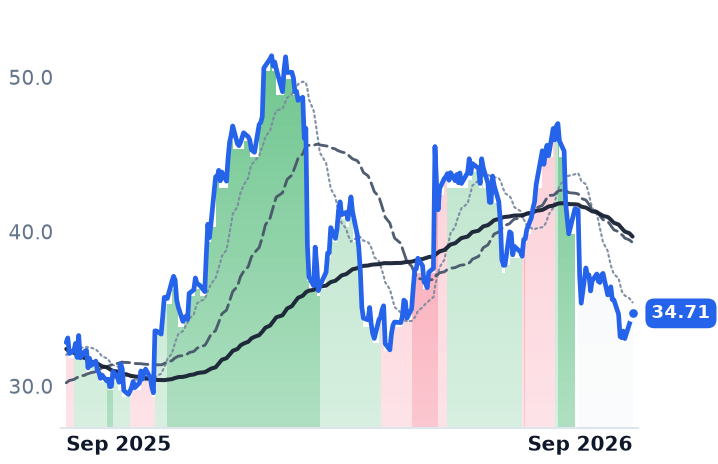
OMCL | Omnicell | Healthcare Operations & Workflows | ⚠️ Emerging Bear | −6.6% | +5.8% |
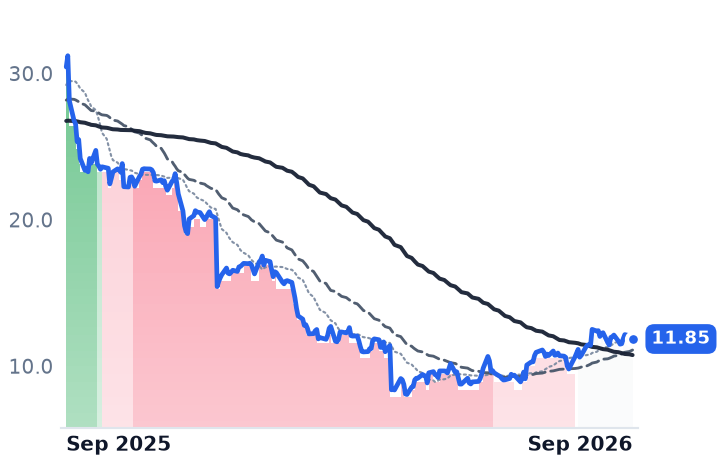
PHR | Phreesia | Healthcare Operations & Workflows | 🔴 Cont. Bear | +3.6% | −61.1% |
| Compared against · context, not the story | |||||
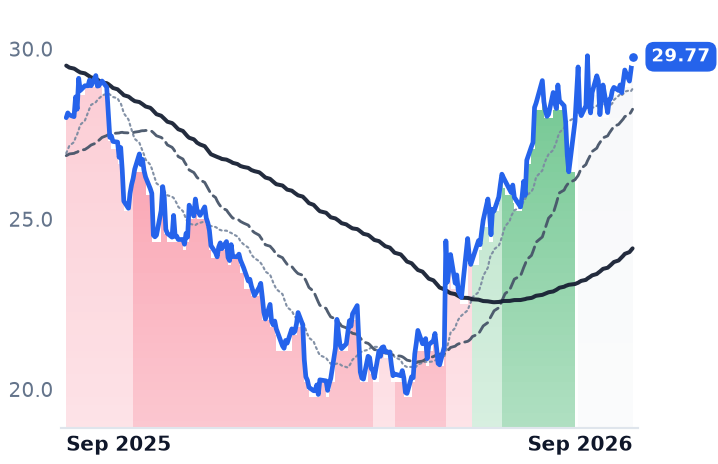
HSTM | HealthStream | Healthcare Operations & Workflows | 🌱 Emerging Bull | −0.1% | +6.4% |
12-month price & trend
| Ticker | Mkt cap | P/E | P/E fwd | P/S | P/S fwd | P/GP | P/GP fwd | EV/EBITDA | FCF yld |
|---|---|---|---|---|---|---|---|---|---|
OMCL | $1.6B | 40.6x | 15.3x | 1.3x | 1.3x | 2.8x | 2.9x | 14.0x | 9.0% |
PHR | $734.3M | 69.4x | 31.6x | 1.4x | 1.4x | 2.1x | 2.0x | 16.9x | 10.6% |
HSTM | $869.7M | 41.6x | 40.3x | 2.7x | 2.6x | 4.2x | 4.1x | 11.7x | 5.6% |
Consensus projections
| Ticker | FY2026E | FY2027E | FY2028E | |
|---|---|---|---|---|
OMCL | Revenue | +4.5% | +4.2% | +4.5% |
| EPS | +32.2% | −7.9% | +17.7% | |
PHR | Revenue | +14.6% | +7.3% | +5.0% |
| EPS | −107.4% | +367.4% | +82.8% | |
HSTM | Revenue | +9.8% | +4.4% | +5.0% |
| EPS | +16.4% | +12.2% | −100.0% |
Forward fiscal years only. Blank means no analyst coverage for that year.
Omnicell told investors on July 30 that its sales pipeline was the largest it had seen in years, and in the same breath lowered the target for the recurring revenue that pipeline is supposed to turn into. The shares fell 10.4% that day, from $41.40 to $37.11.
That gap — a full funnel, a cut forecast — is the shape of the whole hospital-software question this year. Three vendors sell into the same buildings on three incompatible meters: a capital equipment budget, a pharmaceutical marketing budget, and an annual subscription line. What governs all three is the same balance sheet. Median hospital operating margin was -0.6% in January 2026 and only -0.3% year-to-date through February, with drug costs up 7.6% and supply costs up 7.8%, according to Healthcare Financial Management Association data. A Premier analysis cited by the same association projects the One Big Beautiful Bill Act will hit hospital revenue by an estimated $68.6bn across 2026 and 2027.
The capital meter
Omnicell, which sells automated medication-dispensing cabinets, central pharmacy robotics and 340B pharmacy programs to health systems, still books 56% of revenue as product: $175m of the June quarter's $312.2m, against $137m of service. Revenue grew 7.4%, gross margin reached 49.0% from 43.9%, and operating income went from $8.1m to $32.4m. Roughly a fifth of the quarter's non-GAAP EBITDA was a $15m tariff refund.
The forward meters moved the other way. Full-year product bookings guidance was widened to $425-560m, stretching the bottom end well below what was previously implied. Year-end annual recurring revenue guidance was cut to $660-680m from $680-700m, citing consumables opportunities taking longer to develop; against $636m at the end of 2025, that takes implied growth to roughly 4-7%. "Our pipeline exiting Q2 2026 is meaningfully larger than we have seen in recent years," chief financial officer H. Baird Radford told investors on the July 30 call. "However, our revised product bookings guidance range reflects our current view on the potential range of outcomes and timing for 2026 purchasing decisions."
The mechanism is specific. Management said this is the first time Omnicell and its largest competitor have launched new dispensing platforms at once — BD's Pyxis line handles more than 9.8 million transactions a day — pushing customers into multi-stakeholder evaluations that run quarters or years. The installed base being replaced is younger than the generation before it, so urgency is lower. Omnicell is expanding customer leasing programs to help hospitals fund the purchase. And memory chip constraints will add $6m of cost in the second half, worth 80 basis points of product margin.
The advertising meter
Phreesia sells patient check-in and payments software to practices, and separately sells drug makers the right to put branded messaging in front of those patients — a marketing budget, not an information-technology one. July-quarter revenue rose 10.4% to $129.5m, but the company paid $160m for AccessOne, a patient-receivables financier, in November. Fiscal 2027 guidance of $510-520m includes about $37m from that deal, implying organic revenue near $473-483m against $480.6m last year. That guide was itself cut from $545-559m set in December, while the adjusted EBITDA range of $125-135m was held.
The cut came from the pharmaceutical side: clients committed lower second-half spend on brand-specific and regulatory-policy dynamics, with visibility shortening. "[It is] very complex [with] a lot of different moving parts," chief financial officer Balaji Gandhi said on the fiscal fourth-quarter call, placing the impact "around the second half of the year, not the first half." Meanwhile quarterly adjusted EBITDA hit a record $32.9m from $22.1m, and average client count reached 4,744, up 6% — provider seats growing slower than reported revenue.
The subscription meter
HealthStream, which sells workforce compliance training and clinician credentialing on annual subscriptions, is the one raising. June-quarter revenue was a record $83.7m, up 12.5%, of which 8.3 points were organic and $2m was a one-time contingent-fee catch-up from a 2020 acquisition. Remaining performance obligations — contracted revenue not yet recognized — were $685m against $618m a year earlier, and full-year revenue guidance went up to $327-332m. "Our customers view HealthStream as a partner for solutions across their entire enterprise rather than a single application," chief executive Robert A. Frist, Jr. said on the August 3 call, crediting bundling.
Even here the budget shows through: HealthStream's large hospital customers flagged the expiration of Affordable Care Act premium tax credits and anticipated Medicaid reimbursement pressure on that same call.
What the prices did, and what they earn
The grouping fails first as arithmetic. Over twelve months Omnicell is up 8.1% and HealthStream 6.2%; the roughly 16% decline attributed to the group is Phreesia's 62.4% collapse alone, most of it a single 23.3% gap on the December 9 guidance warning. Over three months the ranking inverts — HealthStream up 18.0%, Phreesia up 14.4%, Omnicell down 17.2%.
Omnicell's fall is earned. At 15.3x forward earnings and a 9.0% trailing free cash flow yield it looks cheap, but consensus models earnings per share falling to $2.09 in 2027 from $2.27 this year, so the multiple sits on a shrinking base. Phreesia's bounce is the harder call: cheapest of the three at 2.03x forward gross profit against Omnicell's 2.85x and HealthStream's 4.05x, with a 10.6% free cash flow yield, but rising on margin off a wrecked base while organic growth went to nil. HealthStream, at 40.3x forward against 41.6x trailing, has almost no room between what it earns now and what it is expected to earn — and it is the only one whose backlog is paying for the price.
The test set out at the start was whether hospital budgets are reopening. Two of these three answered no, in their own guidance, six weeks apart; the third is growing by selling more products to customers it already has. Omnicell's pipeline may well be the largest in years. Nothing in its own forecast says which year it closes.