

SAIC Raised 2027 Revenue Guidance Above Its February Cut on 9% On-Contract Growth
Hypothesis Opus 5 · Research Opus 5 · Writing Opus 5 · Prompt v1.6
Three federal IT primes sell the same thing — cleared staff billing hours against multi-year task orders — and their shares have separated by 53 percentage points in a year. The funding data does not explain it. The portion of backlog with appropriated money actually behind it is expanding: Leidos's funded backlog grew 44% year over year while its total backlog grew 5%, and CACI's grew 28.6%.
SAIC printed the group's only book-to-bill below one on August 31 and raised full-year guidance the same morning. What is genuinely deteriorating is company-specific rather than budgetary: the Defense Health Agency is removing Leidos as integrator of the military health record, and SAIC has lost two enterprise-IT recompetes. CACI trades at 25.3x trailing earnings, Leidos at 10.8x forward.
| Ticker | Company | Segment | Trend · 13mo | 30D | 1Y |
|---|---|---|---|---|---|
| The subject · what this brief is about | |||||
LDOS | Leidos | Defense & Government Solutions | ⚠️ Emerging Bear | +2.4% | −24.2% |
SAIC | Science Applications International | Defense & Government Solutions | 🌱 Emerging Bull | +5.7% | +12.7% |
CACI | CACI International | Defense & Government Solutions | ⚠️ Emerging Bear | +17.2% | +30.8% |
| Compared against · context, not the story | |||||
BAH | Booz Allen Hamilton | Government & Defense Consulting | 🔴 Cont. Bear | −0.6% | −30.5% |
KBR | KBR | Diversified Infrastructure & Operations | 🔴 Cont. Bear | −2.4% | −25.3% |
PSN | Parsons | Testing, Detection & Measurement | 🔴 Cont. Bear | −6.6% | −42.3% |
ACN | Accenture | Enterprise Consulting & Systems Integration | 🔴 Cont. Bear | +11.1% | −24.0% |
BBAI | BigBear.ai | Defense & Government Solutions | 🔴 Cont. Bear | −6.3% | −39.8% |
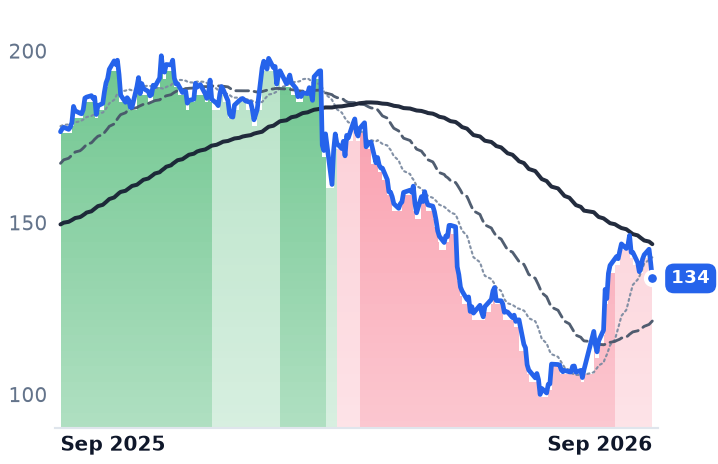
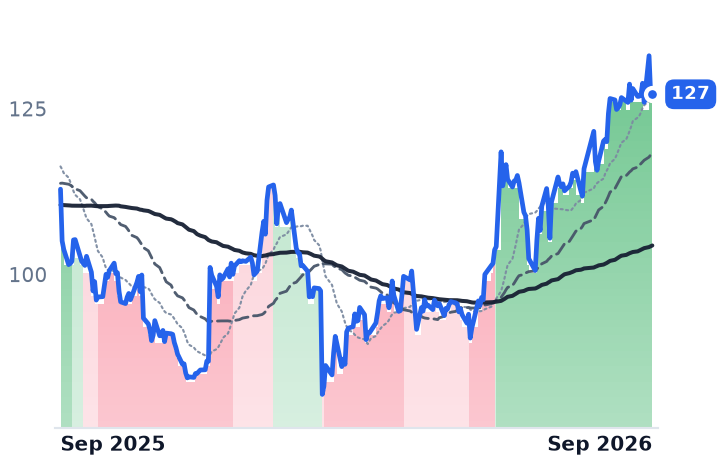
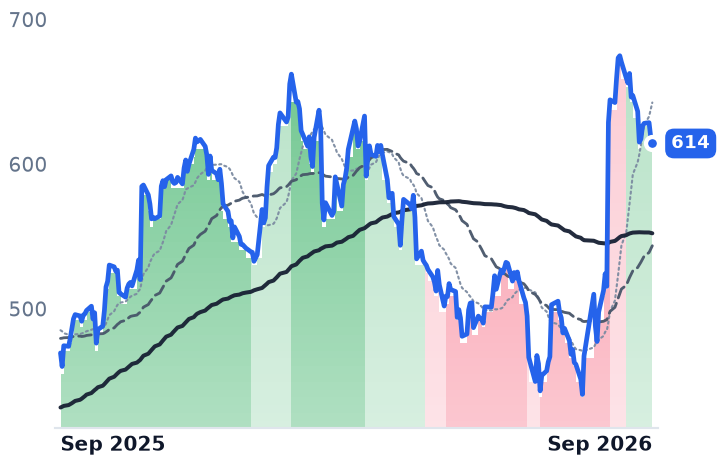
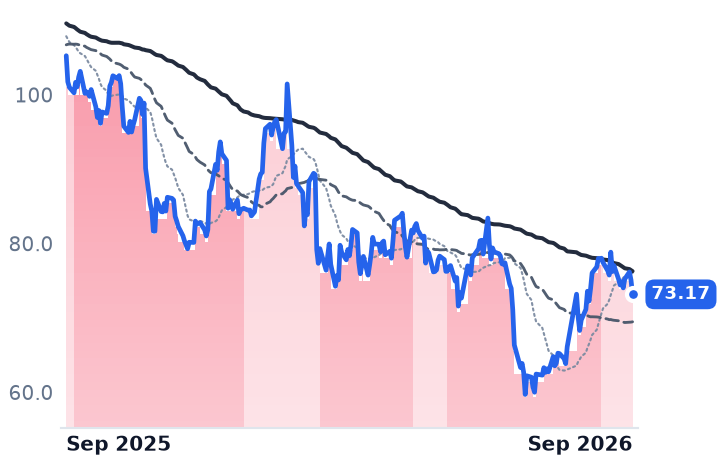
12-month price & trend
| Ticker | Mkt cap | P/E | P/E fwd | P/S | P/S fwd | P/GP | P/GP fwd | EV/EBITDA | FCF yld |
|---|---|---|---|---|---|---|---|---|---|
LDOS | $16.8B | 12.4x | 10.8x | 1.0x | 0.9x | 5.5x | 5.3x | 9.9x | 12.9% |
SAIC | $5.4B | 14.7x | 11.9x | 0.7x | 0.7x | 5.7x | 5.8x | 7.8x | 11.5% |
CACI | $13.6B | 25.3x | 18.7x | 1.4x | 1.3x | 6.6x | 5.8x | 17.1x | 9.4% |
| Ticker | Mkt cap | P/E | P/E fwd | P/S | P/S fwd | P/GP | P/GP fwd | EV/EBITDA | FCF yld |
|---|---|---|---|---|---|---|---|---|---|
BAH | $9.5B | 12.3x | 12.3x | 0.9x | 0.8x | 1.9x | 1.9x | 10.4x | 11.8% |
KBR | $3.8B | 9.5x | 7.6x | 0.5x | 0.5x | 3.4x | 3.3x | 6.8x | 12.8% |
PSN | $5.4B | 23.7x | 15.1x | 0.9x | 0.8x | 3.8x | 3.6x | 13.0x | 7.7% |
| Ticker | Mkt cap | P/E | P/E fwd | P/S | P/S fwd | P/GP | P/GP fwd | EV/EBITDA | FCF yld |
|---|---|---|---|---|---|---|---|---|---|
ACN | $115.9B | 15.0x | 12.9x | 1.6x | 1.5x | 5.0x | 4.7x | 9.0x | 10.9% |
BBAI | $1.4B | n/m | — | 10.7x | 9.7x | 38.5x | 34.7x | n/m | -5.2% |
Consensus projections
| Ticker | FY2026E | FY2027E | FY2028E | |
|---|---|---|---|---|
LDOS | Revenue | +5.2% | +6.1% | +4.7% |
| EPS | +17.1% | +4.6% | +3.2% | |
SAIC | Revenue | −2.4% | +0.0% | +1.1% |
| EPS | +15.3% | +6.0% | +5.8% | |
CACI | Revenue | +10.9% | +12.7% | +6.7% |
| EPS | +14.2% | +16.7% | +15.4% | |
BAH | Revenue | −6.1% | +0.7% | +4.2% |
| EPS | −4.3% | +5.1% | +5.1% | |
KBR | Revenue | +3.1% | +1.8% | +5.1% |
| EPS | +17.3% | +3.9% | +4.9% | |
PSN | Revenue | +3.3% | +7.2% | +5.7% |
| EPS | +3.7% | +10.7% | +14.2% | |
ACN | Revenue | +6.0% | +4.1% | +5.3% |
| EPS | +7.6% | +5.9% | +7.3% | |
BBAI | Revenue | +9.1% | +12.5% | — |
| EPS | −71.6% | −35.4% | — |
Forward fiscal years only. Blank means no analyst coverage for that year.
Science Applications International Corporation, which sells engineering, IT modernization and logistics almost entirely to the Army, Navy, NASA and the intelligence agencies, reported its July quarter on August 31 and did something it had not managed all year: it raised full-year revenue guidance to $7.2-7.3bn from $7.0-7.2bn, with adjusted earnings guidance lifted to $10.65-10.75 a share. That is back above the level it cut to on February 11, when a pre-announcement blaming procurement delays and lost enterprise-IT recompetes took 16% off the stock in one session and dragged Leidos and CACI down with it. It remains below the $7.35-7.55bn the year began with.
These companies do not sell software. They sell cleared people billing hours against multi-year task orders, which makes one line item decisive: funded backlog, the slice of the order book with appropriated money behind it. A total backlog number can sit on a shelf for years under a stopgap; funded backlog is what can be billed now. On that measure the sector bear case has the direction wrong.
The funded money is arriving
CACI International — signals intelligence, cyber, electronic warfare and enterprise IT for the defense and intelligence agencies — closed its fiscal year on June 30 with total backlog of $32.0bn, up 1.9%, and funded backlog up 28.6% to $5.4bn. Leidos, which builds national-security systems, modernizes Federal Aviation Administration air-traffic control and runs disability examinations for veterans, showed the same split more sharply: funded backlog grew 44% to $10.2bn against 5% growth in total backlog, on a book-to-bill of 1.1 times. CACI's full-year bookings ran at the same 1.1 times on more than $10bn of awards.
SAIC is the exception, at 0.6 times for the quarter and 0.8 times over twelve months, with $3.8bn funded out of $22.1bn. Management's explanation is that large recompetes slipped and that extensions protect near-term revenue while deferring the booking; one major award landed two days after the quarter closed. The corroborating figure is on-contract growth of 9% in the quarter, roughly double the prior-year pace, with programs ramping from recent wins tracking to $500m this year against $350m planned. "Our recompete win rate of over 90% this quarter creates an easier path to on-contract growth," chief executive James C. Reagan told investors on August 31.
What is actually breaking
The damage is real but it is about who bills, not whether anyone does. The Defense Health Agency is replacing Leidos as lead integrator of the military health record, awarding sole-source contracts directly to the underlying technology vendors, with transitions running through July 2027. The Veterans Benefits Administration has suspended incentive payments across its disability-examination program for the rest of 2026, where Leidos's unit drew a $392.7m delivery order this fiscal year. SAIC lost the RITS enterprise-IT recompete, worth about 350 basis points of second-half revenue, and the $1.4bn CASTLE-NET Army Corps order to Accenture Federal Services after the Government Accountability Office denied its protest in May.
The contract-mix shift the bear case leans on is happening slowly. Fixed-price work is 15-18% of SAIC revenue against roughly a third of its pipeline, and its Civil group earns north of 15% EBITDA margins on fixed-price jobs. "The move to more outcome oriented fixed price is real," finance chief Prabu Natarajan said on the same call, "but they are gradual." Leidos chief executive Tom Bell told investors on August 4 that outcome-based work is "in our wheelhouse".
The split in the shares
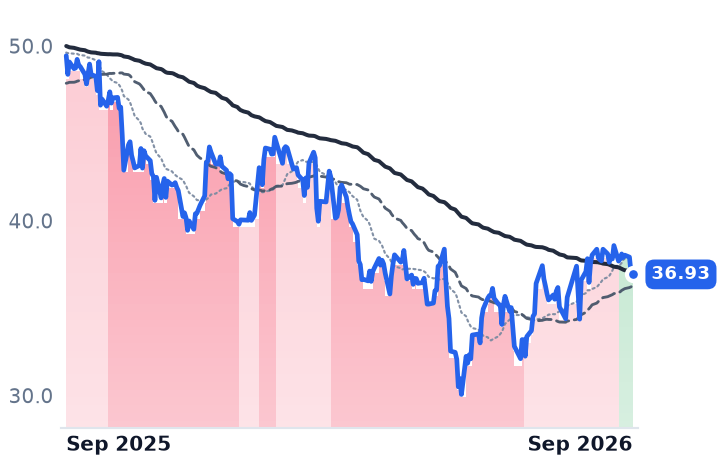
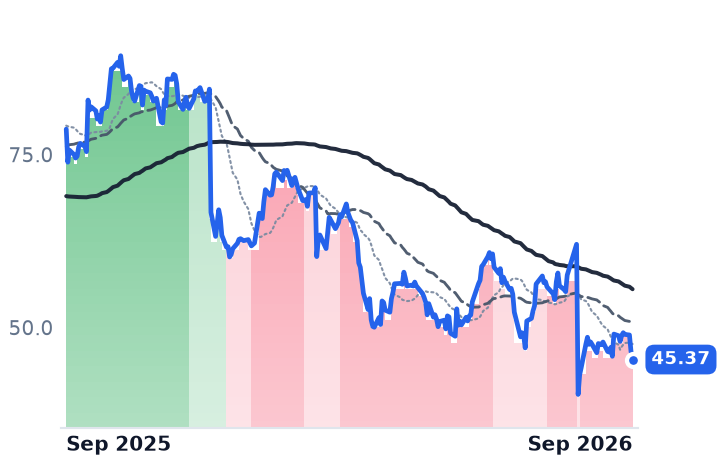
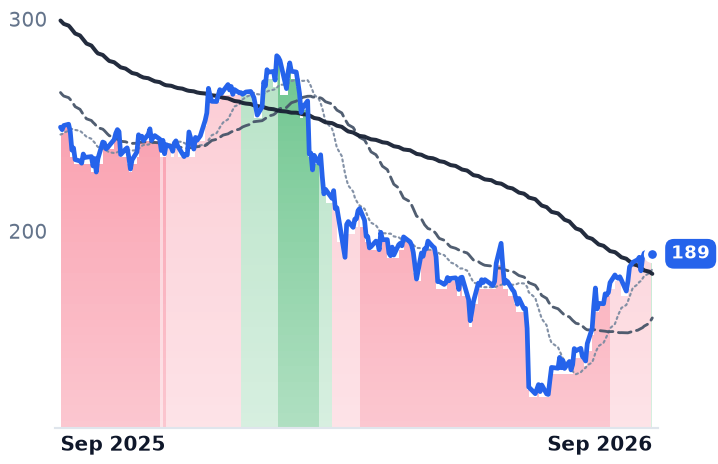
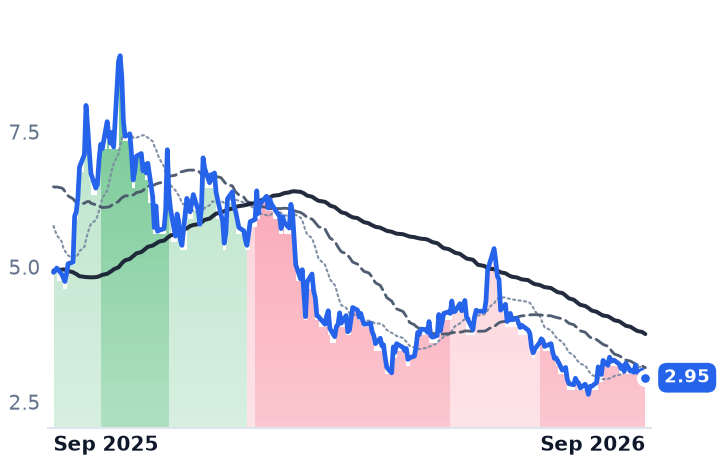
Over twelve months CACI rose 27% and SAIC 7.5% while Leidos fell 26%, and the peer group sits with Leidos: Booz Allen Hamilton lost a third, Parsons more. CACI earned its side — revenue growth accelerated to 17.6% in the June quarter and fiscal-2026 operating income rose 20.4% on revenue up 10.9% — but at 25.3x trailing earnings and 18.7x forward it now trades above the 19-24x range of the past two years and above the 21.0x it carried in early May. Leidos is the harder case: revenue accelerated to 7.2% and 2025 net income grew 16.1%, yet operating margin fell to 11.1% from 13.4% and quarterly operating income declined 11.2%. At 12.4x trailing and 10.8x forward against roughly 16x a year ago, with a 12.9% free-cash-flow yield, the market is pricing the health-record loss as permanent while consensus still models 6% revenue growth next year. SAIC sits between them, and on enterprise value against EBITDA at 7.8 times it is the cheapest of the three.
The verdict the funding data supports is narrower than a sector rolling over. Appropriated dollars are reaching these contractors faster than headline backlogs suggest; what has changed is that agencies are reallocating those dollars — insourcing integration, consolidating vehicles, handing incumbents' work to rivals. That is a market-share problem with names attached, and it argues against reading Leidos's de-rating as a budget verdict when its own funded backlog grew fastest of the three. It also means CACI's re-rating through the top of its own band now depends on the second-half acceleration management has guided to, with first-quarter organic growth flagged as low single digits.
About 15-20% of annual federal contract obligations land in September alone, and a stopgap has removed the October shutdown risk through early December. The awards are coming. Which of these three names appears on them is the only question the backlog disclosures cannot answer.