

Affirm Doubled Its Funding Debt to $3.3bn While Upstart Cut Loans Held to 5.9%
Hypothesis Opus 5 · Research Opus 5 · Writing Opus 5 · Prompt v1.6
Two lenders with the same business model made opposite decisions about who owns the loan after it is written, and only one of them is being paid for it. Affirm grew gross merchandise volume 36% to $14.1bn in its June quarter and financed a growing share of it on its own balance sheet, with funding debt at $3.3bn against $1.6bn a year earlier and loans held for investment up to $9.56bn. Upstart grew originations 50% to $4.2bn and pushed retained loans down to 5.9% of outstandings, a two-year low, funding the volume with $10.8bn of committed third-party capacity signed this year.
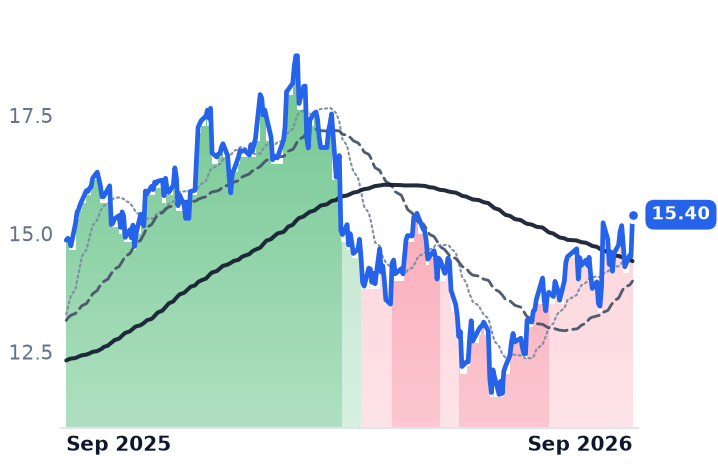
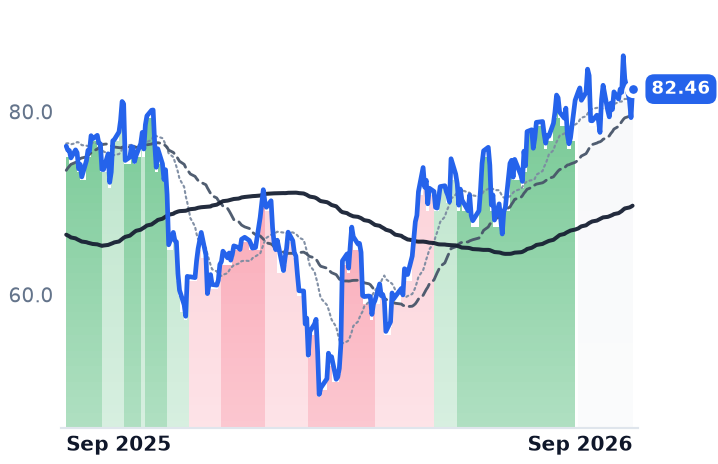
Both businesses improved; the market split them. Affirm has held an uptrend since June and trades at 6.67x forward gross profit, Upstart at 2.55x on comparable consensus growth. The judgment: Affirm's operating record earns its rating and now carries rate risk it did not carry a year ago, while nothing in Upstart's quarter explains a stock 59% below its 52-week high.
| Ticker | Company | Segment | Trend · 13mo | 30D | 1Y |
|---|---|---|---|---|---|
| The subject · what this brief is about | |||||
AFRM | Affirm | Consumer Fintech & Lending | 🌱 Emerging Bull | −2.0% | −9.9% |
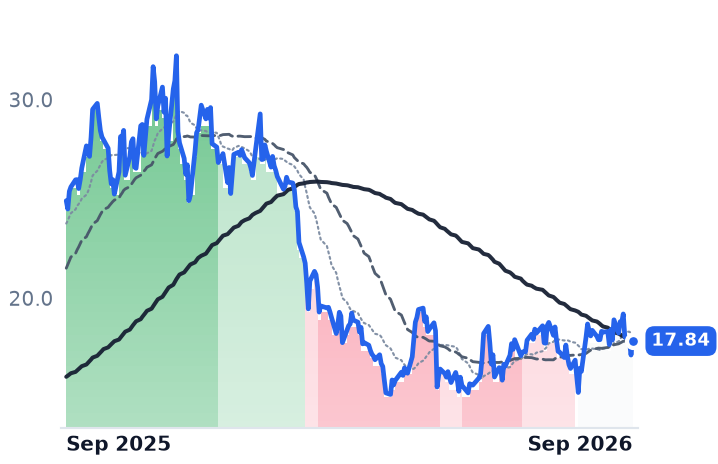
UPST | Upstart | Digital Payments & Fintech Platforms | 🔴 Cont. Bear | −4.3% | −59.3% |
| Compared against · context, not the story | |||||
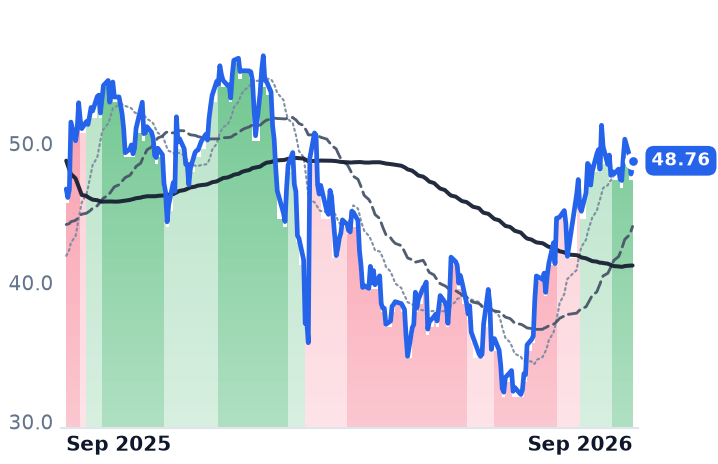
SCHW | The Charles Schwab | Wealth Management & Advisory | 🟢 Cont. Bull | +2.2% | +13.7% |
HOOD | Robinhood Markets | Retail & Digital Brokerage | 🟢 Cont. Bull | +18.4% | +6.1% |
NU | Nu | Emerging Markets & Specialized Banking | ⚠️ Emerging Bear | +6.6% | +3.6% |
BILL | Bill.com | Fintech & Digital Finance | 🌱 Emerging Bull | +5.0% | +4.3% |
SOFI | SoFi Technologies | Digital Payments & Fintech Platforms | ⚠️ Emerging Bear | −1.1% | −28.4% |
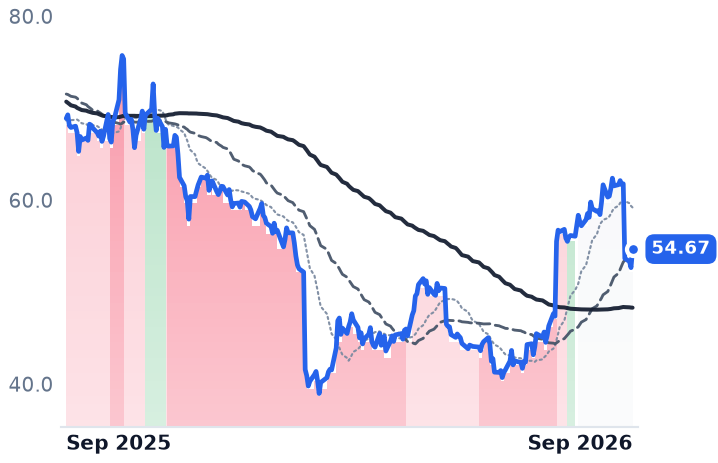
PYPL | PayPal | Digital Payments & Fintech Platforms | 🔴 Cont. Bear | −5.5% | −20.6% |
XYZ | Block | Other | 🌱 Emerging Bull | +0.5% | +8.2% |
KLAR | Klarna | Consumer Fintech & Lending | 🔴 Cont. Bear | −26.5% | −66.0% |
12-month price & trend
| Ticker | Mkt cap | P/E | P/E fwd | P/S | P/S fwd | P/GP | P/GP fwd | EV/EBITDA | FCF yld |
|---|---|---|---|---|---|---|---|---|---|
AFRM | $24.8B | 13.0x | 38.6x | 5.9x | 4.5x | 8.7x | 6.7x | 25.8x | 4.0% |
UPST | $2.7B | 45.3x | 40.7x | 2.3x | 1.9x | 3.1x | 2.5x | 51.7x | -11.0% |
SCHW | $158.1B | 16.8x | 15.1x | 5.6x | 5.9x | 6.5x | 6.9x | 10.4x | 6.2% |
| Ticker | Mkt cap | P/E | P/E fwd | P/S | P/S fwd | P/GP | P/GP fwd | EV/EBITDA | FCF yld |
|---|---|---|---|---|---|---|---|---|---|
HOOD | $69.5B | 36.6x | 42.0x | 15.1x | 13.9x | 18.3x | 16.9x | 29.0x | 3.1% |
NU | $58.9B | 18.6x | 14.0x | 3.4x | 2.7x | 7.7x | 6.2x | 21.4x | 6.4% |
BILL | $5.0B | n/m | 13.4x | 3.0x | 2.7x | 3.8x | 3.5x | 58.7x | 9.6% |
| Ticker | Mkt cap | P/E | P/E fwd | P/S | P/S fwd | P/GP | P/GP fwd | EV/EBITDA | FCF yld |
|---|---|---|---|---|---|---|---|---|---|
SOFI | $20.0B | 34.5x | 26.0x | 3.9x | 4.3x | 5.1x | 5.6x | 20.4x | -12.6% |
PYPL | $39.2B | 8.0x | 8.4x | 1.2x | 1.1x | 2.5x | 2.5x | 5.8x | 14.1% |
XYZ | $41.9B | 52.2x | 18.3x | 1.7x | 1.6x | 3.8x | 3.6x | 15.3x | 7.8% |
| Ticker | Mkt cap | P/E | P/E fwd | P/S | P/S fwd | P/GP | P/GP fwd | EV/EBITDA | FCF yld |
|---|---|---|---|---|---|---|---|---|---|
KLAR | $5.6B | n/m | 70.6x | 1.4x | 1.3x | 3.0x | 2.7x | 3.4x | -47.0% |
Consensus projections
| Ticker | FY2026E | FY2027E | FY2028E | |
|---|---|---|---|---|
AFRM | Revenue | +32.0% | +29.9% | +24.4% |
| EPS | +2220.4% | +54.7% | +43.9% | |
UPST | Revenue | +37.1% | +30.9% | +28.7% |
| EPS | −58.6% | +163.4% | +61.8% | |
SCHW | Revenue | +11.6% | +10.0% | +9.3% |
| EPS | +23.5% | +17.5% | +15.9% | |
HOOD | Revenue | +9.9% | +22.8% | +15.3% |
| EPS | −9.8% | +37.0% | +18.0% | |
NU | Revenue | +54.4% | +21.7% | +14.0% |
| EPS | +42.6% | +32.7% | +26.4% | |
BILL | Revenue | +13.2% | +11.3% | +10.5% |
| EPS | +26.1% | +41.5% | +17.6% | |
SOFI | Revenue | +31.3% | +22.3% | +23.6% |
| EPS | +64.3% | +34.3% | +26.0% | |
PYPL | Revenue | +3.2% | +4.1% | +4.4% |
| EPS | −1.0% | +8.6% | +9.0% | |
XYZ | Revenue | +7.4% | +11.7% | +12.2% |
| EPS | +60.8% | +29.6% | +24.0% | |
KLAR | Revenue | +26.1% | +19.6% | +18.1% |
| EPS | −127.5% | +292.7% | +63.2% |
Forward fiscal years only. Blank means no analyst coverage for that year.
Affirm ended its June fiscal year owing $3.3bn against loans it chose to keep — twice the funding debt it carried twelve months earlier.
Neither Affirm, which finances checkout purchases over terms of one to 48 months, nor Upstart, which runs an artificial-intelligence underwriting platform for unsecured personal, auto and home-equity loans, holds a bank charter today. Both originate through a partner bank and then decide what to do with the paper: sell it to forward-flow buyers and securitization trusts, or borrow against it and hold it. That decision — who owns the loan the morning after it is written — determines which of them a move in long-term interest rates actually touches.
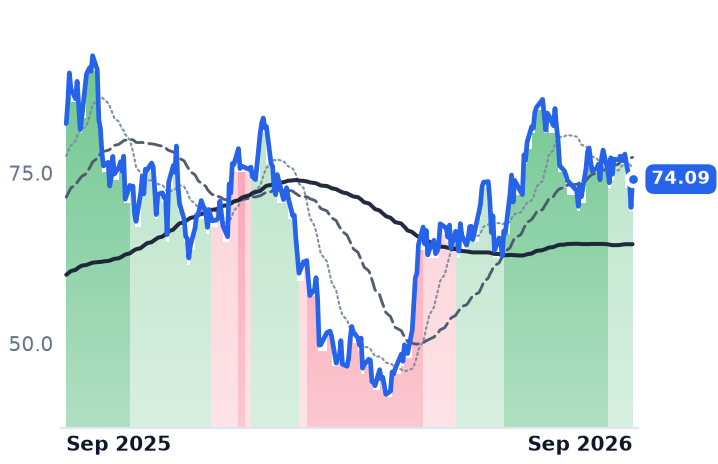
It was visible on September 1, when a global bond selloff drove long-dated Treasury yields to one-year highs after oil rose on renewed strikes in the Iran conflict. The selling found the balance sheets: Affirm fell about 5% and SoFi 4% while Robinhood held steady. No credit event was involved.
Affirm is buying its growth with borrowed money, and the credit is getting better
The June quarter was the best Affirm has reported. Gross merchandise volume rose 36% to $14.1bn and revenue 33% to $1.17bn, both ahead of consensus, with GAAP operating margin of 12.6% against roughly 6.6% a year earlier. Revenue less transaction costs — the company's own gross-profit line, which captures the gain on selling loans plus servicing — grew 39% to $589m, or 4.2% of volume. Growing faster than volume means the take rate expanded. Thirty-day delinquencies on monthly installment loans came in at 2.5%, better than the 2.7%–2.8% of the previous three quarters, and that is with 44% of receivables non-prime.
The cost sits on the funding side. Loans held for investment reached $9.56bn gross from $7.03bn, with the allowance rate building about 24 basis points to 5.89%, and funding debt doubled. Chief financial officer Rob O'Hare told investors on the August 27 call that fiscal 2027 take rates should be broadly consistent with fiscal 2026, supported by current funding costs and a similar funding mix — an assumption written against a rate curve that moved this week. Through fiscal 2026 that assumption held easily: funding costs fell about 125 basis points year over year and the 2026-2 securitization was upsized to $750m and more than twice oversubscribed. Affirm guided fiscal 2027 to volume above $64bn.
Upstart did the opposite and was not paid for it
Originations grew 50% to $4.2bn and revenue 42% to $365m, with contribution profit at a record $193m. The volume came through the model, not through concessions: conversion rose to 19.7% from 18.5% and 91% of loans were fully automated. Loans on its own books were $1.06bn, up only 5%, or 5.9% of outstandings. Third parties funded the rest — $10.8bn of incremental committed capacity signed this year and a $569m securitization at the tightest spreads Upstart has seen in three years.
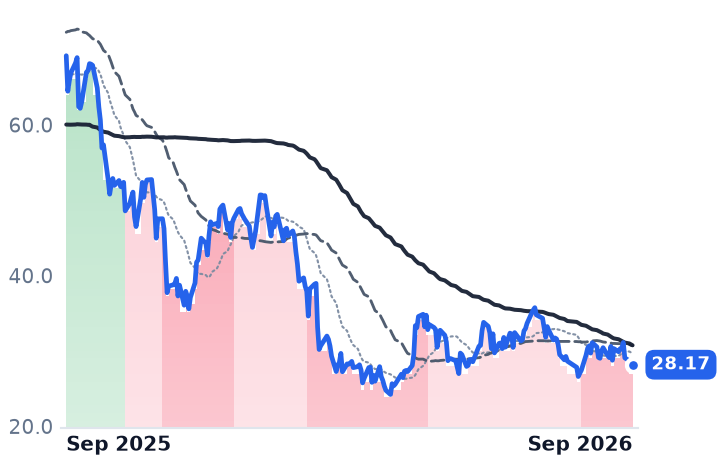
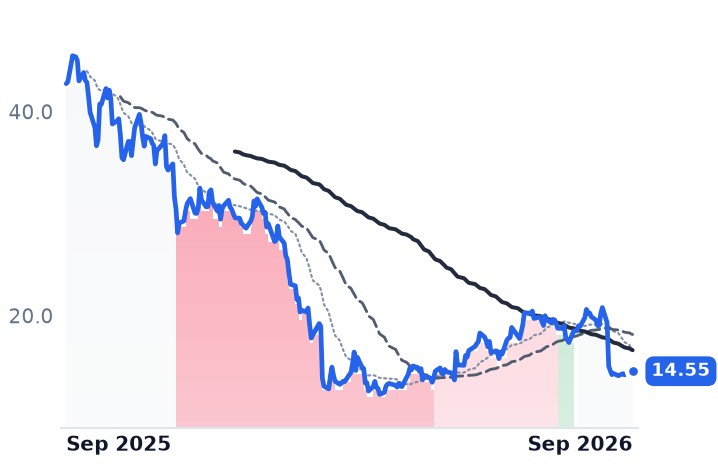
"We grew, our credit performed, and we expanded margins. We didn't have to trade one for another," co-founder and chief executive Paul Gu told investors on the August 4 call. The shares have been in a downtrend since July 31 and sit 59% below their 52-week high. Two disclosures explain some of it: Upstart's own macro index, a measure of how far defaults run above a static baseline, reached 1.5 — the top of the range management guided in February, implying default rates half again the long-run average — and July volume decelerated to 34% year-over-year growth from 50% in the quarter.
What the split is worth
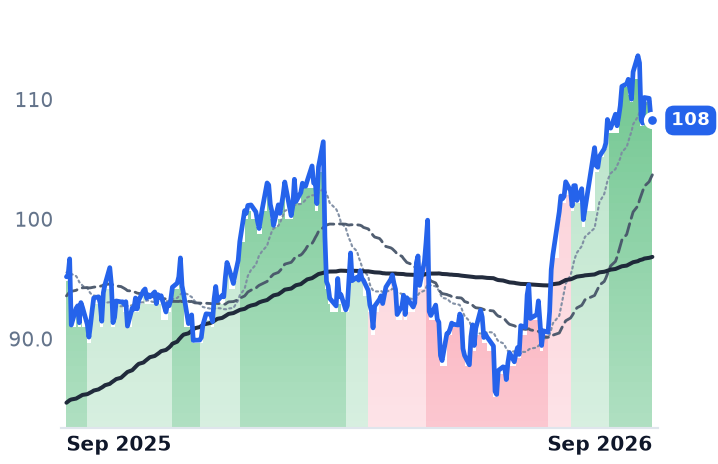
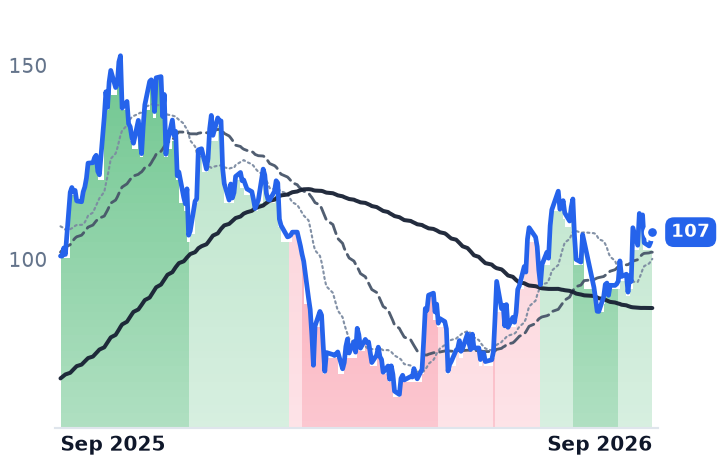
The recovery in financial-services shares over the past three months belongs to Nu, Bill, Schwab and Robinhood, each up more than 20%; Affirm added 4% and Upstart fell 13%. Affirm's price-to-trailing-gross-profit of 8.70x is below the roughly 9.6x of mid-August, because the gross-profit base stepped up faster than the stock; its trailing price-to-earnings ratio of 13.0x is meaningless, since $1.46bn of fiscal-2026 net income was a one-off deferred-tax valuation-allowance release. Forward, Affirm trades at 6.67x gross profit and 38.6x earnings against consensus revenue growth of 30% next year. Upstart trades at 2.55x forward gross profit on similar expected growth, with 40.7x forward earnings the honest caveat.
Affirm's advance is earned by the operating record — expanding take rate, improving delinquencies, six points of margin — and its own choice has attached a rate-sensitivity to that record which did not exist when funding debt was $1.6bn. Upstart's quarter contains nothing that justifies its price; what the market is discounting is the macro index and the July slowdown, and it is discounting them against a company that has already sold the risk to somebody else.
The next reading arrives before either company reports: if long yields hold at one-year highs, the firm that kept $9.56bn of loans finds out first what that costs.