

Atmus's Replacement-Filter Volumes Went Flat as Freight Recovered by Losing Carriers
Hypothesis Opus 5 · Research Opus 5 · Writing Opus 5 · Prompt v1.6
Atmus Filtration was sold to investors as an annuity: replacement filters for trucks already on the road, insulated from the new-build cycle. In the June quarter that annuity sold no more units than a year earlier, worldwide, while North American Class 8 truck orders ran 120% ahead year to date.
The reconciliation is the mechanism. The freight market is healing because carriers are quitting, not because loads are growing — the American Trucking Associations' tonnage index was down 0.5% year over year in July. Miles are being redistributed onto fewer trucks, and miles are what consume filters.
Reported revenue still grew 16.4%, but the Koch Filter acquisition supplied most of it; the engine-filtration segment grew 7%, of which two points were volume. Donaldson, the closest comparable, grew fiscal-2026 aftermarket sales 8.1% over the same window — which makes part of Atmus's problem share, not cycle.
| Ticker | Company | Segment | Trend · 13mo | 30D | 1Y |
|---|---|---|---|---|---|
| The subject · what this brief is about | |||||
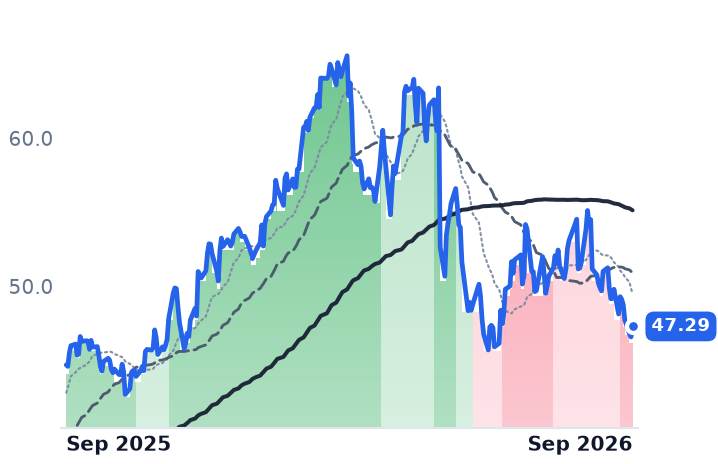
ATMU | Atmus Filtration Technologies | Filtration & Separation | ⚠️ Emerging Bear | −12.2% | +5.8% |
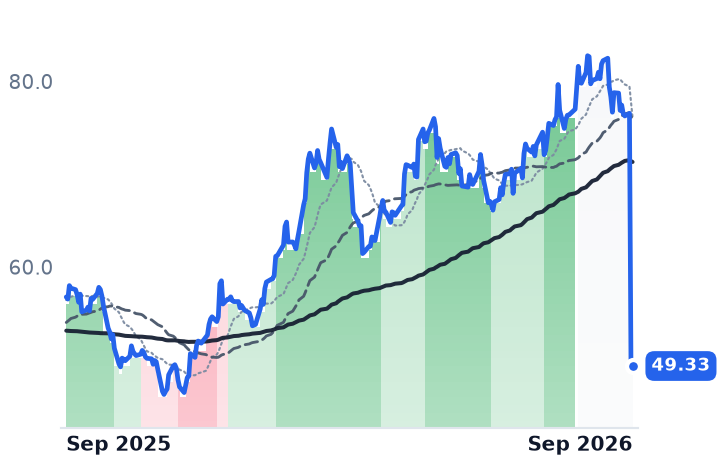
RUSHA | Rush Enterprises | Commercial Truck Dealerships | 🟢 Cont. Bull | −39.1% | −13.1% |
| Compared against · context, not the story | |||||
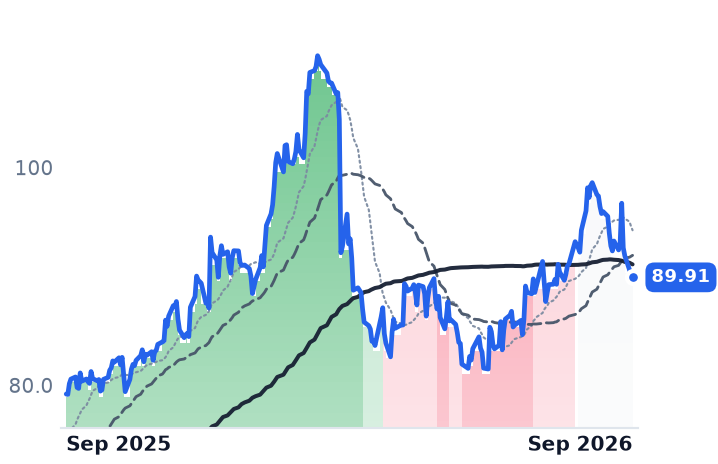
DCI | Donaldson | Testing, Detection & Measurement | ⚠️ Emerging Bear | −6.4% | +13.5% |
SAIA | Saia | Less-Than-Truckload (LTL) | ⚠️ Emerging Bear | −7.8% | +13.5% |
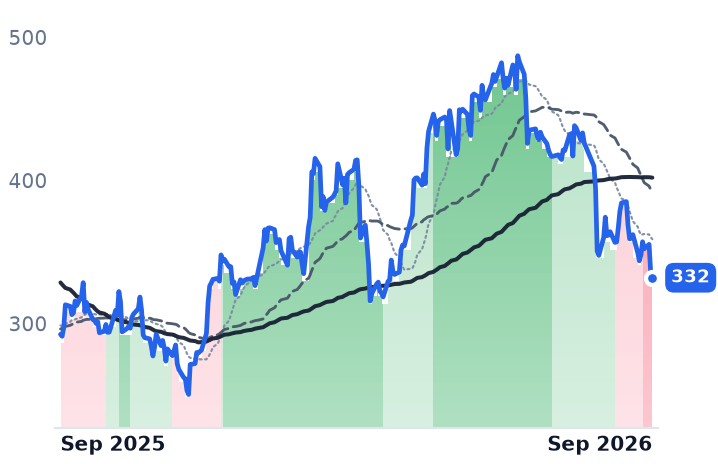
CMI | Cummins | Power & Propulsion Systems | 🟢 Cont. Bull | −15.1% | +40.5% |
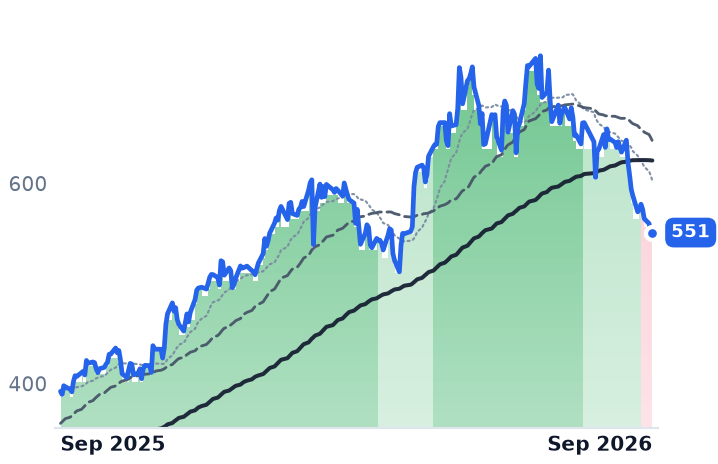
12-month price & trend
| Ticker | Mkt cap | P/E | P/E fwd | P/S | P/S fwd | P/GP | P/GP fwd | EV/EBITDA | FCF yld |
|---|---|---|---|---|---|---|---|---|---|
ATMU | $3.9B | 18.0x | 16.0x | 2.0x | 1.9x | 7.1x | 6.7x | 12.8x | 4.9% |
RUSHA | $5.7B | 14.5x | 19.9x | 0.8x | 0.7x | 4.2x | 3.9x | 13.0x | 2.2% |
DCI | $10.4B | 22.9x | 20.6x | 2.7x | 2.5x | 7.7x | 7.2x | 18.5x | 4.1% |
| Ticker | Mkt cap | P/E | P/E fwd | P/S | P/S fwd | P/GP | P/GP fwd | EV/EBITDA | FCF yld |
|---|---|---|---|---|---|---|---|---|---|
SAIA | $10.3B | 37.0x | 33.8x | 3.0x | 2.8x | 18.8x | 17.6x | 16.5x | 2.5% |
CMI | $81.1B | 29.9x | 19.9x | 2.3x | 2.2x | 9.2x | 8.5x | 17.4x | 4.2% |
Consensus projections
| Ticker | FY2026E | FY2027E | FY2028E | |
|---|---|---|---|---|
ATMU | Revenue | +15.6% | +5.1% | +3.0% |
| EPS | +12.5% | +10.8% | +9.8% | |
RUSHA | Revenue | +5.2% | +10.5% | +5.5% |
| EPS | +18.2% | +23.5% | +21.7% | |
DCI | Revenue | +5.7% | +7.9% | +4.8% |
| EPS | +7.9% | +10.4% | +11.2% | |
SAIA | Revenue | +12.1% | +7.7% | +8.1% |
| EPS | +22.0% | +25.4% | +20.2% | |
CMI | Revenue | +13.1% | +8.9% | +8.0% |
| EPS | +29.6% | +16.9% | +16.9% |
Forward fiscal years only. Blank means no analyst coverage for that year.
Atmus Filtration, the Fleetguard filter business separated from Cummins, built its case on things trucks use up rather than things truckers buy new: roughly 86% of 2025 net sales came from the aftermarket, replacement fuel, oil and air filters for vehicles already in service. In the June quarter that stream was flat year over year globally — no more filters sold — even as North American Class 8 net orders ran 120% ahead of 2025 year to date through July.
Those two facts only look contradictory until you ask what is fixing the freight market. It is subtraction. The ATA's for-hire tonnage index fell 1% in July to 113.5 and sat 0.5% below a year earlier, with the association crediting the recovery to excess capacity leaving rather than to freight growing; tighter Department of Transportation enforcement of non-domiciled commercial driver licences and English-proficiency standards has hastened the exit. Surviving carriers get better rates and order equipment. The total miles run across the national fleet — the only variable that consumes a filter — do not move. An annuity indifferent to the build cycle turns out to be indifferent to the upswing as well.
What the quarter actually contained
Atmus reported record revenue of $527.9m, up 16.4%, and raised full-year sales guidance to $1.975bn–$2.030bn. Most of the growth was bought: the Industrial Solutions segment created by the Koch Filter acquisition contributed $42m on its own. The core engine-filtration business tells the plainer story. "Power Solutions delivered sales of $486 million compared to $454 million in the prior year. An increase of 7%," chief financial officer Jack Kienzler said on the August 7 call. That 7% was three points of price, two of currency and two of volume. Aftermarket, at 85% of the segment, was flat — stronger in the United States and Mexico, softer across Europe, the Middle East, Africa and Asia outside China.
The second half looks thinner. Pricing is guided to moderate to about 0.5% from more than 2% in the first half, commodity inflation in chemicals and plastics tied to Middle East conflict is hitting both costs and Atmus's Indian joint-venture income, and the adjusted EBITDA margin range was narrowed to 19.75%–20.25% with the top end cut. Tariffs are the one thing not doing damage: Kienzler told investors the net EBITDA impact should be "substantially neutral." Chief executive Stephanie Disher said the company has "yet to see a significant inflection" in freight and expects the aftermarket to stay roughly flat. Full-year segment guidance assumes volume between zero and 2%.
Shares fell 7.9% on the day of that raised outlook, are down 12.2% over the past month, and sit 28% below their 52-week high of $65.57. JPMorgan cut the stock to Neutral with a $46 target, raised from $44, on valuation rather than demand.
The uncomfortable comparison
Donaldson, the diversified filtration maker that competes directly in engine aftermarket parts, grew fiscal-2026 aftermarket sales 8.1% with growth in every region and a double-digit increase in the independent distribution channel — the same channel where Atmus is currently signing new distributors for Fleetguard and Koch. Same parc, same idle miles, opposite result. Atmus guides to 1%–2% of aftermarket share gain for the year and claims roughly 90% share in US medium-duty trucks; the June quarter did not show it.
The dealer rung corroborates the mechanism. Rush Enterprises, the largest North American commercial-truck dealership network, took $605m of parts, service and collision revenue in the June quarter, up 1.5% and 64% of total gross profit, at a 130.8% absorption rate. New-truck demand is the hot end: "Our backlog is as big as it has been in a couple years, to be honest with you, where we sit right now. And I will tell you, we are basically sold out," chief executive W. Marvin Rush told the July 29 call. Rush's own quoted price dropped by a third on September 1 — that was the three-for-two stock split taking effect, and adjusted for it the shares are up 29.2% over twelve months, on trailing profits that are still falling.
The verdict
Atmus earns a good part of its de-rating. Price is rolling off, input costs are running hotter for longer than management first thought, the margin band came down, and the acquisition that flatters the top line is already in consensus — analysts model revenue growth decelerating to about 5% in 2027. At 16.0x forward earnings against 18.0x trailing and 12.8x trailing EV/EBITDA, it trades well under Donaldson's 20.6x forward and 18.5x EV/EBITDA, and the gap is not free money: the cheaper company is the one losing relative ground in the channel both are contesting.
What is wrong is the premise that the truck economy is rolling over. Class 8 build slots for 2026 are oversubscribed, the dealer aftermarket is growing, and one of the two filter makers grew its replacement business by 8%. Atmus's problem is narrower and more specific: it owns a toll on miles at a moment when the industry is fixing its economics by parking trucks instead of running them.
Atmus has not confirmed a date for third-quarter results; the last two years put the print on the first Friday of November. The line to read will not be revenue, which the Koch deal will lift again. It is whether aftermarket volume finally moves off zero.