

Akamai Signed $2.8bn of Compute Commitments, More Than Cloudflare's Entire Backlog
Hypothesis Opus 5 · Research Opus 5 · Writing Opus 5 · Prompt v1.6
The two companies that run the internet's edge have taken opposite positions on who should own the hardware that carries artificial-intelligence traffic, and only one of them is paying for it in cash.
Akamai spent 32% of June-quarter revenue on capital equipment and suspended its buyback, and its gross profit fell 0.5% year over year while revenue grew 5.4%. The signed commitments behind that spending are real, but the revenue they buy is dated to 2027. Cloudflare sells subscriptions to a network it already built, grew dollar-based net retention to 120% from 114%, and still watched gross margin slide as paid traffic shifted costs into cost of revenue.
Neither escapes the mechanism. Akamai books the depreciation now; Cloudflare books the traffic.
| Ticker | Company | Segment | Trend · 13mo | 30D | 1Y |
|---|---|---|---|---|---|
| The subject · what this brief is about | |||||
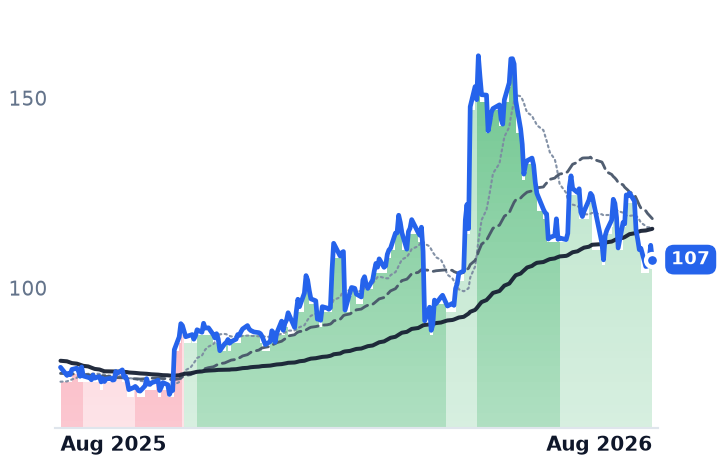
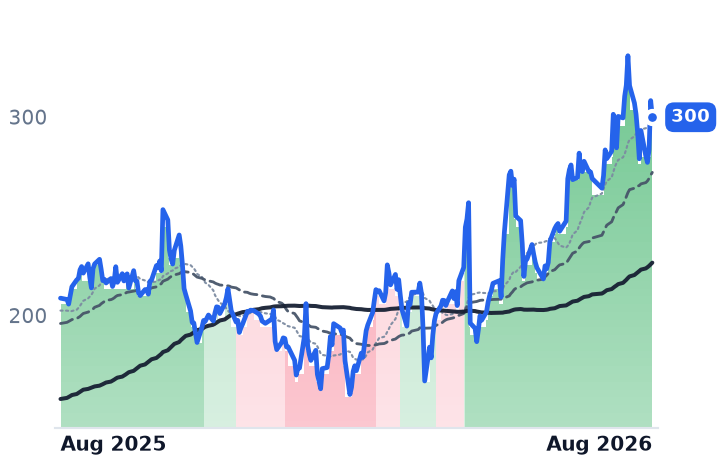
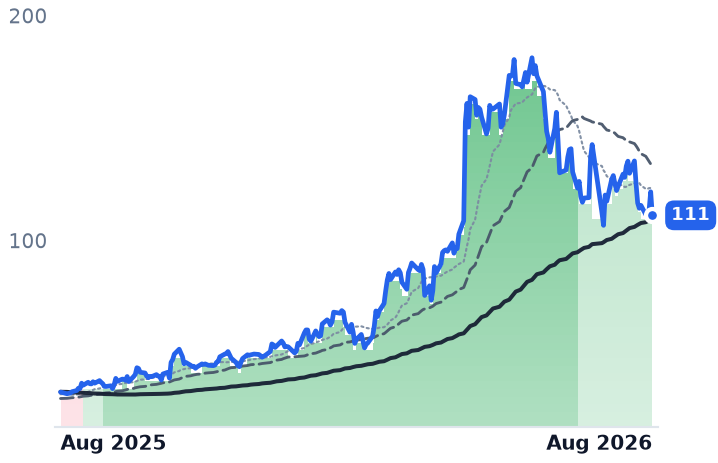
NET | Cloudflare | Network & Application Delivery | 🟢 Cont. Bull | +5.8% | +43.7% |
| Compared against · context, not the story | |||||
AKAM | Akamai Technologies | Network & Application Delivery | 🟢 Cont. Bull | −5.5% | +35.8% |
DOCN | DigitalOcean | Cloud Infrastructure & Platforms | 🟢 Cont. Bull | −7.5% | +240.9% |
12-month price & trend
| Ticker | Mkt cap | P/E | P/E fwd | P/S | P/S fwd | P/GP | P/GP fwd | EV/EBITDA | FCF yld |
|---|---|---|---|---|---|---|---|---|---|
AKAM | $15.7B | 38.0x | 16.1x | 3.6x | 3.5x | 6.4x | 6.2x | 18.3x | 4.0% |
NET | $106.4B | n/m | 237.7x | 42.3x | 37.1x | 58.3x | 51.1x | — | 0.4% |
DOCN | $13.0B | 44.1x | 76.5x | 12.9x | 11.1x | 22.5x | 19.3x | 36.7x | 0.1% |
Consensus projections
| Ticker | FY2026E | FY2027E | FY2028E | |
|---|---|---|---|---|
AKAM | Revenue | +7.2% | +12.8% | +10.8% |
| EPS | −4.6% | +6.1% | +13.9% | |
NET | Revenue | +33.7% | +28.7% | +27.5% |
| EPS | +38.0% | +32.5% | +35.3% | |
DOCN | Revenue | +31.2% | +53.5% | +43.7% |
| EPS | −29.0% | +23.2% | +60.4% |
Forward fiscal years only. Blank means no analyst coverage for that year.
Akamai spent $347m on capital equipment in the June quarter — about 32% of revenue — and suspended its share buyback to keep spending. The company, which delivers and secures web traffic for enterprises and now rents cloud compute alongside it, has signed more than $2.8bn of multi-year cloud-infrastructure commitments so far this year, including a $600m robotics-compute deal disclosed on its August 6 earnings call. Full-year capital spending is guided near 40% of revenue.
That figure is the whole argument. Two companies sell into the same socket — the network layer every application and every automated agent passes through — and they have split on who should own the machines that serve artificial-intelligence workloads. Akamai is buying them, on its own balance sheet, against contracts that convert later. Cloudflare, at seven times Akamai's market value, has publicly refused. "If you're selling what is just commodity compute, if you're basically letting an AI company use your balance sheet and your credit rating in order to buy servers that are the same as everybody else's servers, then that's just not attractive business for us," co-founder and chief executive Matthew Prince told investors on the August 6 call.
What the spending has cost so far
Akamai's June-quarter revenue rose 5.4% to $1.100bn, and gross profit fell 0.5% against the year-ago quarter. Reported gross margin dropped to 55.8% from 59.1%. The hardware arrives before the revenue does, and depreciation lands in cost of revenue in the meantime. Management has guided 2027 revenue growth to low teens against 6–8% this year, and the market is already paying for that recovery: the shares trade at roughly 16x forward earnings against 38x trailing, the sharpest such gap in the pair.
Cloudflare's meter works the other way. It sells contracted subscriptions to a network of more than 335 points of presence built over fifteen years, and the June quarter's revenue grew 35.9% to $696.1m with dollar-based net retention at 120%, up from 114% a year earlier. Customers spending more than $100,000 a year reached 4,698, up 27%, and now supply 73% of revenue. But remaining performance obligations — the contracted work not yet recognized — stood at $2.732bn, less than the company's own full-year revenue guidance of $2.864–2.870bn. Cloudflare has under a year of contracted cover. Akamai, one-seventh its size, has signed more multi-year commitments this year than that entire book.
The margin follows the traffic either way
Asset-light is not cost-free. Cloudflare's gross profit grew 30.2% against 35.9% revenue growth, the third straight quarter cost of revenue outgrew sales, and gross margin on a reported basis was 71.8% — down from 77.3% for full-year 2024. Chief financial officer Thomas Seifert attributed the decline to more network cost being allocated to cost of revenue as paid traffic grew relative to free traffic, and said the trend was beginning to stabilize. And none of the AI products doing the narrative work — Workers AI, R2 storage, pay-per-crawl bot billing — carries a disclosed revenue figure. The largest AI-attributable contract Cloudflare named in dollars was a $7.5m pool-of-funds deal.
The shares have diverged accordingly. Akamai is up 7.4% over six months against Cloudflare's 74.5%, and its 50-day average slipped below its 200-day on August 28, its first such reading since the spring. Over twelve months the gap nearly closes — 35.8% against 43.7% — because Akamai's May earnings spike, a 27.8% single session on the same day Cloudflare fell 23.6%, has been entirely given back.
What each side has earned is separable. Cloudflare's expansion inside its installed base is genuine and visible in retention and customer counts; its six-month price gain is not, since trailing gross profit grew 12.9% over the stretch, and it costs about $58 of market value per dollar of that gross profit against roughly $6 at Akamai. Akamai's backlog is genuine too — but it was purchased with capital that is already shrinking gross profit, and the buyback was the first thing sold to fund it.
Akamai has told investors exactly what the money buys: low-teens revenue growth in 2027. Until it arrives, shareholders own the depreciation.