

Flights Flat, Spare Parts Up 25%: GE and Safran Are Paid for Deeper Repairs
Hypothesis Opus 5 · Research Opus 5 · Writing Opus 5 · Prompt v1.6
The jet-engine aftermarket is booming on a fleet that is barely flying more. GE Aerospace disclosed that departures were flat in the first half of 2026, and the airline industry's own forecast has global passenger demand growing 2.1% this year — yet Safran's civil spare-parts sales rose 27.9% in dollars and its propulsion margin reached 24.5%, above its own guidance range.
The growth is deeper repair work, price, and newly the material availability to finish heavy jobs. That splits the group on earnings quality: Safran and Pratt & Whitney's parent RTX are billing cash work, GE's engine-services margin fell 1.6 points on original-equipment mix, and a quarter of Rolls-Royce's first-half Civil Aerospace profit came from £372m of contract catch-ups the company says will not repeat at that level.
| Ticker | Company | Segment | Trend · 13mo | 30D | 1Y |
|---|---|---|---|---|---|
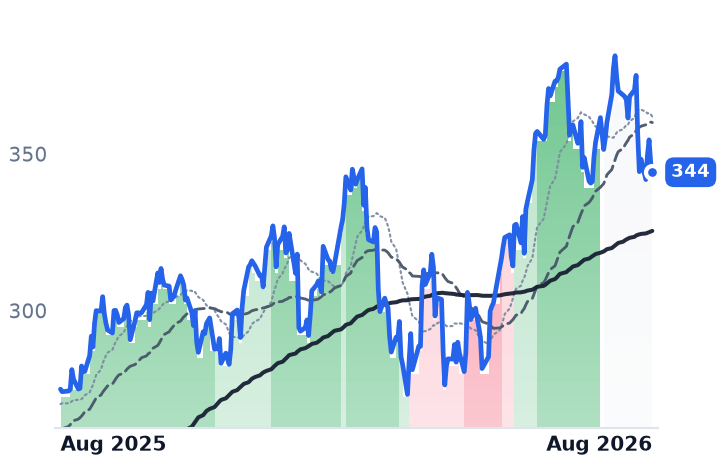
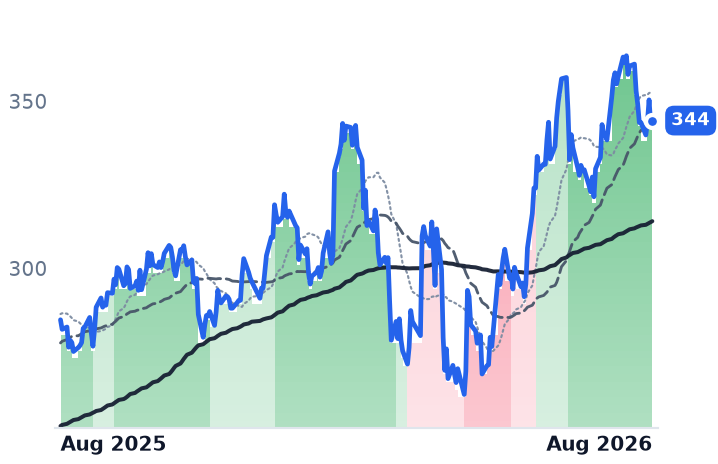
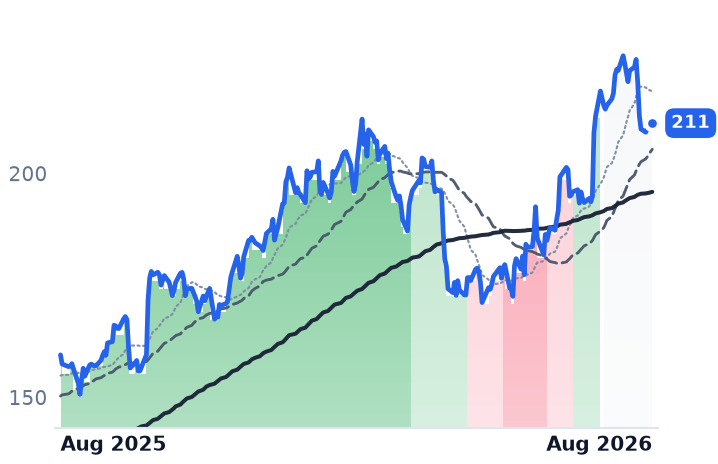
GE | GE Aerospace | Large Diversified Primes | 🟢 Cont. Bull | −2.1% | +25.2% |
SAF.PA | Safran | Aerospace & Defense | 🟢 Cont. Bull | +1.3% | +20.9% |
RTX | RTX | Large Diversified Primes | ⚠️ Emerging Bear | −1.9% | +32.4% |
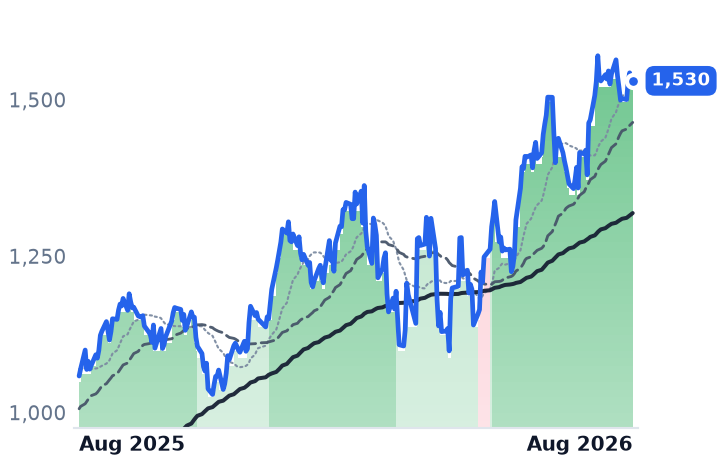
RR.L | Rolls-Royce | Aerospace & Defense | 🟢 Cont. Bull | +10.9% | +44.6% |
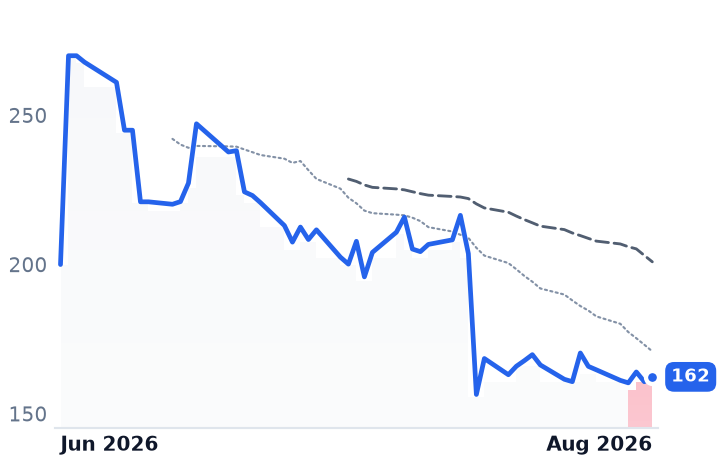
HONA | Honeywell Aerospace | Aerospace & Defense | 🔴 Cont. Bear | −20.9% | −18.8% |
12-month price & trend
| Ticker | Mkt cap | P/E | P/E fwd | P/S | P/S fwd | P/GP | P/GP fwd | EV/EBITDA | FCF yld |
|---|---|---|---|---|---|---|---|---|---|
GE | $355.4B | 40.2x | 43.3x | 7.0x | 7.1x | 19.8x | 19.9x | 29.9x | 1.0% |
SAF.PA | $143.4B | 37.0x | 33.1x | 4.3x | 3.9x | 31.3x | 28.8x | 24.3x | 3.6% |
RTX | $285.3B | 36.8x | 29.2x | 3.1x | 3.0x | 15.0x | 14.6x | 19.7x | 4.2% |
| Ticker | Mkt cap | P/E | P/E fwd | P/S | P/S fwd | P/GP | P/GP fwd | EV/EBITDA | FCF yld |
|---|---|---|---|---|---|---|---|---|---|
RR.L | $126.5B | 42.5x | — | 5.5x | 5.3x | 19.2x | 18.8x | 19.0x | 3.4% |
HONA | $51.5B | 68.5x | 20.0x | 5.8x | 2.8x | 16.0x | 7.7x | 39.9x | 0.2% |
Consensus projections
| Ticker | FY2026E | FY2027E | FY2028E | |
|---|---|---|---|---|
GE | Revenue | +20.6% | +11.1% | +9.2% |
| EPS | +26.7% | +15.0% | +13.9% | |
SAF.PA | Revenue | +15.8% | +10.1% | +9.0% |
| EPS | +26.3% | +26.0% | +13.2% | |
RTX | Revenue | +10.5% | +7.4% | +7.2% |
| EPS | +16.7% | +9.1% | +10.9% | |
RR.L | Revenue | +19.8% | +11.6% | +11.0% |
| EPS | +47.8% | +15.2% | +16.6% | |
HONA | Revenue | — | +7.6% | +7.4% |
| EPS | — | +14.7% | +11.0% |
Forward fiscal years only. Blank means no analyst coverage for that year.
The world's airlines are not flying much more this year than last, and the companies that repair their engines just reported the strongest aftermarket numbers of the cycle. GE Aerospace, which builds and maintains jet engines through its Commercial Engines & Services arm, told investors that departures were flat across the first half of 2026 and that it expects only modest growth in the second. Spare-parts revenue grew 25% regardless.
That gap defines the season. The maintenance annuity — decades of shop visits and parts sales on an installed base chief executive Larry Culp described to investors as "80,000 engines and growing, and more than 2.3 billion flight hours" — is supposed to be geared to flying. This year it is not. The airline industry's trade body expects global passenger demand to grow 2.1% in 2026, a sharp deceleration from 5.3% in 2025. What is driving reported growth instead is heavier work per shop visit, price, and — newly — the material availability to finish the heavy jobs. All three convert into billed cash. None compounds the way traffic does, and each carries a date on which it stops.
Safran got the parts it needed
Safran, GE's equal partner in CFM International and the clearest read on the narrowbody fleet, reported civil engine spare-parts sales up 27.9% in dollars and civil engine services up 40.4%, the latter mostly on LEAP rate-per-flight-hour contracts. Propulsion recurring operating income reached €2,253m, up 28%, at a 24.5% margin — above the 22-24% the company guides to for the year. "Spare part sales for civil engines increased by 28% in dollar value. And civil engine services also grew by more than 40%," chief executive Olivier Andriès told investors on July 28. Asked how long the heavy-workscope mix lasts, he said Safran is "confident that the trend that we see now… is going to continue for at least the 2 next years in 2027 and 2028."
The honest caveat is that the record margin came from material availability unlocking scopes that were rationed in 2025, plus an August 2025 price increase. And half the narrowbody book has not yet inflected: LEAP-1B profit recognition on flight-hour contracts is still gated on the Maverick turbine blade, expected late 2026 or early 2027. Safran trades near 33 times forward earnings against consensus for 26% earnings growth this year — the least expensive of the group per point of near-term growth.
GE's mix went the wrong way
GE's services revenue rose 26% and internal LEAP shop visits 50%, with roughly $170bn of commercial services backlog behind it. But group gross margin compressed nearly three points to 35.0%, and the engines-and-services margin fell 1.6 points to 27.3% on original-equipment-heavy mix and LEAP still earning below the portfolio average — parity only "by the time we get to 2028," chief financial officer Rahul Ghai said. Ghai also disclosed that spare-parts shipments delayed by material shortages grew 20% sequentially. GE raised guidance across the board and the shares fell 4% on the print, the third consecutive post-earnings decline. It asks roughly 44 times guided 2026 adjusted earnings of $7.65-7.85, above Rolls-Royce near 35 times and Safran near 33.
Rolls-Royce raised on accounting timing
Rolls-Royce, the widebody specialist with no narrowbody engine, grew Civil Aerospace revenue 29% organically to £6.19bn at a 25.3% margin, with large-engine flying hours at 113% of 2019 — and trimmed its full-year flying-hours outlook toward the lower end of 115-120%. The profit raise to £4.7-4.9bn was explicitly driven by higher long-term service-agreement margins and an increased level of contract catch-ups: £372m of catch-ups plus £497m of contractual margin improvement, against £1.57bn of divisional profit, with the company stating the level is not sustainable into the second half. Meanwhile upgraded Trent 1000 turbine blades more than double time on wing — richer visits, fewer of them. The shares are up 44.6% over twelve months.
Pratt & Whitney bought volume back
RTX ran the same trade in reverse: Pratt & Whitney's commercial aftermarket grew 25% while commercial original-equipment sales fell 8%, a deliberate decision to send material to the repair network. Grounded A320neos are down almost 40% from peak and full geared-turbofan recovery is targeted through 2030; the powder-metal remediation still requires repetitive disk inspections every 2,800-3,800 cycles. RTX is the cheapest of the four at 29 times forward earnings against 37 times trailing, with a 4.2% free-cash-flow yield.
The one that could not ship
Honeywell Aerospace makes auxiliary power units, avionics and business-jet engines rather than large commercial turbofans, and it supplied this sector's only violent session: from $203.64 to a $156.47 close on August 6, a 23.2% fall on 20.6m shares against a norm near 4m, after cutting organic growth guidance to 4-5% from 7-9%. Demand was fine — commercial aftermarket still grew 8% — and the constraint was castings, forgings and bearings from about 2% of its suppliers. "One component coming from this one supplier at being about $15 million of past due actually unlocks hundreds of millions of dollars of revenue output," chief executive Jim Currier told investors. At roughly 21 times its cut guidance, it trades at less than half GE's multiple.
Over thirty days the four large-engine names went nearly nowhere — Rolls-Royce up 10.9%, Safran up 1.3%, RTX and GE down about 2% each — while Honeywell Aerospace fell 20.9%, so the group's decline is one name. All four did drop together over three sessions in mid-August with no company news discoverable; the likelier reading is sector-wide repricing.
The verdict is that the annuity is real and converting into billed work at all four engine makers, but it is being paid for depth and price on a fleet that is not expanding its hours. Safran and RTX are earning their advances: one on a margin that beat its own guidance, the other on a recovery still visible in grounded-aircraft counts. GE is asking the highest price of the group while its services margin compresses. Rolls-Royce, the best performer, carries the largest slug of profit that its own release attributes to contract timing.
The engines will get repaired either way — more than 95% of GE's third-quarter spare-parts revenue was already sitting in backlog when it reported. The open question is who books the takeoffs that create the next round of work.