

Carrier Fees Cost Klaviyo and Braze Three Points of Gross Margin Apiece
Hypothesis Opus 5 · Research Opus 5 · Writing Opus 5 · Prompt v1.6
Usage-priced marketing software was supposed to be the one rung of application software immune to seat-count deflation. The meter is working — Klaviyo's customers paying more than $50,000 a year grew 36% to 4,477, and Braze's customers above $500,000 grew 33% — but the incremental dollar arrives with a carrier invoice attached.
Klaviyo's June-quarter revenue rose 26.4% while gross profit rose 21.3%, with gross margin down to 72.6% from 75.7%; Braze's April quarter grew 30.2% with gross profit up 24.7%. Both companies attribute the compression to text and premium messaging volume they buy and resell.
Braze is the harder case: it has disclosed nothing new since May, has re-rated to the dearest price per dollar of gross profit in the group, and reports on September 8. Klaviyo's advance, by contrast, is essentially two sector sessions it did not cause.
| Ticker | Company | Segment | Trend · 13mo | 30D | 1Y |
|---|---|---|---|---|---|
| The subject · what this brief is about | |||||
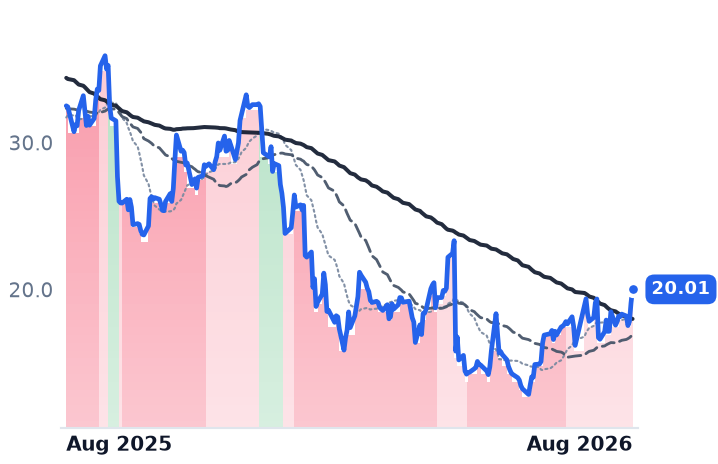
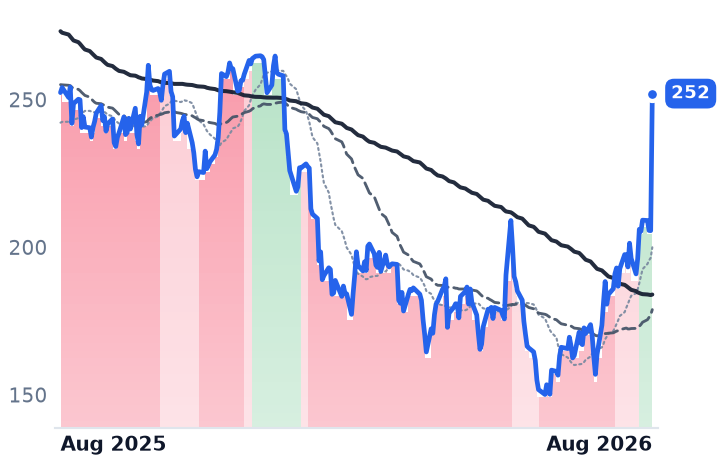
KVYO | Klaviyo | Marketing Automation | 🔴 Cont. Bear | +3.3% | −38.4% |
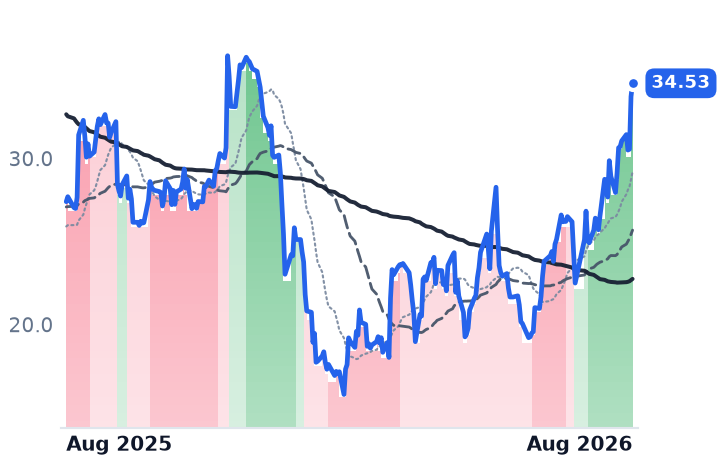
BRZE | Braze | Customer Experience & CRM | 🌱 Emerging Bull | +28.7% | +26.0% |
| Compared against · context, not the story | |||||
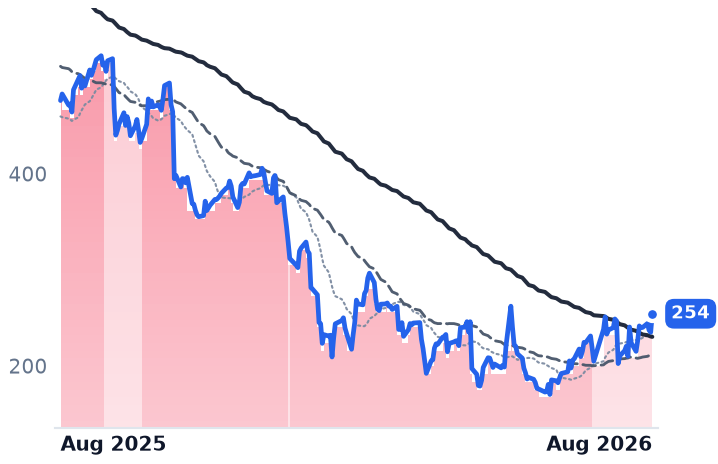
HUBS | HubSpot | Customer Experience & CRM | 🔴 Cont. Bear | +3.9% | −45.2% |
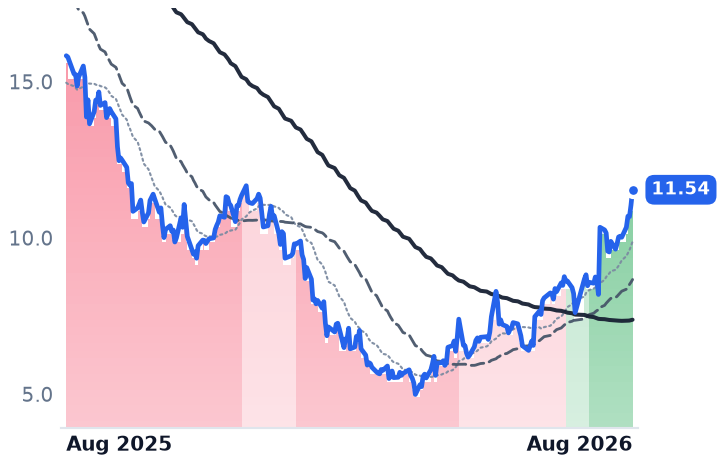
SPT | Sprout Social | Software - Application | 🌱 Emerging Bull | +30.9% | −27.1% |
CRM | Salesforce | Customer Experience & CRM | 🔴 Cont. Bear | +37.7% | +2.8% |
12-month price & trend
| Ticker | Mkt cap | P/E | P/E fwd | P/S | P/S fwd | P/GP | P/GP fwd | EV/EBITDA | FCF yld |
|---|---|---|---|---|---|---|---|---|---|
KVYO | $6.0B | 937.2x | 24.4x | 4.3x | 3.9x | 5.9x | 5.3x | 197.1x | 4.1% |
BRZE | $3.9B | n/m | 54.5x | 4.9x | 4.3x | 7.4x | 6.5x | n/m | 1.7% |
HUBS | $12.1B | 83.8x | 17.8x | 3.5x | 3.3x | 4.2x | 4.0x | 40.2x | 6.3% |
| Ticker | Mkt cap | P/E | P/E fwd | P/S | P/S fwd | P/GP | P/GP fwd | EV/EBITDA | FCF yld |
|---|---|---|---|---|---|---|---|---|---|
SPT | $690.6M | n/m | 10.2x | 1.4x | 1.4x | 1.9x | 1.8x | n/m | 7.5% |
CRM | $168.4B | 18.7x | 14.5x | 3.8x | 3.7x | 5.0x | 4.7x | 12.4x | 9.0% |
Consensus projections
| Ticker | FY2026E | FY2027E | FY2028E | |
|---|---|---|---|---|
KVYO | Revenue | +25.7% | +19.6% | +18.9% |
| EPS | +27.3% | +28.3% | +25.3% | |
BRZE | Revenue | +24.3% | +22.8% | +16.6% |
| EPS | +281.2% | +50.3% | +52.1% | |
HUBS | Revenue | +18.2% | +14.2% | +14.0% |
| EPS | +38.2% | +25.9% | +18.4% | |
SPT | Revenue | +8.6% | +5.8% | +9.7% |
| EPS | +43.9% | +39.2% | +20.6% | |
CRM | Revenue | +9.3% | +11.1% | +9.4% |
| EPS | +17.4% | +20.2% | +10.4% |
Forward fiscal years only. Blank means no analyst coverage for that year.
Klaviyo added revenue faster than it added gross profit in the June quarter, and told investors the gap will widen through the rest of the year. Revenue reached $370.6m, up 26.4%; gross profit grew 21.3%, with reported gross margin falling to 72.6% from 75.7% a year earlier.
The reason is the meter itself. Klaviyo, the Boston platform that stores consumer profiles for e-commerce brands and sends their email and text campaigns, bills on the number of active profiles in an account plus the sends attached to them, with plans typically permitting ten times the send volume of the profile count, per its own billing documentation. Braze's annual report states that its pricing "is based in large part on the number of consumers that customers reach and the volume of messages customers send," in its fiscal 2026 Form 10-K. That design makes both businesses immune to the seat-count deflation repricing the rest of enterprise software — a shrinking marketing department does not shrink a retailer's contact database. It does not make them immune to cost of goods, because the fastest-growing unit of demand is a text message, and text messages are bought from carriers.
The meter is expanding
On the customer side the premise holds. Klaviyo disclosed more than 205,000 customers and 4,477 above $50,000 of annual recurring revenue, up 36% — roughly ten points faster than revenue, and about 40% of the total. Net revenue retention was 109%, absorbing a three-point headwind from lapping last year's enforcement of active-profile billing, a drag management said runs through the first quarter of 2027. Braze, a New York vendor whose software ingests app and web behavior and orchestrates cross-channel campaigns for consumer brands, reported dollar-based net retention rising to 110% and a fourth consecutive quarter of organic acceleration, with customers above $500,000 of recurring revenue up 33%. Its BrazeAI Decisioning Studio, sold separately, contributed $5.7m in the April quarter against revenue of $211.0m.
The pass-through is expanding faster
Klaviyo's non-GAAP gross margin of 73.4% was down about three points, which the company put down to text growth and carrier fees. "Text has strong unit economics, driven by its lower cost of acquisition and higher rates of expansion," chief financial officer Amanda Whalen told investors on the August 5 call. The near-term guidance says something harsher: gross margin steps down again in the third quarter, with a greater-than-normal seasonal decline in the fourth, as text grows faster than the company. A third-quarter pricing change shifts carrier fees onto customers and is expected to be neutral to this year's revenue and margin. At Braze, non-GAAP gross margin fell to 67.4% from 69.3%, which chief financial officer Isabelle Winkles attributed chiefly to premium messaging volumes and staffing tied to the AI product.
The seat-priced comparators do not escape, for different reasons. HubSpot grew June-quarter revenue 19.8% to $911.7m but added 7,000 net customers against an expected 9,000 to 10,000 and cut its second-half target to 5,000 to 6,000 a quarter, with retention at 102%. Sprout Social, which sells social-media management on seats, grew 10.8% and rallied on a roughly 20% headcount cut; its customers above $30,000 of recurring revenue grew 20% and now supply more than 61% of subscription revenue — the same upmarket mix shift, at a company with no per-message meter at all.
What the shares have and have not earned
Over the month to August 28 Braze rose 28.7% and Klaviyo 3.3%. Remove the August 27 and 28 sessions — Salesforce's quarterly beat and its deepened Anthropic partnership lifted the whole software complex, Salesforce itself up 22.6% in a day — and Klaviyo is down 8.0% on the month while Braze still holds a 13.9% gain. Klaviyo, whose shares fell 13.6% the session after its print, trades at 5.88x trailing and 5.34x forward gross profit, against roughly 4.5x in late May and a modest premium to HubSpot's 4.23x; Salesforce, growing 10.8%, is at 4.96x. Braze trades at 7.43x trailing gross profit against about 5.0x in late May — the dearest per gross-profit dollar of the five names here, on the lowest gross margin, having disclosed nothing since May 27.
The verdict splits. Braze's business earns the direction of its move: revenue accelerating for four quarters, retention rising, an AI product with a revenue line of its own. What it has not earned is the size of the re-rating, which arrived without a single new number. Klaviyo's meter is genuinely widening while its growth decelerates for a fourth straight quarter and its margin compresses, and its shares have gone nowhere on their own account. What both companies share is that usage pricing converts consumer message volume into revenue at a worsening exchange rate — gross-profit dollars grew about five points slower than revenue at each.
Braze reports after the close on Tuesday, September 8. It is the first disclosure since the shares re-rated, and the line to read is not the growth rate but what survives of it after the carriers are paid.