

Workday's Multi-Year Backlog Grew 8% as ADP Counted Just 1% More Workers on Payrolls
Hypothesis Opus 5 · Research Opus 5 · Writing Opus 5 · Prompt v1.6
Three companies bill the same meter — a person on a payroll — and the meter has stopped moving. ADP's pays per control, its count of employees on client payrolls, rose 1% in fiscal 2026 and is guided to 0–1% this year, while its Employer Services revenue grew 7%: price and product attach, not bodies.
Workday's July-quarter print, published after the close on 27 August, is where that shows up in contracted business. Near-term backlog still grew 14.2%, marginally faster than subscription revenue, but total subscription backlog of $27.4bn added only $109m sequentially and decelerated from 17.6% growth a year ago. Workday's answer is to price artificial-intelligence work per task rather than per employee. Paycom, whose 31.7% operating margin came from cost cuts and a fifth of its shares retired, is the one whose rally a disclosure actually explains.
| Ticker | Company | Segment | Trend · 13mo | 30D | 1Y |
|---|---|---|---|---|---|
| The subject · what this brief is about | |||||
WDAY | Workday | Enterprise Resource Planning | 🌱 Emerging Bull | +21.2% | −15.7% |
PAYC | Paycom Software | HR & Workforce Management | 🌱 Emerging Bull | +47.3% | +5.0% |
ADP | Automatic Data Processing | HCM Software & Payroll | 🌱 Emerging Bull | +8.2% | −3.8% |
| Compared against · context, not the story | |||||
NOW | ServiceNow | Specialized Enterprise Solutions | 🔴 Cont. Bear | +23.2% | −23.2% |
INTU | Intuit | Enterprise Resource Planning | 🔴 Cont. Bear | +11.2% | −47.2% |
BILL | Bill.com | Fintech & Digital Finance | ⚠️ Emerging Bear | +5.6% | +17.6% |
DOCU | DocuSign | Specialized Enterprise Solutions | 🔴 Cont. Bear | +13.1% | −15.2% |
MNDY | monday.com | Other | 🌱 Emerging Bull | +11.0% | −46.8% |
VEEV | Veeva Systems | Life Sciences Software & Data | 🌱 Emerging Bull | +40.2% | −3.9% |
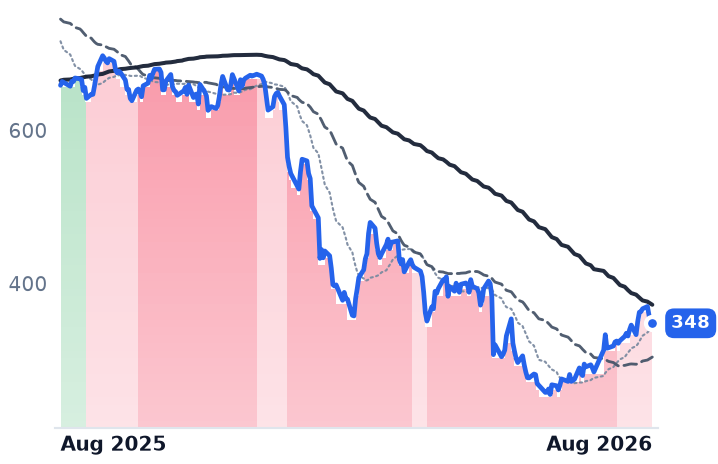
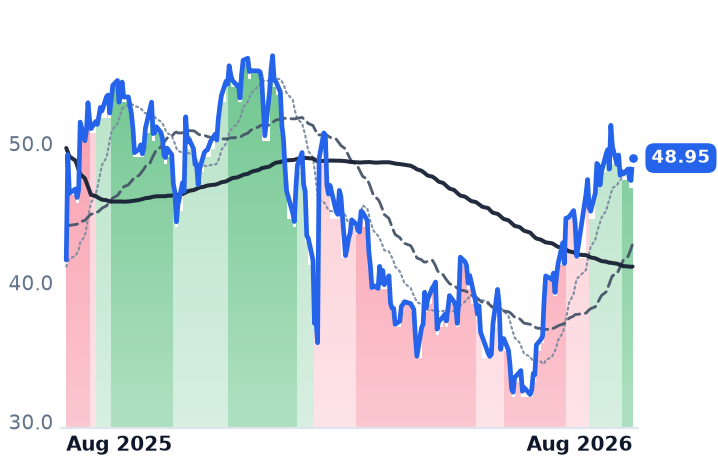
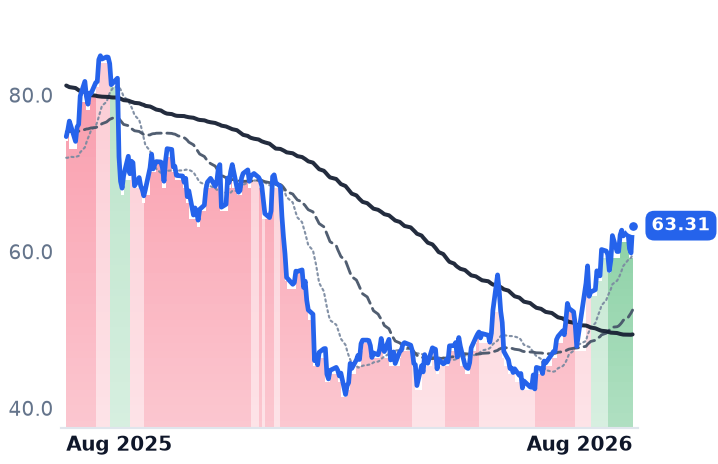
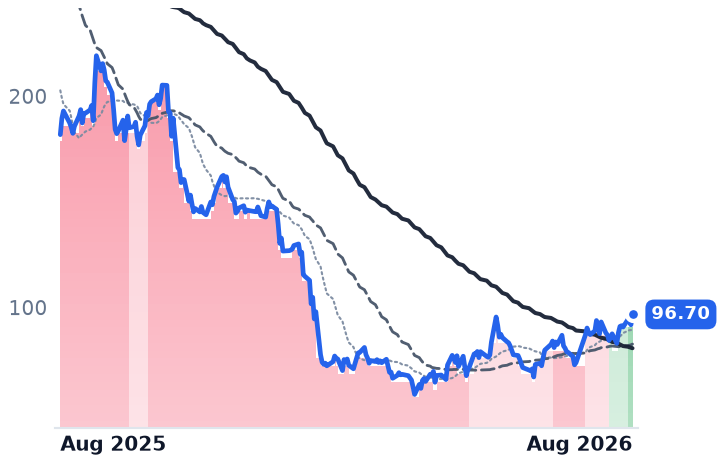
12-month price & trend
| Ticker | Mkt cap | P/E | P/E fwd | P/S | P/S fwd | P/GP | P/GP fwd | EV/EBITDA | FCF yld |
|---|---|---|---|---|---|---|---|---|---|
WDAY | $50.7B | 39.3x | 18.0x | 5.0x | 4.8x | 6.3x | 6.0x | 35.3x | 5.6% |
PAYC | $10.7B | 25.1x | 19.6x | 5.0x | 4.8x | 6.2x | 6.0x | 12.8x | 7.1% |
ADP | $113.8B | 26.0x | 23.2x | 5.2x | 4.9x | 10.8x | 10.2x | 18.1x | 4.4% |
| Ticker | Mkt cap | P/E | P/E fwd | P/S | P/S fwd | P/GP | P/GP fwd | EV/EBITDA | FCF yld |
|---|---|---|---|---|---|---|---|---|---|
NOW | $132.8B | 79.8x | 31.6x | 9.0x | 8.2x | 12.1x | 11.0x | 39.8x | 3.4% |
INTU | $100.4B | 22.2x | 13.4x | 4.8x | 4.2x | 5.9x | 5.2x | 14.6x | 7.7% |
BILL | $4.8B | n/m | 13.4x | 2.9x | 2.7x | 3.6x | 3.3x | 50.1x | 8.9% |
| Ticker | Mkt cap | P/E | P/E fwd | P/S | P/S fwd | P/GP | P/GP fwd | EV/EBITDA | FCF yld |
|---|---|---|---|---|---|---|---|---|---|
DOCU | $11.5B | 38.4x | 13.3x | 3.5x | 3.3x | 4.4x | 4.1x | 17.2x | 9.7% |
MNDY | $3.8B | 38.0x | 16.6x | 2.8x | 2.6x | 3.2x | 2.9x | 34.1x | 7.8% |
VEEV | $39.7B | 39.4x | 27.0x | 11.5x | 10.9x | 15.3x | 14.6x | 29.3x | 4.2% |
Consensus projections
| Ticker | FY2026E | FY2027E | FY2028E | |
|---|---|---|---|---|
WDAY | Revenue | +13.4% | +11.8% | +11.0% |
| EPS | +26.5% | +18.6% | +17.3% | |
PAYC | Revenue | +7.7% | +7.2% | +8.3% |
| EPS | +30.9% | +15.5% | +11.1% | |
ADP | Revenue | +7.0% | +5.9% | +5.7% |
| EPS | +11.0% | +10.7% | +9.2% | |
NOW | Revenue | +22.4% | +18.7% | +18.6% |
| EPS | +17.1% | +23.2% | +21.4% | |
INTU | Revenue | +13.9% | +11.0% | +10.6% |
| EPS | +18.5% | +14.7% | +12.7% | |
BILL | Revenue | +13.2% | +8.9% | +10.1% |
| EPS | +26.1% | +35.2% | +19.3% | |
DOCU | Revenue | +8.4% | +8.9% | +7.6% |
| EPS | +6.9% | +19.5% | +12.6% | |
MNDY | Revenue | +19.8% | +15.2% | +14.9% |
| EPS | +27.8% | +22.3% | +19.1% | |
VEEV | Revenue | +16.3% | +15.1% | +12.0% |
| EPS | +23.1% | +14.1% | +10.7% |
Forward fiscal years only. Blank means no analyst coverage for that year.
Workday reported its fiscal second quarter after the close on 27 August, and the figure that moved the shares was not the revenue line. Total subscription backlog — everything customers have contracted to pay, including years out — came in at $27.403bn, up 8.0%, against roughly $28.6bn analysts had modelled. The stock fell about 7% in after-hours trading, to near $180 from a $193.57 close, erasing some $3.3bn of market value.
That number matters because of what Workday, Paycom and ADP actually sell. All three meter the same thing: a person on a payroll, billed monthly. Workday sells cloud human-resources, payroll and financial software to large enterprises; Paycom sells a single-database payroll and hiring suite to small and mid-sized American firms; ADP runs payroll and human-resources outsourcing for both, including a business that co-employs staff for smaller companies. They are the one rung of enterprise software where the argument that artificial intelligence is eliminating jobs can be checked against a disclosed operating number rather than a narrative.
The meter reads flat
That number is ADP's pays per control — employees on client payrolls, measured same-store. It grew 1% in the fourth quarter of fiscal 2026 and 1% for the full year, with fiscal 2027 guided to 0–1%. Employer Services revenue over the same quarter rose 7% to $3.70bn with segment margin up to 34.4%. Price, module attach and mix did the work; headcount contributed almost nothing. The wider labour data agree that this is stall rather than collapse — the hiring rate was 3.4% in June with 7.4 million openings, a market that neither hires nor fires. Research built on ADP's own payroll microdata found a 13% relative employment decline for 22-to-25-year-olds in the most exposed occupations since late 2022, older workers steady: fewer new seats, not vanished ones.
A flat meter does not kill a subscription business, but it does move all the growth onto price and product. Workday's July quarter shows both halves. Twelve-month backlog of $9.034bn grew 14.2%, still a shade ahead of the 13.9% subscription revenue growth, so near-term contracted seats are holding. The long-dated portion, which is where future seat expansion gets priced, went from 17.6% growth a year ago to 10.9% in April to 8.0% now — a sequential gain of $109m. Full-year subscription guidance moved to $9.940bn–$9.950bn from $9.925bn–$9.950bn, with margin guidance raised to 31.0%.
Workday's counter is to stop selling by the employee. Artificial-intelligence revenue reached nearly $600m annualized, up more than 200%, and "AI driving more than 25% of our new ACV and more than 5,500 customers now using at least one of our organic agents," co-founder and chief executive Aneel Bhusri said on the call. Those agents are billed through Flex Credits, consumed per metered task off a rate card — work performed, not employees employed.
Paycom's answer: fewer of its own
Paycom does not disclose billable employees at all. It reported 20,321 clients at the end of 2025, up 5%, implying revenue per client of roughly $101,000 against $97,000 a year earlier — about half its growth came from price and attach. June-quarter revenue was $531.2m, up 9.8%, with recurring revenue up 11.0%, and operating margin reached 31.7% from 23.2%. "Our strong second-quarter results came in ahead of expectations, reflecting the strength of our automation strategy and disciplined execution," founder-CEO Chad Richison said on 5 August. Roughly a fifth of the shares have been retired, diluted count falling to 45.9m from 56.3m.
What the prices earned
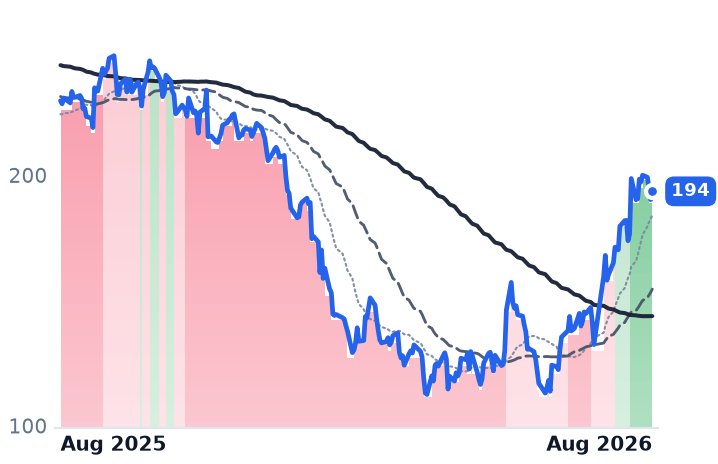
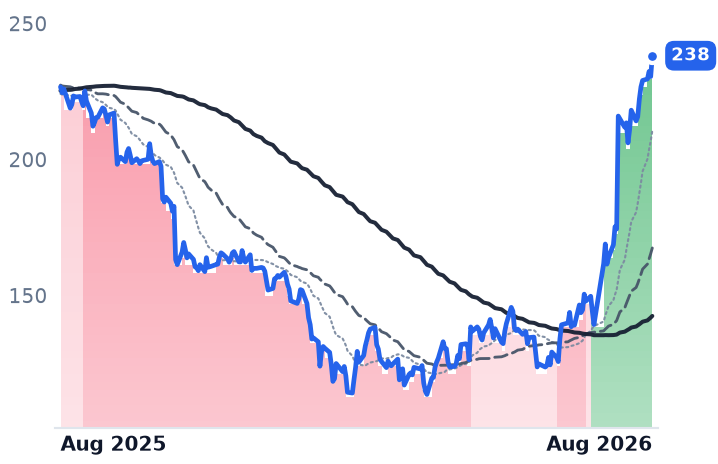
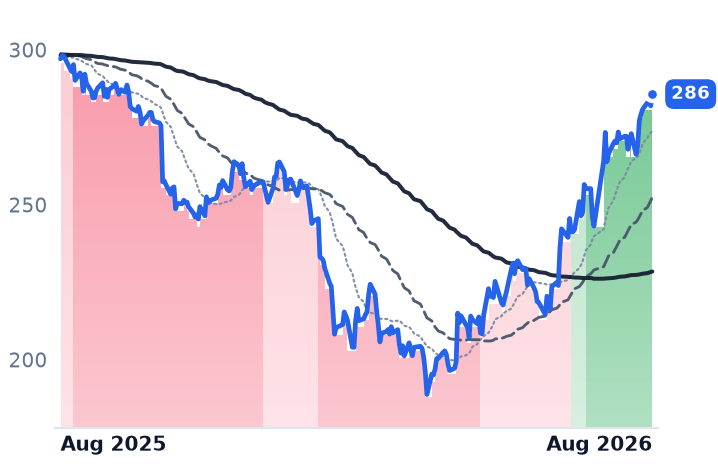
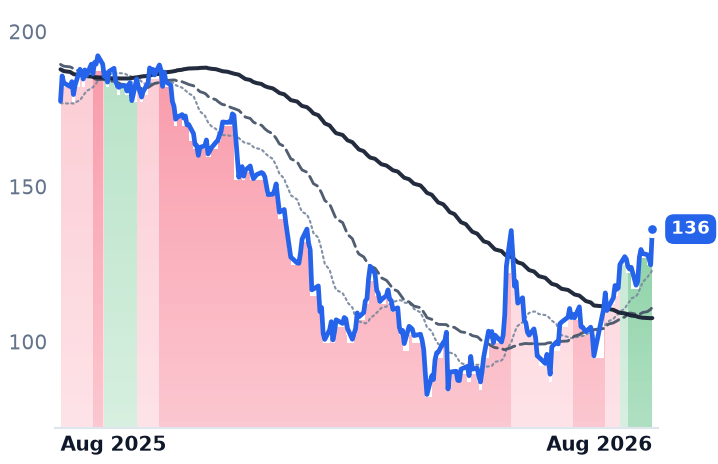
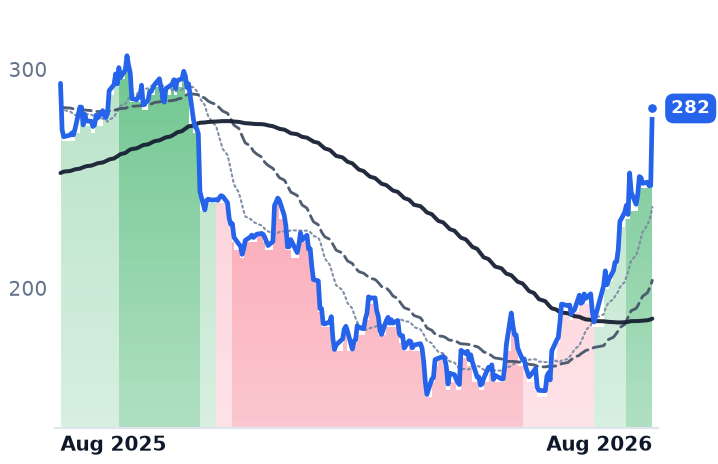
Workday is down 15.7% over twelve months and up 55.5% over three, its largest session a 12.5% jump on 14 August, when a reported Silver Lake take-private approach was read as a floor under software valuations. Paycom's 47% thirty-day gain begins with a 23.8% session the day after its beat-and-raise. Across the nine back-office software names, thirty-day gains average about 20% against a twelve-month loss near 15%; besides Paycom, the big movers were Veeva and ServiceNow, on company events with nothing to do with headcount.
So the split is clean. Paycom's move is bought and paid for by disclosure; Workday's was bought on a deal report and a rotation, and the disclosure, when it landed, went the other way. Yet the two vendors whose meter is literally the payroll count are the cheap ones: measured against gross profit, Workday's market value is 6.26 times and Paycom's 6.23 times, while ADP commands 10.76 times — a 73% premium for 5–6% guided revenue growth. Workday's own reading has fallen from roughly 9.2 times a year ago, and it trades at 17.97x forward earnings against 39.3x trailing; Paycom sits at 19.6x forward against 25.1x trailing. ADP's forward earnings multiple, 23.2x, is barely below its trailing 26x — and its fiscal 2026 gross profit rose just 1.2% on 6.7% more revenue.
The useful conclusion is not that seats are disappearing. It is that they have stopped arriving, and every dollar of growth now has to be argued for on price, modules or metered agents. Workday put that in writing this quarter: the company built on charging per employee is charging for its newest product per task instead.