

Ansys Supplied 29% of Synopsys's Revenue While Its Own Design Tools Grew 8.5%
Hypothesis Opus 5 · Research Opus 5 · Writing Opus 5 · Prompt v1.6
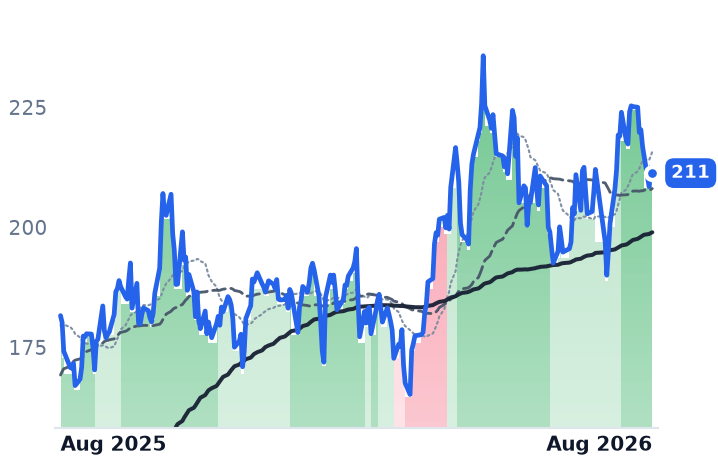
Both halves of the chip-design software duopoly got materially bigger over the past year while their shares went backwards or nowhere: Synopsys's trailing gross profit rose 33.9%, Cadence's 18.6%, and both stocks finished twelve months lower. Synopsys's July-quarter results, released 26 August, settled part of that argument — backlog of $10.9bn, full-year guidance raised, the shares up 11% the next day in their largest session of the year.
What the quarter did not settle is composition. Ansys, the simulation-software business Synopsys bought last year, supplied 29% of revenue while Synopsys's own design software grew 8.5% against a 16% year-ago comparison, with management promising double digits in the fourth quarter. Cadence grew 24.2% with no acquisition to digest and still costs 43% more measured against gross profit.
| Ticker | Company | Segment | Trend · 13mo | 30D | 1Y |
|---|---|---|---|---|---|
| The subject · what this brief is about | |||||
SNPS | Synopsys | EDA & Design Tools | 🔴 Cont. Bear | +18.3% | −24.7% |
CDNS | Cadence Design Systems | Developer Tools & DevOps | 🌱 Emerging Bull | −0.3% | −0.9% |
| Compared against · context, not the story | |||||
ADSK | Autodesk | Design & Content Creation | 🔴 Cont. Bear | +6.3% | −11.8% |
PTC | PTC | Specialized Enterprise Solutions | 🔴 Cont. Bear | +17.9% | −30.6% |
NVDA | NVIDIA | AI & Data Center GPUs | 🟢 Cont. Bull | +7.2% | +16.3% |
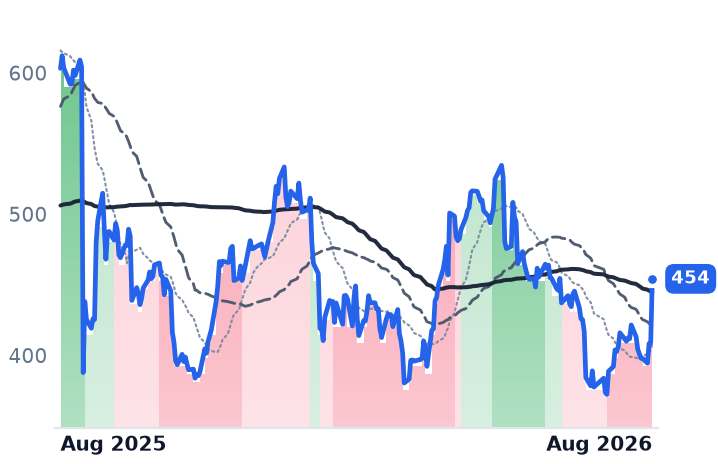
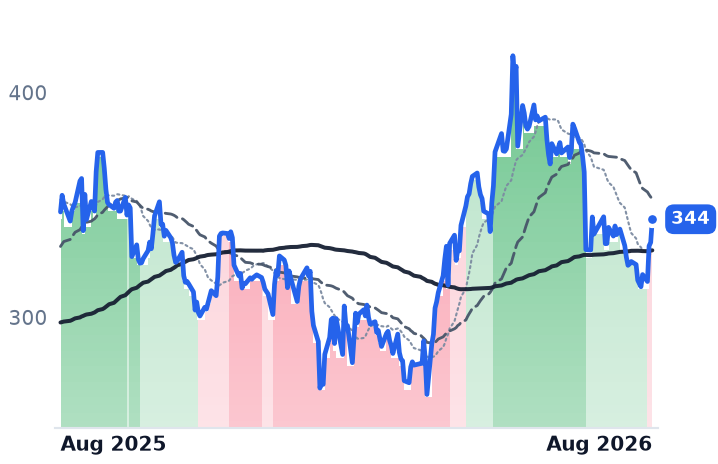
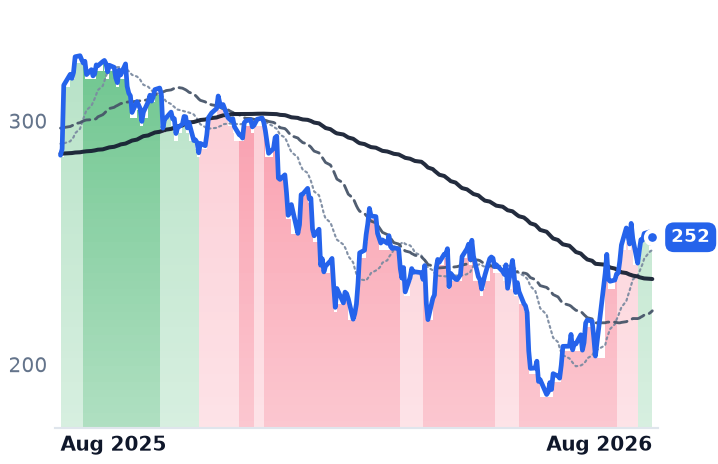
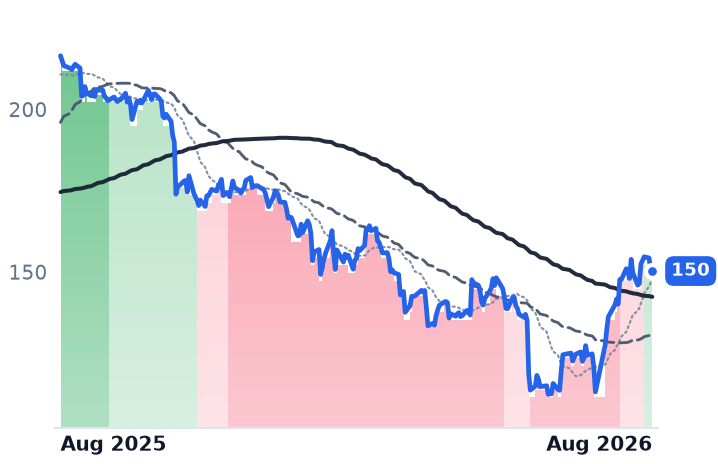
12-month price & trend
| Ticker | Mkt cap | P/E | P/E fwd | P/S | P/S fwd | P/GP | P/GP fwd | EV/EBITDA | FCF yld |
|---|---|---|---|---|---|---|---|---|---|
SNPS | $87.1B | 187.9x | 30.8x | 9.2x | 9.0x | 12.8x | 12.4x | 30.7x | 3.2% |
CDNS | $94.6B | 67.9x | 42.2x | 16.2x | 15.0x | 18.3x | 16.9x | 43.8x | 1.8% |
ADSK | $53.6B | 36.8x | 20.2x | 7.1x | 6.5x | 7.8x | 7.2x | 24.7x | 5.1% |
| Ticker | Mkt cap | P/E | P/E fwd | P/S | P/S fwd | P/GP | P/GP fwd | EV/EBITDA | FCF yld |
|---|---|---|---|---|---|---|---|---|---|
PTC | $16.9B | 14.1x | 17.9x | 5.7x | 6.2x | 6.8x | 7.4x | 10.8x | 5.5% |
NVDA | $5.5T | 34.3x | 25.0x | 21.5x | 13.9x | 29.0x | 18.7x | 28.3x | 2.2% |
Consensus projections
| Ticker | FY2026E | FY2027E | FY2028E | |
|---|---|---|---|---|
SNPS | Revenue | +37.4% | +10.9% | +11.9% |
| EPS | +15.2% | +16.9% | +18.0% | |
CDNS | Revenue | +19.7% | +13.6% | +11.7% |
| EPS | +15.3% | +17.0% | +14.3% | |
ADSK | Revenue | +17.0% | +14.5% | +10.3% |
| EPS | +23.0% | +22.9% | +12.6% | |
PTC | Revenue | +4.9% | +6.2% | +7.5% |
| EPS | +20.1% | +8.5% | +10.5% | |
NVDA | Revenue | +65.1% | +84.2% | +43.2% |
| EPS | +59.0% | +91.7% | +42.0% |
Forward fiscal years only. Blank means no analyst coverage for that year.
Synopsys sells the software chip companies use to draw and verify integrated circuits, and in the quarter ended 31 July that software grew 8.5%. Total revenue grew 42.4%, to $2.477bn, because most of the difference is Ansys — the engineering-simulation maker Synopsys acquired last year, which supplied roughly $711m of the quarter, about 29% of it, and which the full-year guide assumes will contribute close to $2.98bn.
That gap matters beyond one print. The design rung is where every custom artificial-intelligence accelerator, memory controller and networking chip is actually drawn, and it is the part of the chain that has de-rated while the boom ran. Synopsys's gross profit over the trailing twelve months rose 33.9%, to $6.815bn, while the shares fell 24.7%. At Cadence Design Systems, its only real rival, gross profit rose 18.6% and the stock ended the year fractionally lower. Both businesses earned more dollars; investors paid less for them. On 27 August the market took 11.1% of that back at Synopsys in a single session, the largest of its year, with Cadence up 3.1% alongside — though Nvidia reported the same evening, so part of the sympathy move is sector, not design tools.
What compressed
Measured as share price against the gross profit the business earns — reported earnings are near-useless at Synopsys, where acquisition amortization has pushed the trailing price-to-earnings ratio to 188x — Synopsys fetched 14.0x in early May, bottomed at 10.3x on 29 July and sits at 12.8x now. Cadence has barely moved on the same measure, from 19.1x to 18.3x. The two other design-software names on the same shelf did worse than either: Autodesk and PTC both fell over the twelve months, PTC by nearly a third. Whatever resilience exists here is specific to chip design.
The quarter
The line that had worried holders came back. Design IP — the pre-built USB, PCIe, memory and interface blocks Synopsys licenses out — grew 11%, to $474m, after falling around 6% in the April quarter; the newest generation of PCI Express interface won more than 95% of opportunities, and Synopsys reported roughly 20% growth in Korea tied to high-bandwidth-memory and custom-chip work at Samsung and SK Hynix. Non-GAAP operating margin was 41.6%, the reported operating margin climbed to 14.4% from 10.4% a quarter earlier as integration charges anniversary, backlog stood at $10.9bn, and the year's revenue guide went up to $9.69bn-$9.74bn with free cash flow guided to about $2.6bn.
One premise the quarter broke: emulation hardware is not Cadence's alone. Synopsys posted a record hardware-assisted verification quarter with 12 new and 66 repeat customer wins. Cadence, for its part, does not disclose emulation revenue separately — its Palladium and Protium boxes sit inside Core EDA, 71% of revenue — though it described a record hardware quarter of its own with supply tight against demand.
Cadence's June quarter grew 24.2%, to $1.584bn, a third consecutive acceleration, with backlog at a record $8.1bn, intellectual-property revenue up more than 40%, system analysis up 37% and non-GAAP operating margin of 45.5%. "Cadence delivered an outstanding Q2 driven by broad-based strength and the accelerating demand for our AI-driven solutions," chief executive Anirudh Devgan told investors on 27 July. It also signed a multi-year collaboration with Intel covering the 14A process node, most of whose benefit lands after 2026.
What the prices say now
Synopsys trades at 30.8x forward earnings, Cadence at 42.2x, on forward earnings growth rates of about 17% each. The China variable cuts both ways and is unresolved: China was roughly a tenth of Synopsys revenue, Washington imposed and then rescinded licensing requirements on chip-design software within six weeks in 2025, and Cadence's guidance explicitly assumes export rules stay substantially similar. In July, both stocks fell about 9% when a Chinese open-weight model completed a chip design using free tools on a 45-nanometer library, generations behind where either company competes.
So: the business earns the recovery in Synopsys's shares. Gross profit dollars never fell, the IP line turned, margins are rebuilding as Ansys purchase accounting washes through, and Sassine Ghazi, the chief executive, argued on the 26 August call that design agents multiply seat demand rather than replace it — "the need is for more licenses." What nothing in the numbers yet explains is why the same buyer pays 43% more per dollar of gross profit for Cadence, which is growing faster organically but sells into the same design starts and faces the same export regime. The honest read is that Synopsys still carries a digestion discount — $10bn of debt, a diluted 72.6% gross margin, and a core software line growing 8.5% — and that the discount closes only if the fourth quarter delivers the double-digit organic growth management has promised.
The next disclosure is not an earnings report. Synopsys has an investor day on 30 September, where it has said it will explain how it prices the royalty agreements it is negotiating with hyperscalers building their own artificial-intelligence silicon. A second business model exists; it does not yet have a published price.